
It's no secret that the quality of soil cultivation, adequate mineral nutrition, and protection from diseases and pests directly impact the size of the future harvest. Choosing the right mineral fertilizer spreader will help ensure the proper vitamin supply to the soil and plants. While spreading beneficial additives in small areas can be done with a hand spreader, professional equipment is required for larger production areas.
What types of mineral fertilizer spreaders are there?
Every homeowner considers the most challenging and urgent task to be the timely and adequate application of fertilizer to the soil. This isn't easy to accomplish manually. It's more practical to purchase a specialized device for this purpose.
Even an experienced farmer can easily become confused in the agricultural equipment market. Machine design isn't the only important factor. It's also important to consider the area being cultivated and the field's characteristics, the plant's growth stage and fertilizer type, the farm's tractor fleet, and the acquisition cost.
Fertilizer dispersion occurs:
- by means of a pendulum tube (exclusively for small areas);
- by rotating disks with special blades.
The main difference between solid organic fertilizer spreaders is their design type. They can be:
- trailers;
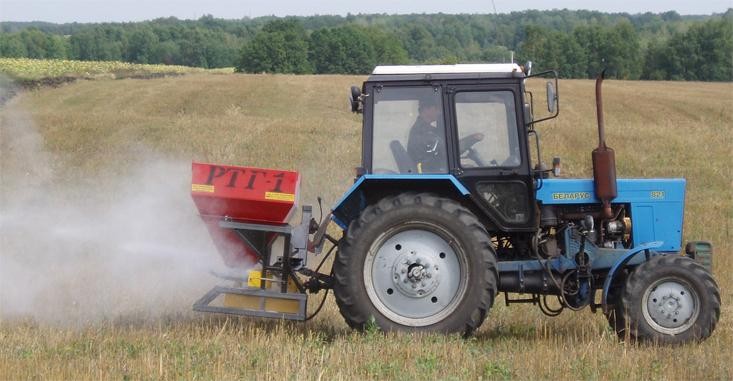
- suspended;
- manual.
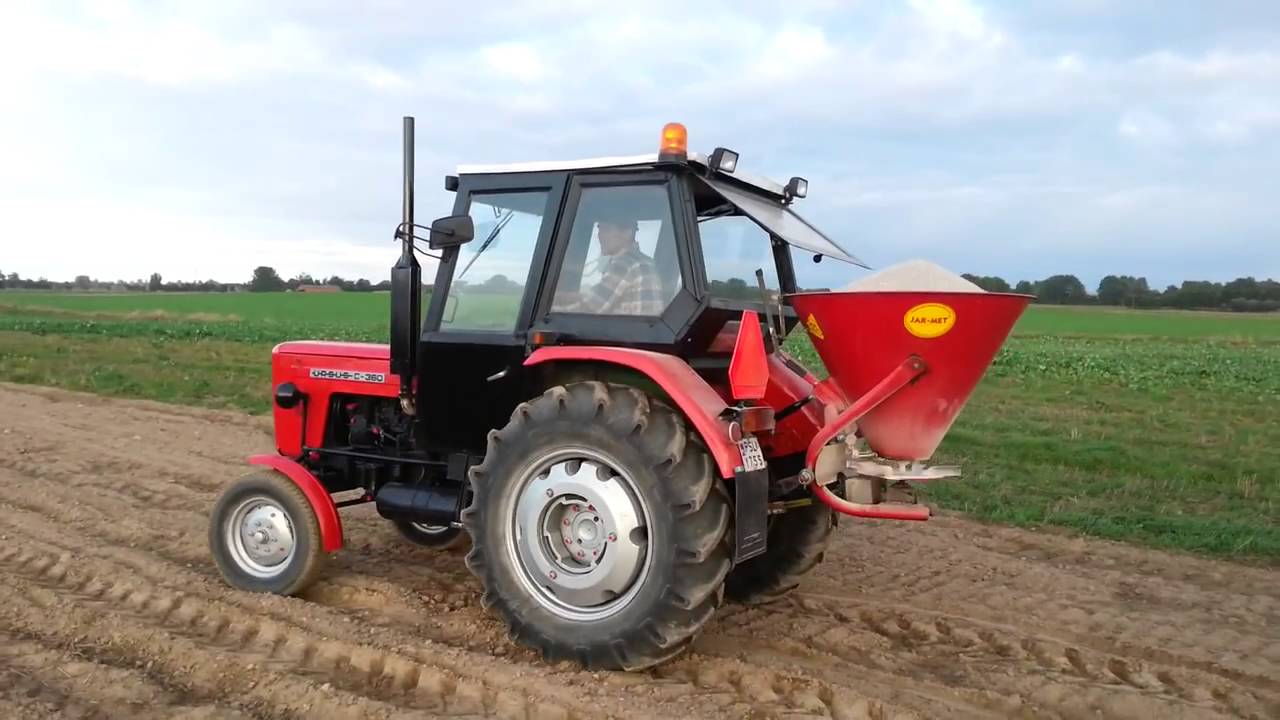
Self-propelled units are also used. These are essentially vehicles with equipment attached to them. They're a complete system that can replace many a trailer-mounted mineral fertilizer spreader. And they're priced accordingly.
Wall-mounted models
It makes sense to pay attention to them if the farm is very small, and the crops are on 400-500 hectares.
Important! Before purchasing, make sure your tractor and spreader are compatible.
Disc spreader
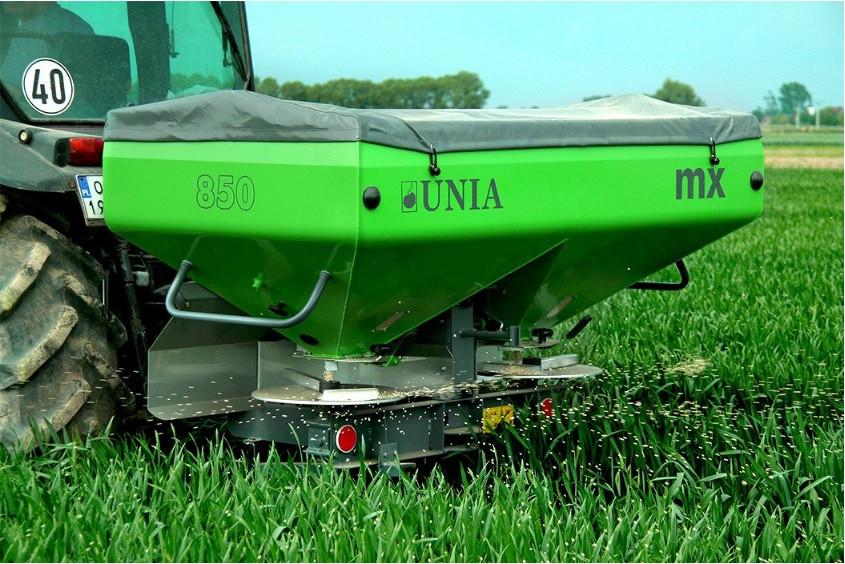
It's a metal bin with a frame. To ensure even distribution of the contents, it has mechanical stirrers inside. These stirrers are also called agitators. A screen is attached above them to sift the fertilizer.
Take a look Also
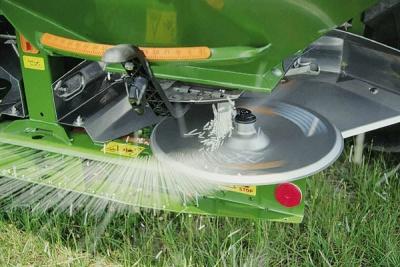
The flow of bulk materials is regulated by a limiting valve. A shut-off valve seals the container, making it easy to move. Locks prevent the valves from moving freely. Fertilizers (seeds and other materials) fall onto rotating distribution plates. They are intercepted by shovels and distributed in an even layer across the ground.
Pendulum spreader
The main difference is the dispersion device. The unit uses a plastic swinging tube. It quickly moves left and right to scatter the contents onto the ground. They are much less common than disc sprinklers. They are less efficient and quite noisy in operation.
Trailed spreaders
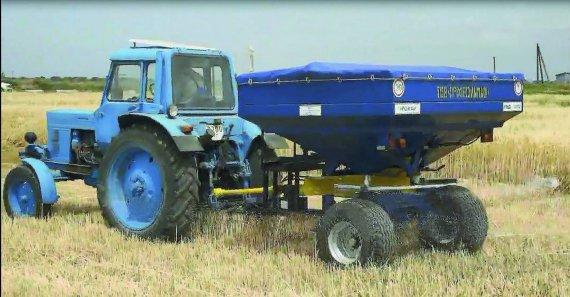
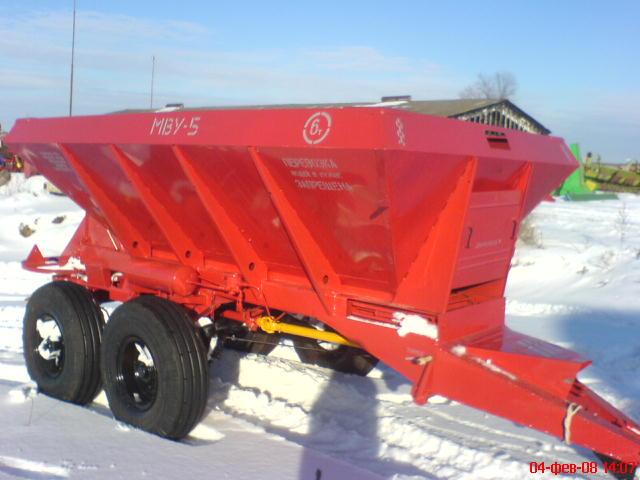
They work in the same way as mounted fertilizer spreaders, the only difference being that they are a wheeled trailer attached to the frame behind the tractor. They offer quite a wide range of capabilities, capable of holding tens of tons of fertilizer and spreading it over tens of meters.
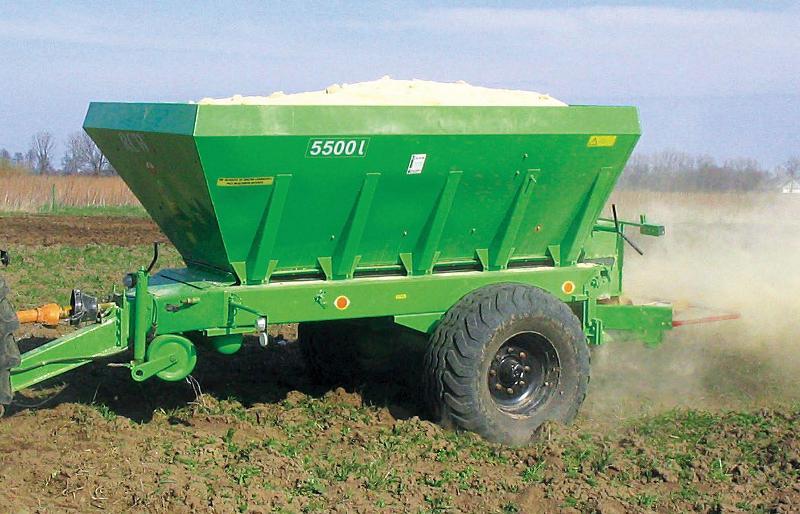
This wide-tired trailer is unaffected by weather conditions and can even operate on wet ground.
Manual models
This unit is very easy to operate—you just push it across the field. It's also inexpensive. It's an excellent option for small field and garden owners, for spreading fertilizer and sowing various crops. It's also useful in winter, spreading salt and sand to combat ice.
Advantages and disadvantages
Before making a final choice, it is necessary to weigh all the pros and cons of this technique.
Advantages:
- achieving more stable results than when processing the field manually, saving time and labor costs;
- ensuring precise dosing, which is especially convenient when dispersing significant volumes of fertilizers over large areas;
- can be used for spreading seeds, sand, and salt.
Flaws:
- The most significant drawback is the high cost. Automatic spreader models can cost thousands, even tens of thousands, of American dollars. This means a payback period of several years;
- Mounted and trailed spreaders will require the presence of tractors with a specific power in the farm.
Security measures
An operating unit can be dangerous if safety precautions are not followed. No one should be in the operating area. The engine must be turned off when performing any operations on the fertilizer spreader.
Important! Before using the product, please carefully read the operating instructions.
Which one is better to choose?
Choosing the best option isn't easy. First, you need to know what you need the spreader for.
And only then decide on the performance characteristics of the models offered by the market:
- bunker volume;
- working width;
- weight of equipment with an empty hopper;
- Recommended tractor power (including ideally suited machines of the same brand);
- Number of disks, their rotation speed (for disk units). European standard - 540 rpm;
- the type of fertilizer (such as powder or granules, salt or sand, etc.) for which the equipment is intended;
- Manufacturer, seller's warranty obligations and expiration date.
New spreading systems are made from stainless steel, and the hopper is coated with a special powder paint that prevents the metal from deteriorating when exposed to chemicals.
When choosing a control type, it is important to remember that automatic transmission is more convenient than manual transmission, but also more expensive.
Manufacturers
The most popular brands whose products are distinguished by high quality:
Amazone
Made in Germany. The company also has a factory in Russia. Products are constantly being improved.
RUM
A full line of semi-trailer spreaders. Their purpose is to spread fertilizers (powder or granules) and seeds across crop fields.
Biardzki
Made in Poland. Tank capacity is 0.5 cubic meters, spreading width is 4-12 meters.
Rauch
Made in Germany. Popular among farming households.
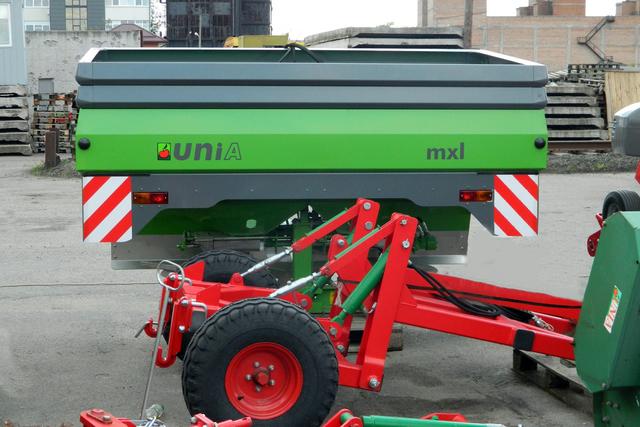
UNIA
Made in Poland. Two lines of mounted spreaders—MX and MXL—and a trailed one—RCW—are available. UNIA brand units can be used for grain seeding.
Reviews
According to those who have already made their choice and tested the unit in action, the right spreader can pay for itself within a year.
German brands are especially prized. They're made of high-quality metal, meaning they won't rust. Plus, their paint lasts a long time.
A spreader can significantly reduce the time spent on spring and fall tillage. It allows farmers to easily fertilize, lime, sow, and perform many other tasks. The machine won't be idle; it can be used even in winter.
Related posts:
 How to use and prepare manure as a fertilizer, its types and composition
 Classification and description of types of mineral fertilizers and their use in the garden
 What is the best way to feed tomato seedlings to make them plump?
 The best eggplant varieties for growing in a polycarbonate greenhouse: planting and care
 Types and names of nitrogen fertilizers, their importance and use at home
 How and what to use to fertilize gooseberries: a review of the best fertilizers
 The use of peat as a fertilizer for potatoes and other crops and its differences from humus
 How to feed and what fertilizers are best for blueberries, soil acidification