
- Description and Features
- History of selection
- Main characteristics
- Description of the bush
- Description of bunches and berries
- Productivity
- Transportability
- Frost and drought resistance
- Disease resistance
- Taste qualities
- Applications of berries
- Pros and cons of the variety
- How to plant correctly
- Recommendations for choosing deadlines
- How to choose and prepare a site
- How to select and prepare planting material
- Planting diagram
- Care instructions
- Watering mode
- Top dressing
- Trimming
- Mulching
- Preventive spraying
- Protection from birds and pests
- Preparing for winter
- Methods of reproduction
- Diseases and pests
- Ticks
- Cicadas
- Phylloxera
- Mildew
- Oidium
- Harvesting and storage
- Tips from experienced gardeners
Grapes are not only a tasty but also a healthy treat. Eating a handful of these berries daily helps boost the immune system. There are many varieties of this crop. Through selective breeding, some species are now grown in areas where climate conditions previously made this impossible. Below, we'll discuss one such variety, known as Sharov's Riddle.
Description and Features
The variety has gained popularity among gardeners due to a number of advantages.
Black berries appear early and in large quantities on the vine, have a pleasant, bright flavor, and the plant itself requires little effort in care.
History of selection
This variety was developed relatively recently—just over 40 years ago. It was named after the amateur breeder, Sharov. He used the Far Eastern 60 hybrid to develop the new variety. This variety can withstand temperatures as low as -40 degrees Celsius.
It was pollinated with pollen from other early ripening varieties: Magarach 352 and European Tukay.
The newly developed variety also inherited its early ripening ability. Therefore, the Zagadka Sharova grape has become a good choice for growing in colder regions.
Main characteristics
Grapes intended for cultivation in cool climates must possess a number of specific characteristics. This variety fully meets these requirements. The vines are self-pollinating and can be good pollinators for other varieties.
This grape variety is classified as a wine grape. Its sugar content is 22%.
Description of the bush
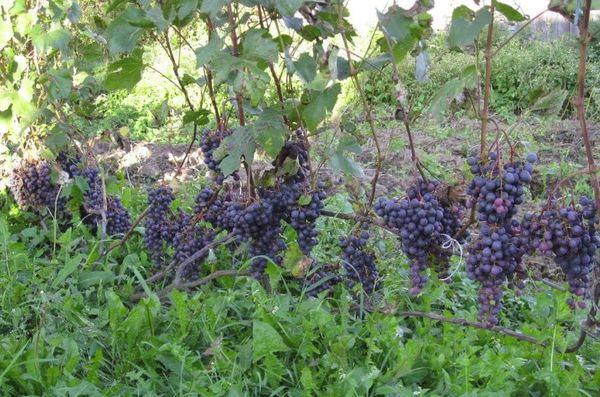
The bush grows quickly, with long, flexible shoots. In summer, the vine can reach 3-4 meters in height.
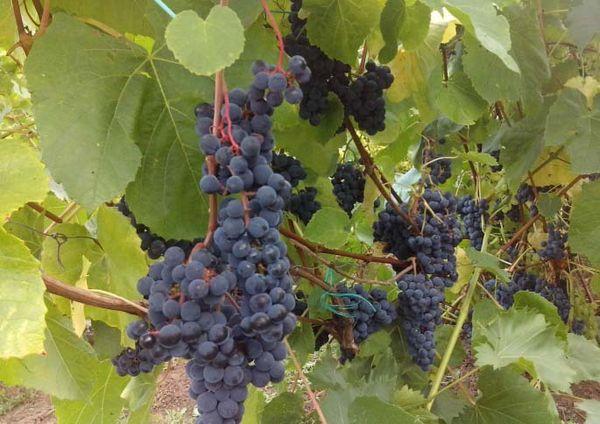
The leaves have a characteristic plant shape of 5 lobes with figured cutouts.
Flowers are gathered in a panicle. The grapevine blooms in early summer. Tendrils also form within the inflorescence, which attach themselves to a support and later become woody, supporting the plant.
Description of bunches and berries
The first bunch of grapes appears on the shoot already in the second year.
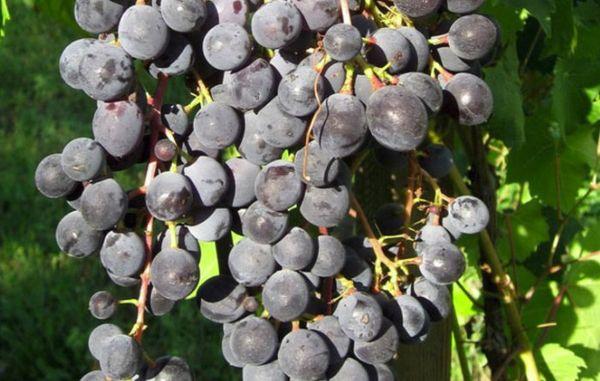
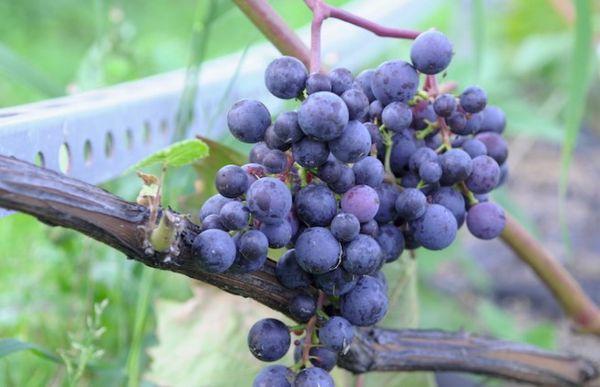
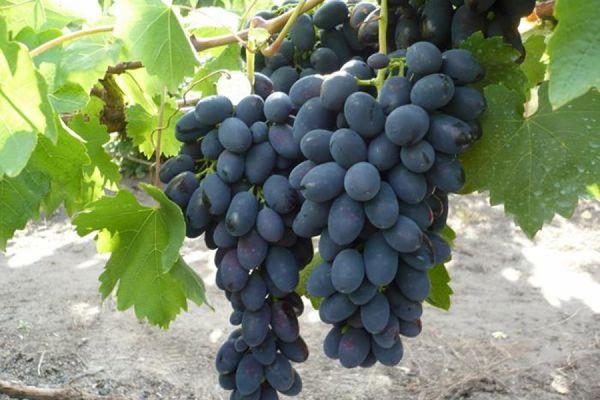
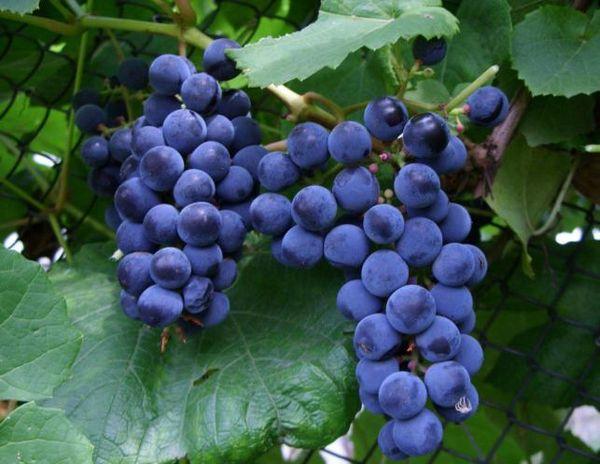
The grape clusters are medium-sized, weighing from 100g to 400g. The density is medium. The grapes are round and bluish-black in color, weighing 2-3g each. The berries have a dense, thin skin, containing 2-3 small seeds.
Productivity
This variety is highly productive, producing fruit year after year. It ripens 110 days after the first buds appear, which is early compared to other grape varieties.
If the gardener uses a film covering, then in this case the berries will appear even earlier.
The vine is capable of producing fruit as early as its second year of growth in the ground. In total, the plant can bear fruit for 20 years.
Take a look Also

During the first year, the load on the bush should be minimal, no more than one cluster. Gradually, the number of clusters can be increased.
In the 5th year of growth, one shoot produces at least 15 kg of berries.
Transportability
The harvest tolerates transportation well. The berries do not fall from the bunch or crack.
Frost and drought resistance
Grapes of this type have good resistance to low temperatures.
The plant's root system is not susceptible to frost damage, unlike many other grape varieties. The vines are very flexible and can be bent to the ground and covered to protect them from frost.
The shoots also tolerate dry and hot weather well.
Disease resistance
The Zagadka Sharova variety has an average level of resistance to most diseases common to grapes.
Taste qualities
The berries of this variety are distinguished by a delicate, sweet flavor. Wines and juices made from it are particularly aromatic.
The taste changes slightly depending on the degree of ripeness of the berries, acquiring other shades.
Applications of berries
Grapes of this variety are used to make jams, compotes, grape juice, and homemade wines. The berries preserve well when frozen.
Pros and cons of the variety
The Zagadka Sharova variety has a number of obvious advantages:
- easy to care for;
- ripens early;
- tolerates cold and heat well;
- gives a stable harvest;
- does not crumble when collected;
- tolerates transportation and storage well.
The disadvantages of the variety include average resistance to fungal diseases and pest damage.
How to plant correctly
The rules for planting such plants are simple.
Recommendations for choosing deadlines
Grapes are placed in the ground in the fall, 3 weeks before the cold weather sets in, so that the seedlings have time to take root and adapt to the new conditions.
You can also plant the plant in the spring (mid-April to May). This should be done before the shoots begin to bud.
How to choose and prepare a site
Grapes grow well in all types of soil and require little or no fertilizing. However, planting in the following types of soil is not recommended:
- swampy;
- saline;
- with high humidity.
The area where this variety is planned to be planted must be protected from strong drafts.
Preference should be given to the southern side of the garden plot.
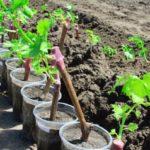
How to select and prepare planting material
Seedlings should be purchased from specialized nurseries. By purchasing plants from an unknown producer, a gardener risks encountering problems later: various plant diseases, as well as the presence of pest larvae.
The young plant should be healthy and strong. The seedling should have a well-developed root system.
When purchasing, make sure the roots are moist.
Planting diagram
The basic rules for planting a plant are:
- The soil must be warmed up to at least +10 degrees.
- Autumn planting is carried out a month before the onset of cold weather.
- At least 2 m should be left between seedlings.
- The hole is prepared in the fall or spring 1.5-2 months before planting the plant in the ground.
- When planting, the plant should be slightly tilted towards the future support, and then dug in.
- If the bush is not grafted, then when planting, the upper bud should be slightly above the top layer of soil.
- After planting, each bush is watered (2 buckets of water per plant).
Care instructions
The Zagadka Sharova variety is unpretentious. Gardeners need to provide basic growing conditions: adequate light, sufficient moisture, weed control, and occasional fertilization.
Watering mode
Grapes have good drought tolerance, but excessive heat will affect the yield. Therefore, during periods of drought, the vines require additional watering.
Gardeners recommend following this soil moisture regimen:
- before the flowers appear;
- during the formation of the first berries;
- in the second ten days of July.
This amount of moisture will be quite sufficient for the plant.
Top dressing
Fertilizers are applied under the bush in the 4th year of growth.
Two weeks before flowering, add nitrogen to the soil. A week after flowering begins, apply fertilizers containing nitrogen and phosphorus.
During the period of berry setting, complex mineral substances are added to the soil.
After the harvest is fully collected, the soil is treated with preparations containing potassium and phosphorus.
Grapes have a branched root system, so fertilizer should be applied at a distance of 50 cm from the stem in a circle.
Trimming
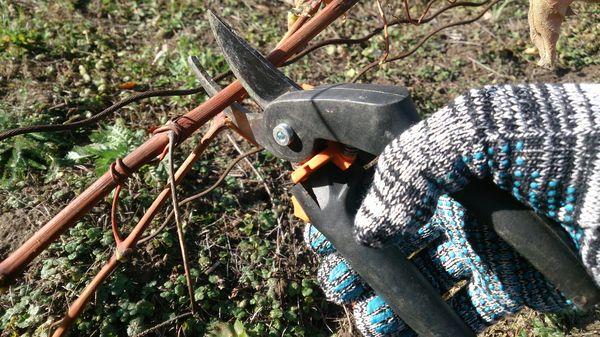
The Zagadka Sharova variety produces berries even with minimal pruning. One-year-old vines are pruned above five buds.
The vine is tied up in its first year of growth. Hemp rope or twine is used for this purpose.
Mulching
This procedure will prevent weed growth. Mulch the soil around the grapes using dry grass, sawdust, or peat.
The old layer of mulch should be removed and destroyed in the spring, as it may contain the larvae of harmful insects.
Preventive spraying
To prevent the appearance of insects and various diseases, grapes are sprayed with the following solutions:
- Bordeaux mixture;
- preparations with high copper content.
Spray the plants three times per season:
- before flowering;
- after its completion;
- 3 weeks after re-treatment.
To avoid any damage to the bushes, the gardener must regularly take the following measures:
- tie up the vine on time;
- Weed the spaces between rows. A large number of harmful insect larvae overwinter in the soil. They become active in the spring;
- remove excess leaves from the vine, trim shoots as necessary.
Protection from birds and pests
Ripe, sweet grapes are a delicacy not only for insects but also for birds. They can cause significant damage, reducing yield or spoiling the berries. Wasps also often appear on the shoots, which also damage the grapes.
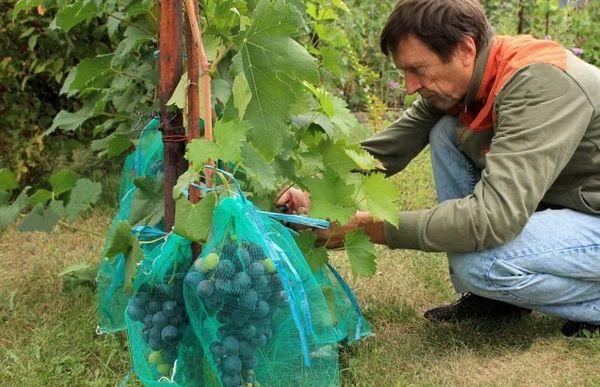
Various methods (sound repellents, garden scarecrows) are used to control birds and insects. However, their effectiveness is low, as birds become accustomed to them after a while.
The most effective method is to stretch mosquito netting over the vines. To catch wasps and butterflies, use traps filled with sweet syrup. It's best to identify wasp nests and destroy their nests.
Preparing for winter
These plants don't require any special winter preparation. The roots can withstand severe frosts on their own, but the shoots need to be removed from their supports and bent to the ground. Snowdrifts will preserve them well.
Methods of reproduction
This grape variety propagates well from cuttings, but does not require additional grafting. This simplifies the planting process.
Diseases and pests
The Zagadka Sharova variety has average resistance to diseases and insect pests.
Ticks
These insects often parasitize grapevines. They come in several varieties. Mites settle on the plant's leaves and feed on them. Gardeners may not immediately notice them.
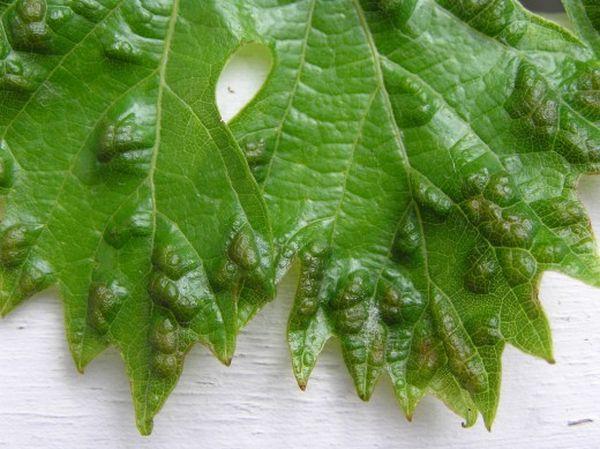
When infected, the leaves become covered with a whitish coating and eventually dry out. If left untreated, the plant dies.
Take a look Also
Some species of mites feed on shoot buds.
To prevent damage, before the buds swell, the bushes are treated with a solution of lime with the addition of sulfur.
Cicadas
The pest attacks grapevine shoots. They grow poorly, and the upper parts of the plant dry out completely.
Cicadas cause a lot of damage because they are very voracious, and it is not always possible to notice them right away.
In addition to insecticide treatments, insects are also collected manually. This is done in the morning, as they are less active at this time.
Growing crops such as onions and garlic between rows also helps.
Phylloxera
Prevention is crucial in controlling this pest. It's crucial to prevent insect larvae from being introduced from another area. Once phylloxera has multiplied, it's extremely difficult to remove it from a plant.
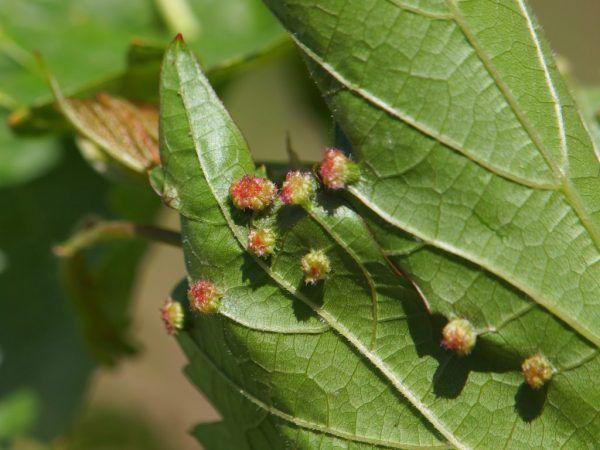
You can successfully combat the pest by breeding grapes on a rootstock that is resistant to the pest.
It is not advisable to purchase planting material from unknown sources, as this significantly increases the risk of infestation.
Mildew
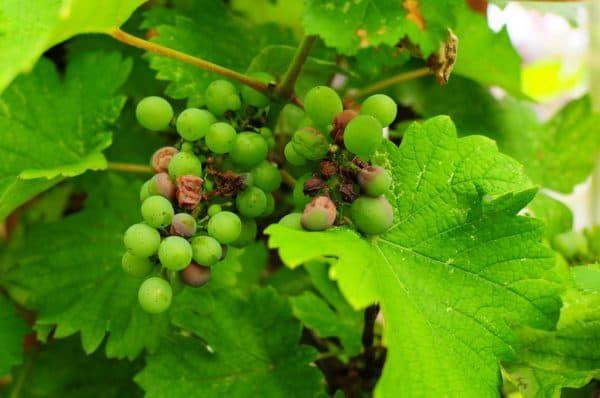
This fungal disease poses a major threat to Zagadka Sharova. Downy mildew thrives in areas with high humidity. It manifests itself as follows: characteristic oily yellow spots first appear on the leaves. Then, a white mycelium appears on the underside of the leaf. If the disease progresses, it affects all above-ground parts of the plant.
Oidium
This fungal disease is known to gardeners by another name: powdery mildew. It attacks all plant organs, causing a powdery coating to form, and shoots to grow poorly. Leaves gradually die off.
Fungicides can help combat these problems. Apply them to plants according to the manufacturer's instructions.
It is important to remember that during the ripening period of the harvest, vines can only be treated with colloidal sulfur and a solution of manganese.
Affected leaves and shoots should be removed and destroyed.
Harvesting and storage
Grapes should be harvested in dry weather.
When harvesting from this variety of grapes, the berries do not fall from the clusters. This helps preserve the clusters in their proper condition. It's advisable to preserve the whitish coating on them to help preserve the grapes.
Berries have excellent storage properties. When stored properly, they can be stored for up to 90 days without affecting their appearance or taste.
Tips from experienced gardeners
A novice gardener who has no previous experience growing grape vines can start by planting the Zagadka Sharova variety.
The plants require minimal care and will delight their owner with a good harvest.
Experienced gardeners also recommend that beginners purchase grape seedlings only from trusted sources.
Related posts:
 Description of 30 grape varieties for Siberia, planting and care for beginners
 The best grape varieties for growing in the Urals, planting and care rules in summer
 Description of 30 varieties and types of Muscat grapes, planting, cultivation and care
 Beginner's Guide to Growing Grapes in Open Ground in Central Russia
 The ripening time of grape vines by variety, how to speed up the process, and what to treat the plant with
 Description and rules for growing Solaris grapes
 Description and cultivation techniques for the Muromets grape variety
 How to plant grapes step by step, with a description of the process and care