
- Features of columnar varieties
- Advantages and disadvantages of culture
- Habitat
- Features of cultivation
- Site selection and preparation
- Favorable and unfavorable neighbors
- Timing and technology of planting
- How to care for the crop
- Regularity of watering
- What and when to feed a tree
- Features of crown formation
- Susceptibility to diseases and pests
- Treatment
- Preventive treatments
- Preparing plants for winter
- Methods of reproduction
- Popular varieties of columnar cherries
- Ashinsky hybrid variety
- Little one
- Delight
- Queen
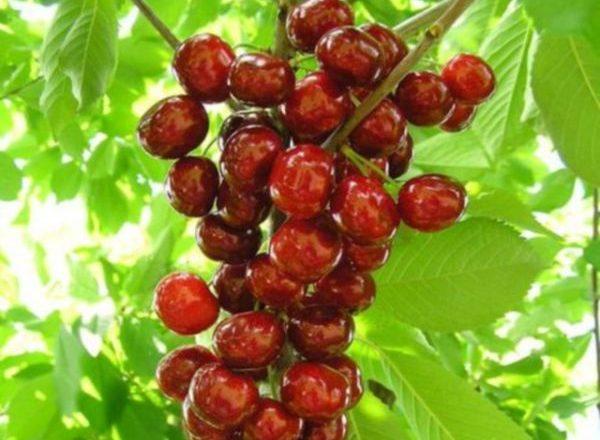
- Helena
- Silvia
- Queen Mary
- Black cherry
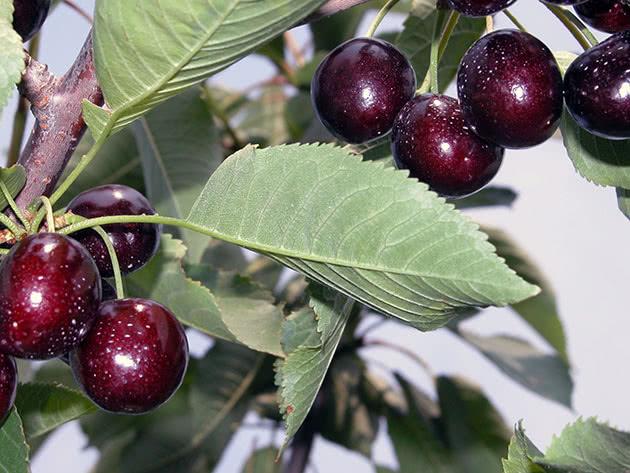
- Sabrina
- Jealousy
- Little Sylvia
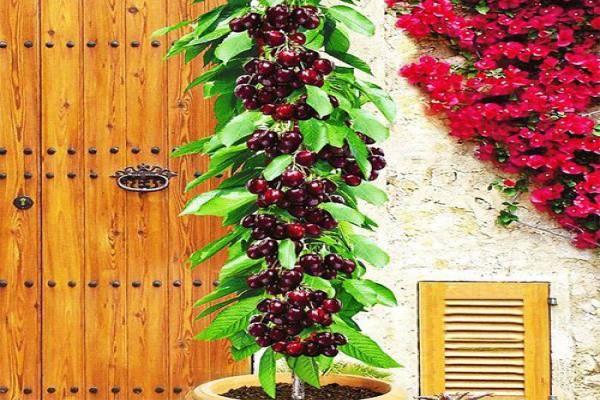
Among the many varieties of cherry, trees with a distinctive, columnar crown shape have become very popular. Columnar cherry varieties have small, uniform shoots along the entire length of the trunk, where flowering and fruiting occur. This easy-to-grow tree requires little maintenance but is very productive. It is compact, fits beautifully into any landscape, and can be used for ornamental purposes.
Features of columnar varieties
Columnar cherry and sweet cherry varieties are used in commercial gardening and are also suitable for planting in small garden plots. With proper care, they delight with a bountiful harvest each year.
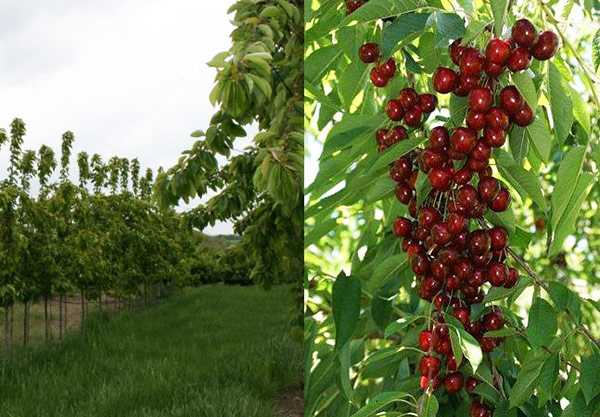
Columnar cherry trees are characterized by a strong, straight trunk and short shoots. Side branches are absent or pruned short. This crown shape allows the tree to occupy very limited space. Dwarf varieties, no more than 1.5-2 meters tall, exist. They are suitable for growing in containers and can take pride of place in a greenhouse or conservatory.
The advantage of columnar cherry is the combination of decorative properties, good yield and high taste quality of fruits.
Advantages and disadvantages of culture
The main characteristic of this type of fruit tree is its lack of branching. The crown is formed by shoots growing vertically upward and is quite compact. All the tree's nutrients are directed toward the formation of fruiting shoots, ensuring good quality and abundant fruit. These properties underlie the advantages of the columnar cherry:
- High decorative potential. The trees are most beautiful during the period of dense flowering and fruiting.
- Unpretentiousness, ease of cultivation and care.
- Compact form, possibility of growing the crop in a small area.
- High yield and early fruiting – berries appear already in the second year of the trees’ life.
The main drawback of columnar cherry varieties is their short lifespan. This necessitates frequent (every 20 years) garden renovation. Another drawback is their low frost resistance. Furthermore, seedlings of columnar varieties are more expensive than other varieties.
Habitat
The columnar cherry is ideally suited to the climate of southern Russia and its central regions. It thrives in windless areas with plenty of sunshine, in areas with loose, fertile soil.
In northern regions with short summers, the crop often does not have time to take root and freezes.
In gardens in Moscow and the Moscow region, columnar varieties should be planted in the spring. In southern regions, trees planted in both spring and fall thrive. Fine, sunny days promote timely rooting and adaptation.
Features of cultivation
Growing columnar varieties begins with selecting and purchasing seedlings. It's recommended to do this at large garden centers or reputable nurseries. Before purchasing, carefully inspect the tree, paying attention to the following characteristics:
- intact bud of the apical shoot;
- straight trunk with smooth bark;
- powerful root system without rot;
- healthy foliage.
Site selection and preparation
When choosing a site, pay special attention to its location and soil quality. Columnar cherries should be planted in areas protected from the wind and with adequate sunlight. The ideal soil type is black soil, without a high water table.
Excessive soil acidity can be reduced by mixing it with wood ash.
Favorable and unfavorable neighbors
Other cherry tree varieties make good neighbors for columnar cherries. They are the best pollinators for partially self-fertile varieties.
Columnar cherries should not be planted near junipers, which are often affected by a fungal disease (rust). Airborne spores are highly likely to fall on the cherry trees, causing them to become diseased and die quickly.
Timing and technology of planting
The best time to plant is spring. Work can begin immediately after the last frost, but preparations should begin a little earlier. Prepare planting holes 80 centimeters in diameter and 70 centimeters deep, based on the number of seedlings to be planted. The distance between rows is 3 meters, and between two holes, 0.5 to 1 meter (depending on the size of the plot).
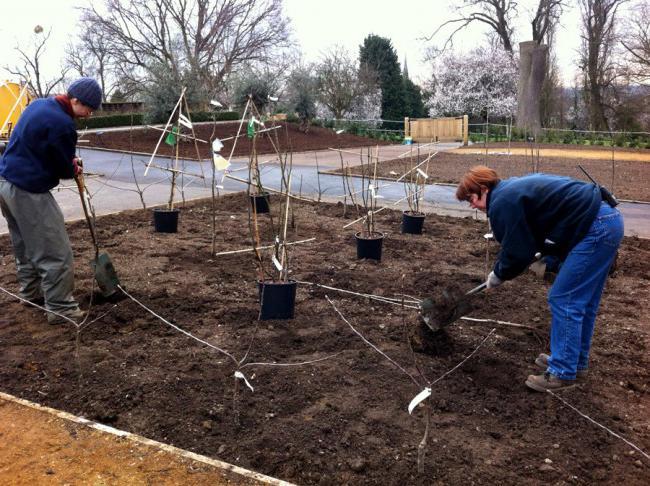
The planting technology is as follows:
- Before planting, prepare a nutrient mixture at a ratio of 1 bucket of compost to 3 buckets of black soil, with added potassium and phosphorus. Add this mixture to the hole.
- The seedling is placed in the center of the hole, carefully spreading out its roots.
- Having secured the trunk with a peg, they fill it up, leaving the root collar outside.
- The soil is carefully compacted and the tree is watered generously.
How to care for the crop
Care for columnar cherry seedlings includes timely watering and fertilizing, crown formation, and protection from diseases and pests.
Regularity of watering
For normal growth and development, seedlings require moist and oxygenated soil. To achieve this, water and loosen the soil around the trunk as it dries out. Each tree should receive 2 to 5 liters of water. During the fruiting period, it's important to increase the frequency of watering, especially during dry periods. Mulch should be applied immediately after watering, loosening, and weeding.
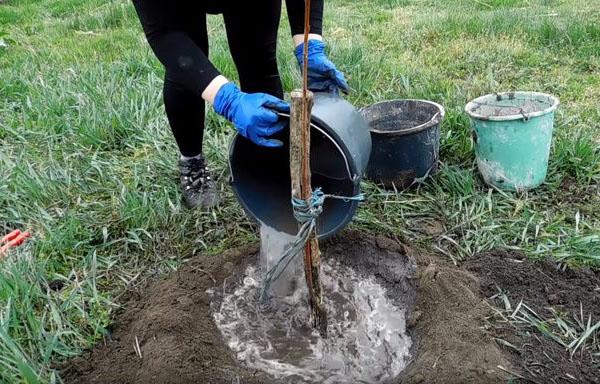
Young trees benefit greatly from frequent weeding. Weeds rob them of nutrients and moisture, significantly slowing growth and development.
What and when to feed a tree
During the year, the cherry tree needs three applications of fertilizer:
- in spring, nitrogen-based preparations (ammonium nitrate or urea) are used;
- In the fall, phosphorus and potassium fertilizers are applied;
- At the end of flowering, half a bucket of rotted manure mixed with a small amount of ash is poured under each tree.

Features of crown formation
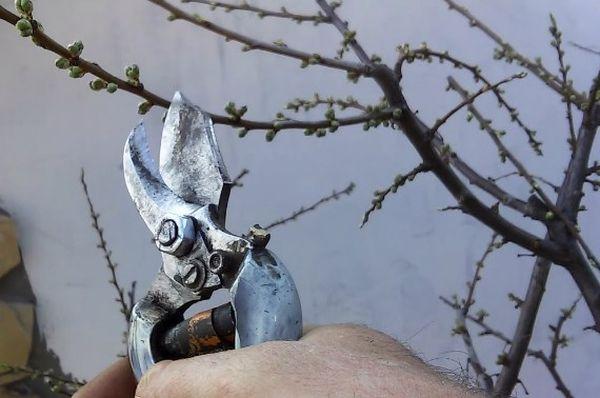
Pruning is carried out according to a specially developed scheme, since classical methods do not give the desired result.
- In the first year, the top is removed and the side branches are pinched at a distance of 10 centimeters from the main trunk.
- In the second and third years, pinch out the side shoots at a distance of 20-30 centimeters from the trunk. The top is trimmed back to approximately the same distance.
- In the fourth year, thin branches that shade the trunk are cut off.
- In the fifth and subsequent years, the top is pruned to prevent the tree from growing upward.
- In the sixth and subsequent years, lateral shoots that break the shape of the crown are removed.
Susceptibility to diseases and pests
Through extensive selection, disease- and pest-resistant varieties have been developed, but some susceptibility to fungal and viral infections (coccomycosis, moniliosis), brown spot, and holey spot (clasterosporium) remains. Trees can also suffer from attacks by caterpillars, cherry weevils, codling moths, and cherry aphids.
Treatment
The most effective method of protection against coccomycosis and moniliosis is spraying with Bordeaux mixture and fungicidal preparations (Phtalan, Cuprozan, Zineb).
To combat holey spot, diseased branches are cut out, the affected areas are treated with garden pitch, and fallen leaves and fruits are collected and burned.
The most popular methods of controlling garden pests are the use of universal insecticides such as Intra-Vir and Iskra.
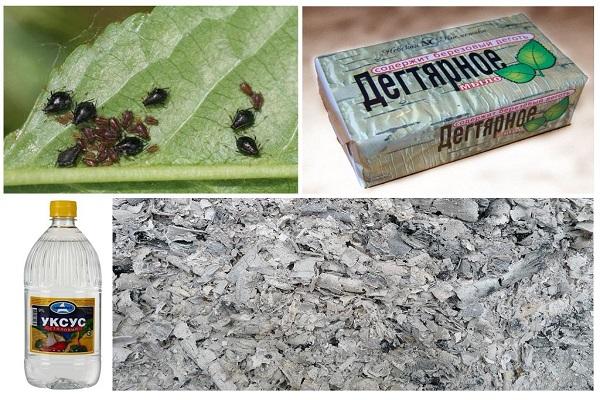
Traditional treatment methods are also used, such as treatment with a solution of laundry soap with the addition of tobacco extract.
Preventive treatments
Numerous preventative measures help reduce the risk of disease. Regularly inspect cherry trees, removing diseased leaves and spoiled and rotten fruit. Spraying with garlic infusion, onion peel, or wood ash solution is also recommended. To protect against hares, which damage the bark, cover tree trunks with special netting or spruce branches.
Preparing plants for winter
Most columnar cherry varieties are susceptible to winter frosts. In the fall, special preparation begins to help the plants survive the cold season. The main frost protection measures are as follows:
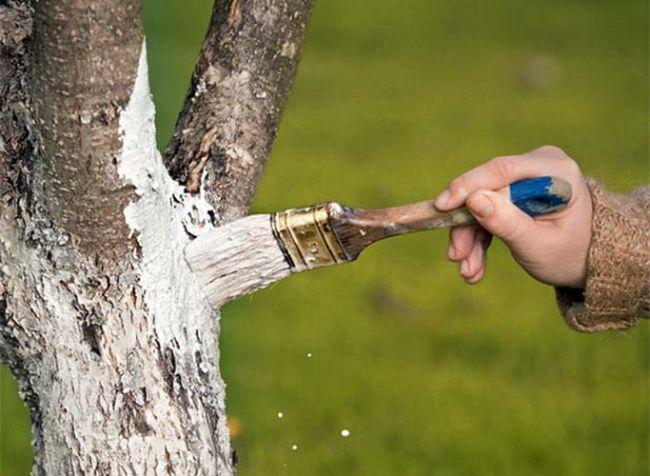
- Treating the trunks with lime solution will help protect plants from frost and bright sun.
- Heavy watering and mulching will saturate the plants with moisture before the onset of the dormant period.
- Insulation with burlap or agrofibre will protect the trunk and apical bud from freezing.
- A wooden frame around the trees, then wrapped around them, will provide protection during severe frosts.
Methods of reproduction
The most popular methods propagation of columnar cherry - grafting and cuttingsGrafting is done on two-year-old trees. When propagating by cuttings, suitable shoots are selected, cut, and treated with rooting stimulants. They are then planted in the ground, where rooting occurs.
Propagation by seeds is practiced less frequently, since sometimes valuable varietal characteristics are lost.
Pre-sprouted seeds are sown in individual containers and placed in a warm place for the winter. In the spring, they are planted in open ground, and after strengthening, in a permanent location.
Popular varieties of columnar cherries
Gardeners love to grow columnar cherry varieties, noting their ease of cultivation, good survival rate, and abundant fruiting. The main differences between the varieties lie in growing time, fruit size, and flavor.
Ashinsky hybrid variety
The Ashinsky hybrid is a low-growing tree (no taller than 2 meters) that produces a bountiful harvest annually. The berries ripen in the second half of July and have a distinct flavor and aroma, with a fleshy texture. They transport well.
Little one
The Malutka cherry variety is brightly colored and has a sweet and sour flavor. The trees are productive and are often used in landscaping. The variety is self-fertile.
Delight
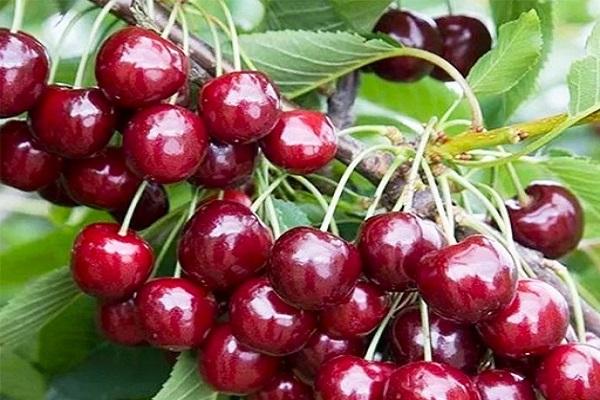
The Vostorg variety trees reach two meters in height and are productive. This early-ripening variety produces heavy (up to 15 grams), sweet, and fleshy fruits.
Queen
A late-ripening variety distinguished by large, dark berries. Trees grow up to 2.5 meters tall and are frost-resistant and resistant.
Helena
Helena trees reach 3 meters in height and produce dark red berries with fleshy pulp. They have a long fruiting period. This early-ripening variety requires careful care.
Silvia
The Sylvia variety is identical to the Helena variety, but the fruits ripen even earlier (in the first half of June). It has low frost resistance and requires special protection from winter frosts.
Queen Mary
Trees of this variety are also not frost-hardy and grow better in mild winters (in southern Russia). The berries have excellent flavor.
Black cherry
Black columnar cherry is easy to grow, frost-resistant, and suitable for growing in the harsh Siberian climate. The trees are self-pollinating.
Sabrina
Self-fertile trees with a wide crown. They don't tolerate cold well, but are highly resistant to disease. The berries are large, sweet, and juicy.
Jealousy
The tree produces medium-sized fruits (weighing no more than 10 grams) that ripen in midsummer. The berries are fleshy, suitable for canning, and can be stored for long periods.
Little Sylvia
Low trees with a narrow crown (about half a meter in diameter). The sweet fruits ripen in the second half of June. Suitable for desserts.
Columnar cherry is a unique crop whose cultivation solves several problems at once. This includes saving space, creating a unique garden composition, and yielding a bountiful harvest.
Related posts:
 Description and pollinators of the Vladimirskaya cherry variety, planting and care
 Description and characteristics of the Kharitonovskaya cherry variety, planting and care
 Description of the 10 best black cherry varieties, planting and care in open ground
 Description and characteristics of 17 dwarf cherry varieties, planting and care
 Description of the Zhukovskaya cherry variety, planting and care in open ground
 Description and characteristics of columnar cherry varieties, planting and care
 Description and varieties of cherry variety Shpanka, planting and care
 Description and cultivation of the best varieties of felt cherry, planting and care
The usual chatter. And the main question of who pollinates whom is not addressed.
Profanation and lies.
Columnar cherries exist only as hybrids, and even then, only abroad, for sale. Moreover, in Russia there are no columnar cherries, only deception on the part of sellers and their basic ignorance.
I am telling you this as a candidate of agricultural sciences.
Good afternoon
First, soften your tone a bit. Otherwise, it looks like you're bluntly and unfoundedly accusing the author, editor, and the entire website team of lying. How can you prove this? So, all those columnar cherries sold by so many stores and online platforms are fictitious? Aren't you going too far?
If you have a PhD, please provide documentary evidence. Otherwise, I don't believe it at all.