
- The history of the Tamaris variety
- Pros and cons
- Description of cherry
- Dimensions
- Fruiting
- Flowering period and pollinators
- Ripening time and harvesting of berries
- Yield and use of berries
- Characteristics
- Drought resistance, winter hardiness
- Immunity to diseases and pests
- Planting cherry trees on a plot
- Deadlines
- Choosing the optimal location
- What to plant next to it?
- Selection and preparation of planting material
- Landing technology
- Specifics of care
- Watering and fertilizing
- Pruning and crown shaping
- Prevention of diseases and insects
- Winter protection
- Methods of reproduction
- Gardeners' reviews
Cherries are a favorite treat for many gardeners. However, not everyone can afford to plant them in their garden due to their large, sprawling crown. The Tamaris cherry tree is a pleasant exception, reaching an average height of 2 meters. Below is information on planting these trees in your garden, including care requirements, characteristics, pros and cons, and propagation methods.
The history of the Tamaris variety
The cultivar was developed at the Michurinsk Institute of Horticulture and Nursery, located in the Tambov Region. The author is senior researcher T.V. Morozova. She treated the "Shirpotreb Chernaya" cherry cultivar with the chemical mutagen ethyleneimine. The cultivar was registered in the State Register of Russia in 1994.
Additional information: Mutagens are used in breeding as specific growth and development stimulants.
Pros and cons
The advantages of Tamaris cherry include the following qualities:
- compactness of the tree;
- self-fertility;
- good frost resistance;
- high yield;
- excellent berry taste;
- good immunity.
The disadvantages of this variety include the need for pruning.
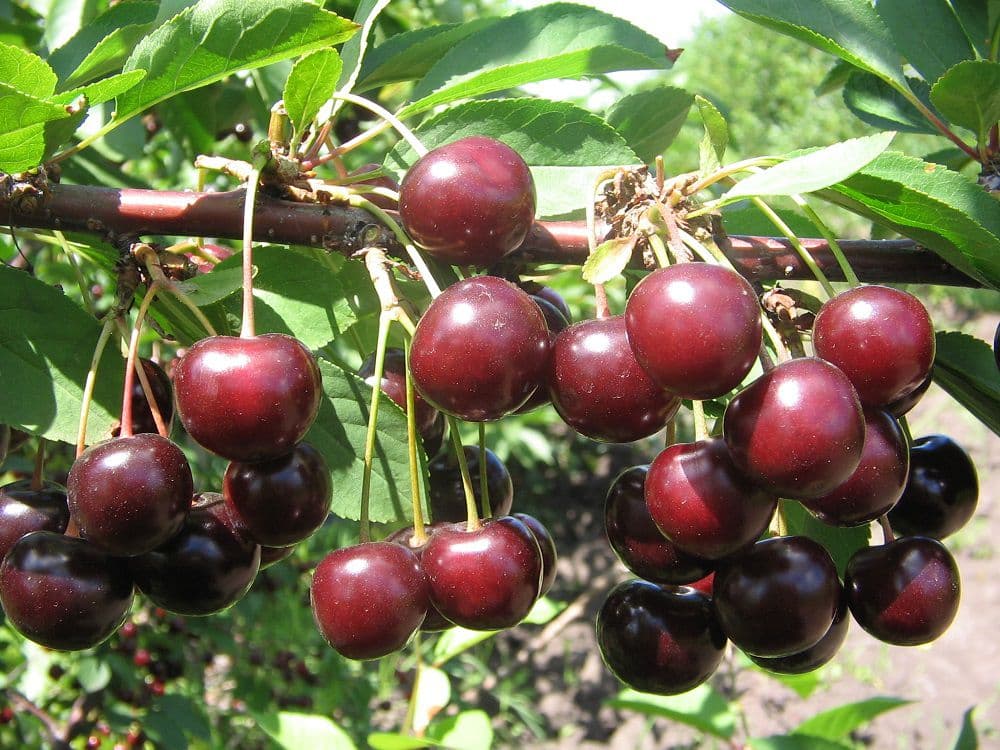
Description of cherry
Due to its late flowering and fruiting, the Tamaris cherry is not susceptible to spring frosts.
Dimensions
The tree grows to 1.7-2 meters, sometimes reaching 2.5 meters. The crown is broad, rounded, and of medium density. The leaves are dark green, with a glossy surface.
Fruiting
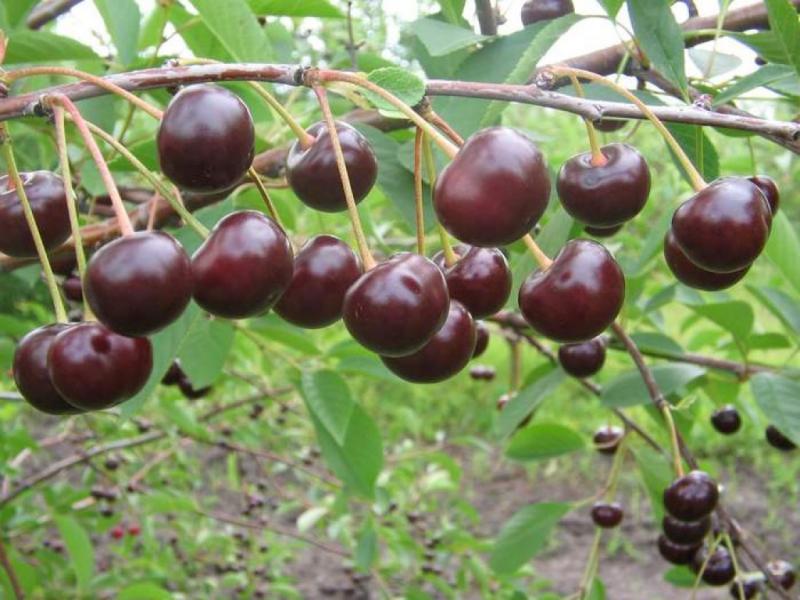
The first fruits ripen 2-3 years after planting. Fruiting is consistent year after year, with no decline in yield or quality. The variety is well adapted to the climate of central Russia. Due to its late flowering period, it can also be planted in more northern regions.
Flowering period and pollinators
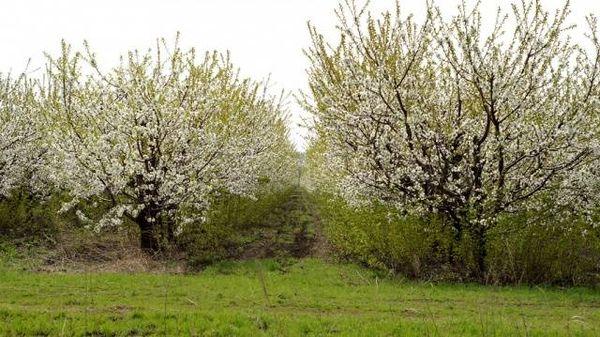
Blooming is late and short, lasting no more than 4-6 days. Tamaris cherry is self-fertile and does not require pollinators. However, planting other varieties nearby will increase its yield.

Ripening time and harvesting of berries
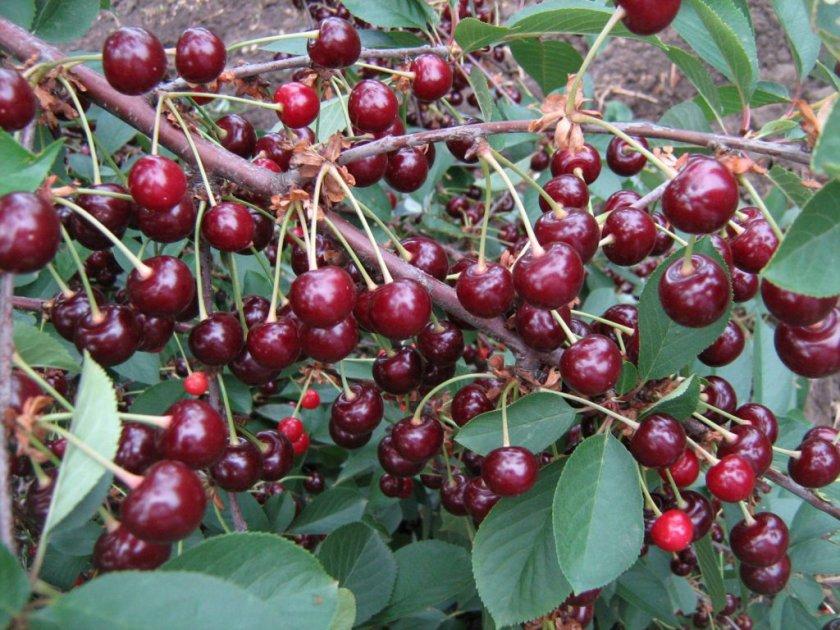
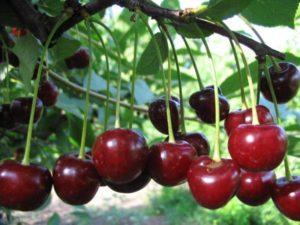
Tamaris cherries ripen late, in late July or early August. By this time, the berries have a sweet and sour flavor. Harvesting is done in dry, windless weather.
Yield and use of berries
The tree yields 8-10 kilograms of fruit, which have versatile uses. They can be eaten fresh, dried, or frozen. The berries are also used to make delicious juices, compotes, and jams.
Characteristics
The lifespan of a single tree is 20 years or more. Positive qualities such as good immunity and frost resistance play a significant role in this.
Drought resistance, winter hardiness
Cherry trees can withstand temperatures down to -24°C without protection. At lower temperatures, fruiting shoots may freeze. However, they quickly recover during the growing season.
The variety has average drought resistance: in prolonged dry weather, the trees require watering, otherwise the berries will not be juicy.
Immunity to diseases and pests
The Tamaris cherry tree has good immunity. It is rarely affected by the plant's characteristic disease, coccomycosis. The variety can become infected with pathogenic microorganisms due to improper care.
Planting cherry trees on a plot
Purchase seedlings from a reputable nursery or garden center, or from reliable retailers. Avoid buying trees grown in other climates, as they will take a long time to adapt to local conditions or will die within a few years without producing a harvest.
Deadlines
Young trees are planted in the spring, before bud break. Spring planting is beneficial because the seedlings have time to establish themselves before frost sets in. Cherry trees can also be planted in the fall, but no less than a month before the first frost.
Choosing the optimal location
The cherry tree planting area should be well-drained and protected from cold winds. Groundwater at the planting site should not be too close to the soil surface. The substrate should consist of leaf mold, turf, peat, and sand.
What to plant next to it?
The tree's development depends on the surrounding plants. Tamaris prefers to grow near cherries, grapes, hawthorn, and other cherry varieties. It is not recommended to plant it near pears, apples, plums, or cherry plums. To ensure good growth, the cherry tree should be kept at least 6-6.5 meters away from these trees.
Selection and preparation of planting material
A quality seedling looks like this:
- the age of the young tree is no more than 2 years;
- its height is 95-100 centimeters;
- the root system is well branched;
- the bark and roots are healthy, whole, without dents or spots.
Before planting, the root system of the seedling is dipped in a bucket of water for 2-3 hours.
Landing technology
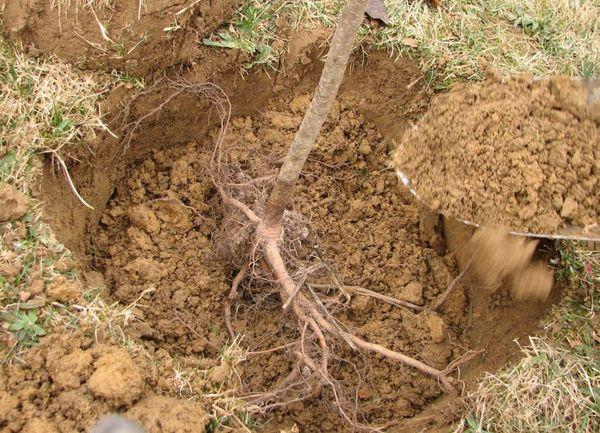
A hole for planting cherries is dug to the size 50×50 centimeters. Planting is carried out as follows:
- drainage made of expanded clay or small stones is placed at the bottom of the pit;
- half the ditch is filled with fertile soil;
- a tree is placed in the middle, the roots are straightened, and covered with soil;
- compact the soil and add 2-3 buckets of water.

The tree trunk circle is mulched with humus, straw, and dry grass.
Specifics of care
In order for a cherry tree to grow well and bear fruit, it needs to be cared for: watered, fertilized, sprayed prophylactically, and its crown shaped.
Watering and fertilizing
Abundant watering is required when planting cherries, during flowering and fruit formation. During other developmental periods, water as needed. Increase watering during dry, hot weather.
It is important to remember that excessive soil moisture can lead to the development of fungal diseases.
If the cherry tree was planted in fertile soil, fertilizing begins in the third year after planting. In the spring, nitrogen-containing fertilizers are applied to promote foliage growth. Potassium-phosphorus fertilizers are applied in the summer and fall. Tamaris responds well to the application of mullein during flowering.

Pruning and crown shaping
To prevent cherry trees from becoming overgrown, pruning is done to maintain form. The shoots grow vigorously, so they need to be trimmed regularly. Otherwise, the branches may break under the weight of the berries. Dry, broken, and frost-damaged shoots are also pruned.
Prevention of diseases and insects
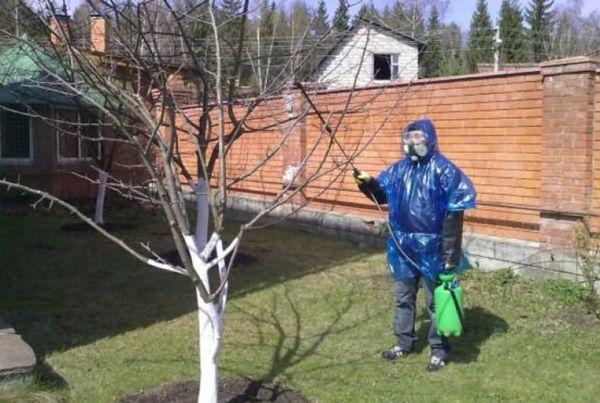
The Tamaris variety has good immunity, but adverse weather conditions or poor care can cause the cherry tree to be susceptible to diseases and pests. To prevent this, trees are sprayed with insecticides and fungicides.
Winter protection
The tree trunk is covered with a layer of paper or burlap. The area around the trunk is covered with a thick layer of snow. The branches can be bent down and covered with straw or tree tops. When the weather warms up, the covering material is immediately removed to prevent the above-ground and underground parts of the cherry tree from rotting.

Methods of reproduction
The easiest way to propagate the Tamaris cherry is by cuttings. To do this, cut off 30-centimeter-long shoots that are just beginning to harden in June. Place them in water with a few drops of growth enhancer for 18 hours. While the cuttings are soaking, prepare the bed. Make a 10-centimeter-deep furrow and fill it with a mixture of peat and sand. Plant the shoots, water them, and cover them with plastic wrap.
Another method of cherry propagation is layering. To do this, the lower shoots are bent toward the ground, secured, and covered with substrate. The layers are watered, the soil around them is loosened, and soon young shoots will emerge from them. After growing, these shoots are transplanted to a permanent location. Cherry propagation by grafting is usually carried out by specialists. Wild seedlings are used as rootstock, and Tamaris cherry cuttings are grafted onto these.
Important! Before beginning the vaccination procedure, thoroughly disinfect the instrument.
Propagation by seeds is used only for breeding purposes or for growing rootstock.
Gardeners' reviews
Farmers describe the variety as high-yielding, frost-resistant, and robust. The fruits are attractive, tasty, and sweet.
This cherry variety is ideal for small gardens and cottages. It doesn't take up much space, and because the tree is short, it doesn't create a large area of shade.
Related posts:
 Description and cultivation of the best varieties of felt cherry, planting and care
 Description and pollinators of the Vladimirskaya cherry variety, planting and care
 Description and propagation of the Bessey cherry variety, planting and care rules
 Description and varieties of cherry variety Shpanka, planting and care
 Description and characteristics of 17 dwarf cherry varieties, planting and care
 20 Best Cherry Varieties for the Central Russian Region with Descriptions and Characteristics
 Description and pollinators of the cherry variety Malyshka, growing rules
 Description and varieties of Zhelezistaya cherry, planting and care