
- Description of the Zvezdochki apple tree
- Advantages and disadvantages
- Selection and cultivation regions
- Tree size and annual growth
- Fruiting
- Flowering and pollinators
- Ripening time and harvesting of fruits
- Yield and taste of apples
- Transportation and storage
- Winter hardiness
- Immunity to diseases and pests
- Planting and caring for the Zvezdochka apple tree
- Preparing the seedling
- Selecting and preparing a planting site
- Timing and technological process for planting young apple trees
- Agricultural technology and care
- Trimming
- Top dressing
- Watering
- Mulching
- Protection from diseases and pests
- Subspecies and variants
- Winter
- Columnar
- On a dwarf rootstock
- Methods of reproduction
- Gardeners' reviews
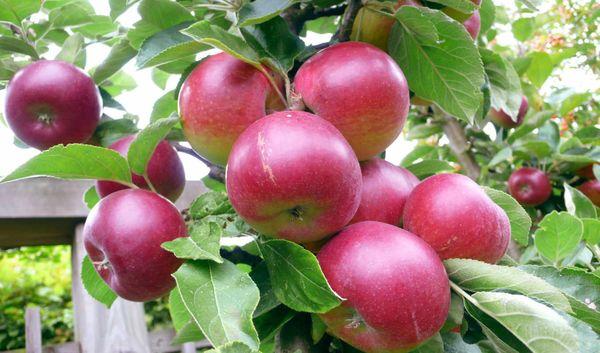
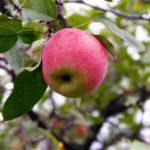
The Zvezdochka garden apple tree stands out for its tall tree and medium-sized fruits with a scarlet hue and a sweet-tart flavor. Its late ripening makes it moderately frost-resistant. A significant advantage is its long shelf life, with the fruits retaining a fresh flavor and aroma over time.
Description of the Zvezdochki apple tree
The Zvezdochka variety has its own characteristics, which are reflected in its flowering and fruiting periods. The description can help you determine the area where the best harvest is obtained.
Advantages and disadvantages
Many gardeners prefer to plant different apple varieties. The Zvezdochka variety is a favorite, as it thrives alongside its neighbors. But this isn't the only reason for the apple tree's appeal; other advantages include:
- high quality fruits - bright, whole, tasty;
- wide use of apples in cooking;
- constant yield;
- long shelf life;
- possibility of transportation to distant regions;
- increased immunity to diseases.
The downside is its average frost resistance, which precludes planting in cold climates. Another drawback is the reduction in fruit production after 15 years.
Selection and cultivation regions
The Zvezdochka apple tree was developed by crossing the Anis and Lithuanian Pepelina apple varieties. This work was carried out by experienced breeder S. F. Chernenko. The hybrid plant absorbed the best qualities of its parents and initially thrived in the soils of the Oryol region, and then in the Northwestern, Central, and Middle Volga regions.
Tree size and annual growth
The apple tree has a tall trunk and a branched crown that grows 10 cm annually. As a result, by the time it reaches 20 years of age, it reaches a height of 7-8 m. Gardeners report an average height of 5-6 m at midlife. The apple tree's structure develops organically: spreading shoots with abundant foliage form on the rounded crown. The leaves are dark green, elongated, and serrated along the edges.
Fruiting
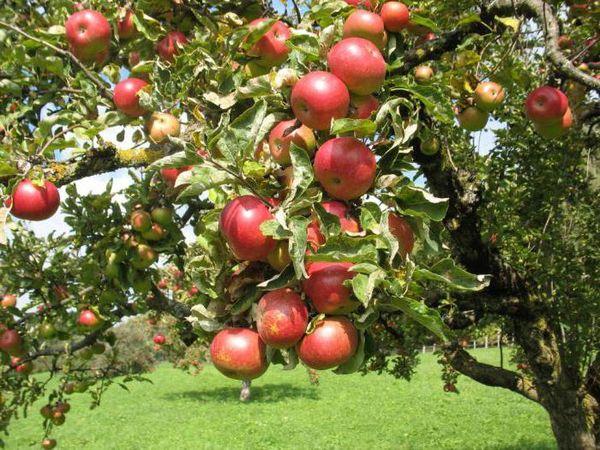
The fruiting of the late variety depends on a long vegetation process, which covers three seasons: spring, summer, autumn.
Flowering and pollinators
Depending on the temperature, flowering occurs in late May or early June, lasting 10 days. This garden apple tree thrives alongside other apple trees, but the best pollinators are the winter varieties Zhigulevskoye and Bogatyr.
Ripening time and harvesting of fruits
The fruits of the Zvezdochka apple tree ripen in the fall; gardeners recommend harvesting in the second ten days of September.
Yield and taste of apples
The first harvest is collected in September of the fifth year. This year, the number of apples is minimal—around 10. Each year, the number of fruit clusters increases, resulting in a seasonal yield of 100-200 kg. The average fruit weighs 80-140 g.
The Zvezdochka apple tree is a table and dessert variety, with a characteristic sweet and sour flavor. It is used to make jams, compotes, and pie fillings. It is also eaten fresh.
Transportation and storage
Gardeners warn that the fruit is considered unripe in September; it is harvested and stored in a basement or cellar at freezing temperatures. It fully ripens in October, and a waxy coating appears on the skin, protecting it from damage. Zvezdochka apples can be stored for up to six months or more. This quality allows them to be transported over long distances.
Winter hardiness
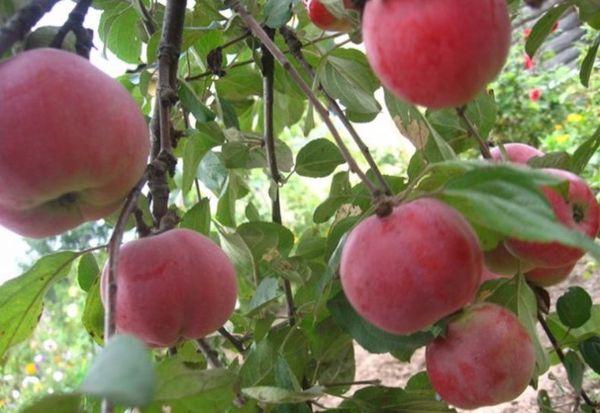
According to its characteristics, the Zvezdochka apple tree has average frost resistance.
It's important to remember that the root system is susceptible to freezing at temperatures as low as -25 degrees Celsius, so it's important to take steps to insulate the roots with mulch in advance.
Immunity to diseases and pests
According to gardeners, the apple tree has good immunity to fungal diseases. The common apple scab disease affects the Zvezdochka variety least of all. However, the tree is susceptible to fruit rot and powdery mildew.
Planting and caring for the Zvezdochka apple tree
The first stage of agricultural activities involves selecting planting material, choosing a suitable site, and proper planting.
Preparing the seedling
The quality of planting material can be determined using a two-year-old seedling; at this age, the young tree has grown 10 cm in its root system. The roots should be moist, and the trunk and shoots should be undamaged.
Selecting and preparing a planting site
Apple trees thrive on full sun, so a south-facing site is recommended for the Zvezdochka apple tree. It's best to have other trees on one side to slightly shade the sun. Avoid planting on uneven surfaces exposed to strong winds. Till the site thoroughly before planting.
Timing and technological process for planting young apple trees
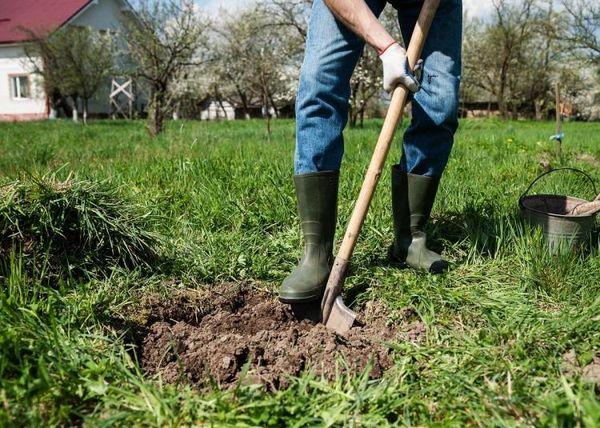
The planting time is determined by the climate and weather, typically in spring, around late April or early May. Warm soil is essential for the roots of the young Zvezdochka apple tree.
A tall tree requires space for further growth, so dig a deep and wide hole, measuring 50 x 50 cm, using the sapling as a guide. Also, consider the following pattern when planting:
- the seedling of the variety is planted at a distance of 5-6 m from other plants;
- Before planting, add organic fertilizers to the hole: 50 g of wood ash, 5 kg of peat, 40 g of superphosphate;
- a support is installed at a depth of 1.5 m, and a seedling is secured on the south side;
- straighten the roots, then sprinkle with soil, and tamp the surface well;
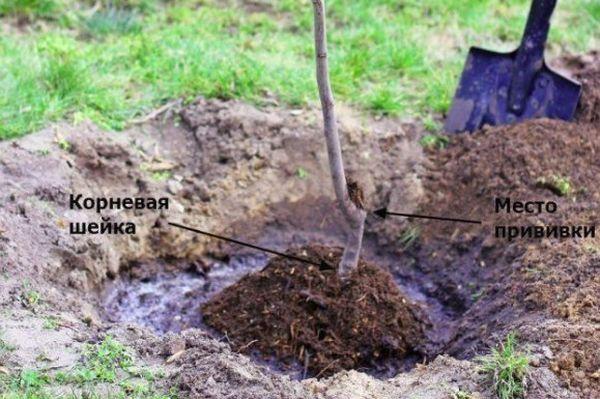
- the root collar should be 5 cm above the soil;
- At the end, tie the tree to a support and then water it generously.
Agricultural technology and care
A beautiful garden with strong trees and a good harvest is the result of careful agricultural work, which includes pruning, timely watering, fertilization, and protection from external factors.
Trimming
Zvezdochka trees have long shoots growing in different directions, bearing the weight of the foliage and apples. The crown grows gradually, and the growth of main and secondary branches is controlled by pruning. After planting the seedling, remove one-third of the shoots. In subsequent spring periods, perform sanitary pruning, removing weak, damaged branches.
Top dressing
The soil around the apple tree is formed into a circle; this near-trunk cultivation is convenient for agricultural maintenance. If the bush is planted in infertile soil, additional fertilizer is essential.
In the first year after planting, in the fall, it is necessary to loosen the soil around the tree trunk and add complex fertilizers with phosphorus and potassium.
In the spring, carefully dig up the top layer of soil, mixing it with leaves and manure.
Watering
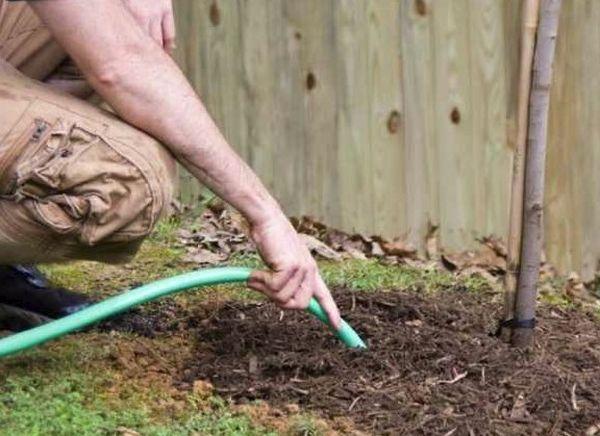
The Zvezdochka apple tree's extensive root system draws groundwater from deep within, and rainfall also provides essential moisture to all parts of the tree. During dry summers, additional watering with fresh water is recommended in late June or July. Using a 14-cm-long stick, check the soil's moisture level at depth, and water in the evening if necessary.
Mulching
The Zvezdochka garden apple tree requires autumn mulching. To do this, remove all weeds and fallen leaves, gently loosen the soil, and then spread hay or sawdust around the tree's trunk. This will protect the roots during frosty days.
Protection from diseases and pests
To protect fruit trees, preventative measures are taken. In early spring or late fall, all parts of the tree are sprayed with Bordeaux mixture or a solution of Nitrofen. To prevent rodents from eating the trunk, it is wrapped with paper or scraps of fabric soaked in creolin.
Subspecies and variants
The Zvezdochka apple tree is widely used for breeding; today there are several of its subspecies: winter, columnar, and on a dwarf rootstock.
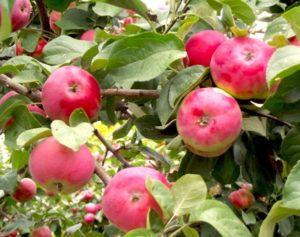
Winter
The winter apple variety Zvezdochka is grown in northern regions, where its strengths—frost and drought resistance—are fully realized. Even temperatures as low as -35°C and as low as -37°C (-22°F) do not cause damage. Gardeners value this variety for its consistent fruiting and delicious fruits weighing 50-100g.
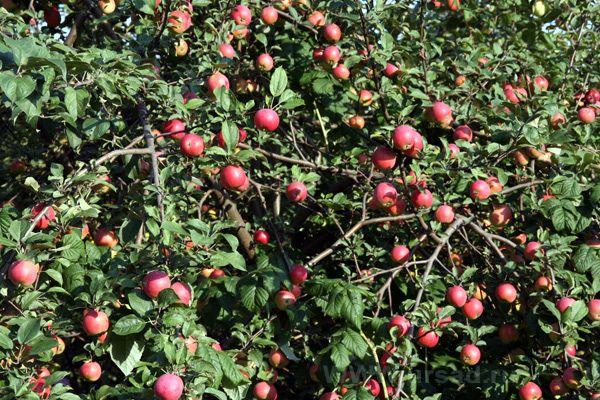
Columnar
This variety is convenient because it has a very compact structure: a straight trunk forms a sparse crown, which doesn't take up much space in the garden. This variety has a medium yield, with up to 16 kg of apples per tree, weighing 150-200 g.
On a dwarf rootstock
The Zvezdochka apple tree on a dwarf rootstock is considered a low-growing plant, reaching a height of 2.5-3 meters. Its advantages include a neat crown, easy care, and a harvest in the second or third year. The apples ripen two weeks earlier. The main drawback is its average lifespan of up to 15 years.
Methods of reproduction
The most popular propagation methods are cuttings, root suckers, cloning, and using a regular apple tree branch. Each method requires specific preparation.
Gardeners' reviews
Alexey Bochkarev, 41, Moscow region: "I have a large number of apple varieties in my garden, including the Zvezdochka apple tree. It's a prolific variety that produces beautiful, full-bodied fruits every year, and I try to harvest them on time. I stack them in wooden crates and then store them. In my experience, Zvezdochka apples stay in perfect condition until April of the following year."
Vladimir Krasnov, 29, Ryazan Oblast: "It's a good variety, easy to care for. After planting, we fertilized and watered it regularly, which was sufficient. Over the past three years, the sapling has grown strong and grown, and now boasts a dense crown. It will begin bearing fruit in the coming years, and we're confident this tree will produce high-quality fruit."
Ekaterina Frolova, 53, Moscow Region: "The apple tree has a brown, star-shaped spot near the stem, which is where the variety gets its name. We harvest up to 150 kg of apples from our trees every year, making delicious jams, compotes, and juicing them. The juicy flesh is pinkish-green, giving the juice a distinctive color. This is an ideal variety for homemade preserves for the winter."
Related posts:
 Description and rules for growing the Bratchud apple tree variety
 Description of the ornamental Nedzvetsky apple tree, cultivation technology
 Description of the Chudnoe apple variety, planting and caring for a dwarf tree
 Description of the Borovinka apple tree variety, cultivation and care
 Description and subspecies of the Sakharny Arkad apple tree variety, cultivation technology
 Description and subtleties of growing the Sverdlovsk Beauty apple tree variety
 Description and planting of the Dream apple tree variety, care and propagation
 Description and rules for growing creeping apple trees, planting and care