
- Bluecrop blueberry selection
- Pros and cons of culture
- Characteristics and description
- Bush size
- Fruiting
- Flowering and pollination
- Ripening time and harvest
- Tasting evaluation and further sale of fruits
- Immunity to diseases
- Resistance to low temperatures and drought
- Planting technology
- Selecting a site
- Preparing seedlings and planting holes
- Timing and algorithm of planting operations
- Specifics of plant care
- Top dressing
- Sanitary and formative pruning
- Watering and mulching
- Preventive treatments
- Preparing for winter
- Blueberry propagation
- Gardeners' reviews of the variety
One of the most common blueberry varieties native to America is Bluecrop. Before planting this tall, high-yielding, and easy-to-grow bush, it's important to familiarize yourself with its specific growing requirements. This will help you easily grow a luxurious bush in your garden and ensure annual fruiting.
Bluecrop blueberry selection
The domestication and spread of blueberries was thanks to Frederick Vernon Coville and Elizabeth White, who bred this wild crop. Through their hard work, they developed 15 varieties of blueberries. The Bluecrop variety is also a result of their efforts and literally means "blue crop."
Pros and cons of culture
Garden blueberry Bluecrop has many advantages:
- resistant to a number of diseases;
- frost-resistant;
- It is highly productive and allows you to get up to 9 kg of delicious berries from one bush, which are distinguished by their large size, excellent taste and tolerate transportation well;
- Ease of care distinguishes this variety from its peers and contributes to its widespread distribution in the cold regions of Russia.
The main disadvantage of the crop is its extended fruiting period, which complicates the harvesting and sale of the crop.
Characteristics and description
Bluecrop blueberry is widespread in cold regions and has its own specific characteristics.
Bush size
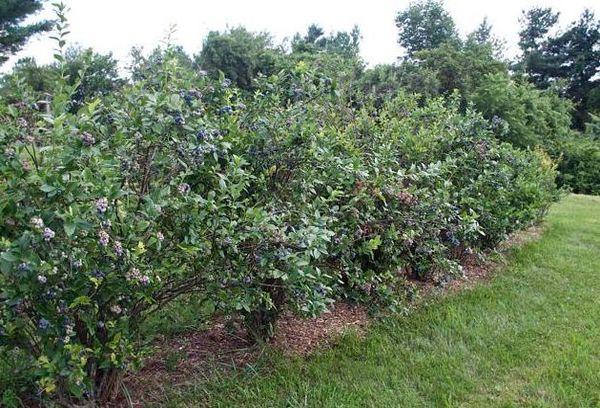
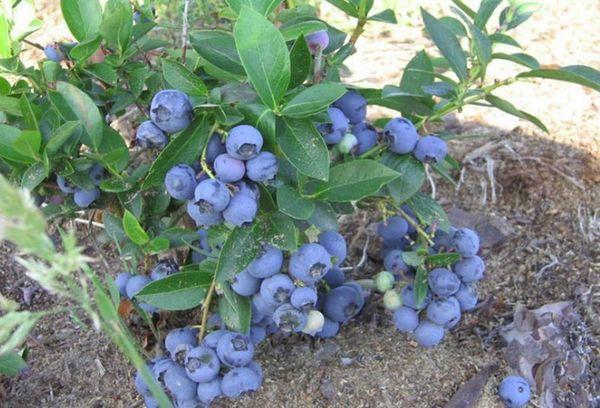
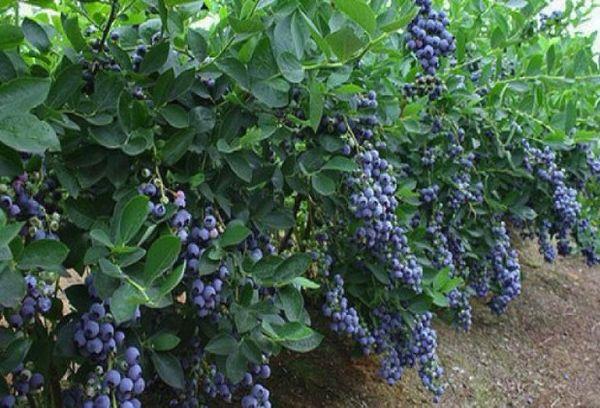
This variety is a lush, tall bush with a profusion of berries. Without annual pruning, it can reach a height of 2.5 meters. It has a spreading crown, exceeding two meters in diameter.
Fruiting
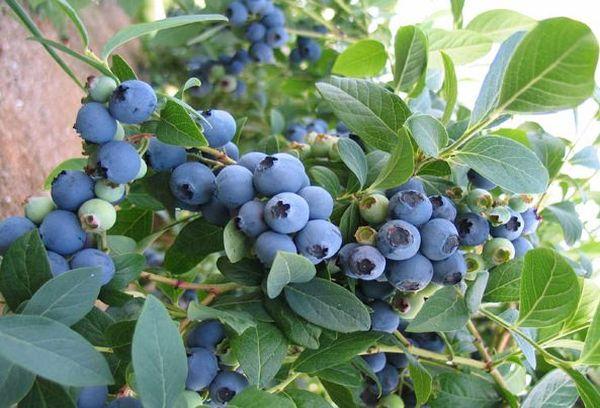
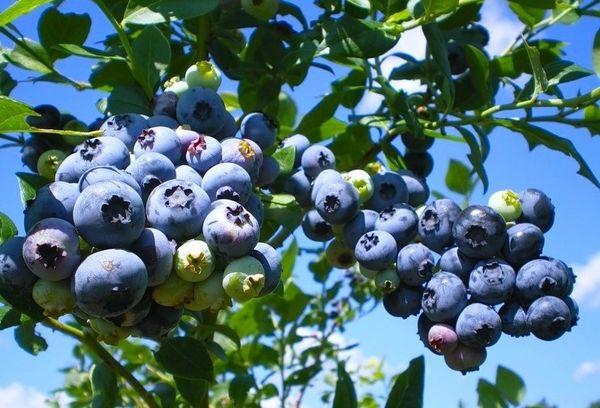
It begins bearing fruit in its third year, producing dark-blue, flattened berries with a distinctive bloom, averaging 2 grams in weight. The fruits form large clusters, making them very easy to harvest.
Flowering and pollination
The variety is cross-pollinated and requires planting several plants with similar growth periods in the same area. The shrub blooms in May, and the first fruits begin to ripen in July.
Ripening time and harvest
The fruiting period varies depending on the growing region. On average, it occurs in July-August and lasts for a full month. During this period, up to 10 kilograms of delicious berries can be harvested from a single mature plant. They are noted for their excellent shelf life and transportability.
Tasting evaluation and further sale of fruits
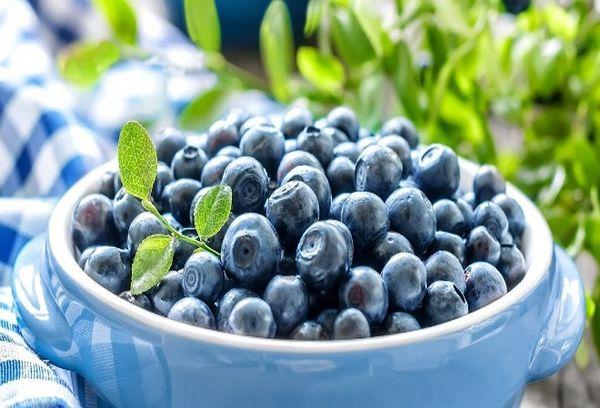
Bluecrop berries have a delicious flavor and are eaten fresh. They are also used to make delicious preserves, jellies, compotes, and wine.
Immunity to diseases
This variety is distinguished by its resistance to common garden diseases. However, it is often affected by viral diseases and pathogenic fungi.
Resistance to low temperatures and drought
It tolerates low temperatures well and can easily survive down to -34°C. This makes it suitable for cultivation in northern regions.
Planting technology
Blueberries are planted in the spring, before the sap begins to flow. For quick adaptation, it's best to use 2-3-year-old seedlings in containers. Blueberries have delicate roots, so keep this in mind when removing the plants for replanting.
Selecting a site
In the wild, blueberries prefer marshy areas. They thrive in soils with close groundwater levels. They grow and bear fruit well in sunny clearings. When grown in the shade, low yields and a slightly sour taste are often observed.
Preparing seedlings and planting holes
Blueberries require light, acidic soil. A mixture of peat and sand in a 3:1 ratio is ideal. The soil should be loose, with a pH of 3.5 to 5.

If the soil acidity is low, long-term acidifiers based on sulfur are used to increase it.
The planting hole is prepared well in advance of planting. Its dimensions are at least 50 x 50 cm. The soil is thoroughly loosened. The acidity is adjusted to the required level.
Containerized seedlings require no pre-planting. Simply ensure the soil is thoroughly saturated with water to prevent damage to the root system when removing the plants.
Timing and algorithm of planting operations
Despite the plant's frost resistance, it's best to plant it in early spring. Make a hole in the prepared hole equal to the size of the root system. Water the soil thoroughly with clean water and a rooting agent. Plant the bushes 80-120 cm apart.
Specifics of plant care
The primary care for blueberries in the first few years after planting involves annual pruning. This procedure stimulates growth and increases fruit production.
Top dressing
To prevent soil alkalization, calcium, ash, and lime are not used when growing blueberries. Organic fertilizers are also avoided. The crop is fed with nitrogen fertilizers in early spring and complex fertilizers in the fall.
Sanitary and formative pruning
After the leaves fall, formative pruning is performed. All lower growth is ruthlessly removed, leaving strong, upright branches. Sanitary pruning is performed in early spring, before the active movement of sap begins. At the same time, dry, frozen over winter and damaged branches are removed.
Watering and mulching
Blueberries are moisture-loving plants. They require frequent and abundant watering. Watering is especially important during dry summers during the ripening period. A lack of moisture negatively impacts the berries' flavor, causing them to become sour.
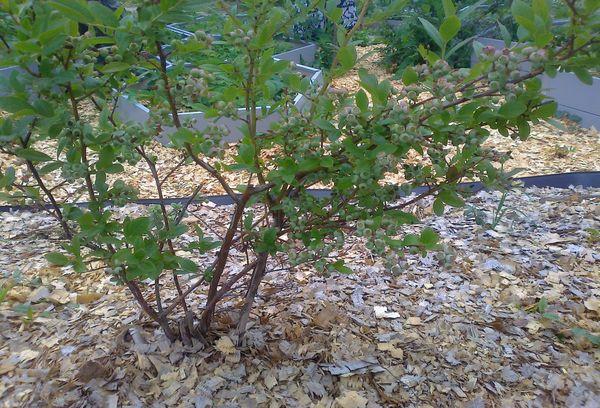
Mulching prevents premature evaporation of soil moisture, eliminates weeds, and protects the root system from freezing during the winter. Sawdust, spread in a thick layer around the entire trunk circle, is used as mulch for blueberries.
Take a look Also
Preventive treatments
Preventative treatment of blueberries with Topsin and Euparen, as well as Bordeaux mixture, is effective against the most common diseases. The bush is treated in early spring and fall.
Preparing for winter
Despite their resistance to severe frosts, blueberries require insulation. Young shoots are protected with covering materials. Roots are protected with a thick layer of mulch and a thick snow crust around the roots.
Blueberry propagation
Bluecrop can be spread in a country house using one of the following methods:
- seeds;
- layering;
- by cuttings.
Propagation by layering is the most common option.
Gardeners' reviews of the variety
Judging by the feedback from gardeners with extensive experience growing Bluecrop blueberries, it's safe to say that this variety doesn't thrive in every plot. It requires careful soil preparation and controlled acidity.
Bluecrop blueberry is a unique, easy-to-grow variety. When grown in suitable soil, it produces large, easy-to-grow harvests of delicious berries with excellent shelf life and flavor.
Related posts:
 Description and characteristics of 45 of the best varieties of garden blueberries
 Description and rules for growing the Northland blueberry variety
 Description of the Denis Blue blueberry variety and the subtleties of growing it
 Description of the Early Blue blueberry variety, planting and care
 Blueberry recipes for the winter, including freezing or blending with sugar to preserve all the vitamins
 Description and characteristics of the Elizabeth blueberry variety, planting and care
 Description and characteristics of the Toro blueberry variety, growing rules
 Characteristics and description of the Patriot blueberry variety, planting and care