
- Reasons for the lack of fruiting in blueberries
- Mistakes in caring for berry crops
- Shaded landing site
- Acidified soil
- Lack of pollinators
- Insufficient drainage
- Lack of mulch
- Diseases
- Necrotic spotting
- Threadiness of branches
- Dwarfism
- Red ringspot
- Mosaic
- Moniliosis of fruits
- Gray rot
- Phomopsis fungus parasitism
- Stem cancer
- Double leaf spot
Many people wonder why their blueberries aren't bearing fruit and what to do about it. There can be many possible causes. First and foremost, they include improper agricultural practices. Other contributing factors include fungal or bacterial infections. A common cause of fruit failure is pest infestations.
Reasons for the lack of fruiting in blueberries
If your garden blueberry isn't blooming or bearing fruit, the first thing to suspect is improper care. Blueberries don't thrive in beds previously occupied by potatoes or other vegetables. It's best to plant them after perennial grasses.
Moreover, the plant does not accept organic matter well. Therefore, it is planted in soil that has not been fertilized with such substances for the past five years.
A common reason for a lack of fruit is improper planting. When purchasing, choose a bush that's in a large container. In small containers, the plant's root system becomes heavily intertwined.
To properly plant the plant, immerse the container in water for 15 minutes. Then, remove the pot and straighten out the root system. Otherwise, some roots will remain intact. This plant will not bear fruit and will die after a while.
The shrub's root system is located in the surface layer—at least 25 centimeters deep. Therefore, gardening tools should not be used when weeding the plant. Damaged roots will not be able to recover.
It is recommended to loosen the soil shallowly – a maximum of 30-35 millimeters.
Mistakes in caring for berry crops
When growing blueberries, it's important to consider many nuances. This will help ensure good results and full fruiting.
Shaded landing site
A blueberry bush won't produce fruit if it doesn't bloom well. Planting the plant in the shade is often the cause of this problem. Although blueberries thrive in shaded areas with high humidity, they won't thrive without constant sunlight. A lack of adequate light negatively impacts flowering.
In addition to light, the plant requires protection from the wind. Adequate humidity is also crucial. An artificial soil irrigation system is considered the optimal solution. This will allow the plant to be exposed to sunlight and receive adequate moisture.
Acidified soil
A common cause of yield declines is considered to be the incorrect selection of soil composition for the crop. The plant will not thrive in alkaline or neutral soil.
To address this problem, artificial soil acidification is used. For blueberries to thrive, a pH of 3.5-4.5 is required.
Lack of pollinators
Blueberries are considered self-fertile. However, for optimal flowering and fruiting, they require pollinators. It's important that plants have similar flowering periods. Therefore, experts advise against planting just one blueberry bush. It's best to plant several plants 1.5 meters apart.
Insufficient drainage
Good drainage ensures the removal of excess liquid. This will help prevent root rot. For blueberries, this option is necessary when planting in peat or sandy soil.
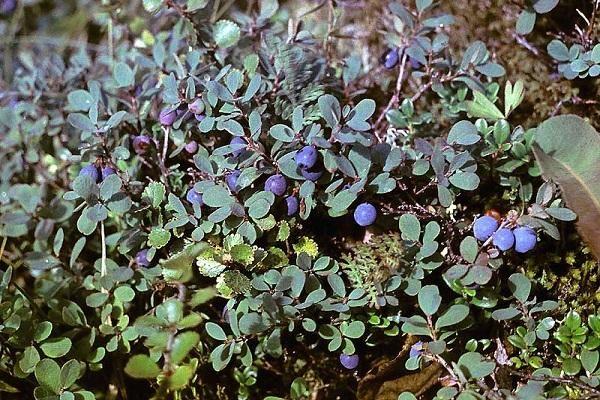
It's recommended to use small stones to form a drainage layer. They should be placed at the bottom of the hole before planting. If using a pot, drainage should also be placed at the bottom. For proper plant development, this layer should be at least 5-10 centimeters thick.
Lack of mulch
Tree bark, sawdust, leaves, and sand are good mulches for soil. Peat, hay, or straw are also excellent options. Sawdust is considered the best option. It helps prevent rapid drainage of water into the soil. Furthermore, the material decomposes slowly, so it doesn't need to be replaced quickly.
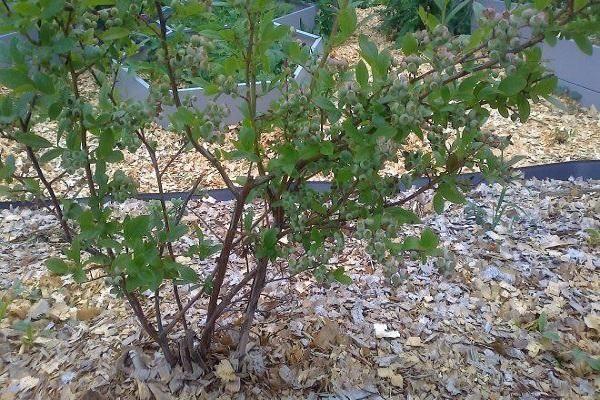
When using mulch, it's important to follow certain guidelines. The layer's thickness shouldn't exceed 10 centimeters. When planting, sawdust should be spread 50 centimeters from the stem.
The first mulch application is done immediately after planting the plant in its permanent location. Subsequent applications are performed as needed. At this point, the thickness of the mulch layer should be reduced to 5 centimeters. It's important to keep in mind that leaves and straw decompose quickly, so this type of mulch should be replaced annually.
Diseases
There are many diseases that can negatively affect the development of blueberries and lead to a decrease in yield.
Necrotic spotting
This disease is characterized by the appearance of round, red spots on the plant's leaves. Initially, older foliage is affected, followed by the entire plant.
Threadiness of branches
This disease remains asymptomatic for four years. The affected bushes experience a slowdown in growth. The leaves take on a reddish tint, become wrinkled, and curl. The shoots become covered in stripes resembling laces.
Dwarfism
Mycoplasma causes the disease. Affected plants develop poorly. Branches become covered with small, tasteless fruits. Sometimes, the fruits are completely absent. Leaves gradually shrink in size, turning yellow and then red.
Red ringspot
In midsummer, the plant's leaves become covered in red spots. Gradually, the entire bush becomes infected, leading to its death.
Mosaic
As the disease progresses, the plant's leaves become covered with yellow patterns. They turn yellow near the petioles, and green near the tips. Mites are responsible for the spread of the disease.
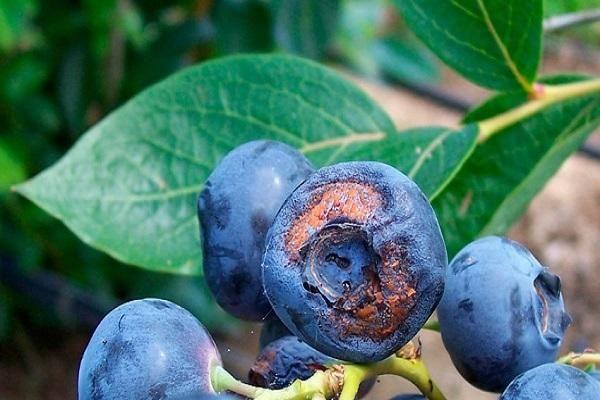
Moniliosis of fruits
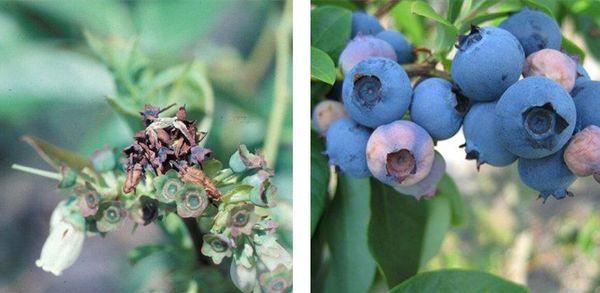
With this condition, it appears as if every part of the plant has been frost-damaged. It's a fungal infection that overwinters in dried fruit. When the plant is affected, the upper part of the plant first wilts and turns yellow. It then turns dark and dies. Flowers also turn brown and die. Fruit darkens and loses its flavor.
Gradually, the fungal infection causes damage to the wood and cracking of the bark. Gum-like growths appear on the bushes. In severe cases, the plant dies.
To prevent the disease from developing, it's important to collect fallen leaves and fruit from under the bushes. This debris should be burned. The plant should be treated with Bordeaux mixture. Other fungicides can also be used.
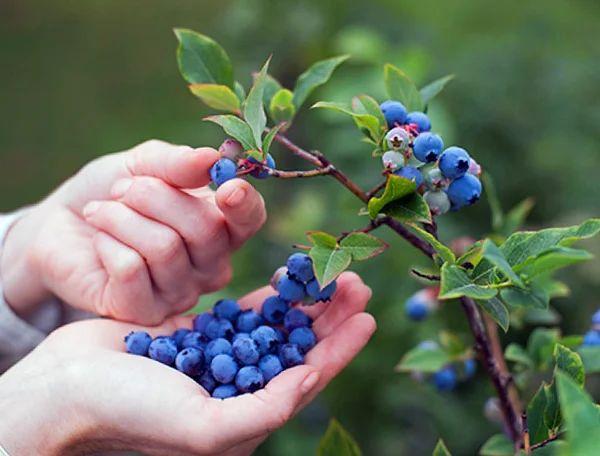
Gray rot
This disease is characterized by the appearance of brown or red spots on branches, foliage, and berries. These spots later turn gray. The disease begins in the upper parts of the plant and gradually moves downward.
As it develops, severe damage to fruit is observed. Gray mold is especially dangerous in wet weather.
If fungal spores get on flowers, a serious reduction in yield is observed.
Plants that receive too much nitrogen fertilizer are most susceptible to the disease. Also at risk are densely planted plants that lack proper ventilation.
Fungi overwinter on fallen leaves. Therefore, it is imperative to collect and burn them. To ensure adequate air circulation, maintain sufficient distance between bushes when planting.
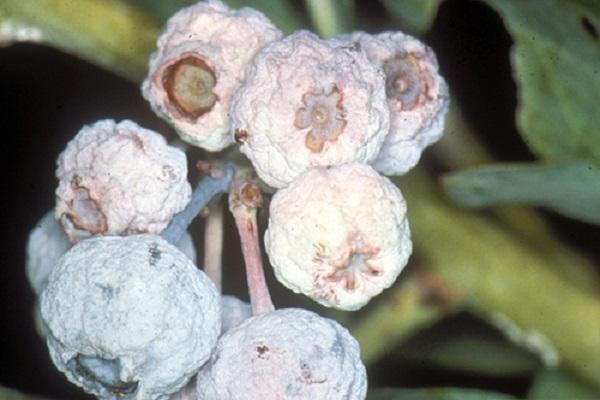
Phomopsis fungus parasitism
When blueberries are infected, new shoots dry out and curl up. Affected areas can range from 3 to 35 centimeters in size. Leaves turn brown, dry out, and fall off. They become covered with reddish spots up to 10 millimeters in size.
To combat the disease, it is recommended to destroy damaged shoots and treat the plant itself with preparations used to combat stem cancer.
Stem cancer
This is one of the most dangerous diseases. Initially, leaf scars become covered with red spots. Then, the plant's shoots are affected. After some time, they increase in size, become oval, and darken in color. Gradually, the spots expand and cover the entire shoot. Eventually, the shoot dies.
Young bushes are most susceptible to the disease. Older shoots become covered with ulcerated lesions, cracks, and peeling bark.
Prevention can help avoid problems. Avoid planting blueberries in beds with high humidity. Experts also advise against over-fertilizing with nitrogen. Damaged branches should be pruned and destroyed promptly.
To combat the disease, it's recommended to use products such as Euparen and Topsin. It's recommended to treat the bushes three times, 7 days apart. The first treatment is performed before flowering, and the second after harvest. Bordeaux mixture is recommended for use after the leaves emerge. It is also applied twice in the fall, after the leaves have fallen.
Double leaf spot
This disease causes leaf damage. It begins in late March, with numerous small spots 2-3 millimeters in diameter appearing. Their number subsequently increases. In summer, these lesions begin to grow, reaching 6-13 millimeters in diameter. In high humidity conditions, the disease spreads much more rapidly.
To combat this problem, products such as Euparen and Topsin are used. In spring and fall, Rovralem is also approved.
A lack of fruit on blueberries can be caused by a variety of factors. To achieve significant success in growing the crop, it's important to identify the cause and take action promptly.
Related posts:
 Description and rules for growing the Northland blueberry variety
 Description and characteristics of 45 of the best varieties of garden blueberries
 Blueberry recipes for the winter, including freezing or blending with sugar to preserve all the vitamins
 Description and characteristics of the Elizabeth blueberry variety, planting and care
 How to feed and what fertilizers are best for blueberries, soil acidification
 Symptoms and treatment of blueberry diseases, pest control methods
 Description and growing guidelines for the Reka blueberry variety
 How to plant and grow blueberries from seeds at home