
- Causes of blueberry diseases
- Diseases and their treatment
- Fungal infections
- Witch's broom
- White spot
- Physalosporosis
- Gray rot
- Phomopsis
- Stem cancer
- Mummification of berries
- Moniliosis of fruits
- Viral infections
- Mosaic
- Red ringspot
- Mycoplasma or dwarfism
- Blueberry pests and how to control them
- Heather arrowroot
- Blueberry moth
- Triangular flat leaf roller
- Prevention
Blueberry diseases are numerous and have specific characteristics. These diseases are caused by fungal infections or viruses. These diseases can result in reduced yields and even complete plant death. To avoid such problems, it's important to use specialized treatments promptly. Removing affected plant fragments and implementing other agricultural practices are also crucial.
Causes of blueberry diseases
To avoid garden blueberry diseases, it's important to choose the right variety before planting. Seedlings should be suited to the region's climate and have high disease resistance.
Weak plants often suffer from various diseases. Therefore, they require high-quality and comprehensive care. The causes of problems are violations of agricultural technology for growing crops, a large number of weeds, and lack of irrigation.
Another factor that causes various problems is neglecting to mulch the soil. This procedure helps isolate the infection and prevent its spread. Failure to fertilize in a timely manner is also a cause of problems in highbush and lowbush blueberries.
Diseases and their treatment
Today, numerous diseases are known to cause damage to blueberries. To address these problems, it's important to determine their causes.
Fungal infections
Such infections are very common. They typically occur in hot weather and high humidity. The fungi can persist in the soil for a long time and are frost-resistant. When a plant is infected, its yield is significantly reduced.
Witch's broom
As the rust fungus spreads, short shoots rapidly develop. These shoots are localized in a specific part of the bush and have a yellow or red tint. The branches then dry out. Nearby plants quickly become infected. To combat the problem, trim and burn the infected branches.
White spot
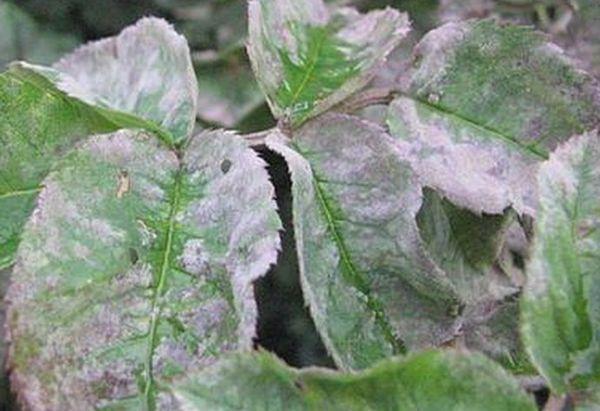
This disease affects leaves, causing round spots and dots to appear. These can be white-gray or brown, with a red border around them. The affected areas wilt and fall off.
To prevent disease, apply a thick layer of mulch. Remove any affected leaves from the plant and then burn them.
Take a look Also
Physalosporosis
The first symptoms of the disease appear in the fall. Young branches are affected by red spots. These gradually develop into large wounds and lead to the death of the branches.
Fundazol and Topsin help combat this problem. Use 2 grams of each per liter of water. These products are used only after harvesting.
Gray rot
As this disease progresses, the entire plant suffers. Affected areas become covered with a brown coating, which later turns gray. They then die.
To combat fungus, use fungicides. Fundazol is recommended for this purpose. Apply the product three times, seven days apart. Damaged parts should be cut off and burned. As a preventative measure, in spring, spray the blueberries with Bordeaux mixture.
Phomopsis
The disease develops when water stagnates in the garden bed. This affects growing shoots, causing the tops to die. As the disease progresses, black, brown, or tan spots appear on the leaves, the bark loses its color, and spots appear on the internodes.
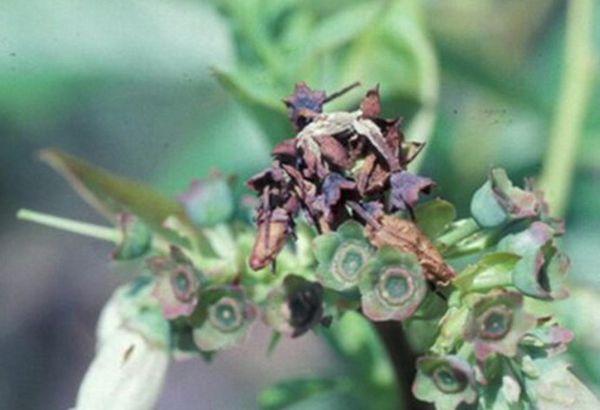
Damaged bushes should be completely removed, and the remaining ones should be treated with copper-containing products. Fungicides such as Horus and Thanos can be used as a preventative measure. This should be done in the spring.
Stem cancer
As the disease progresses, red spots appear on the leaves. Over time, these spots increase in size and cause damage to the entire shoot. After this, the bush becomes covered in ulcerated lesions and dies.
To avoid problems, do not plant the plant in areas with high humidity.
Sanitary pruning and the use of nitrogen fertilizers are also important. Before flowering, treat the plant with Bordeaux mixture. Fungicides can also be used. There's no need to treat affected bushes. They should be removed and burned.
Mummification of berries
This fungal disease attacks young tissue and inflorescences. As a result, the shoots turn black and die, and the leaves dry out.
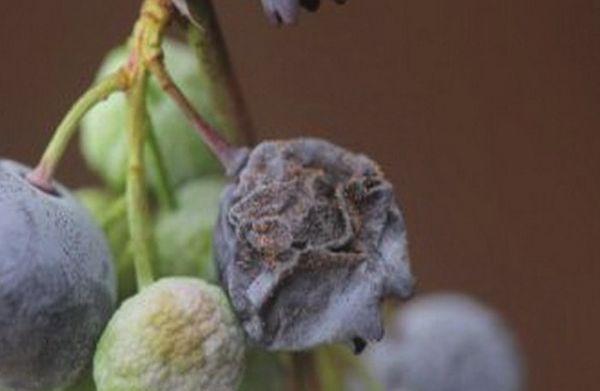
When affected by fungus, blueberries first develop and then dry out. Damaged parts of the plant should be removed and burned. To prevent the disease, it is recommended to treat the plant with urea in early spring. Afterward, apply mulch to a layer 5 centimeters thick.
Moniliosis of fruits
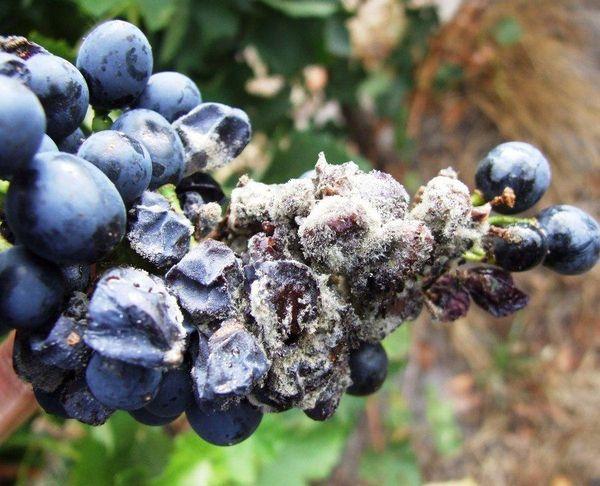
This disease affects more than just the fruit. Initially, the fruit develops normally, but then quickly dries up. A frost-like coating appears on the leaves and shoots. The pathogen can overwinter in the berries.
To combat the problem, remove the affected parts. Blueberries can be treated with urea.
Viral infections
Viral infections are virtually impossible to treat. Therefore, when such diseases develop, the bush is removed to prevent damage to other plants.
Mosaic
When the disease appears, damaged leaves become covered with a yellow mosaic pattern. The petiole area becomes yellow, while the tips remain green. Mites spread the disease.
Red ringspot
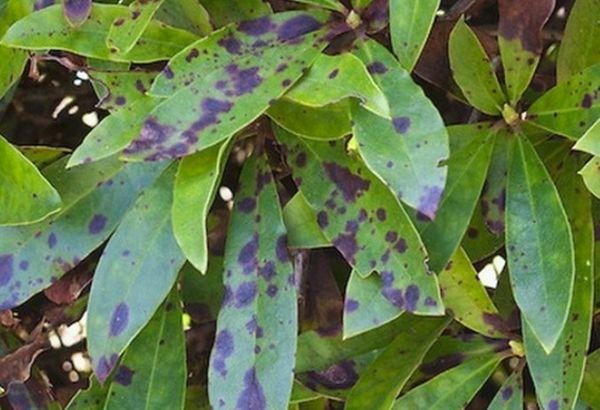
The disease affects older blueberry leaves, which become covered with red, ring-shaped spots. Over time, the spots affect the entire plant and can even cause death.
Mycoplasma or dwarfism
Mycoplasma causes the disease. When the disease appears, the bush's growth is disrupted. The berries become small and tasteless. Also, when the disease appears, the leaves become small and turn yellow prematurely. With the arrival of autumn, you may notice that the leaves have turned red.
If leaves turn red, what should you do? It's recommended to remove and burn the affected parts. If the damage is severe, the entire bush should be removed.
Blueberry pests and how to control them
Harmful insects pose no less a threat to blueberries than pests. They can cause the plant's death. Therefore, experts recommend timely preventative treatments.
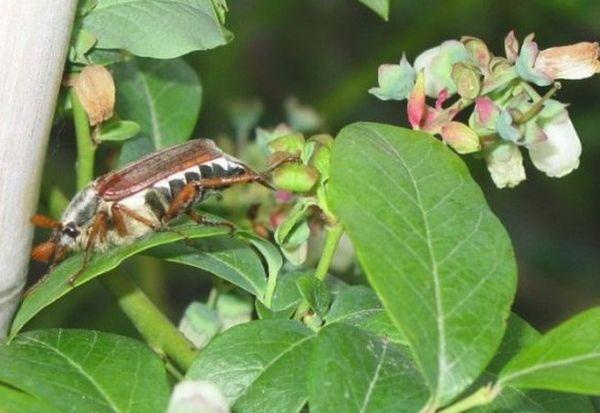
Heather arrowroot
The insect is a butterfly. Its caterpillars have short hairs and are covered with black and white spots. The pest develops in June and September, affecting blueberry leaves.
To deal with the problem, the bushes should be sprayed immediately when the leaves appear. For this purpose, products such as Kemifos, Actellic, and Fufanon are used. If there are numerous caterpillars, repeat treatment in the summer. It is recommended to collect and destroy individual pests.
Blueberry moth
This insect is also a butterfly. The caterpillar is distinguished by two pairs of abdominal legs. The pest's body is yellow and covered with numerous black lines. The caterpillars develop in May. To control them, insecticides are recommended.
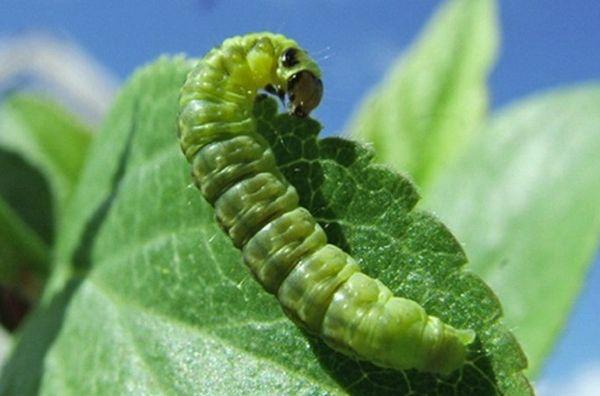
Triangular flat leaf roller
This insect is a small butterfly. Its wingspan is 18-20 centimeters. The pests attack the plant's leaves, causing them to contract using webbing. The caterpillars are light green in color and have dark stripes on their sides.
Take a look Also
When bushes are infected, the leaves curl. To combat the problem, individual pests must be eliminated. For prevention, plants can be sprayed with Fufanon, Actellic, or Kemifos.
Prevention
To prevent stem cancer, avoid using large amounts of nitrogen fertilizers, as these increase the risk of developing the disease.
Regular sanitary pruning is essential. The first pruning should be done before buds appear, and the second after the leaves have fallen. The bush should also be treated with Bordeaux mixture.
Effective preventative measures that help avoid the development of diseases and insect attacks include the following:
- For planting, use only healthy seedlings that show no signs of disease. Preference should be given to varieties that are resistant to diseases.
- Fertilizer should be applied when planting. It's also recommended to monitor soil moisture levels. Blueberries should be planted in a sunny location. It's important to maintain a minimum spacing of 2 meters between plants.
- It is recommended to immediately remove dead and diseased branches. The bush should be inspected regularly. Thickened shoots should be removed immediately. Timely pruning ensures free air circulation and helps prevent the development of gray mold.
- It is recommended to treat the bush with Bordeaux mixture. This is done twice during the season.
- Fallen leaves and fruits should be removed and burned.
- It is recommended to use fungicides before flowering. These include Skor and Tridex.
To prevent damage to bushes by harmful insects, it is recommended to spray the leaves with pesticides. Anti-scab products can be used for this purpose.
Today, many dangerous diseases are known to infect blueberries. To combat these infections, it's important to identify their causes and promptly administer appropriate medications.
Related posts:
 Description and rules for growing the Northland blueberry variety
 Description and characteristics of 45 of the best varieties of garden blueberries
 Blueberry recipes for the winter, including freezing or blending with sugar to preserve all the vitamins
 Description and characteristics of the Elizabeth blueberry variety, planting and care
 How to feed and what fertilizers are best for blueberries, soil acidification
 How to plant and grow blueberries from seeds at home
 Description of the Denis Blue blueberry variety and the subtleties of growing it
 Description and subtleties of growing the Spartan blueberry variety