
- What fertilizers does apricot need?
- Complex fertilizers
- Organic fertilizers
- Minerals
- Methods of application
- Foliar
- Root
- Rules for fertilizing a tree
- Depending on the season
- In summer
- In the spring
- In the fall
- The nuances of fertilizing seedlings and young trees
- Fruiting apricots
- Old tree
- Before the flowering period
- During flowering
- To prevent the ovaries from falling off
- During fruiting
- After harvesting
- To stimulate crop yields
- Gardeners' mistakes
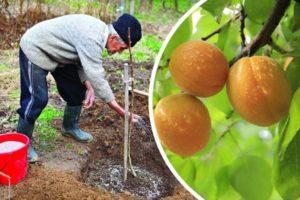
Typically, every garden plot or dacha has at least one apricot tree. This sweet crop is quite demanding and requires careful care. Fertilizing apricots in the summer is essential, as the quality of the fertilizer determines a bountiful harvest, resistance to adverse conditions, and the health of the fruit tree.
What fertilizers does apricot need?
Throughout its growth and development, the apricot tree requires a whole range of fertilizer mixtures, which are applied at different intervals.
Complex fertilizers
Complex fertilizer mixtures are applied during the tree's awakening period and during active growth. Apricots require fertilizers containing high amounts of nitrogen and phosphorus. Universal mineral complexes (such as Ammophoska) are used for this purpose, as they promote timely flowering.
Organic fertilizers
In spring and late summer, the tree requires different fertilizers. In August, fruit trees will require organic fertilizers. Gardeners use the following fertilizer mixtures: urea, chicken manure, slurry, and saltpeter.
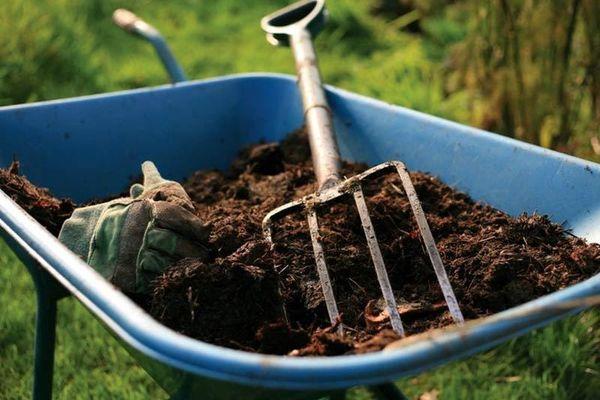
Minerals
Mineral fertilizer mixtures are typically applied in late summer or early September. The soil should be enriched with potassium and phosphorus, and a small amount of calcium is also recommended. These elements are present in wood ash, and chalk or special mixtures are used as calcium supplements.
Methods of application
There are several accessible methods for applying fertilizers. In both cases, the fruit tree is enriched with nutrients necessary for enhanced growth and development.
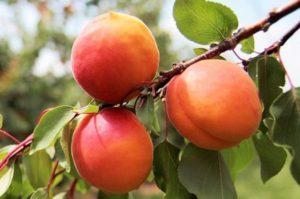
Foliar
Foliar feeding fertilizes the entire crown. By spraying the necessary substances onto the entire tree, the apricot tree absorbs micronutrients through its leaves, with full absorption occurring only after a few days.
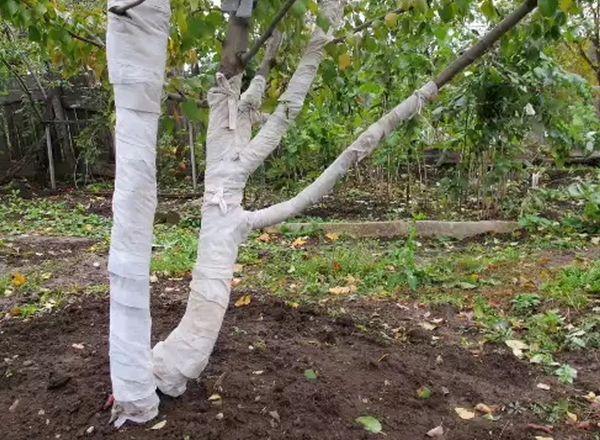
Root
In this case, the fertilizer mixture is applied directly to the tree trunk. This method is called a "long-playing plate" because the nutrients penetrate deep into the soil and are absorbed by the root system.
Rules for fertilizing a tree
To avoid various difficulties and problems when growing fruit trees, fertilizers should be applied in accordance with certain rules.
Depending on the season
Depending on the time of year, the apricot tree needs certain mineral components.
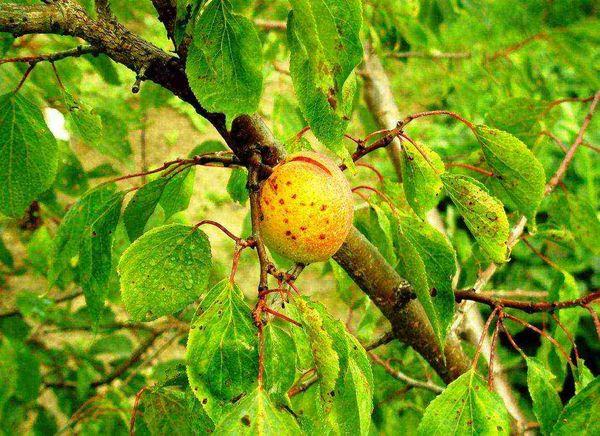
In summer
Summer fertilization is typically done foliarly. Special solutions are applied to the leaves to maximize the supply of beneficial micronutrients to the fruit tree. During this period, the plant will require nitrogen- and potassium-containing solutions.
At the beginning of June, it is recommended to use universal complex fertilizers, and at the end – organic ones.
In the spring
In spring, apricot trees require nitrogen-rich fertilizers. Fertilizers are applied exclusively to the roots three times a season: before bud break, during flowering, and after flowering. Organic fertilizers are recommended: urea, saltpeter, chicken manure, or a mullein solution.
In the fall
Autumn fertilizer mixtures contain phosphorus, potassium, and calcium. These elements are essential for apricots to improve frost resistance. In this case, both mineral fertilizers and proven folk remedies can be used. Wood ash and chalk are suitable for this purpose. Organic matter should be added after the leaves have fallen. All fertilizer mixtures are applied under the trunk, close to the root system.
The nuances of fertilizing seedlings and young trees
Before applying fertilizers, it's recommended to ensure you're familiar with the specific nuances of fertilizing a tree depending on its age. Seedlings don't need fertilization in the first year, as they rely on the nutrients added at planting. Young trees require organic fertilizers containing nitrogen.
Fruiting apricots
Fruit-bearing trees 3-4 years old require fertilization with nitrogen-containing mixtures. However, caution should be exercised and application should be done sparingly, as this may cause the apricot tree to stop blooming.
It is recommended to apply mineral additives and organic matter alternately when watering and processing the crop.
Old tree
To feed an old tree aged 5-10 years, you'll need to apply up to 50 kilograms of fertilizer mixtures annually. This includes organic compounds, as well as complex mineral mixtures to support the tree's immunity and productivity.
Before the flowering period
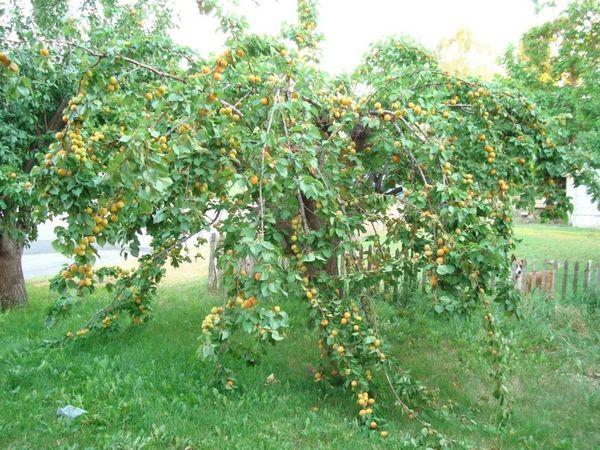
Immediately after the snow melts and the soil warms, apply the first fertilizer mixture. Before the apricots awaken, treat them with a urea solution: add 50 grams of the solution to 10 liters of water. A nitrogen-potassium solution is also used. For 20 liters of water, add 4 tablespoons of urea and 2 tablespoons of potassium salt.
During flowering
The tree should also be fertilized during flowering—in mid-April or late May. For this purpose, organic fertilizers are used instead of mineral fertilizers. Add 0.5 liters of chicken manure to 10 liters of liquid. Apply the solution to the trunk circle. A week later, add another liter of wood ash.
To prevent the ovaries from falling off
Typically, ovary drop is caused by excess nitrogen in the soil. To prevent this, it is recommended to apply complex fertilizers containing phosphorus and potassium. To prepare a nutrient solution, take 10 liters of water, 30 grams of superphosphate, and the same amount of potassium sulfate. The fertilizer is applied via the root system.
During fruiting
To increase fruit tree yield and resilience, prepare the following solution: 2 tablespoons of potassium sulfate and superphosphate, as well as 3 tablespoons of urea. Apply the nutrient solution via the root system.
After harvesting
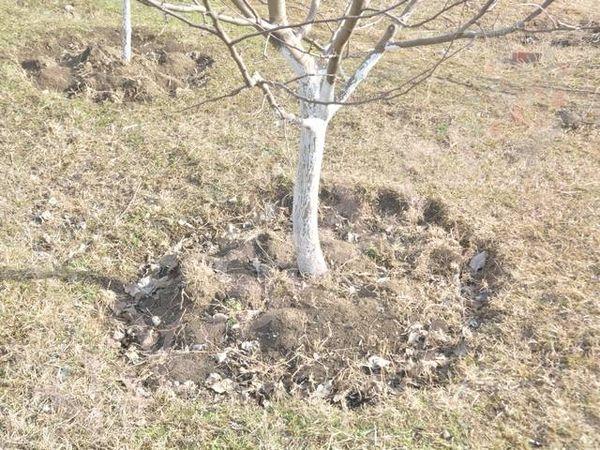
During this period, the apricot tree should be fed with wood ash, potassium nitrate, potassium, and calcium-containing fertilizer mixtures. These valuable nutrients are added to the tree's trunk circle in the form of granules or a liquid solution.
Take a look Also
To stimulate crop yields
To increase apricot fruiting productivity, it's recommended to nourish the soil with mineral compounds that saturate the tree with a range of beneficial substances. For this purpose, a boric acid solution is used, spraying the buds. Adding compost is also a good idea.
Gardeners' mistakes
Gardeners often overlook the fact that overfertilizing can be just as detrimental as not fertilizing at all. This is why it's crucial to follow the correct fertilizer dosage to avoid various problems when growing fruit trees.
Also, many people forget that fresh organic additives (droppings, manure and humus) can cause colossal damage to the root system and significantly weaken the apricot tree. In addition, the tree should not be fed with compounds that contain chlorine.
Related posts:
 How to plant walnuts, care for them, and grow them at home
 Peach tree care and agricultural secrets, pest control
 Descriptions of the 20 best cherry varieties for the Moscow region, their planting and care
 Description and cultivation of the 15 best cherry plum varieties for the Moscow region, planting and care rules
 Description and characteristics of the 27 best plum varieties for the Urals, planting and care
 Description of the Red Early apple tree variety, agricultural technology and specific care
 Description of the Vasilisa cherry variety, cultivation and care
 Description of the Bryanochka cherry variety, planting and care instructions