
- The history of the Astrakhan watermelon
- Description and characteristics of the variety
- How to distinguish Astrakhan watermelon from others?
- Benefits and harms of the product
- Advantages and disadvantages
- Specifics of growing Astrakhan watermelon
- How to grow seedlings
- Seed preparation
- In the greenhouse
- In open ground
- Preparing seedlings at home
- Choosing a landing site
- The process of transplanting seedlings into open ground
- Further care of the crop
- Temperature and lighting
- Humidity and watering
- Soil fertilization
- Diseases and pests of Astrakhan watermelon
- How to determine the ripeness of a berry
- Harvesting and storage rules
- Common mistakes when growing
- Reviews of the culture
Astrakhan red watermelons have been cultivated for decades. They are very popular in industry and among gardeners. Their seeds can be purchased at any specialty store or ordered online. The berries grow up to 10 kg, store well, and are easy to transport.
The history of the Astrakhan watermelon
In the 1970s, the Astrakhan watermelon variety was developed under the guidance of Russian breeder K. E. Dyutin. The work was conducted at the Institute of Vegetable and Melon Growing. It was later added to the State Register of Russia. This variety remains very popular among gardeners.
Watermelons were first grown in Astrakhan in the mid-16th century. The Tsar loved them, and he demanded that supplies be established for the royal court. Later, watermelons were cultivated in plantations and shipped throughout the country. Peter the Great ordered watermelon cultivation near Moscow, but all the plantings perished due to adverse weather conditions. A century later, scientists of the time were able to develop a watermelon resistant to temperate climates. And in the 20th century, breeders developed the Astrakhan variety.
Description and characteristics of the variety
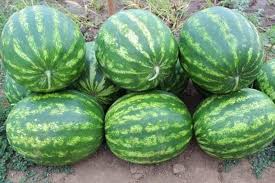
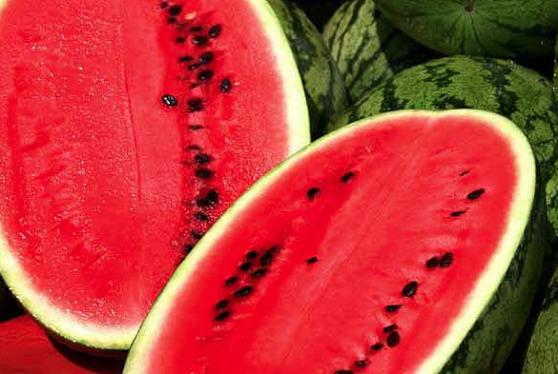
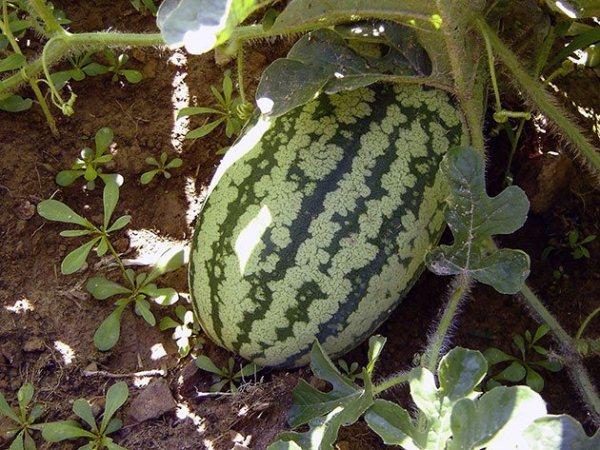
This is a mid-season variety with a growing season of 70-80 days. Suitable for growing in any climate, this watermelon is very popular among gardeners. Its fruits grow to 7-10 kg. The flesh is bright red, with black seeds. The rind is colored with alternating dark and light green stripes, which have wavy edges.
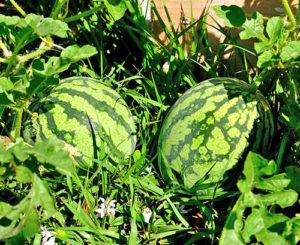
The plant has large, green leaves. They are spreading and have jagged edges. The bushes are large, occupying about 1 m² of space. Flowering occurs 20-25 days after planting. The flowers are large and yellow, and an ovary forms in their place.
How to distinguish Astrakhan watermelon from others?
Unlike other varieties, the Astrakhan variety is round. It forms a dense, thick rind. The stripes are vibrantly colored and have ribbed edges. Its flesh is vibrant, red, and juicy. The seeds are large and black.
Benefits and harms of the product
The product contains many useful substances and is beneficial for the body:
- improves metabolism;
- has a diuretic effect;
- removes waste and toxins from the body;
- accelerates kidney function;
- improves the condition of the cardiovascular system and blood;
- helps to get rid of excess weight.
Watermelon can be harmful if consumed regularly and indefinitely. The body experiences:
- too much strain on the kidneys and deterioration of their condition;
- increased blood sugar;
- leaching of calcium and beneficial microelements from bones due to large amounts of fluid;
- worsens the condition of the gastrointestinal tract.
Advantages and disadvantages
The Astrakhan variety has its advantages and disadvantages. The advantages include:
- early ripening of fruits;
- transportability;
- large berries up to 10 kg;
- ease of care;
- resistance to many diseases;
- high taste qualities of berries;
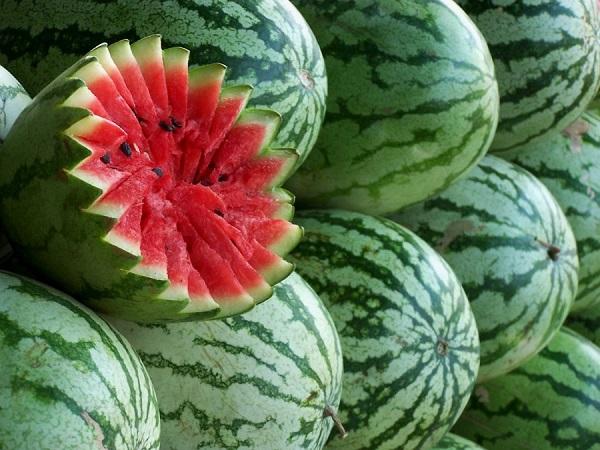
- storage of unopened fruits for up to 2 months;
- has a marketable appearance and sells well.
 Disadvantages include the need for increased watering during drought, as well as regular fertilizing.
Specifics of growing Astrakhan watermelon
Astrakhan watermelon has several specific growing guidelines. If followed, it will yield large fruits and a sweet flavor.
How to grow seedlings
First, you need to grow the seedlings. Then, care for them according to all the rules until the plant matures and produces fruit. The crop is suitable for growing in both greenhouses and open ground.
Seed preparation
Dry seeds are soaked in a potassium permanganate solution for 30 minutes and immediately transferred to the soil. Sprouted seeds are soaked in potassium permanganate and then left in water until sprouts appear. Only then are they transferred to the soil.
In the greenhouse
In the selected area, dig holes 7-8 cm deep. Place 2-3 seeds in each hole and cover with soil. After 7-8 days, seedlings will emerge. Thin them out, leaving the stronger seedlings. Space them 1 m apart.
In open ground
Seeds are sown outdoors primarily in southern regions. Dig holes 7-8 cm deep and plant 2-3 seeds per hole. After germination, thin out the seeds, leaving strong seedlings.
Preparing seedlings at home
Prepare 250 ml containers for the seeds. Fill each container halfway with soil. Place the prepared seeds inside and cover with soil. The seeds are planted to a depth of 4 cm. Cover the seed pods with transparent plastic wrap and leave in a warm place until germination occurs.
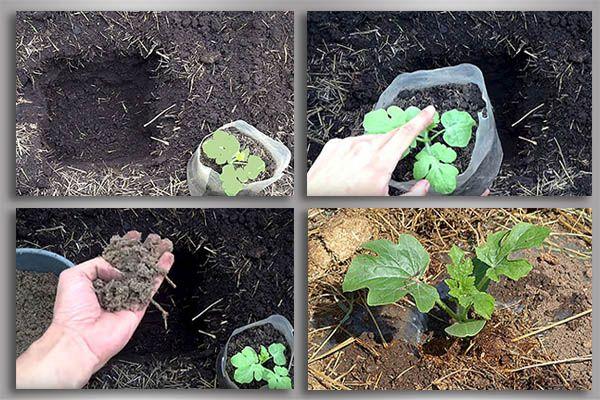 Important! Ventilate the seedlings for 30 minutes every day.
Choosing a landing site
Melons prefer well-lit locations. They should not be grown near tall trees or shrubs that will create shade. Sandy and sandy loam soils are ideal for watermelons. Clay and loamy soils reduce seed germination and produce smaller fruits. Good precursor plants for watermelons include:

- cucumber;
- potato;
- legumes;
- medicinal plants.
The process of transplanting seedlings into open ground
Transferring seedlings to open ground is carried out as follows:
- The selected area is dug up and organic fertilizers are added.
- After 2 weeks, the ridges are formed.
- Holes are dug at a distance of 1 m from each other.
- The depth of the holes is 7-8 cm.
- A little water is poured into them.
- The seedlings are removed from the container.
- They are transferred to holes and covered with soil so that the roots are completely underground.
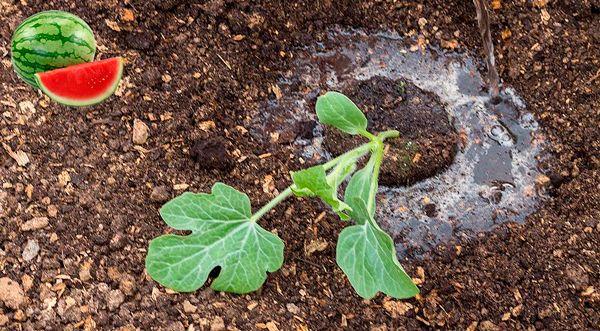 Important! It is recommended to use peat pots when preparing seedlings, as the roots of the plant are very sensitive and there is a high risk of damage during transplantation.
Further care of the crop
To obtain large berries, it is necessary to provide proper care for the plants, monitor watering, fertilize and weed.
Temperature and lighting
The plant requires full daylight. Cloudy weather and shaded areas slow watermelon growth. Constant drafts also damage shoots and disrupt fruit development. The optimal growing temperature is 30-40°C.
Humidity and watering
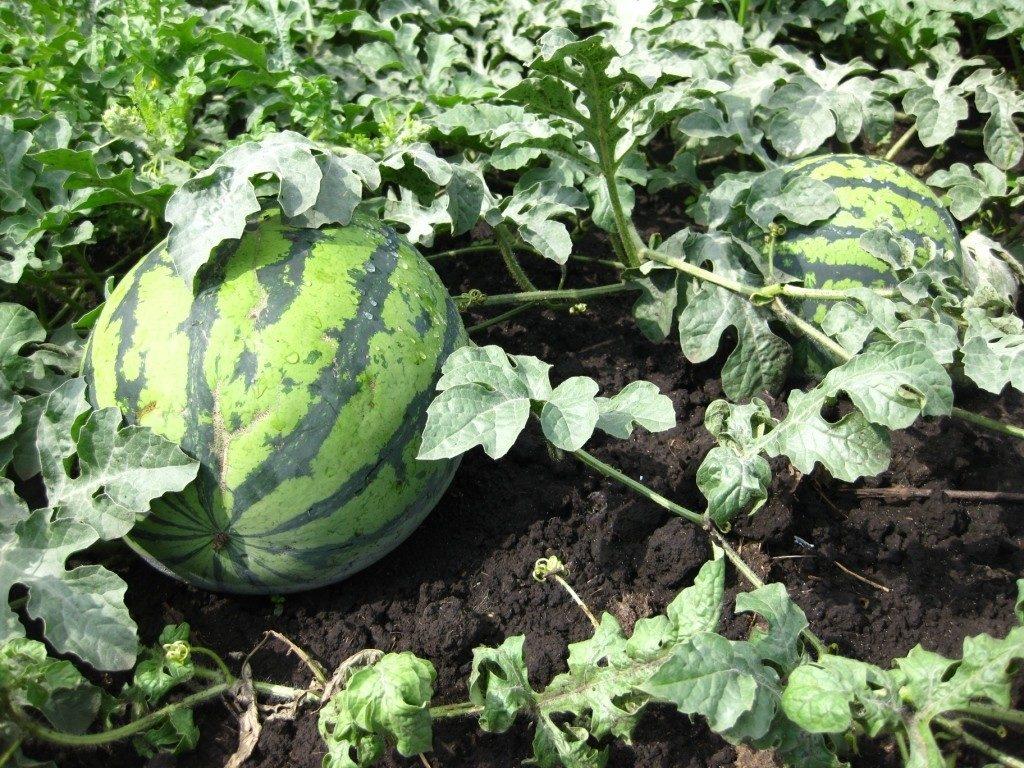
The plant is considered drought-resistant thanks to its well-developed root system, which extends deep into the soil. However, to ensure juicy berries, water daily or every other day. Use warm, settled water.
Soil fertilization
Fertilizing is done three times during the growing season. The first time is when transplanting to open ground, the second time at the beginning of flowering, and the third time after fruit set. The presence of certain micronutrients is important for each period:
- after transplantation - nitrogen and potassium;
- during the flowering period - magnesium, calcium, potassium;
- during ovary formation - ammonium nitrate.
 Important! Prepare all fertilizers according to instructions and observe safety precautions.
Diseases and pests of Astrakhan watermelon
The Astrakhan variety has strong immunity; infections can occur due to inadequate care and non-compliance with planting rules. The plant is susceptible to:
- Anthracnose. Dark spots appear on the leaves. The disease occurs in high humidity conditions.
- Gray mold. A gray coating appears on shoots. The infection spreads from the soil when moisture is high. Damaged areas are cut off and treated with copper sulfate.
- Fusarium wilt attacks the plant's root system. The root area becomes soft and black. Affected shoots are removed and destroyed.
- Melon aphids. High humidity increases the insect's proliferation. They nest on the underside of leaves. They gradually eat away at the leaves, reducing crop yield. Treatments include insecticides and wood ash.

How to determine the ripeness of a berry
How can you tell when berries are ripe? Fruit ripeness can be determined by the following signs:
- the watermelon rind has a glossy finish;
- the perianth turned yellow and dried out;
- the stalk has dried out and the hairs have started to fall off;
- when you tap the berry you hear a dull sound;
- the place where the watermelon lay turned yellow or white;
- When squeezing the fruit, a cracking sound is heard.

Harvesting and storage rules
For long-term storage, the berries are harvested 10 days before they fully ripen. They are cut from the bush with a knife, stems included. For immediate consumption, the fruits are harvested when they are fully ripe.
The harvest is stored for 2 months in a cool, ventilated room at a temperature of 10 °C.
Watermelons should not be stored near other vegetables. They are placed in wooden crates or hung in mesh bags.
Common mistakes when growing
Beginner gardeners make mistakes when growing crops, which results in less-than-desirable harvests. These mistakes include:
- watering the plant too often;
- incorrect thinning of seedlings;
- choosing an unsuccessful landing site;
- too frequent fertilization;
- harvesting before full maturity;
- improper seed preparation.
Reviews of the culture
Alexey, 45, Moscow: "Our family loves watermelons. We've always bought them but never tried growing them. This year, we decided to give planting a try. We bought some seeds at a flower shop. The salesperson recommended the Astrakhan variety. We prepared the seedlings and moved them to the greenhouse. At the end of August, we harvested five large berries. They were very sweet and stored well."
Valentina, 34, from Sochi: "We have our own farm and grow watermelons for sale. We plant the Astrakhan variety every year. The seeds have a good germination rate. We used to buy the seeds right away, and now we extract them from the ripe berries. The fruits grow large and even. Because of their thick rind, they travel well. This variety sells out quickly."
Alexandra, 56, Perm: “I’ve been growing it for the last two years watermelons in a greenhouse"This year, I bought seeds of the Astrakhan variety. I'd heard a lot of good things about it. I prepared the seedlings and transplanted them into the ground. The plants were attacked by aphids. I fought them all season. The berries grew to a medium size and were sweet."
Related posts:
 The best grape varieties for growing in the Urals, planting and care rules in summer
 80 Best Eggplant Varieties for Different Regions with Descriptions and Characteristics
 Descriptions of the 20 best cherry varieties for the Moscow region, their planting and care
 Description of 30 varieties and types of Muscat grapes, planting, cultivation and care
 The best eggplant varieties for growing in a polycarbonate greenhouse: planting and care
 Description of the 90 best varieties of beans for open ground with names
 Description of the best cabbage varieties for 2025 for different regions
 Description of the best tomato varieties for Udmurtia for open ground and greenhouses