
- Description of the climate of Central Russia
- The best varieties
- Winter-hardy
- Veda
- Bryansk pink
- Iput
- Odrinka
- Jealousy
- Pink pearl
- Fatezh
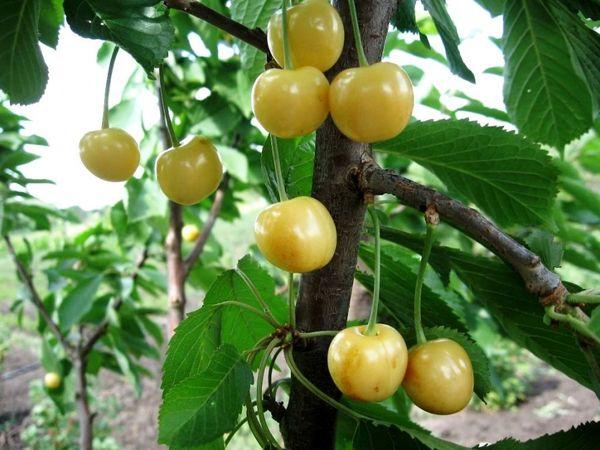
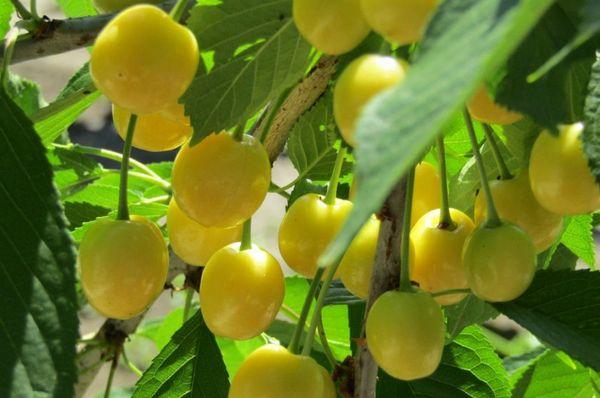
- Yellow-fruited
- Yellow Drogana
- Leningrad Yellow
- Oryol amber
- Homestead yellow
- Chermashnaya
- Low-growing and dwarf
- Self-fertile and early-fertile
- Sweet
- Timing and methods of growing a tree
- Cherry tree care
- Fertilizing and watering
- Crown formation and pruning
- Pest and disease control
- Preparing for winter
- Gardeners' Tips
Which cherry varieties are suitable for central Russia? This question concerns many gardeners who want to grow this crop on their plots. Unlike cherries, cherries are more heat-loving and do not tolerate extremely cold winters. Thanks to the efforts of breeders, new, "hardier" varieties have been developed. Hybrid cherries are less demanding of favorable weather conditions and bear fruit reliably, regardless of winter temperatures.
Description of the climate of Central Russia
This is the conventional name for the European part of Russia. The weather here is moderately continental. Winter begins in the second half of November and lasts until almost mid-March. January is considered the coldest month. During this month, the thermometer can drop to -29 degrees Celsius. Average winter temperatures range from -2 to -14 degrees Celsius. In this region, all winter months are snowy and frosty.
Snow doesn't begin to melt until mid-March. Warmer spring weather is often followed by prolonged cold spells with snowfalls and frosts. Only by mid-May does warm weather return, with temperatures reaching 10-15 degrees Celsius. However, even at this time of year, recurring cold spells are possible.
Warm and comfortable weather prevails throughout the summer in central Russia. Summer temperatures range from 22 to 25 degrees Celsius. The weather is influenced by anticyclones, which bring temperatures of up to 30 degrees Celsius, and cyclones with rain and thunderstorms.
With the arrival of September, summer gradually transitions into autumn. The weather gradually cools, with nighttime temperatures dropping below freezing and increasing rainfall. From the second half of October, the weather deteriorates further. The wind becomes cold and dank, with frequent sleet. In November, temperatures drop below freezing. By the end of the month, the entire Central Russian region is covered in snow.
The best varieties
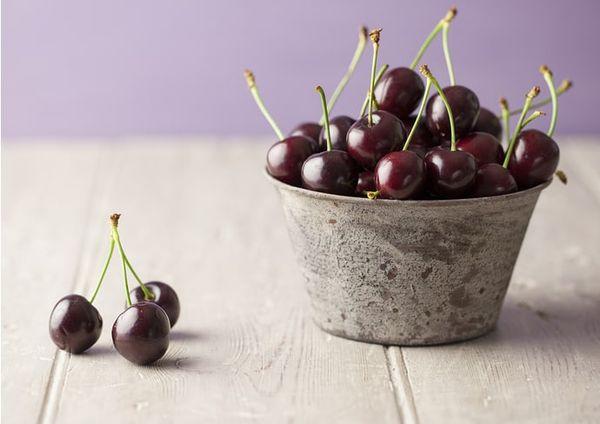
The climate of central Russia allows for the cultivation of various cherry varieties. Most trees are self-sterile, so to achieve a high yield, several cherry varieties need to be planted in the garden.
Winter-hardy
In the European part of Russia, it's advisable to grow frost-hardy varieties whose crowns are resistant to frost cracks and whose flower buds are unlikely to freeze over the winter. It's best to plant trees that bloom closer to June, so their flowers are not affected by spring frosts.
Veda
A domestic hybrid bred specifically for the central region. This 2.5-meter-tall tree is frost-resistant. It blooms in mid-May and is resistant to recurrent frosts. The harvest begins in late July.

This is a table variety with sweet, medium-sized, dark cherry berries. A single mature tree can yield almost 23 kilograms of cherries. This variety is self-sterile. To encourage fruit formation, pollinator trees (Bryanochka) should be planted nearby.
Bryansk pink
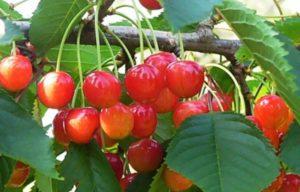
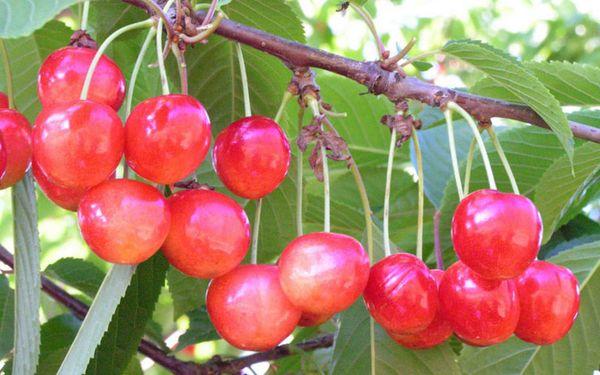
It blooms in mid-May and bears fruit in late July and August. Each tree yields 25 kilograms. The berries are sweet in taste and medium-sized (each weighing up to 5.45 grams). The flesh is juicy and crisp. The skin of ripe berries has a yellowish-pink hue. This plant is self-fertile.
Iput
A cold-hardy cherry tree with large, very sweet berries, almost black when ripe. A mature tree reaches 3.45 meters in height. It blooms in May, and the berries ripen by the end of June. Each mature tree can yield up to 45 kilograms. The variety is self-sterile.
Odrinka
A cold-hardy variety. It blooms in May and ripens in July. The berries (each weighing 5.45 grams) are dark cherry-colored, sweetish, and have juicy, crisp flesh. The tree is self-sterile and requires pollinators.
Jealousy
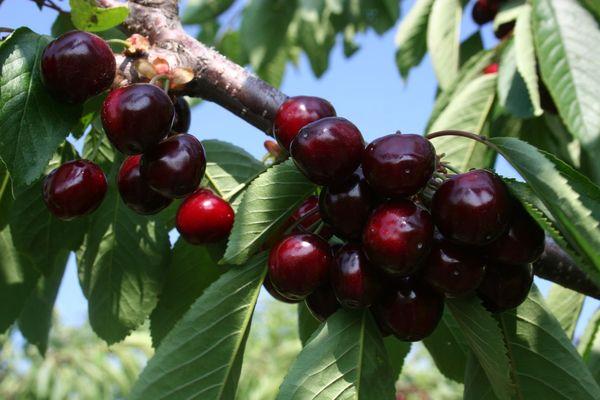
A winter-hardy plant that begins bearing fruit in its fifth year. It blooms in mid-May, and the fruit is harvested in early July. The berries are dark burgundy, slightly sweet, crisp, and juicy. Each berry weighs 4.67 grams. Each mature tree can yield 14-20 kilograms of berries. It is partially self-fertile.
Pink pearl
The harvest of sweet, large, orange-pink berries can be picked as early as the first week of July. The first fruits ripen when the tree is five years old. This self-sterile variety boasts excellent winter hardiness of its flower buds.
Fatezh
The tree ripens mid-early. The berries are medium-sized, sweet-tasting, and yellowish-red in color. The tree is above average in winter hardiness. It is self-sterile.
Yellow-fruited
In a garden plot located near a forest, it's best to plant yellow-fruited cherries. Birds don't bother yellow berries, preferring the red ones. These varieties produce much higher yields.
Yellow Drogana
An early-bearing hybrid developed in Germany. The first berries appear in the third year of life. It blooms in spring, in May. The harvest can be done in the first week of July. Pollinators should be planted near the tree. The cherries are sweet, with golden skin, and large. A single berry can weigh up to 8 grams. This is a suitable large-fruited cherry variety for the European part of the country. Other large-fruited varieties (such as Bull's Heart) are more heat-loving.
Leningrad Yellow
A winter-hardy, productive crop. The berries ripen in August. Cherries have a golden-amber color and sweet, juicy flesh. Each berry weighs 3.45 grams. The trees have good immunity and are rarely affected by diseases or insects.
Oryol amber
A tall tree that begins bearing fruit in its fourth year, producing up to 35 kilograms of berries annually. This variety blooms in mid-May. The harvest can be picked in late June. The berries are juicy, aromatic, and amber-yellow. Each berry weighs 5.45 grams.
Homestead yellow
An early, self-fertile crop that doesn't require pollinators. The berries are juicy and crisp, weighing 5.45 grams each. The cherry tree blooms for the first time in its sixth year. It's a winter-hardy crop that tolerates harsh winters well.
Chermashnaya
A tall tree that first produces berries in its third or fourth year. This cherry variety ripens in July. The berries are medium-sized (4.45 grams), yellowish in color, and have a sweet, delicate, dessert-like flavor.
Low-growing and dwarf
In a small garden plot, it's advisable to plant short, dwarf trees. They're easier to harvest, producing a harvest that's almost as abundant as that of taller trees. Columnar and dwarf cherry trees bear fruit earlier. Popular varieties include Helena, Sylvia, Original, Weeping, Valeria, and the Canadian varieties Compact Lambert and Compact Stella.
Self-fertile and early-fertile
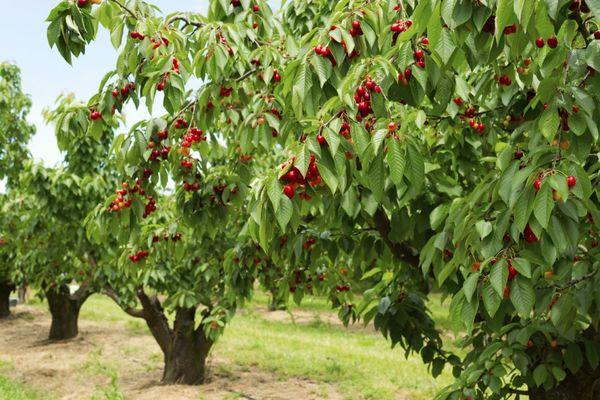
Self-fertile varieties are those whose flowers can be pollinated by their own pollen. Self-pollinating varieties produce approximately 42 percent of the total number of flowers. These varieties do not require cross-pollination and are not dependent on bees. The best varieties are considered to be Narodnaya Syubarova, Priusadebnaya Zheltaya, and Danna. Partially self-fertile varieties include Ovstuzhenka and Revna.
When choosing a variety, gardeners pay attention to the year in which the first berries appear and when they ripen. Early-bearing trees are those that begin bearing fruit in their third year (Chernaya rannyaya, Zorka, Leningradskaya rozovaya).
Sweet
For many gardeners, the main criterion when choosing a variety is the sugar content of the berries. The sweetest cherries (about 13-14% sugar) are considered to be Yaroslavna and Ostozhenka. The Tyutchevka variety has slightly less sugar (11%).
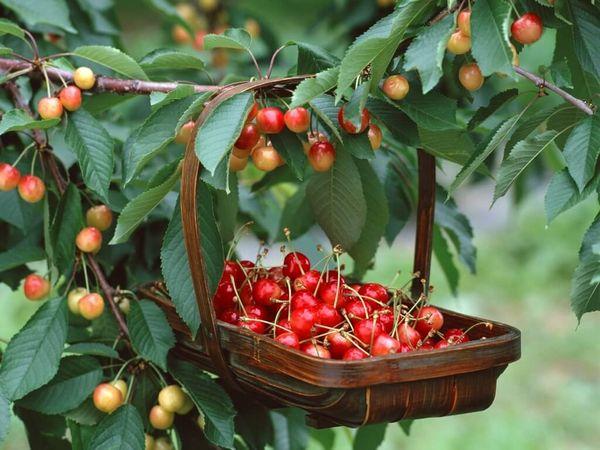
Timing and methods of growing a tree
When choosing a cherry tree for planting in your garden, consider the variety's characteristics and the climate of your region. It's best to plant the tree in a sunny, wind-protected spot. Cherries prefer fertile, neutral soil and do not tolerate waterlogging. If the soil is too acidic, add dolomite flour and wood ash. Excessively clayey soil can be amended with sand and peat.
Cherry trees are planted in early spring, after the snow melts, or in the fall (before October). Seedlings are purchased from a nursery. For planting, it's best to buy young trees 1-2 years old with a healthy, fibrous root system and moist or slightly opening buds. Container-grown seedlings are also available.
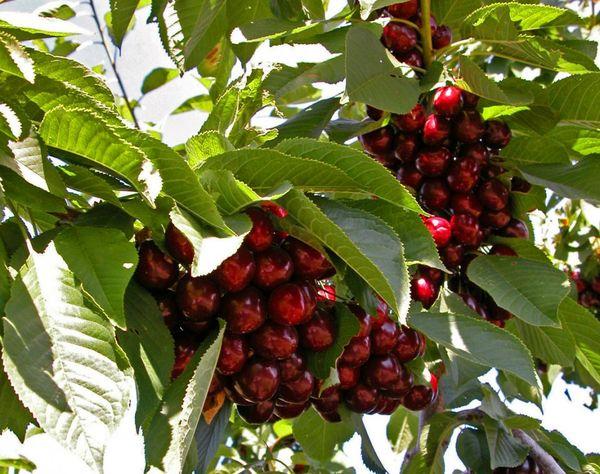
The hole is dug a month before planting. It should be 3 meters from the next tree. The hole size is 70 x 80 centimeters. The soil is mixed with sand, wood ash (305 grams), well-rotted manure (a bucket), peat, and minerals (105 grams each of superphosphate and potassium sulfate).
The fertilized soil is returned to the hole to form a mound. A stake can be inserted for support, if desired. Then the seedling is placed on top and covered with the remaining soil up to the root collar. The soil is compacted and two buckets of water are poured under the root.
The tree trunk area can be mulched with peat or sawdust. Immediately after planting, the central trunk should be shortened by 40-50 centimeters.
Cherry tree care
With proper care and timely fertilization, cherry trees will bear fruit regularly for 15-25 years. Hybrid varieties are considered winter-hardy, but it's best to insulate the trees before frost sets in.

Fertilizing and watering
Fertilizer added to the hole when planting the tree should last for 2-3 years. Young trees can be fed in early spring with a urea solution (35 grams per 10 liters of water). Fruit-bearing trees are fertilized with superphosphate and potassium sulfate (50 grams per 12 liters of water) before flowering. After harvesting, the cherry tree is again fed with potassium and phosphorus. For the winter, the area around the trunk is mulched with humus.
Cherry trees are watered only during periods of drought and prolonged periods of no rain. Care should be given to the tree during flowering and berry formation, applying 2-3 buckets of water under the roots 1-2 times a week. Reduce watering during the ripening period. Excess moisture can cause cherry trees to crack. Before the onset of cold weather in late autumn, perform a moisture-replenishing irrigation.
Crown formation and pruning
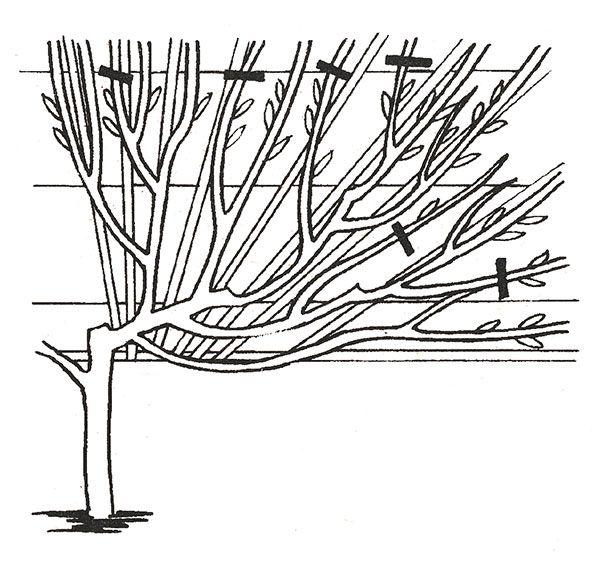
Cherry tree branches stretch upwards. This growth can be controlled by pruning, which should be done only in early spring (before bud break).
In the second year after planting, all skeletal branches are shortened by a third of their length. Crown formation is completed before fruiting begins. At 4-5 years of age, the tops of the branches are left untouched; berries will grow on them. In subsequent years, only inward-growing, diseased, and dead branches that thicken the crown are pruned.
Pest and disease control
Cherry trees become ill if they lack fertilizer or suffer from excess moisture and insect attacks. Treating the tree's trunk area with a urea solution in early spring will kill any insects that survived the winter and replenish nitrogen reserves. You can also rinse the trunk with a solution of ferrous sulfate or whitewash it with lime. Before flowering, the foliage can be sprayed with insecticides (Fitoverm, Karbofos, Iskra-Bio, Akarin) as a preventative measure.
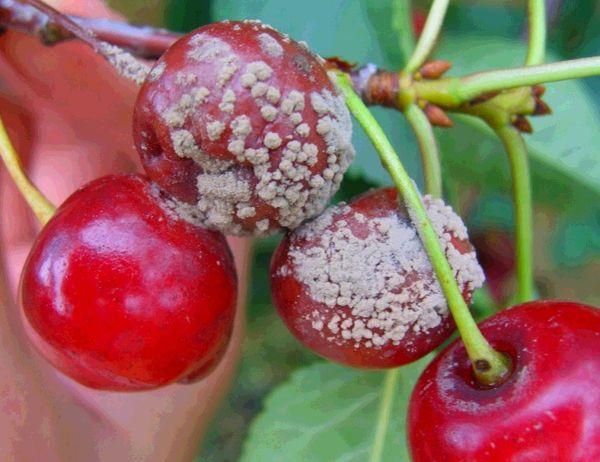
Cherry trees can be susceptible to brown leaf spot, berry rot, clasterosporium leaf spot (spots and holes on leaf blades), and mosaic disease (light yellow circles on leaves). To prevent these diseases, the foliage can be sprayed in early spring with a solution of Bordeaux mixture, copper sulfate, or Nitrofen.
Solutions of potassium sulfate, urea, and wood ash help prevent sudden drying of leaves and buds (verticillium wilt). If green-brown spots (scab) appear on the berries, the foliage can be sprayed with a solution of Kuprozan. If gum flow is detected, the area should be cleaned, treated with copper sulfate and covered with garden pitch..
Preparing for winter
Young trees are most often damaged by frost. Older trees survive winters better. Before the onset of frost in late autumn, cherry trees are insulated. First, remove all fallen leaves, loosen the soil around the trunk, pour 5-6 buckets of water under the roots, and apply fertilizer. Then, lay a thick layer of mulch around the trunk, such as humus with peat or sawdust. The trunk is whitewashed with lime and wrapped in burlap. In winter, snow should be regularly added to the area around the trunk.
Gardeners' Tips
5 tips from experienced gardeners:
- Dry or excess branches can be trimmed before or after the sap flow has ended.
- Nitrogen fertilizers are applied only in early spring.
- Before wintering and at the beginning of spring, the trunk should be whitewashed with lime.
- In autumn, all fallen leaves must be removed from under the tree.
- In spring, with the first rays of the sun, the covering and insulation are removed so that the tree does not get steamed.
Related posts:
 Planting and caring for cherries, feeding and growing rules
 Description and cultivation of the Bryansk pink cherry variety, pollinators
 Descriptions of the 20 best cherry varieties for the Moscow region, their planting and care
 The health benefits and harms of cherries, rules of consumption, and their effects on the body
 Description and characteristics of the Veda cherry variety, planting and care scheme
 Description of the cherry variety Lyubimitsa Astakhova, planting and care
 Description and characteristics of the Tyutchevka cherry variety, planting and care
 Description and cultivation of the Yantarnaya cherry variety, selection of pollinators