
Winter garlic "Skif" was bred at the West Siberian Experimental Station, specifically for the region's conditions. The variety was included in the State Register of Breeding Achievements of Russia back in 1993. Over the past decades, this cold-resistant vegetable has found a cultivar in other regions of the country.
General characteristics of the variety
The plant is short, reaching up to 50 cm, but the stem can reach slightly higher. The aboveground portion consists of 8-10 succulent green leaves covered with a bluish waxy coating. The foliage is robust, up to 3 cm wide in the middle.
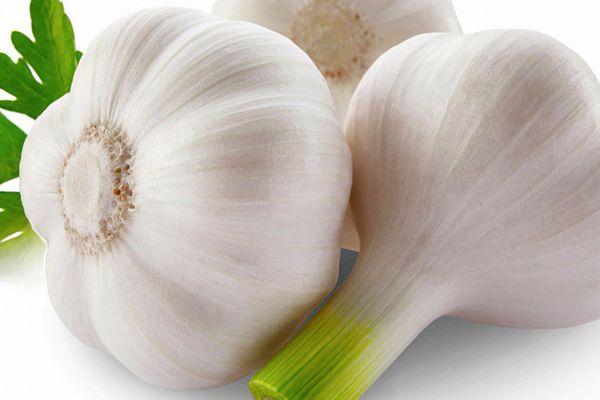
The Skif variety is a bolting variety. However, the formation of the generative organ has virtually no effect on the vegetable's yield, although at home, home gardeners remove the bolting stems to increase the bulb's size. Numerous small bulblets form on the bolting stem, which serve as planting material, so if necessary, they can be retained for propagating a preferred variety.
The Skif garlic variety yields 800-850 g per square meter. Each bulb weighs between 25-35 g. Under particularly favorable conditions or with good care, a bulb can grow to 50 g. The amount of garlic harvested per unit area does not vary significantly due to climatic conditions or the vagaries of the weather throughout the season.
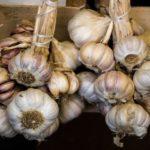
Winter garlic can be stored almost all winter. It begins to sprout closer to spring if the pantry is too warm. It can be stored in bunches, tying the heads by the remaining woody stems. Gardeners also note that garlic stores well in perforated boxes.
The plant is resistant to white rot and bacterial bulb rot. Thanks to its pungent odor, garlic has virtually no enemies. However, pests such as the onion fly can also attack it by laying eggs on young plants. If widespread, pests of garlic plantation can be treated with insecticides against caterpillars and leaf-eating insects.
Take a look Also
![When should you dig up garlic in the Moscow region in [year]?](https://harvesthub.decorexpro.com/wp-content/uploads/2018/07/kogda-vykapyvat-chesnok-v-moskovskoj-oblasti-9-300x200.jpg)
Consumer qualities of vegetables
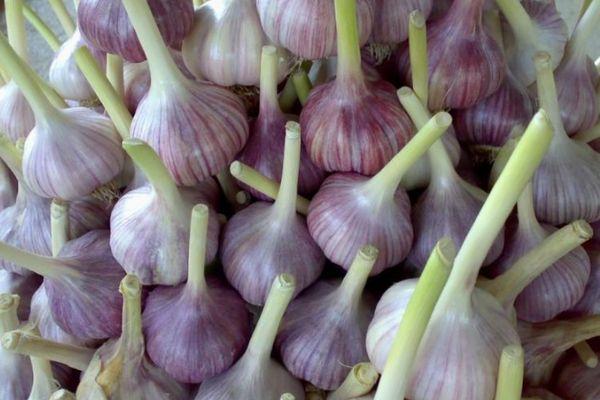
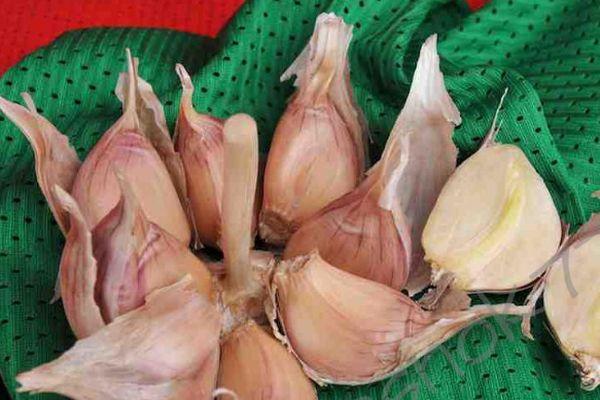
The bulbs of varietal garlic consist of cloves tightly packed together, arranged around the remains of the flower stalk. They are attached to a dry base and covered on top by 2-3 layers of light, thin scales with purple veins. Each garlic clove is individually covered with tough, leathery, tightly fitting scales.
Garlic cloves are blunt-tipped. The flesh has a medium-spicy flavor and a strong, distinctive aroma. Garlic contains a rich array of vitamins and microelements, the most important of which is selenium. This mineral is essential for normal heart function, so garlic should be included in the diets of children and the elderly.
Skif garlic is suitable for fresh consumption in culinary dishes and is also suitable for winter preservation. Its pungent flesh is used as an ingredient and flavoring in many Caucasian, Asian, and Russian dishes. It is included in ground meat for cutlets or homemade sausages, kupaty, and other dishes. It is also used to make savory appetizers and vegetable caviar. The garlic bulbs can be grilled.
In addition to storing the vegetable fresh, garlic is fermented and pickled, creating a delicious addition to the main diet. This type of preparation is used both as a stand-alone snack and as an ingredient in dishes. But garlic's main use is as a flavoring agent for other preserves. In addition to imparting a pleasant aroma, garlic juice, rich in phytoncides, preserves homemade preserves from spoiling. It is added to jars containing assorted vegetables, in pickled mushrooms, sauces and appetizers from a wide variety of vegetables.
How to grow winter garlic?
There are two ways to plant garlic. Using bulblets harvested from the flower stalk, a commercial harvest can take two seasons. Therefore, garlic is most often planted as cloves, sorting through the bulbs after harvesting.
Each clove is a miniature bulb that will bloom and produce both bulblets and 4-6 new cloves gathered into a head. When planting bulblets in the first season, the resulting bulblets are large, round, cloveless and non-flowering. These bulblets are already suitable for edible use, but these bulblets are usually planted to produce the familiar garlic cloves the following year.
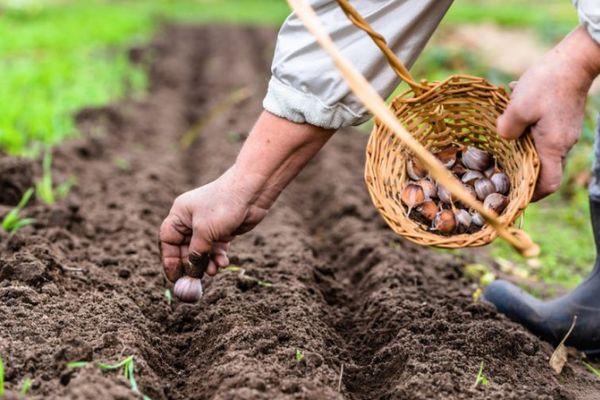 Planting of winter garlic Skif begins in late autumn, when the cloves are able to germinate and form a root system. As soil temperatures drop, new bulb development stops at this stage, and the garlic overwinters in the ground or on raised beds. Early in the spring, the plant begins to grow and forms above-ground organs. The approximate timing depends on the onset of sustained freezing temperatures. In central Russia, garlic is planted in the first ten days of October.
Select healthy, large bulbs for sowing. They should be separated into individual cloves, but the leathery scales should not be removed. The bulbs are planted 10-15 cm deep in well-dug soil. The distance between the cloves should be about 10 cm.
After planting, the beds are covered with a thick layer of mulch made from sawdust, humus, peat, etc. The mulch layer should be at least 10 cm thick. This "featherbed" will protect the crops from frost if the snow cover is low or extreme cold sets in.
In early spring, when the snow melts in the garden, rake the mulch aside. It can be used for other beds. Sometimes, by this time, the garlic greens have already sprouted, so remove the mulch carefully. Further care consists of watering if there has been no rain for a long time and the soil dries out to a depth of 3-5 cm. When flower stalks appear, pull them straight up from the stems. The stalks can be used for food or pickled for winter.
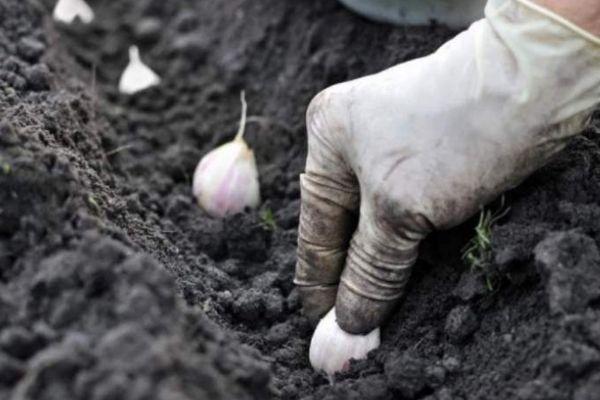
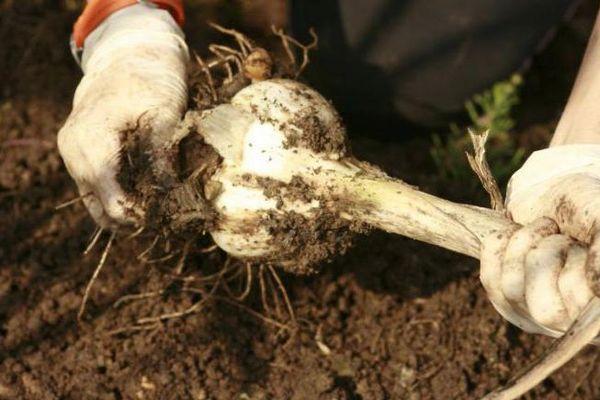
It takes approximately 100-110 days from germination to technical maturity. Ripening can be determined by the appearance of the above-ground portion: the leaves begin to yellow and dry, and the stems begin to lodge. The Skif variety of garlic ripens in mid-July.
Gardeners note that it's important not to leave the garlic in the garden for too long after it ripens. After about two weeks, the bulbs begin to separate into individual cloves, which then sprout. This garlic won't last long in storage and will wilt early.

The garlic is dug up and dried, the roots and dirty skins are removed, the stems are cut to 25 cm, and the heads are tied into bunches. The garlic is hung in a cool, dry pantry.
When growing from bulblets, the first sowing is done in the spring, leaving 4-5 cm between the "seeds." The bed is tended, weeding and watering the small plants as needed. The plants will not flower. Harvesting is done in August, based on the wilting of the above-ground portions. The bulblets are peeled and stored in boxes. To obtain commercial garlic, they should be planted in the fall of the same year, within the timeframe specified for planting cloves. The bulblets will bloom the following year. Care for them as recommended in the description of cultivation techniques for garlic from cloves.
Related posts:
 The best varieties and types of early and winter garlic with descriptions and names
 How to properly grow and care for spring garlic in open ground and when to tie it into knots
 When can spring garlic be harvested in 2025? Harvesting from the garden and storage
 Description and yield of the Lyubasha garlic variety, planting and care
 Description and cultivation of single-clove garlic, planting and care rules
 Winter garlic cultivation technology, large varieties and cultivation rules
 How to properly dry winter garlic after digging and where to store it at home
 Garlic harvesting dates in the Urals in 2025, cultivation and care