
- How does high humidity affect garlic?
- Harvest times in rainy summer
- The Importance of Timing During Continued Rainfall
- Is it possible to dig up bulbous plants in the rain or immediately after rain?
- How to harvest after a rainstorm
- Rules for digging up garlic heads
- Preparing and drying the harvest
- What to do if garlic gets caught in the rain while drying
- How to improve crop quality
- How to prevent diseases
- Common mistakes
When to harvest garlic During a rainy summer? This is a question many gardeners ask, faced with adverse weather conditions and frequent precipitation. To do this, they need to adhere to the harvest maturity dates, choose the right time for digging, and consider the harvesting and subsequent processing rules.
How does high humidity affect garlic?
Increasing moisture during garlic's growth accelerates the ripening process. Therefore, if garlic is left in the soil for too long, the cloves may rot. This rot quickly spreads throughout the bulb, infecting adjacent bulbs.
Harvest times in rainy summer
During rainy weather, dig up the garlic crop two weeks earlier than expected. Winter varieties are typically harvested starting on July 20, and spring varieties are harvested two to three weeks after winter varieties. It's important to watch for signs of ripening:
- The seed capsule on the stalk splits. This is typical of the winter variety, as it is prone to bolting.
- The lower leaves droop and the upper ones turn yellow.
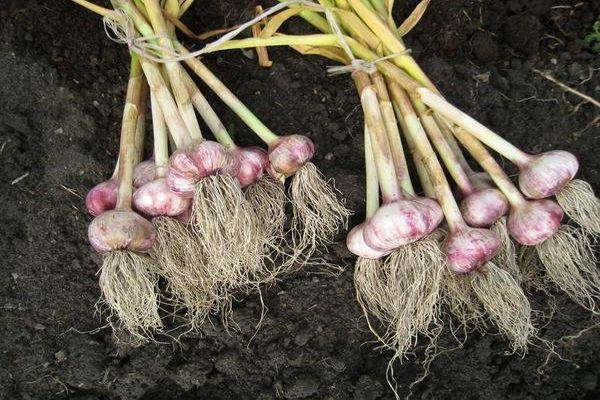
- When several heads are dug up, a white-purple color is noted.
- The cloves are easily separated from each other, and the peel comes off without any problem.
- They have a characteristic garlic smell.
The Importance of Timing During Continued Rainfall
Harvest the bulbs 3-4 hours after rain, preferably in the evening or afternoon, when the soil has dried out slightly. The shorter the time between rain and digging, the greater the risk of bulb rot.
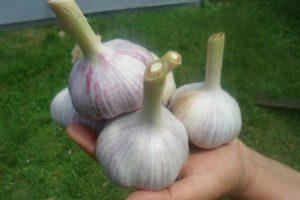
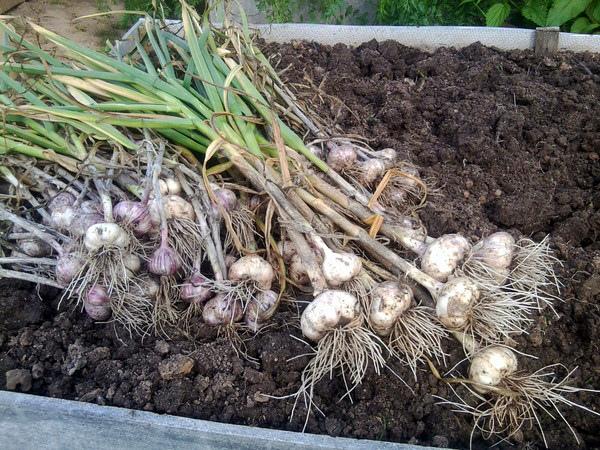 Important! Do not wash the bulbs with water to remove soil. Gently brush off the soil with your hands.
Is it possible to dig up bulbous plants in the rain or immediately after rain?
It's not recommended to dig up garlic bulbs during rain or immediately after precipitation. However, if all the signs of ripening are clearly visible, there's no other choice. If the bulbs are left in the ground for even 2-3 days longer, they will become overripe, which will affect the quality of the cloves and their shelf life.
How to harvest after a rainstorm
During heavy rain, several factors must be considered during harvesting and subsequent processing.
Rules for digging up garlic heads
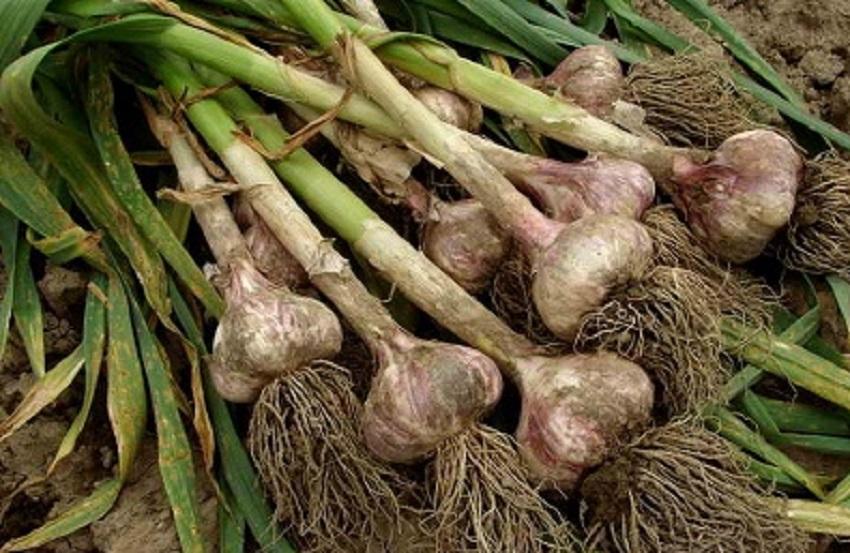
Garlic harvesting is carried out in accordance with the following rules:
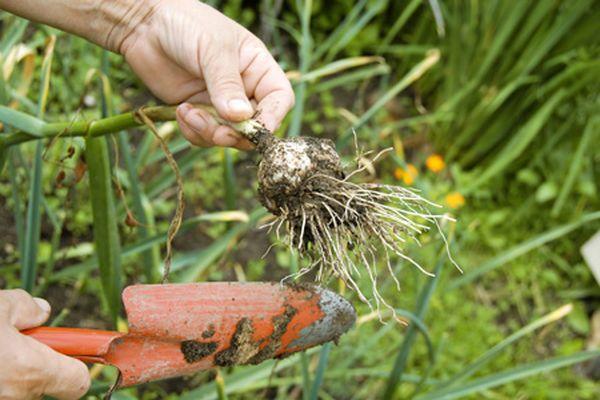
- To dig up the bulbs, use a pitchfork. It's sunk deep next to the bush, then lifted up.
- The bulbs are removed from the root ball and cleaned by hand.
- Do not tap the bulbs against each other or other objects, as this will reduce the shelf life of the harvest.
- The heads are sent for processing along with the tops and roots.
- The bulbs are collected in a bucket and then transferred under a canopy.
Preparing and drying the harvest
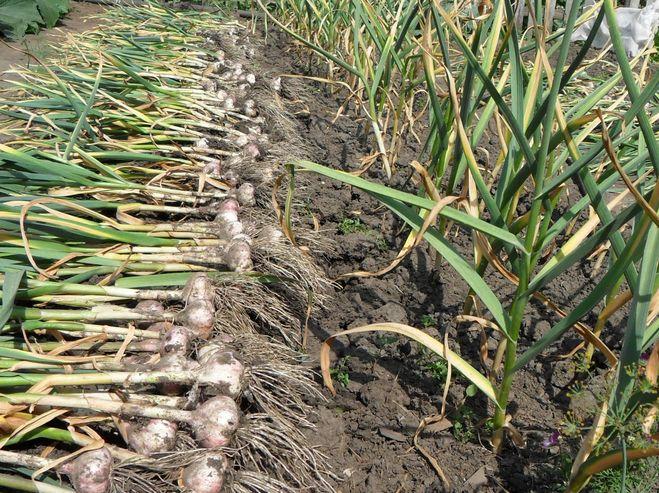
After digging, the garlic is transferred to a ventilated area protected from rain. They are distributed in small groups under a canopy and left for 3-4 days. Then, the harvest is checked for dryness. The plants are turned over, the vines are thinned out, and the vines are left for another 7-8 days. By this point, the tops and roots should be completely dry. If they remain damp, the garlic is dried for another 2-3 days, turning the vines.
What to do if garlic gets caught in the rain while drying
If garlic gets caught in the rain while drying, it should be moved under cover as quickly as possible. The more moisture it gets, the greater the risk of bulb rot. Hang several garlic plants in one spot. Cover any gaps under the cover that could allow water to seep in. Turn over any damaged garlic and leave it to dry for 2-3 days.
It's recommended to check your garlic daily for rot and other signs of damage. This procedure helps prevent rot from affecting your crop.
Important! To prevent such a situation in the future, it is necessary to carefully study the weather forecast.
How to improve crop quality
To extend the shelf life of your garlic harvest, you need to follow a few rules:
- Individual peeled cloves, damaged and rotten bulbs are removed and processed first.
- Trim the roots with scissors, leaving 1 cm in length. Root treatment should be carried out no later than a month after digging.
- The tops are cut off for ease of storage or left for braiding and bunching.
- It is necessary to carry out fertilizing in a timely manner.
- Garlic is planted according to the timing.
- The crop is watered regularly.
- Harvesting begins after signs of ripening are identified.
How to prevent diseases
Frequent exposure to moisture weakens plants' immunity, making them susceptible to disease. The plant has a strong immune system, but under unfavorable conditions, it weakens. Not only the upper shoots but also the bulbs are affected. The disease continues to progress even after uprooting. Preventive measures include:
- The bulbs are carefully dug out, trying not to damage them.
- Dry the garlic thoroughly until the stems and roots are completely dry.
- The storage location must correspond to the variety and favorable conditions.
- For storage, choose one of the methods and prepare garlic for this purpose according to the recommendations.
It is recommended to process the winter variety first, as it does not store very well.
Optimal storage conditions are cool temperatures and moderate humidity. Suitable storage locations include a cellar, refrigerator, or basement.
Spring garlic is characterized by a long shelf life. It tolerates room temperatures well and is suitable for kitchen storage in braids, bunches, and other storage methods.
Common mistakes
When digging up garlic, it's important to follow the rules. Many gardeners and novice summer residents make mistakes:
- Bulbs should be dug out of the ground, not pulled out by hand. This can damage the central shoot, cause the cloves to fall apart, and compromise the integrity of the bulb.
- Trim the tops after they've completely dried out. While the stems are still green, the bulb continues to draw nourishment from them.
- Large heads have a longer shelf life than others. Therefore, small and medium-sized heads are used immediately for processing and consumption.
- It is better to harvest winter garlic a few days earlier than to let it overripe.
![When can you harvest garlic in [year] according to the lunar calendar, timing and storage rules](https://harvesthub.decorexpro.com/wp-content/uploads/2019/04/chesnok-2-300x188.jpg)
Related posts:
 The best varieties and types of early and winter garlic with descriptions and names
 How to properly grow and care for spring garlic in open ground and when to tie it into knots
 How to properly dry winter garlic after digging and where to store it at home
 When to dig up garlic in the Moscow region in 2025
 When can spring garlic be harvested in 2025? Harvesting from the garden and storage
 Description and yield of the Lyubasha garlic variety, planting and care
 When to harvest winter garlic in Siberia, planting and storage times, varieties
 Garlic harvesting dates in the Urals in 2025, cultivation and care