
The Roxolana F1 melon was developed for cultivation in cold regions. This hybrid is resistant to temperature fluctuations and diseases, and its rapid ripening period allows for a productive harvest even in short summers.
Description and characteristics
This variety is popular for its excellent flavor and disease resistance. The fruits have a long shelf life, so they can be eaten even during the colder months. For best storage, they are picked unripe and stored in a cool, dry place. These fruits can last for months. To ripen, they should be moved to a warm, sunny spot.
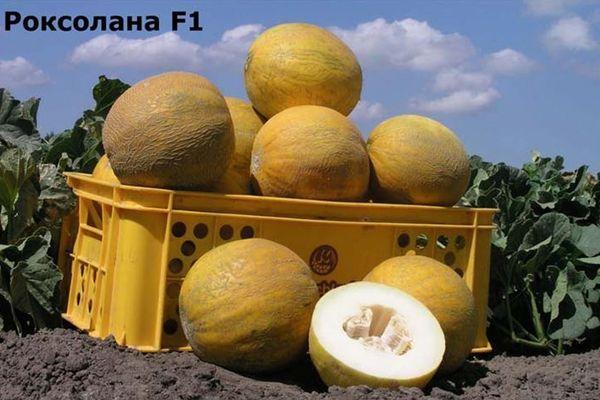
Thanks to its characteristics, this variety receives only positive reviews from gardeners and large farmers. In addition to its long shelf life, the melon boasts the following qualities:
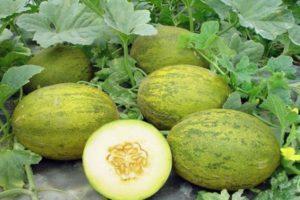
- weight from 1.5 to 2.5 kg;
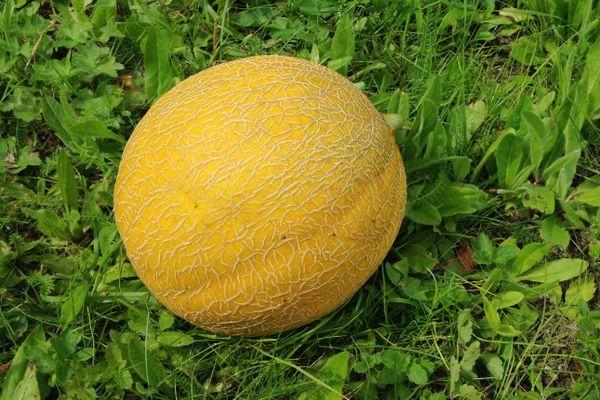
- fruits are round, slightly elongated;
- the peel is thin, yellow-orange in color;
- the tops are powerful;
- leaves are wide;
- maturation period from 60 to 70 days;
- the pulp is sweet and tender.
The plant is resistant to melon diseases such as anthracnose and downy mildew. Furthermore, the roots are resistant to rot. The crop can be sown when the soil temperature reaches 15°C. When growing outdoors, choose a site at an elevated position with full sun. The plant's broad foliage will protect the fruit from the scorching sun.
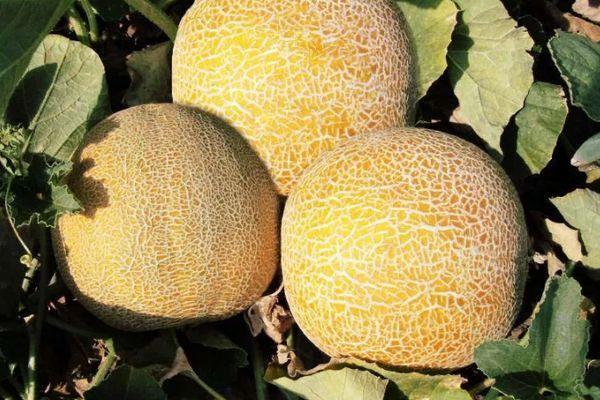
In regions with cold climates and short summers, it is recommended to grow seedlings and then transplant them into a greenhouse.
Growing methods
Seeds purchased from a specialist store are suitable for planting. Some gardeners use seeds from previous harvests, stored for at least three years. However, it's important to remember that Roxolana F1 is a hybrid variety. Even if this sowing yields a harvest, the fruits will vary in varietal quality. To ensure a high-quality harvest, it's necessary to purchase seeds annually.
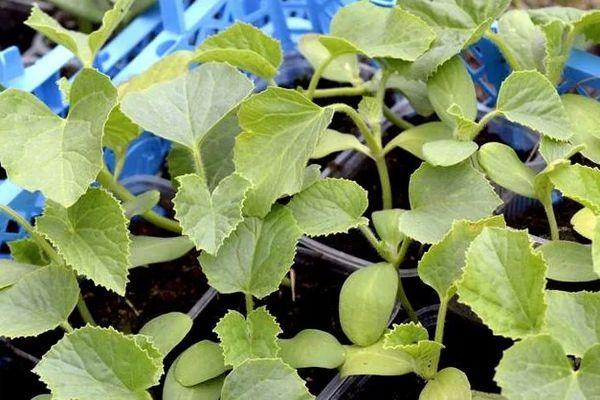
Before sowing, the seeds need to be germinated. To do this, soak them in a warm, weak solution of potassium permanganate for 12 hours. Then, place the seeds on damp cheesecloth until sprouts appear.
Seedlings are grown in peat pots and planted outdoors along with the container. Young plants have very fragile roots, easily damaged when removing the seedlings from the container. You can make your own soil by mixing soil, compost, peat, and ash. Place two seeds in each pot. Keep the seedlings in a warm, well-lit area. Cover the pots with glass or plastic until the seedlings sprout.
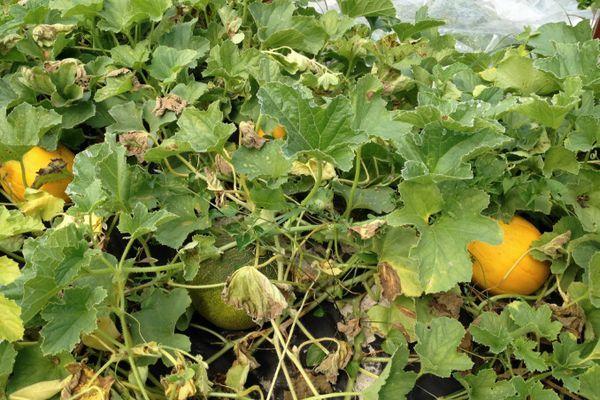
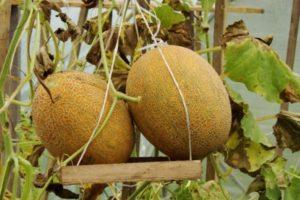
Before transplanting, the soil in the greenhouse should be fertilized. Bushes are planted 0.6 meters apart. Since space in the greenhouse is limited, melons can be grown vertically. To do this, install a trellis in the greenhouse and stretch twine. As the stems grow, they are wrapped around the twine. The plant cannot support the melon's weight, so the fruits are hung in netting from the trellis. This will prevent the fruit from falling until ripe.
The greenhouse needs to be ventilated daily. It's also important to attract insects to pollinate the seedlings. This can be done in two ways: by spraying the melons with sugar water or by planting honey-producing flowers near the greenhouse. Alternatively, you can use artificial pollination to avoid attracting unwanted insects.
In warm climates, seeds can be sown directly into open ground. The plot should be well-lit and elevated. Crop rotation should be kept in mind. If the plot previously contained melons, sowing melons is not recommended.
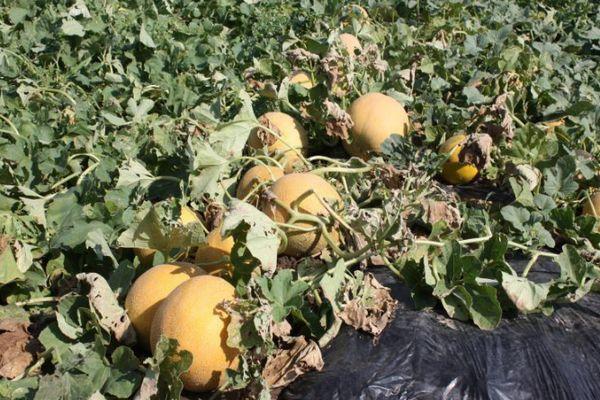
The sowing depth is up to 10 cm. The soil is fertilized with diluted manure, humus, peat, or ash. When growing horizontally, place a substrate (wood, linoleum, or plywood) under the fruit to limit contact with the soil. Otherwise, the fruit may rot. To obtain an early harvest, as in a greenhouse, it is recommended to plant seedlings in the ground rather than sow seeds.
Caring for the variety
For melons to grow and produce a productive harvest, they require soil with low acidity, good oxygen supply, and sufficient minerals. Therefore, loosening and fertilizing are essential. Fertilizers are added at least once every 14 days, and loosening is performed as needed.
Weeds must be removed promptly; Roxolana does not tolerate such a neighborhood. Furthermore, the variety does not tolerate high humidity; watering should be done no more than once every seven days.
Only male stems are formed on the main stem, while female stems grow on shoots. In order for the plant to bear fruit, it must be pinched. After the fourth leaf appears, the stem is pruned to form shoots. These branches also need to be pruned. The procedure is repeated several times. If pinching is done correctly, one bush can produce 5 to 7 large fruits.
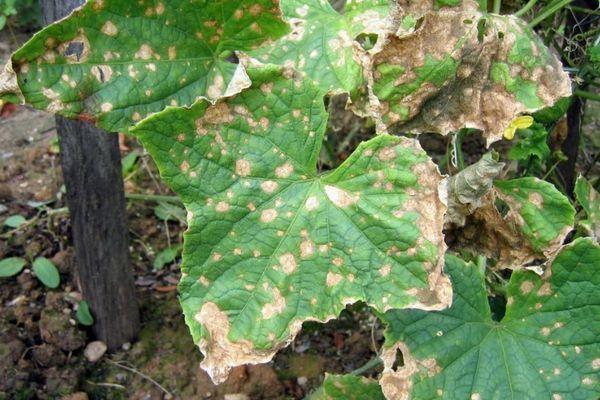
The variety is resistant to many diseases, but there is always a risk of infection. Roxolana is sometimes susceptible to fusarium wilt, powdery mildew, and insect attacks. If fusarium wilt occurs, reduce watering and destroy the affected plants. Melons should not be planted in the area where the infected melon grew for another five years.
If affected by powdery mildew, treat the bushes with sulfur powder. Bordeaux mixture or chemicals will help repel insects (aphids, flies, and spider mites).
Related posts:
 The best grape varieties for growing in the Urals, planting and care rules in summer
 The best eggplant varieties for growing in a polycarbonate greenhouse: planting and care
 Descriptions of the 20 best cherry varieties for the Moscow region, their planting and care
 80 Best Eggplant Varieties for Different Regions with Descriptions and Characteristics
 Is it possible to grow an apricot tree from a seed in your garden? How to plant and care for it?
 How to properly grow a peach tree from a seed at home, planting and care
 Planting and caring for cherries, feeding and growing rules
 How to plant walnuts, care for them, and grow them at home
Take a look Also
I grow this variety beautifully in southern Siberia. This is my third year growing these melons, and I immediately started using a growth bioactivator. BioGrowI always manage to get a bountiful harvest with it; I even made melon jam one summer. My neighbor's variety grows much more poorly without the activator.