
- Description and characteristics of the plant
- How to plant in open ground correctly
- Choosing a location
- Soil requirements
- Preparing the site and planting hole
- How to select and prepare planting material
- Recommendations for choosing deadlines
- Planting diagram
- Care Features
- Watering
- Top dressing
- Spraying
- Mulching
- Preparing for winter
- Loosening and weeding
- Pruning and shaping
- Harvesting and storage
- Methods of reproduction
- Graft
- Copulation
- In the side cut
- Into the cleft
- Cuttings
- With bones
- Layering
- Diseases and pests
- Pomegranate moth
- Pomegranate aphid
- Branch cancer
- Review of popular varieties
- Gulyusha
- Ak Dona Crimean
- Achik-anor
- Improved Cossack
- Akhmar
- Nar-sharin
- Dholka
- Regional cultivation features
- Crimea
- Krasnodar Krai
- In the Moscow region
- Urals and Siberia
- Features of growing in tubs
- Tips and recommendations
This exotic crop piques the interest of gardeners and excites the imagination of landscape designers. Knowing how to properly grow pomegranates allows you to enrich your landscape with beautiful, eye-catching trees and enjoy the healing fruits.
Description and characteristics of the plant
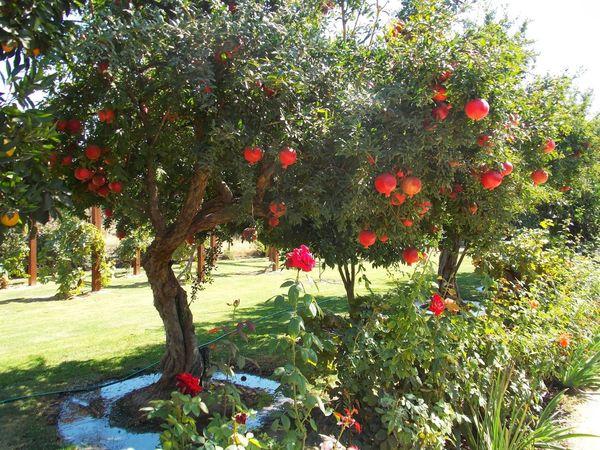
Pomegranate belongs to the Lythraceae family. It is a deciduous shrub or small tree, growing up to 6 m tall with slender branches often tipped with spines. The leaves are opposite, arranged in clusters on short stems; they are elliptical, 2-8 cm long, and glossy green.
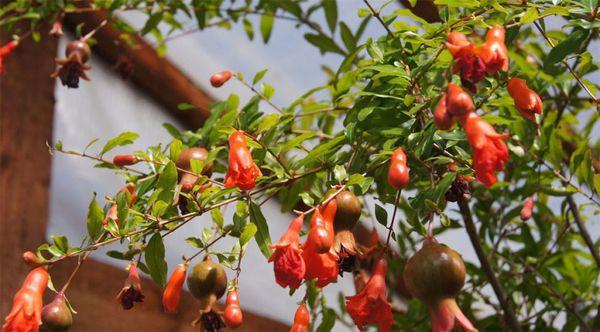
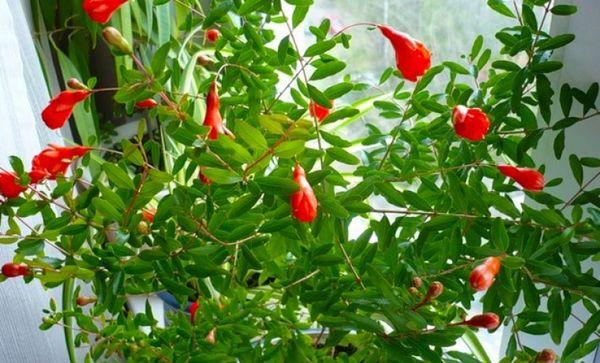
The plant is adorned with red, orange-tinged pomegranate flowers, which come in two varieties: pitcher-shaped, which produce ovaries, and bell-shaped, which do not. It blooms delightfully from May to August.
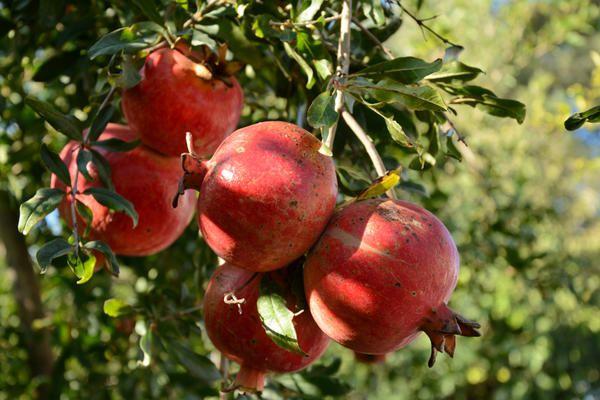
The fruits of the garden pomegranate are spherical in shape, have a red-yellow or brown-red skin and weigh up to 600 g.
How to plant in open ground correctly
Planting a garden pomegranate in open soil has its own peculiarities that must be taken into account so that the plant takes root successfully and decorates the garden with its beautiful, healthy appearance.
Choosing a location
Pomegranate requires sufficient light, so for planting seedlings, choose a bright area in the garden that is warm, without drafts or cold winds.
Soil requirements
Garden pomegranates thrive and produce high yields in deep, organically rich, loamy soils with good drainage. When growing the crop, keep in mind that it does not tolerate saline or waterlogged soils.
Preparing the site and planting hole
Before planting the pomegranate, dig up the area, fertilize, and moisten it. Drainage is essential, using gravel, crushed stone, or broken brick.
The planting hole should be three times larger than the root system of the garden pomegranate seedling. This is necessary to enrich it with a soil mixture containing fertile soil and compost.
Important! Mineral fertilizers and manure are not allowed when planting pomegranates..
How to select and prepare planting material
To successfully grow this crop, you need to select a winter-hardy and grafted pomegranate seedling. It's best to purchase planting material from reputable nurseries where it's grown in compliance with all technological standards and requirements.
Each garden pomegranate tree must undergo a thorough inspection and preparation before planting. First, inspect the plants and remove any damaged or rotted roots. Garden pomegranate seedlings 40-50 cm tall with well-developed roots should be pruned, leaving 4-6 buds to form a bush with 3-4 trunks.
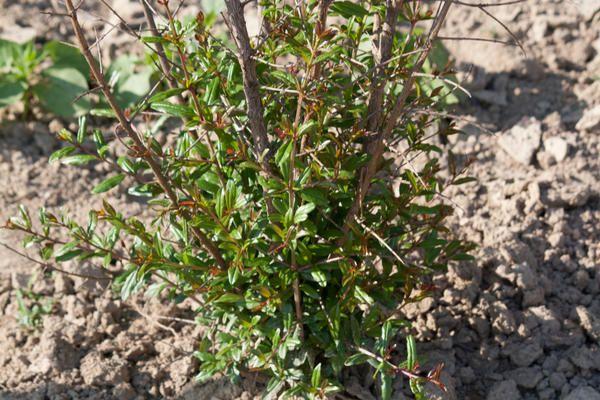
The day before planting, soak the garden pomegranate seedlings in water. To ensure better survival, treat them with a growth regulator, leaving them in the solution for 30 minutes. Then proceed with planting.
Recommendations for choosing deadlines
Planting is best done in the spring, when the soil temperature reaches 12 degrees Celsius at a depth of 10 cm. These soil conditions are typically observed in May.
Planting diagram
Depending on soil fertility, pomegranate planting patterns range from 5 x 3 to 4 x 4 m. Standard planting hole dimensions are 60 x 60 x 60 cm. When planting, place pomegranate seedlings at a 45-degree angle to the row; this will facilitate winter protection for the garden pomegranate. Then compact the seedlings to eliminate air pockets, water, and mulch.
Care Features
When cultivating pomegranate, not only proper planting is important, but also subsequent care, which must be carried out according to all the rules.
Watering
Pomegranate is a moisture-loving plant, especially during flowering and fruit formation. During this time, water frequently, using settled, room-temperature water.
Garden pomegranate should be watered several times per season depending on weather conditions.
Watering is required in spring and autumn, and in summer during dry weather.
Top dressing
Pomegranates need to be well-fertilized before planting. Then, in the summer, fertilize them with mineral complexes containing potassium, phosphorus, and nitrogen, preferably in liquid form. And in the fall, when digging, enrich the soil around the plant's trunk with manure.
Spraying
For preventative purposes, garden pomegranates require spraying, which is recommended in the spring before bud break with copper-containing preparations and in the fall after leaf fall with a urea solution. This procedure will protect the plant from fungal diseases.
Mulching
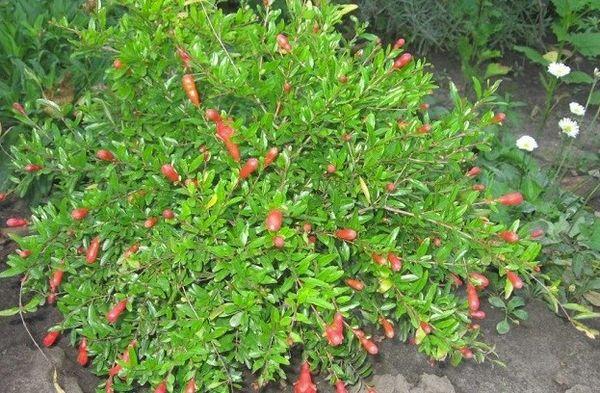
You can expect a bountiful pomegranate harvest by consistently applying a mulch of straw, dried leaves, and grass clippings under the plant. This will retain moisture, prevent weed growth, and allow oxygen to reach the pomegranate rhizomes.
Preparing for winter
Even frost-hardy varieties of garden pomegranate require winter protection. First, spray the crown of the plant against fungal infections with a 3% Bordeaux mixture. Once the average daily temperature drops below 10 degrees Celsius, tie the pomegranate branches with rope or twist them and bend them toward the ground. Then pin them down and cover them with 15-20 cm of soil. You can cover the top with spruce branches.
Loosening and weeding
The pomegranate tree's trunk area should always be kept clean and free of weeds. This requires loosening and weeding, which promotes healthy growth. It's important to do this after watering, preventing a hard crust from forming.
Pruning and shaping
Shaping the crown of a garden pomegranate is an essential step in caring for the plant. Scheduled pruning should be performed in the spring or after harvest, removing damaged and dry branches, as well as small ones that can cause the tree to become overgrown. After this, it's necessary to remove root suckers and shoots growing on the trunk.
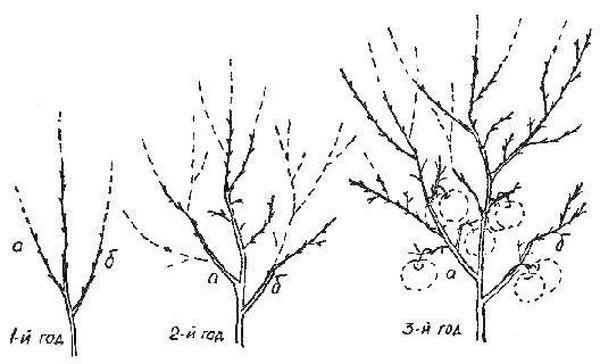
To ensure abundant fruiting, leave 5-6 main shoots on the plant. This will make it easy to care for the pomegranate and also provide shelter for the winter. Like all fruit trees, pomegranates age, so they require rejuvenating pruning once every 20 years.
Harvesting and storage
In October, begin harvesting pomegranates. At this time, they will reach peak ripeness, their seeds will be rich in sugars, and their skins will acquire a vibrant red or mottled yellow-orange hue.
Important! Harvest the fruit before it's fully ripe, as it may crack at this stage and become unsuitable for storage.
Pomegranates store well and stay fresh for a long time. The key is to create favorable conditions: store the fruit in a room with good air circulation and a temperature of 2 degrees Celsius.
Methods of reproduction
If you want to increase the number of pomegranate plants in your garden without spending a penny, you can propagate them. There are many ways to do this.
Graft
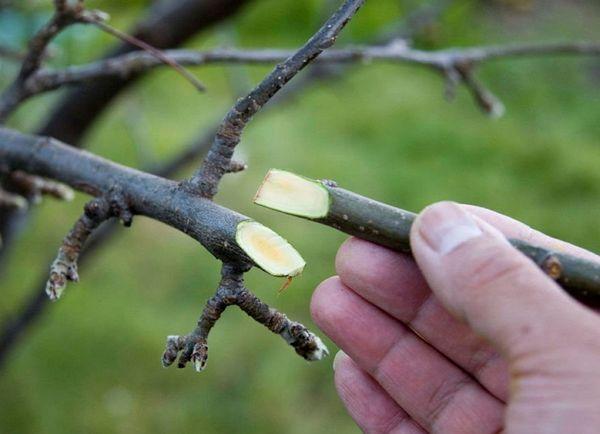
Pomegranate propagation can be accomplished by grafting, which can be done in many ways: copulation, side cutting, or cleft grafting. In all cases, the cut scion should be firmly placed against the cut on the rootstock or inserted into the bark and securely tied. After some time, the graft will fuse. The favorable period for grafting is spring.
Copulation
The simplest and most effective method of grafting pomegranates is copulation. This method is used when the scion and rootstock are the same size. For better fusion, soak the cuttings in a root stimulator solution for 8 hours.
In the side cut
This technique is very common. It involves grafting a pomegranate scion onto the side of the rootstock in the spring, inserting it into a cut in the wood. This method is advantageous because it ensures a strong bond between the scion and the rootstock.
Into the cleft
A versatile way to rejuvenate an aging pomegranate tree and boost its immunity to the vagaries of nature, as well as revive a dying tree by grafting a new variety into its crown.
The method is simple to perform: in the spring, cut off the top of the rootstock and cut it lengthwise, then insert the scion into the gap.

Cuttings
This method of propagating pomegranate involves taking cuttings from one-year-old woody shoots, each 25 cm in size. For rooting, it's best to choose a fertile, well-drained site with soil warmed to 2°C (37°F). In May, plant the pomegranate tree 10 cm deep, leaving one internode above the soil surface. Plant the cuttings 10-12 cm apart at an angle.
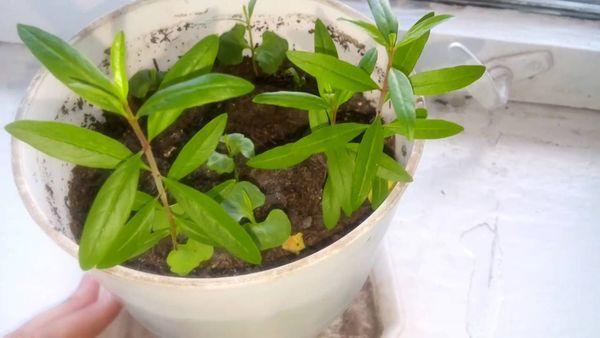
To ensure good rooting of pomegranate cuttings, the soil must be kept moist. Watering should be stopped at the end of October, after the leaves have fallen.
By autumn, the garden pomegranate seedlings, which have grown to 50-60 cm in height with 3-4 shoots and developed roots, are suitable for transplanting next season.
With bones
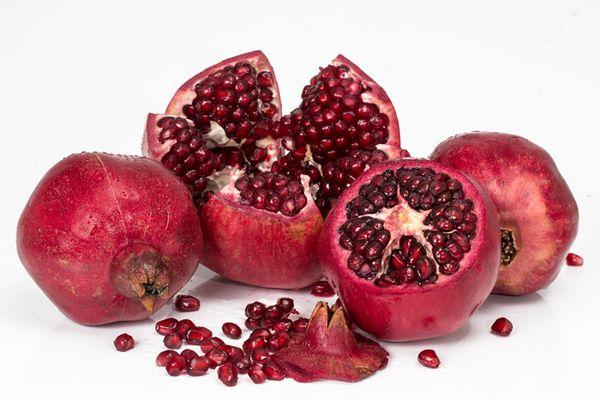
You can grow pomegranates using seeds taken from a fresh, ripe fruit. To do this, follow these steps:
- Spread the pomegranate seeds over the damp soil and cover them with 1.5 cm of soil.
- During the germination process, moisten the soil regularly.
- Once the pomegranate seeds have sprouted and reached 3 cm in height, transplant them so that the distance between the sprouts is at least 4 cm.
- After 3 months, repeat the procedure, leaving only strong, healthy shoots.
When propagated by seeds, there is a chance that the pomegranate will replicate all the characteristics of the mother plant, provided the bush forms a crown and provides proper care over several years.
Layering
Garden pomegranates can also be propagated by layering—rooted shoots that form naturally on the plant. To do this, bend a lower branch down to the soil and pin it in a trench, leaving the tip intact. Then, cover the stem with soil. Adventitious roots will form on the part of the stem covered with soil, and aboveground organs will develop from the buds at the top.
Separate the rooted cutting of the garden pomegranate from the mother bush and transplant it.
Diseases and pests
Unlike other fruit trees, garden pomegranates are less susceptible to diseases and pests. However, poor care and unfavorable weather and climate conditions can lead to dangerous outbreaks of infectious diseases and pest infestations.
Pomegranate moth
The larvae of this insect pose a danger, gnawing at the tissue in plant trunks, thereby disrupting photosynthesis. They also damage buds, inflorescences, and fruits, eating them from the inside, creating tunnels, and filling them with excrement.
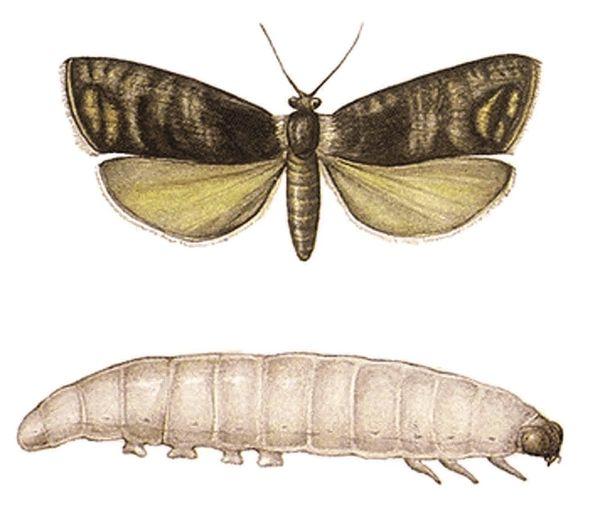
Control measures: Insecticide treatments before sap flow, during bud swelling, during the growth of new ovaries, and in the fall, at the end of the growing season, before the leaves have fallen, will help rid pomegranates of codling moths. Pheromone traps can also be installed from May to June.
Pomegranate aphid
This insect damages all parts of the pomegranate. Adults and larvae settle in colonies on foliage and young shoots. Several generations occur throughout the year, with peak numbers observed in June. From July onward, aphids primarily concentrate on shoots, calyxes, and cracks in pomegranate fruits.
Their activity is evidenced by the deformation of leaves and shoots, and the dropping of fruits. Sooty molds develop on the aphid excretions, forming a black film that adversely affects the physiological processes and ornamental appearance of the plant.
Control measures: spray the pomegranate with soapy solutions; in case of mass reproduction, only chemical preparations will be effective.
Branch cancer
Cracking of the bark on the branches of weakened plants, the appearance of wounds with spongy swellings along the edges, and drying of shoots indicate branch cancer.
Control measures: Treatment involves removing infected parts of the pomegranate or cutting the tree back to the stump.
Review of popular varieties
Among the many varieties of culture, the following varieties of garden pomegranate are popular.
Gulyusha
A tall tree with a strong, spreading crown, the pomegranate is prized for its round, slightly oval-shaped fruit with a tapered base, weighing 230 g. The rind is pink or light red. The large, cherry-colored seeds have a harmonious flavor that combines sweetness and tartness.
This garden pomegranate variety is high-yielding, disease-resistant, and moderately frost-hardy, requiring protection. The harvest has a shelf life of 4-5 months.
Ak Dona Crimean
The tall tree forms a branched crown. The pomegranate is adorned with elongated leaves and large fruits with a dense, creamy-red skin. The pink-hued seeds are large and sweet with a hint of tartness.

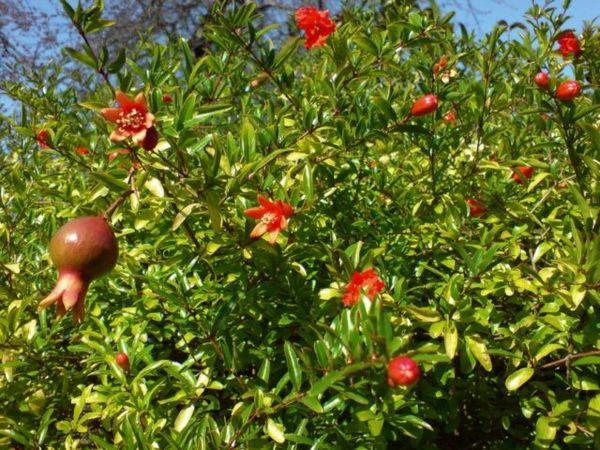
This garden pomegranate variety is winter-hardy and easy to care for, and its fruits are particularly popular due to their excellent taste.
Achik-anor
A small tree producing 300g round fruits tapering toward the base. The rind is thick and light carmine in color. The pomegranate seeds are large, cherry-colored, and have a sweet and sour taste.
The positive characteristics of the pomegranate variety include stable, high yields, good disease resistance, and average frost resistance.
Improved Cossack
A medium-sized tree, producing round, cream-green fruits with spots all around. The large, pinkish-red seeds have a distinctive, pleasant flavor.
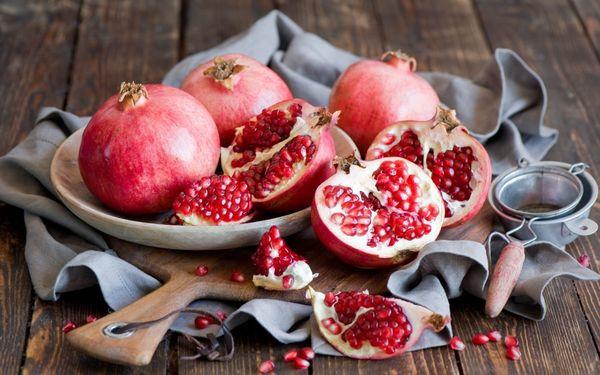
This pomegranate variety is highly productive, disease resistant, and easy to care for.
Akhmar
The bush can reach up to 4 m in height. Fruits weigh up to 300 g. The skin is pinkish-green, thick, and easily peeled. The seeds are light pink.
This garden pomegranate variety ranks among the top in terms of sweetness. Akhmar's distinctive feature is its long flowering period.
Nar-sharin
A small tree with fruits that have pinkish-beige skin with light greenish flecks. The seeds are round, soft pink, and sweet in flavor.
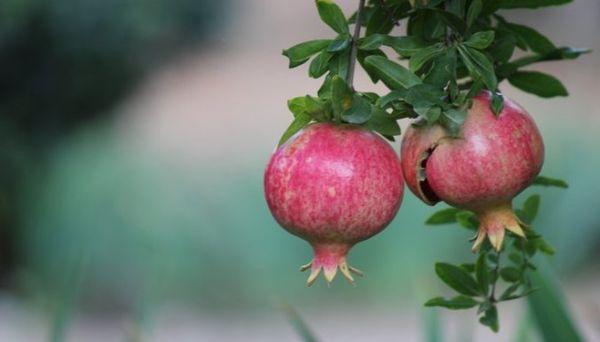
This variety of garden pomegranate has gained popularity due to the taste and commercial qualities of its fruits.
Dholka
A medium-sized plant, up to 2 m tall. The fruits of this garden pomegranate are light pink in color, weighing 180-200 g. The color of the seeds varies from white to pale pink.
The variety is valued for the taste of its fruit, attracting attention due to the high sugar content of its pomegranates.
Regional cultivation features
When cultivating garden pomegranate, its regional characteristics are taken into account.
Crimea
Pomegranates can withstand drought and temperatures down to -17 degrees Celsius. Therefore, the crop is more common in southern Crimea.
Krasnodar Krai
In the subtropical climate of the Krasnodar region, where dry weather prevails, pomegranate grows well and produces high and stable yields.
In the Moscow region
When growing pomegranates in the Moscow region, ensure the crop is well-protected during the winter. However, under these conditions, flowering may not occur.
Urals and Siberia
The weather and climate of the Urals and Siberia are not suitable for the pomegranate tree, but the plant can still be grown only in greenhouses with a certain temperature, humidity, and lighting level.
Features of growing in tubs
The plant can be grown in the garden, indoors, or in containers. For this purpose, it is recommended to train it as a tree with 5-6 skeletal branches or a shrub with 3-4 trunks. The height of the pomegranate should not exceed 60 cm. In May, remove dry, old shoots and those growing inward from the crown.
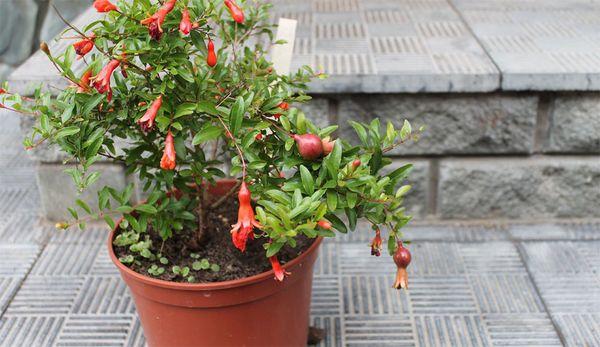 Advice! For the winter, after the pomegranate sheds its leaves, move the tub to a cool basement..
Tips and recommendations
Without knowledge of pomegranate biology and cultivation techniques, it's impossible to grow a robust pomegranate tree in your garden that will delight you with a bountiful harvest of delicious and healthy fruit. It's important to heed the advice of experienced gardeners:
- To create comfortable conditions close to natural conditions for the southern culture.
- Plant pomegranates on plains facing south or southeast, where they are least exposed to seasonal frosts.
- Provide proper care for the pomegranate by applying fertilizer, regularly watering, mulching, pruning and shaping the crown.
- Carry out preventive maintenance in a timely manner.
By taking these important points into account when growing pomegranates, you can decorate your dacha with this exotic plant and reap delicious fruits every year.
Related posts:
 Caring for and growing pomegranate from seed at home
 Planting and caring for indoor pomegranates at home for beginners
 How to propagate pomegranate cuttings at home and rooting methods
 The best eggplant varieties for growing in a polycarbonate greenhouse: planting and care
 80 Best Eggplant Varieties for Different Regions with Descriptions and Characteristics
 The best grape varieties for growing in the Urals, planting and care rules in summer
 TOP 50 recipes for favorite and unusual salads for the New Year of the Pig 2019
 The health benefits and harms of cherries, rules of consumption, and their effects on the body