
- The history of Turgenevka cherry breeding
- Table: pros and cons of the variety
- Description and characteristics of the culture
- Habitat
- Size of mature tree and annual growth
- Pollinators of the variety
- Flowering period and ripening time
- Productivity, fruiting
- Applications of berries
- Drought resistance, winter hardiness
- Immunity from diseases and pests
- Planting nuances
- Optimal timing
- Choosing a suitable location
- Favorable and unfavorable neighbors
- Preparing the planting hole
- Step-by-step algorithm for planting a seedling
- Aftercare of cherries
- Watering and mulching
- Pruning and frost crack prevention
- Fertilizers
- Diseases and pests, methods of control and prevention
- Preparing for winter
- Reviews of the variety
The Turgenevka cherry, or Turgenevskaya cherry, is a garden variety that is incredibly popular among gardeners. Recently, breeders have been delighting gardeners with a wide variety of cherry varieties. But the Turgenevka, thanks to its unique characteristics, remains a leader. The plant reaches a height of 3.5 meters, boasts frost resistance, and boasts excellent yields.
The history of Turgenevka cherry breeding
This variety, popularly known as the Turgenev cherry, was bred in 1979. Thanks should be given to the Soviet breeders who cultivated the Zhukovskaya seedlings. Thanks to the efforts of several employees at the All-Russian Research Institute, it was possible to produce a tree that met all the necessary characteristics.
This cherry tree variety, planted in a garden, will delight gardeners with its high yield, moderately spreading crown, and frost resistance. However, it is not suitable for northern regions of the country. Seedlings are more often planted in the central part of the country, where the climate is milder.
Table: pros and cons of the variety
Besides its frost resistance, the plant has a number of advantages that invariably attract gardeners. But with advantages comes disadvantages.
| Advantages of the variety | Among them, they cite the high quality of the berries—large, tasty, and aromatic. Furthermore, the plant is easy to grow and doesn't require extensive gardening knowledge. |
| Cons | If there are no pollinators in the area, the cherry tree will produce few fruits, as one of the variety's drawbacks is partial self-sterility. Flower buds are not particularly frost-resistant. |
Description and characteristics of the culture
Cherry is considered one of the most common plants. You can find it in almost any garden. But each variety has its own characteristics. Let's talk about those specific to the Turgenevka.
Habitat
It's believed that this cherry variety is uncommon in the northern regions of our country. They are most commonly cultivated:
- In the central regions of our country.
- In the Central Black Earth Region.
- And also in the North Caucasus.

Size of mature tree and annual growth
The average height is considered to be 3-3.5 meters. This is the "height" of a mature plant. It is believed that the tree grows slowly and reaches a height of 3 meters by the age of 4.5 years. After this, the cherry tree begins to bear fruit.
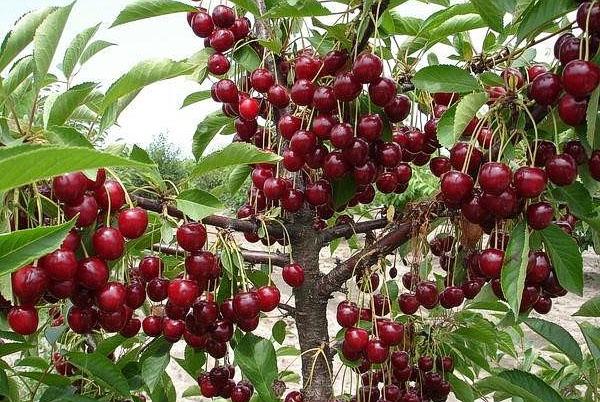
Important! The average lifespan of a cherry tree is 15-17 years, during which time it actively bears fruit.
By modern standards, the yield of this variety is not that high, but gardeners are attracted not so much by the parameters as by the stability of the species.
Pollinators of the variety
This cherry variety may have some problems with pollination, so it is recommended to plant the following varieties nearby:
- Lyubskaya;
- Favorite;
- Melitopol joy.
Flowering period and ripening time
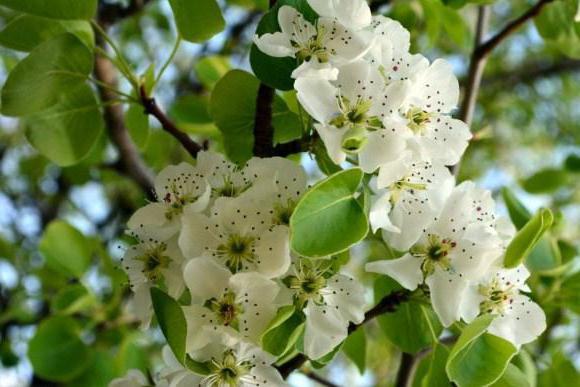
Flowering begins when the outdoor temperature reaches a constant 10 degrees Celsius. The growing season lasts 7-10 days, but can extend up to 2 weeks. Harvesting can begin in July.
Productivity, fruiting
The tree begins to bear fruit only in its fifth year. The yield is considered good. The berries meet the following characteristics:
- The average weight of one cherry reaches 5 grams.
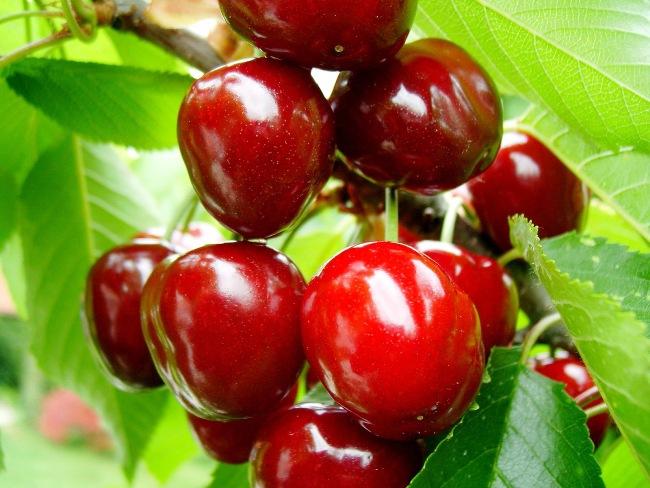
- It has a dark red hue and juicy flesh.
- The taste of the fruit is sweet, but with a characteristic sourness.
Applications of berries
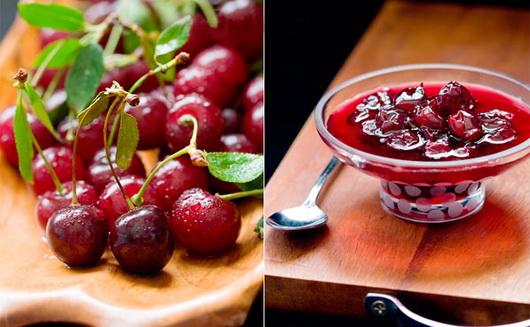
The fruits of this variety are often used to make cherry juice due to their vibrant flavor. The berries are also used to make compotes and jams. They can also be used in various preserves.
Drought resistance, winter hardiness
It's considered good; the tree itself isn't affected by temperature fluctuations, but its buds can freeze. If the temperature drops sharply during flowering, the gardener is unlikely to expect a large harvest.
Immunity from diseases and pests
By nature, Turgenevka has good immunity, but the trees will need to be treated regularly against pests – every year.
Cherry is most often affected by:
- moth that causes damage to the kidneys;
- sawfly larvae - they parasitize on the plant foliage;
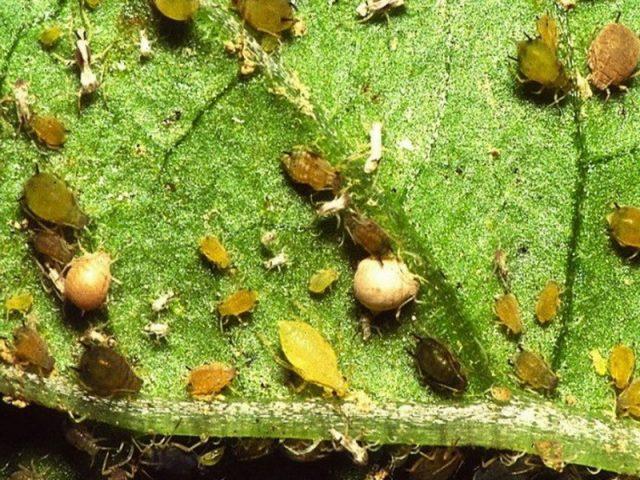
- aphids, which cause damage to young shoots and leaves of the tree;
- But the weevil damages cherry flowers and berries.
When it comes to diseases, when cultivating trees, you should be wary of the following:
- Coccomycosis.
- Clusterosporiasis.
Planting nuances
To ensure the crop bears fruit, it's important to pay attention to the planting process. The gardener will need to select the appropriate seedling, planting location, and follow a number of guidelines.
Optimal timing
Planting takes place in the spring. This time is considered optimal; it's best to plant cherries in late April, or even early May.
Choosing a suitable location
After inspecting the area, the gardener should choose a sunny spot that is not exposed to cold winds.
Favorable and unfavorable neighbors
Cherry varieties chosen as neighbors will help pollinate Turgenevka. These include Molodezhnaya and Lyubskaya, which will significantly increase the variety's yield.
Preparing the planting hole
After choosing a suitable location, dig a hole 85 centimeters deep in the ground. Then, spread out the tree's root system and begin planting the cherry tree.
Step-by-step algorithm for planting a seedling
To avoid common mistakes, you should follow a certain algorithm of actions:
- for planting, choose a one-year or two-year plant, since the older the tree, the lower its survival rate;
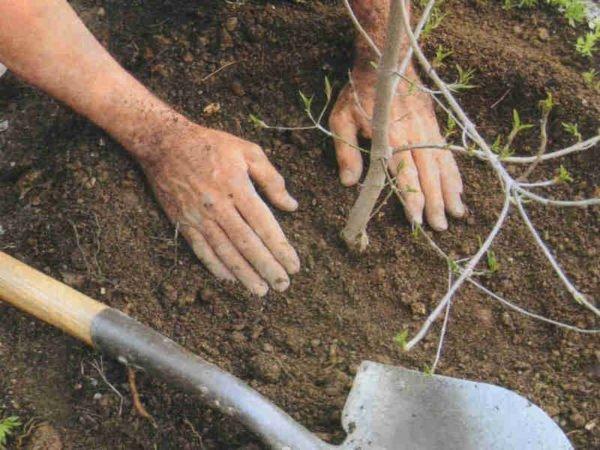
- dig a hole in the ground 85 centimeters deep and 45 centimeters wide;
- Add fertilizer to each hole; you can use humus, wood ash, or superphosphate fertilizers;
- we cover the tree roots with soil, leaving the root collar without deepening;
- We water the seedling well, form a border from the soil, and mulch the soil.
Aftercare of cherries
Proper care will help the seedling take root faster, begin to grow, and significantly reduce the risk of developing fungal and other diseases.
Watering and mulching
After planting, water the plant generously to ensure the moisture is absorbed into the soil. To achieve this, create a border of soil. Mulching with peat will reduce the need for watering.
Note: Cherry trees don't like stagnant water, so watering should be moderate. Excessive watering will cause root rot.
Pruning and frost crack prevention
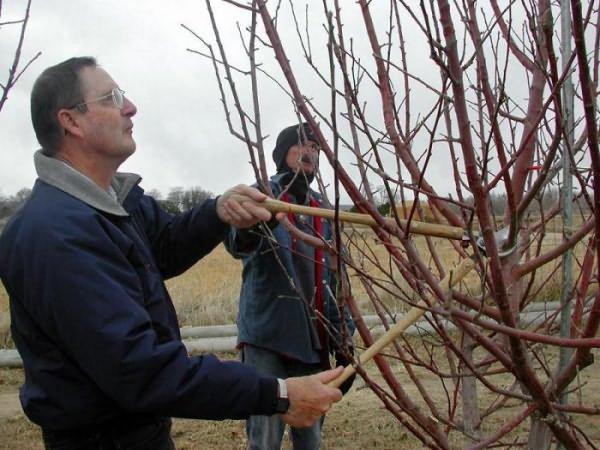
Every spring, the tree's dead shoots are pruned. To shape the crown, all inward-growing branches must be removed. To ensure normal growth and development, the tree's root suckers are removed in the summer, as they rob the plant of energy and nutrients.
Fertilizers
The following fertilizers can be used:
- Superphosphate in the amount of 200 grams.
- Humus – up to 5 liters.
- Potassium fertilizers in the amount of 50 grams.
- Up to 400 grams of wood ash.
Fertilizers are added to the planting hole, and additional feeding is also carried out during the cherry blossom period.
Diseases and pests, methods of control and prevention
When spring arrives, the risk of encountering various problems increases, which relate to treating plants from pests and preventing fungal and other diseases.
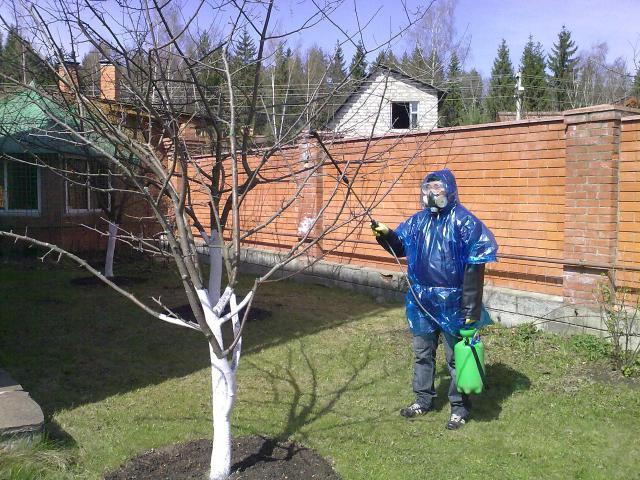
Turgenevka has a fairly robust immune system, but to prevent diseases, proper care is recommended. However, this is often not enough, and experienced gardeners recommend:
- when the buds begin to open, treat the plant with insecticides with the addition of fungicides;
- when the cherry trees stop blooming, the procedure is repeated using the same solution;
- Every year the trees are treated with Bordeaux mixture, and once every three years they resort to the help of Nitrofen.
 It is worth remembering that ripe berries attract rodents and birds.
Preparing for winter
Turgenevka can survive the winter without shelter, as the variety is frost-resistant. To ensure the cherry tree survives the cold, follow these steps:
- Dig up the soil to a depth of 15 centimeters, in the area around the crown.
- There is no point in digging deeper - there is a risk of damaging the root system.
- You will have to remove the leaves before digging.
- Whitewash the tree trunk, having first removed the dead bark.
Reviews of the variety
Maxim Rykov.
"I planted about five trees of this variety on my plot. I didn't do any special care, except maybe at the initial stage when I was planting the seedlings. I didn't even fertilize them, as I just wanted a blooming garden and didn't care much about the berries. But five years later, I was surprised to find that the cherry trees I planted were all covered in delicious and fairly large berries."
Alevtina Mirnaya.
"I have a cherry tree of this variety in my garden. It's been producing fruit beautifully for 5-7 years now. I use the berries for their intended purpose: I eat them and make jam from them."
Thanks to its good frost resistance, consistently high yields, and low maintenance, the Turgenevka variety remains popular with gardeners. These trees will delight gardeners with delicious and sweet cherries, provided they are properly cared for.
Related posts:
 Description and cultivation of the best varieties of felt cherry, planting and care
 Description and pollinators of the Vladimirskaya cherry variety, planting and care
 Description and propagation of the Bessey cherry variety, planting and care rules
 Description and characteristics of 17 dwarf cherry varieties, planting and care
 20 Best Cherry Varieties for the Central Russian Region with Descriptions and Characteristics
 Description and varieties of cherry variety Shpanka, planting and care
 Description and varieties of Zhelezistaya cherry, planting and care
 Description of the 25 best cherry varieties for the Urals and Siberia, planting and care in open ground