
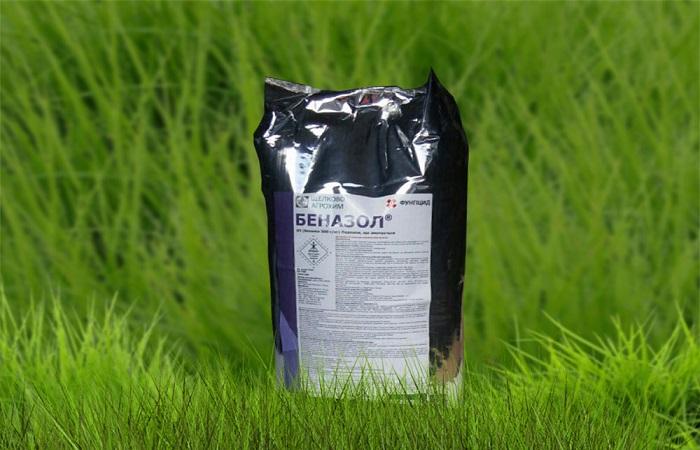
Benazol is a protective fungicide primarily used to prevent fungal diseases. It is primarily used to treat cereal crops and sugar beets. It has both contact and systemic properties, providing reliable protection against pathogens. Benazol can also be used for both treatment and prevention.
What is included in the composition and existing forms of release
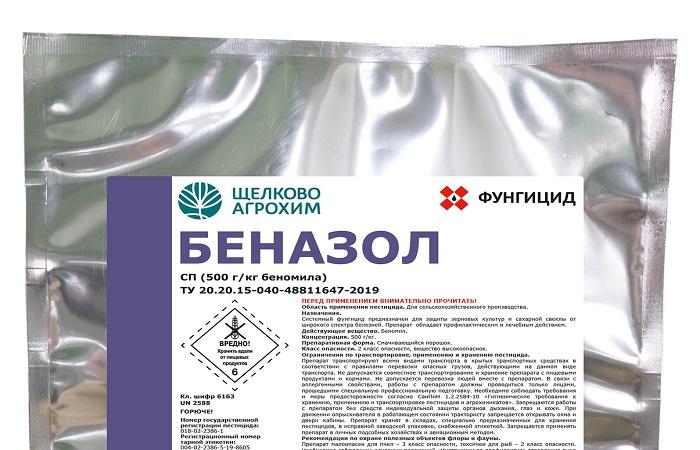
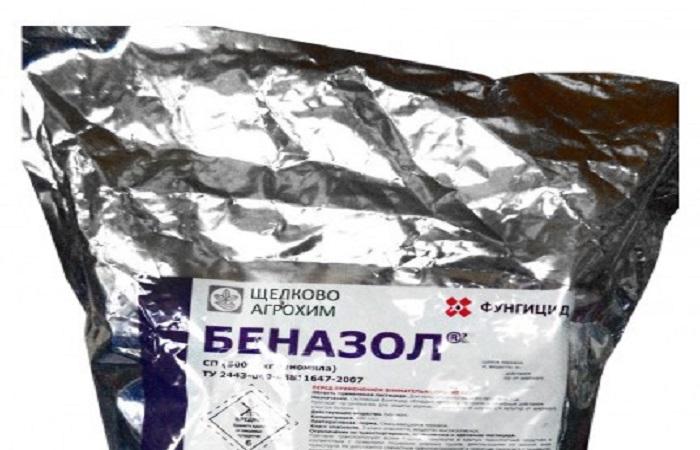
The active ingredient of this product is benomyl. One kilogram of the product contains 500 grams of this substance. The fungicide is available as a wettable powder and is sold in 5-kilogram packages.
Mechanism of operation and purpose
The drug works by inhibiting the cell division of pathogens. Its active ingredient has both protective and therapeutic properties, effectively suppressing diseases.
Benomyl is absorbed by the foliage and root system of plants. It then migrates upward in an apical direction. Part of the active ingredient remains on the surface as a contact form, while the other part penetrates the plant structure. This process transforms the active ingredient into carbendazim. This compound is an excellent systemic fungicide.
During benomyl hydrolysis, butyl isocyanate gas is released. It penetrates the pathogen mycelium and immediately stops cellular respiration. This helps quickly stop further pathogen growth. This property provides an additional fungicidal effect.
The key advantages of Benazol include the following:
- high degree of effectiveness in combating a wide range of major pathogens;
- possibility of use for treatment and prevention of pathologies;
- increasing the duration of the growing season;
- facilitating the wintering process when growing winter crops;
- effectiveness against root rot.
Calculation of consumption
The dosage and features of use of the product are indicated in the table:
| Dosage | Culture | Diseases | Processing Features | Waiting period (number of treatments) |
| 0.3-0.6 | Winter wheat | Cercospora, snow mold, fusarium root rot | Spraying is required during the growing season. 200-300 liters of working solution are required per hectare. | 50 (1) |
| 0.5-0.6 | Spring and winter wheat | Powdery mildew | Plantings should be treated during the growing season. Use 200-300 liters of working solution per hectare. | 50 (1) |
| 0.6-0.8 | Sugar beet | Cercospora leaf spot, phomosis, powdery mildew | Spraying should be done during the growing season. It is recommended to use 200-400 liters of spray solution per hectare. | 40 (1-3) |
| 0.3-0.6 | Winter rye | Snow mold, Fusarium root rot, Cercosporella | Spraying should be done during the growing season. It is recommended to apply 200-300 liters of working solution per hectare. | 50 (1) |
Instructions for use and how to make a working solution
It is recommended to treat crops in clear and calm weather. The lack of wind allows for uniform application and avoids wastage. If the fungicide dosage is correct, the risk of fungicide development is minimal.
The protective effect lasts for 20-28 days. Avoid treating plants if they are under stress. This may be due to pest attacks or weather conditions, such as heavy rainfall or frost.
Benazol is approved for tank mixes. It combines well with various plant protection products. The exception is products with a pronounced alkaline or acidic reaction. It is typically applied once per season.
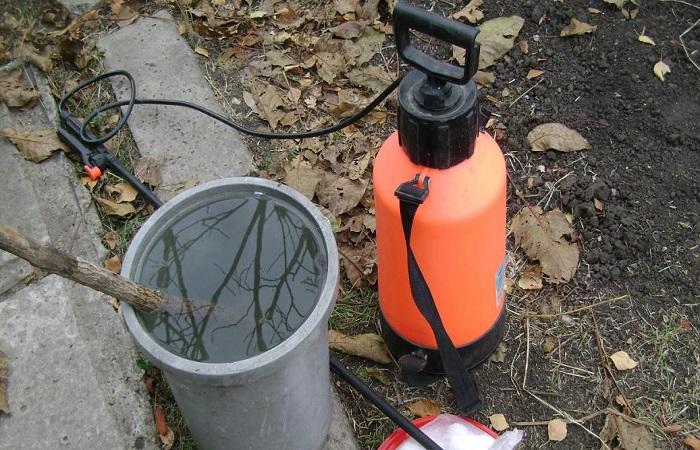
To ensure the product achieves the desired effect, it's important to properly prepare the working solution. This should be done on the day of use. To do this, measure out the required volume of fungicide, place it in a suitable container, and add a small amount of water. Mix thoroughly.
The result should be a thick paste. Place it in a sprayer tank filled with water. Rinse the container in which the stock solution was prepared with clean water and pour it into the sprayer tank. Then, thoroughly mix the working solution.
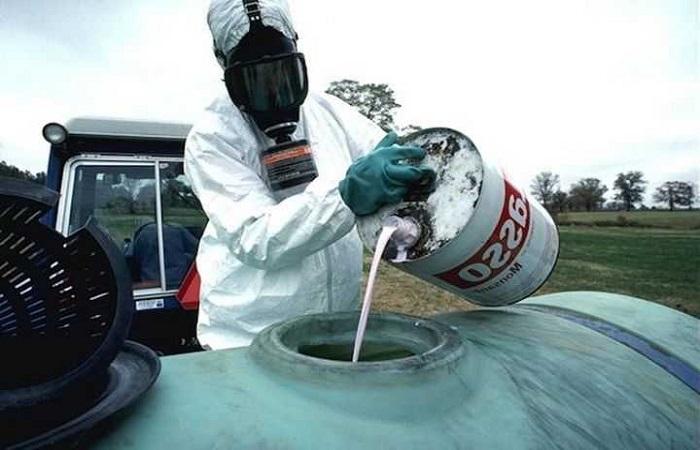
Safety precautions
Benzole is classified as a Class II hazard to humans. Therefore, when handling it, personal protective equipment is required. This includes protective clothing, gloves, a respirator, and goggles. Do not spray on crops near bodies of water.
When choosing a spraying time, it's important to keep in mind that bees shouldn't be flying. Therefore, it's recommended to apply the spray in the morning or evening. Wind speed should be 3-4 meters per second. The distance to the nearest apiary should be at least 2 kilometers.

What is it compatible with?
The product can be combined with other plant protection products. Exceptions are substances with pronounced alkaline or acidic reactions. Benazol should not be combined with Bordeaux mixture or sulfur-based products.
How much and how to store correctly
It is recommended to store the fungicide in a dry place designated for pesticides. Temperatures should range from -10 to +40°C. The product has a shelf life of 3 years.

Substitute products
Effective analogues of the drug include:
- "Benamil";
- "Fundazol";
- Nor-Bi.
Benazol is an effective treatment for various types of fungal infections. To ensure the desired results, it's important to use it correctly. Adhering to safety precautions is crucial.
Related posts:
 Methods for planting and propagating cherries at home
 The best eggplant varieties for growing in a polycarbonate greenhouse: planting and care
 Nitrophoska composition and instructions for use of fertilizer, errors
 The best methods for growing grapes from seeds at home
 The best grape varieties for growing in the Urals, planting and care rules in summer
 Rules for planting and caring for pears in open ground, how to grow them correctly
 Growing and caring for hazelnuts in open ground, rules for planting hazelnuts
 Conditions for growing mandarin at home and rules for caring for the tree