
- Why is planting timing so important?
- Choosing the best method
- Seedling method
- Sowing seeds
- How to determine the deadlines
- Favorable days
- Unfavorable period for planting work
- Factors Affecting Timing
- Temperature conditions and soil warming
- Varietal characteristics
- Dependence on the growing region
- When is it recommended to sow Chinese cabbage for seedlings?
- Schemes and technology for sowing in open ground
- The optimal time for planting seedlings in the ground
- Spring planting
- Summer planting
- Autumn planting
- When can you plant Chinese cabbage a second time?
- Rules for carrying out planting operations
- How to correctly arrange plantings on a plot
- How to fertilize the holes before planting
- We plant seedlings in the beds
- Nuances of crop care
Beginner gardeners often don't know the right time to plant Chinese cabbage outdoors, and they make mistakes by misjudging the timing. Planted at the wrong time, it begins to bolt before it has time to develop a head. By studying the information, gardeners can easily grow juicy, crisp heads of cabbage in their own garden.
Why is planting timing so important?
Chinese cabbage thrives only when daylight hours are short and the heat hasn't yet set in or is already waning. The best time is late March to early April or late July to early August. When planting in May or June, there's a risk that the cabbage will bolt before it even begins to form a head. This is why planting it on time is so important.
Choosing the best method
Each method has its advantages and disadvantages. With seedlings, the heads mature earlier, but when grown in boxes, subsequent transplanting damages the roots, and the cabbage may take a long time to establish itself.
When sowing seeds directly into open ground, the heads will form later, but the plants will grow strong and hardened.
Seedling method
To prevent damage to the roots when transplanting young bushes into the ground, plant the seeds in peat pots. They will gradually decompose in the soil without harming the plants. The following mixture of ingredients is used as a substrate:
- 2 parts coconut soil;
- 1 part humus.

Another option:
- 1 part peat;
- 1 part river sand;
- some wood ash.
You can also purchase vegetable soil at a specialty store. It's lightweight, breathable, and enriched with nutrients. It doesn't need to be disinfected; you can simply add a little river sand.
The seed is planted in a separate container, at a depth of 1 centimeter, and watered. The pots are placed in a dark room until the sprouts emerge. Then they are transferred to a bright windowsill.
Sowing seeds
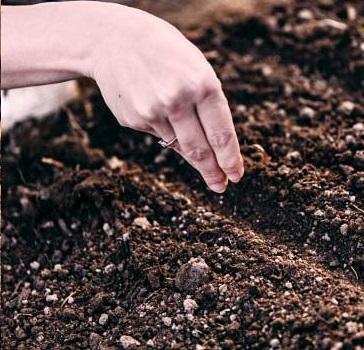
Before sowing, the soil is dug, fertilized, and holes or furrows are dug. Initially, the seeds are sown densely, 10 centimeters apart. Then, the seedlings are thinned until they are approximately 40 centimeters apart. The removed young shoots can be eaten.

Seeds must be prepared for planting. To do this, follow these steps:
- remove small, discolored, or cracked seeds;
- place them in warm water for 15-20 minutes;
- drain the warm water and add cold water: this procedure will help awaken the seeds;
- drain the liquid after 5-6 hours;
- Pour the seeds into a damp linen cloth and place in the refrigerator for 24 hours.
Additional information: By saving and planting the stalk, you can grow a full-sized head of Chinese cabbage.
How to determine the deadlines
The growth of living organisms depends largely on the phases of the moon. It is believed that root crops should be planted during the waning moon, while plants that produce above-ground crops should be planted during the waxing moon. Therefore, the correct sowing time should be chosen based on favorable dates.
Favorable days
According to the lunar calendar, the best time to plant Chinese cabbage is the first week after the new moon. During the waxing moon, water is close to the ground, which helps saturate the roots of the plants with moisture. During this period, the plants develop a strong root system, gain strength, and thrive.
In addition, the Moon should be in the most fertile signs: Cancer, Pisces, Capricorn, Scorpio, Libra, Taurus.
Unfavorable period for planting work
Don't sow seeds or plant seedlings during the waning moon. Also, days during the full moon and new moon are unfavorable for planting Chinese cabbage. Seedlings planted during this period are likely to be underdeveloped. Planting should be avoided when the moon is in the least fertile signs: Leo, Aquarius, and Aries.

Factors Affecting Timing
When to plant Chinese cabbage depends on several factors.
Temperature conditions and soil warming
Chinese cabbage is a cold-hardy crop. It can be planted outdoors at temperatures as low as 4°C to 5°C, but will thrive at temperatures as low as 15°C to 20°C. For this same reason, the soil should be well-warmed by the sun before planting. However, delays in planting can cause the cabbage to bolt.
Varietal characteristics
The timing of planting Chinese cabbage depends largely on the variety. Early-ripening varieties have a growing season of 40-50 days from planting. Mid-season varieties are ready for consumption in 60-70 days. Varieties that ripen 75-90 days after planting in open ground are considered late-ripening. Based on these factors (as well as weather conditions), gardeners choose the optimal time to plant the vegetable.

Dependence on the growing region
It's difficult to recommend planting times for every region. It's important to consider the current year's weather conditions. For example, in the Krasnodar Krai, the soil warms up by March 15-20, in the Moscow region and the Leningrad region by early April, and in the Siberian region and the Urals by late April.
When is it recommended to sow Chinese cabbage for seedlings?
The seedlings mature within a month, so the seeds are sown in late February. By the time they are planted outdoors, they will have developed 4-5 leaves. For summer plantings, the crop is sown directly into the ground in July. If you have no experience growing cabbage, it's best to purchase an early-ripening Dutch hybrid. This will allow the heads to ripen before the hot weather sets in and prevent bolting.


To grow the crop from seeds, they are planted in peat pots or pellets, pre-soaked in water. Place 1-3 seeds at a depth of 1 centimeter. Subsequently, leave one, the strongest plant in the pot. Chinese cabbage requires short daylight hours, so shade is needed if necessary.
Please note! Late-planted Chinese cabbage will bolt.
Schemes and technology for sowing in open ground
To ensure better root warming, ridges are first made in the beds, followed by holes or furrows. Seeds are sown densely, then thinned. For better germination, the seedlings are covered with plastic film. The distance between grown plants should be approximately 40 centimeters.
When growing crops, it's important to practice crop rotation. The best predecessors are cucumbers, garlic, potatoes, and onions. The worst are plants from the cruciferous family. Related crops transmit various diseases to each other. You can eliminate pathogens in the soil by growing cover crops such as alfalfa, phacelia, oats, and vetch.
The optimal time for planting seedlings in the ground
Chinese cabbage requires a place that is well-lit by the sun in the morning and shaded in the afternoon.
Spring planting
The vegetable is planted in the garden beginning in mid-spring. Chinese cabbage is a short-day plant. The optimal time for planting is April and July. During these months, daylight hours are relatively short, which is necessary for the plant to develop a head of cabbage. Early varieties, which are not suitable for long-term storage, are usually planted in the spring.

Summer planting
Cabbage is planted in the summer if gardeners want to store it for the winter. It's important to choose mid-late and late-ripening varieties, as early-ripening ones don't keep for long. For summer planting, seeds are sown outdoors (depending on the region) in late July or early August.
Chinese cabbage planted in May or June will most likely produce a flower stalk and devote all its energy to its growth.
Autumn planting
Cabbage is successfully grown in greenhouses not only in spring and summer, but even in autumn. Indoors, it's easy to control temperature and light levels, which Chinese cabbage is very sensitive to. Growing it in a greenhouse is similar to planting and caring for it in the open ground. You can plant cabbage as by both seeds and seedlings.

When can you plant Chinese cabbage a second time?
The first time this season, Chinese cabbage is planted is in early spring, and the second time is in late summer. This second planting has its advantage: there's no fear of the seedlings freezing in subsequent frosts. Another advantage is that the heat subsides, reducing the risk of bolting. Equally important is the reduction in daylight hours, as the plant does not thrive in long periods of sunlight.
Take a look Also

Rules for carrying out planting operations
To ensure the crop produces juicy, crispy heads, it is necessary to properly plant the cabbage.

How to correctly arrange plantings on a plot
The planting site should be shaded during hot midday weather. Plant Chinese cabbage 30-40 centimeters apart. The vegetable will grow well next to garlic, whose aroma repels pests. Marigolds and pot marigolds can also be planted around the plant bed. They will not only repel pests but also improve the soil.
How to fertilize the holes before planting
The plot for planting Chinese cabbage is prepared in the fall. During this period, it is fertilized with a mixture of rotted manure (at a rate of 4.5 kilograms per 1 meter of soil), liquid double superphosphate (1 tablespoon), and potassium sulfate (1.5 tablespoons). If the soil is too acidic, it is deacidified with wood ash, bone meal, or dolomite.

When planting in spring, add fertilizer consisting of the following components to each hole:
- 0.5 kilograms of humus;
- 2 tablespoons of wood ash;
- 1 tablespoon of organomineral fertilizer.
The ingredients are thoroughly mixed with the soil, watered, and then the seedlings are planted there.
We plant seedlings in the beds
The root system of the seedlings is covered with soil. Care must be taken to avoid any soil reaching the tops of the seedlings. A plant filled with soil will have a hard time developing a head of cabbage. The soil around the seedlings is lightly compacted and watered.

Tip: To prevent flea beetles from infesting young seedlings, sprinkle them with wood ash immediately upon planting.
Nuances of crop care
To ensure that Chinese cabbage grows well, it is necessary to follow the following care rules:
- Form beds on a small elevation, ridge.
- Make sure that no soil gets inside the bush.
- Do not plant too densely.
- Water and fertilize the plant on time.
- At air temperatures above 22°C, the growth of Chinese cabbage is inhibited, so in extreme heat the planting area should be shaded.
- Cut off the heads of cabbage in time, otherwise it may start to bolt.
- Use geotextiles to protect the vegetable from overheating, as well as from various pests.
Growing Chinese cabbage isn't much of a hassle for gardeners, as long as they adhere to its key requirement: planting during short daylight hours. By caring for it throughout the season, farmers can enjoy this tasty and nutritious vegetable throughout the season.
Related posts:
 Why does cabbage grow tall in the garden and what can be done about it?
 Growing and caring for Chinese cabbage in open ground and greenhouses
 Planting, growing, and caring for cauliflower in open ground and greenhouses
 Description of the best cabbage varieties for 2025 for different regions
 How to properly plant cabbage seedlings in open ground: spacing, timing, and temperature
 How to properly plant cauliflower in open ground: diagrams and timing of the procedure
 Why do cabbage leaves turn purple and what can be done to treat them?
 Can cabbage be sprayed with valerian to control pests and what are the treatment guidelines?