
The Megaton F1 white cabbage, described below, is part of a collection of Dutch hybrid varieties supplied to Russia by Bejo Zaden. This variety was developed over 20 years ago and is recommended for cultivation in the Volga-Vyatka, North Caucasus, and Central regions of the country. Hobbyist vegetable growers have appreciated all the advantages of this Dutch cabbage and grow it almost everywhere.
General characteristics of the variety
The bush forms a spreading rosette of leaves. Their petioles are not very long, but the plant occupies a fairly large area (up to 1 m in diameter). The root system is well developed, but sometimes the bushes still topple over during head formation and growth. To prevent this, the base of the stem should be earthed up.

The Megaton cabbage variety is resistant to downy mildew and is not susceptible to bacterial rot. The harvest of this cabbage is almost completely preserved. The variety description notes that the cabbage is not affected by high summer temperatures and can withstand autumn frosts down to -8°C without losing its marketable appearance or nutritional value.
After planting in a permanent location, seedlings are sometimes hit by the last wave of recurrent frosts, but they withstand them well.
The Megaton cabbage hybrid yields approximately 20 kg per square meter. The manufacturer claims the average head weight can reach 15 kg. Gardeners report that, with proper care, 12-14 kg can easily be seen on the scale during harvest. The average head weight is approximately 10-11 kg.
Consumer qualities of cabbage
The Megaton cabbage variety produces round, dense, and very heavy heads. When pressed on the surface of a head of cabbage that has reached technical maturity, it feels like a solid, solid ball. Each head is covered with tightly fitting bracts, slightly curved at the edges, and above these are 2-3 rosette leaves, which provide additional protection from mechanical damage or frost.

When cut, numerous, tightly compressed, tender leaves of the edible portion are visible inside the head. They are snow-white, but the 2-3 mm thick layer adjacent to the outer leaves may be greenish. The inner stalk is relatively short, not even reaching the middle of the head. About 7% of the total mass is discarded during processing.
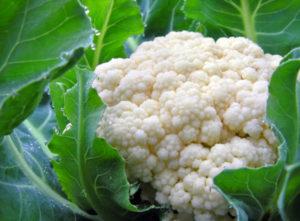
Vegetable growers' reviews note the variety's distinctive flavor: high sugar content and the sweet taste of ripe, frost-free cabbage. Its dense, crunchy texture isn't to everyone's taste if it's intended for fresh consumption. Most gardeners also praise the cabbage's excellent shelf life: it can be stored until January or February in a cool, dry cellar.

Megaton cabbage is classified as a mid-late hybrid in terms of ripening time. Technical maturity occurs 125-140 days after sowing the seeds for seedlings. The cabbage can be harvested in late September to early October; it is not prone to cracking and can be harvested in the garden for about 2-3 weeks.
Its main uses are pickling, canning, and fresh storage. Fresh cabbage salads can be made using the top half of the head: the leaves there are thinner and more tender than the lower parts. The thick, juicy lower parts can be used to make delicious bigos or borscht, stewed cabbage for pie filling, or ground into cabbage patties and pancakes.

Both shredded and quartered cabbage are used for pickling. Its high sugar content makes it one of the best varieties for this method of preservation. You can add tart apples, small whole watermelons, or cucumbers to the cabbage. The lactic acid produced during the pickling process reliably preserves these vegetables, turning them into a delicacy.
In addition to fermentation, cabbage is preserved in quick marinades with vinegar, and used to make winter salads and appetizers, combining cabbage with slices of tomatoes, carrots, cucumbers, and so on. These preparations differ from fermented products in that they undergo heat treatment, such as pasteurization or immersion in a hot marinade.

Storing fresh cabbage is very simple. Don't cut the heads; dig them up by the roots, and pluck all the rosette leaves from the stem. Only the green outer leaves, tightly attached to the head, should be left. In this state, the cabbage is hung by the stem in a dry, cool cellar.

Agricultural technology of the variety
Late-ripening cabbage should be sown for seedlings approximately 1.5-2 months before planting in the garden. Seeds of the hybrid Megaton variety should be purchased in stores; self-propagation will not preserve the qualities of the mother plant. Dutch seedlings are usually prepared for sowing and treated with antiseptics and growth stimulants. These seeds resemble colored beads, as they are covered with a special coating. They do not require any treatment before sowing.

For sowing, prepare a substrate of equal parts sand, humus, and fertile soil. Add 2 tablespoons of ground eggshells, chalk, or gypsum per 10 kg of mixture. You can disinfect the soil directly in the boxes by thoroughly saturating it with a dark, hot solution of potassium permanganate. Sow the seeds after the soil has cooled.
Place the seeds 2-3 cm apart and sprinkle with a thin layer of the reserved dry substrate or fine sand. The layer should be no more than 0.5 cm thick. Cover the container with plastic wrap, making 2-3 holes in it for air circulation. Place the container in a warm place. At a temperature of 25°C (77°F), the seeds will sprout in 2-3 days. Remove the plastic wrap from the container with the first sprouts and place the container in a well-lit area.

Seedling care consists of timely watering. No additional fertilizer is necessary, as a properly formulated mixture contains all the necessary nutrients. When 2-3 true leaves appear on the cabbage, it needs to be planted in separate pots with a capacity of about 0.5 l or in a common box at a distance of 10 cm from each other.
For planting, choose a well-lit location that receives full sun throughout the day. Light, fertile soil is preferable. Cabbage grows poorly in dense, acidic soil, and its root system is susceptible to clubroot.
To prevent this condition, add 1-1.5 kg of chalk, gypsum, dolomite flour or another substance containing calcium per 1 m², add 1-2 buckets of humus and sand or sawdust.
The plants are planted in a 40x70 cm pattern. For the first 10-14 days, the cabbage will need to be watered daily to ensure the young plants receive the necessary moisture. At least 1-2 liters of water should be poured under each bush.
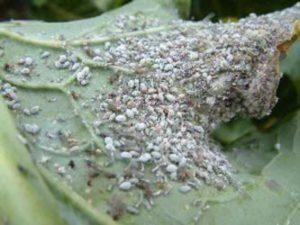

When the rosette begins to form, the seedlings are earthed up. From this point on, watering is done using a drip system or in a trench between the earthed rows. Subsequently, watering is done once every 5-7 days, but thoroughly.
To provide cabbage with the potassium it needs, 2-3 weeks after planting the seedlings, water the planting with a solution of wood ash (500 g per 10 liters) or a complex fertilizer for cabbage (Agricola Vegeta, Kemira, etc.). Fertilizing is repeated at 15-20 day intervals until the end of summer. It should be stopped approximately one month before harvesting.
Related posts:
 Planting, growing, and caring for cauliflower in open ground and greenhouses
 Growing and caring for Chinese cabbage in open ground and greenhouses
 Why cabbage leaves wilt in the garden and what to do
 Description of the best cabbage varieties for 2025 for different regions
 How to properly plant cabbage seedlings in open ground: spacing, timing, and temperature
 Why does cabbage grow tall in the garden and what can be done about it?
 What is the best way to treat cabbage from pests? Folk, chemical and biological remedies.
 Delicious recipes for quickly pickling red cabbage in jars for the winter