
- Signs of cabbage death and growth retardation
- Factors that trigger growth retardation
- Planting in a shaded area
- Non-compliance with soil requirements
- Temperature
- Unsuitable climatic conditions
- Agrotechnical errors
- Damage to the root system
- Nutritional deficiency or excess
- Incorrect watering
- Pests and diseases affecting cabbage growth
- What cabbage seedlings need: a solution to the problem
- We organize competent care for cabbage plantings
- Treatment and prevention of parasites and diseases
- Transplanting and covering bushes
Sometimes, robust vegetable seedlings begin to wilt in the garden, while neighboring ones are growing rapidly and already setting fruit, even though their soil is similar. This member of the cruciferous family doesn't tolerate acidic soils and grows tall in the shade. It's difficult to know what to do when cabbage doesn't grow even though it's planted in fertile soil and receives full sun. To avoid being left without juicy heads, you need to figure out what's wrong and take immediate action.
Signs of cabbage death and growth retardation
When plant development is disrupted, leaves begin to yellow and dry out, and a rotten smell appears in the garden bed. A head of cabbage fails to form, instead forming a rosette with a dry heart. The apical part of the cabbage grows poorly and becomes slimy if the planting was done with seeds cross-pollinated with seeds from vegetables from the same Brassicaceae family.
When the cabbage is standing still, and the lower leaves have fallen to the ground, the upper ones are wilting in the sun, most likely it is affected by a disease, and without urgent measures it will die.
Factors that trigger growth retardation
To restore cabbage growth and improve head formation, it is necessary to determine the reason why the crop stopped growing.
Planting in a shaded area
If the distance between the heads of cabbage in a bed is less than half a meter, and between rows 40–60 cm, the cabbage lacks light, some plants stop developing, and heads develop poorly. The vegetable grows best in a sunny area.

Non-compliance with soil requirements
Cabbage thrives in moisture, but will wilt if waterlogging occurs. Before planting, check the soil composition. A site that thrives well in the following areas is not suitable for cabbage from the cruciferous family:
- mint;
- plantain;
- sorrel.
Perennial grass thrives in highly acidic soil, but cabbage dies after planting.
If no bubbles are released when vinegar hits the soil, dilute the soil with chalk, lime or dolomite flour during digging; 500 g is added per 1 square meter of the plot.
Eggshells reduce acidity and enrich the soil with calcium, manganese, iron, and phosphorus.

Temperature
Cabbage doesn't respond well to heat. At temperatures as low as 26–27°C, the rosette dries out, the leaves wilt and turn yellow, and the heads stop growing. If moisture is insufficient, the crop can die at temperatures as low as 19°C. Although the heads regain their firmness and flavor after frost, a sharp drop in temperature negatively impacts the roots, causing them to rot.
Take a look Also

Unsuitable climatic conditions
Cabbage is intolerant of heat and drought. It thrives in temperate climates, but does not grow well in regions where temperatures rise above 30°C. It does not thrive in the north, where springs are cold and summers are short. A temperate climate is best suited for outdoor cultivation.

Agrotechnical errors
The heads of cabbage turn out small if you plant varieties of different ripening periods in the same bed at the same time; the heads of late cabbage ripen too early and begin to crack.Nitrogen promotes the appearance of thick tops, but delays the growth of heads; during their formation, the crop requires phosphorus and potassium.
Some gardeners don't hill up their cabbage, which prevents the lateral roots that anchor the plant to the ground from forming, leading to insect infestations. This cruciferous crop attracts various pests, and if the beds aren't sprayed with Karbofos when the seedlings emerge, the plants are susceptible to cutworms, flea beetles, and moths.
Damage to the root system
Cabbage needs to be weeded regularly to prevent weeds from choking it. After watering or rain, the soil needs to be loosened, but this must be done very carefully to avoid damaging the roots, which can cause stems to rot, the leaves to dry out, and the plant to die.

Nutritional deficiency or excess
Cabbage can't thrive in poor, depleted soil. Once the seedlings have established themselves, they're fed with the complex fertilizer "Kemira Combi."
When the plant's rosette of leaves begins to dry out or rot due to adverse weather, water it using one of two methods. Dissolve 2.5 grams of magnesium and boron in a bucket of water, along with 1 tablespoon of Kristalin. Alternatively, mix 2 tablespoons of magnesium sulfate and superphosphate in the same amount of water, and add 3 drops of iodine.
Excess nitrogen promotes top growth, but it also hinders head formation. No fertilizer will harm cabbage when the nutrients are applied in liquid form to irrigated soil.

Incorrect watering
Don't let the soil in the garden bed dry out, but the crop doesn't tolerate excessive moisture and will rot in such soil. Cabbage should be watered in the evening every five days; if it's hot, watering should begin every other day or two. When the soil dries out, the cabbage won't form heads.
Pests and diseases affecting cabbage growth
The crop's large, succulent leaves attract insects. Flea beetles attack the plants before they have time to establish themselves in the garden. Cabbage moth caterpillars eat the core of the ovary, causing it to rot.
Aphids, which appear with the first warm days, not only suck all the sap from the leaves but also transmit pathogenic fungi. If signs of rot are present on the cabbage, the plant should be cut down and destroyed.
Take a look Also

To combat moths, spray the garden bed with Enterobacterin or a potassium arsenate solution. Aphids dislike the smell of tobacco and abandon plants when treated with liquid soap and ash.
Cabbage falls over like it's been cut down when infected with clubroot. The fungus lives in the soil for years, but in high humidity and warm weather, it becomes active, forming white growths that cause the roots to dry out and the seedling to rot. The diseased plant cannot be cured; it is dug up and burned.
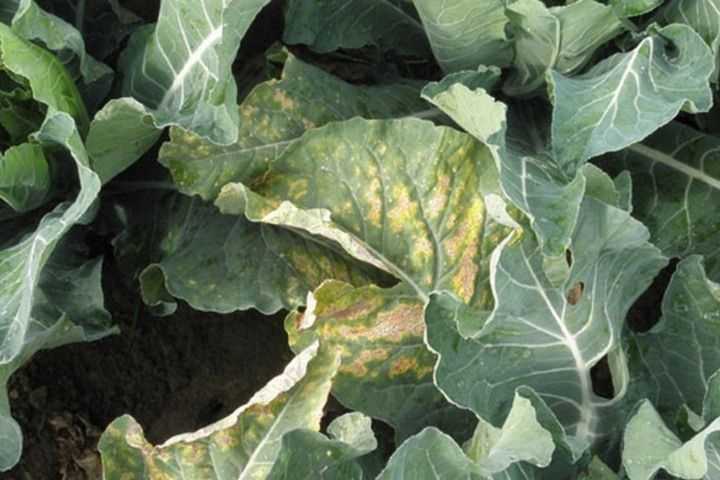
Downy mildew is transmitted through seeds or develops in dense plantings. Cabbage leaves become covered with yellowish spots, and fungal spores spread to the peduncles and stems, forming a mold-like growth. When signs of the disease appear, plants are treated with Ridomil Gold. To prevent downy mildew, seeds are soaked in hot and then cold water before planting, and then treated with chemicals.
 In damp weather, black veins appear on the leaves. Storage rot spreads from one head to another. Before storing the heads, disinfect the cellar or basement, and disinfect the seeds before sowing.The crop suffers from black leg; diseased plants are dug up by the roots and destroyed.
What cabbage seedlings need: a solution to the problem
Only with optimal conditions and proper care can you expect a harvest of large, juicy heads. But even with careful care, cabbage heads may fail to form if poor-quality seeds are sown. To ensure rapid establishment, seedlings are hardened off two weeks before planting. It's important to remember that late-ripening and early-ripening varieties need to be sown at different times.

We organize competent care for cabbage plantings
Large seed heads form when the plants have enough light, moisture, and nutrients. The crop won't thrive in depleted soil. The seedlings' growth largely depends on what they are fed. Add the following to each hole:
- sand;
- peat;
- humus;
- wood ash;
- nitroammophoska.
When heads of cabbage form, fertilize the plants with nitrogen-free organic and mineral fertilizers. Cabbage thrives on moisture, and experienced vegetable growers recommend watering it regularly in the morning or after sunset. Avoid using cold water for irrigation. When caring for seedlings, mound each plant with soil at least twice.

Treatment and prevention of parasites and diseases
Cabbage leaves are used in salads and stuffed cabbage rolls, so treating the crop with poisons is not recommended. To protect seedlings from cruciferous flea beetles and slugs, ash is mixed with tobacco dust and sprinkled on the beds. Spraying with an infusion made by pouring half a bucket of water over tomato tops helps control aphids and caterpillars. The mixture is boiled for three hours, strained, mixed with tar soap, and diluted with boiling water.
Insects don't particularly like the smell of onions, so cabbage is treated with an infusion of the peels, adding Faire dish soap. To repel slugs and cockchafer larvae, jam or honey is placed in a jar, water is added, and the jar is buried in the garden bed. The food attracts ants, who quickly consume the pests, crawling into the sweet container.

It is recommended to plant the following next to cruciferous crops:
- basil;
- sage;
- marigold;
- dill.
The scent of herbs and fragrant calendula is unappealing to fleas and aphids, but it attracts insects that destroy them. Disease prevention is carried out before planting cabbage in the garden. The soil is treated with fungicides, and ash is added to the holes. Often, if affected by downy mildew or blackleg, the plants are dug up and destroyed.
To protect cabbage from powdery mildew, before planting, the seeds are placed in water heated to 50°C, and after 15 minutes they are transferred to cold water.
Spraying the beds with Bordeaux mixture helps prevent the development of late blight.Clubroot is very difficult to control. Plants are hilled and watered with manure when the heads have already formed and are about to be harvested. To prevent the disease, crop rotation is practiced, acidic soil is limed, and the area is dug deeply, which helps destroy fungal spores and prevent bacterial growth.

To combat rot, clubroot and black leg, use systemic fungicides "Topaz", "Trichodermin", "Fitosporin-M", but do not spray the leaves with solutions, but water the roots.
Transplanting and covering bushes
When planting cabbage in the garden, consider not only the ripening time but also the spacing. Vegetable growers recommend planting the crop with the following spacing between the bushes:
- late varieties - 65 cm;
- mid-season - 50;
- early - 35.
The distance between rows should be 75 to 50 centimeters. The leaves of young cabbage are very delicate. Initially, the seedlings need to be shaded from the bright rays of the sun. Early varieties are sown in late April, while late cabbage is planted in the garden in late May or early June and grown from seedlings.
Related posts:
 Why does cabbage grow tall in the garden and what can be done about it?
 Why cabbage leaves wilt in the garden and what to do
 Why do cabbage leaves turn purple and what can be done to treat them?
 Growing and caring for Chinese cabbage in open ground and greenhouses
 Planting, growing, and caring for cauliflower in open ground and greenhouses
 Description of cauliflower diseases and pests, methods of treatment and control
 Can cabbage be sprayed with valerian to control pests and what are the treatment guidelines?
 Why cabbage leaves turn yellow, what to do, and how to deal with it