
Alternaria leaf spot is a potato disease caused by mold fungi. Its danger lies in the fact that affected potatoes become completely unfit for consumption. Eating infected tubers can lead to a number of health problems, including asthma and various allergies. It's important to recognize the signs of Alternaria leaf spot early and take measures to prevent and treat the disease.
Basic information
The description of the fungus indicates that it can affect not only tubers but also leaves and stems. Alternaria blight affects both potatoes and other nightshade crops. Gardeners compare the damage caused by this disease to that caused by late blight. Yields can be reduced by up to 30%.
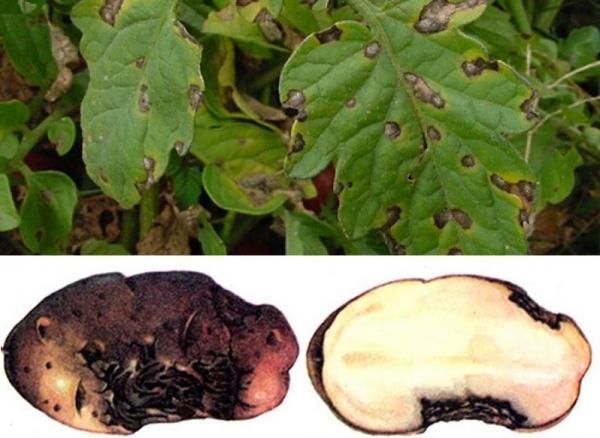
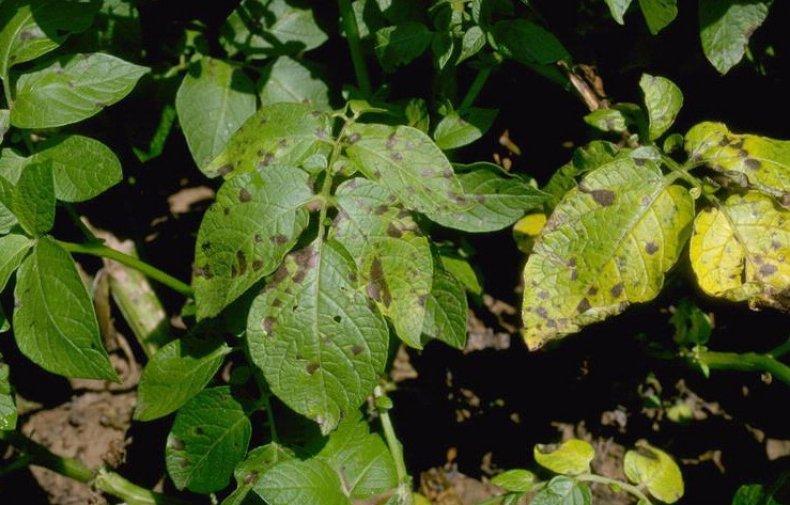
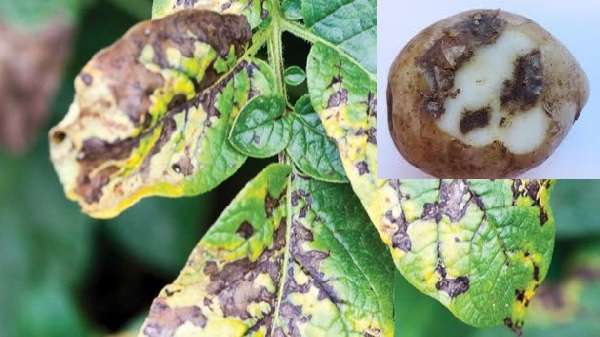
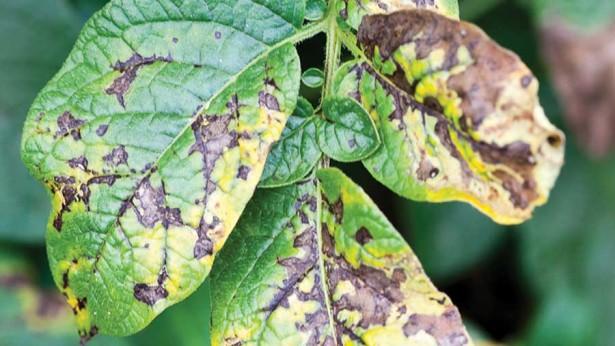
A characteristic sign of the disease is the appearance of concentric dark brown or brown spots on the foliage, which are clearly visible 2-3 weeks before flowering. At severe stages of infection, the foliage turns yellow and falls off. Similar spots also appear on the petioles and stems of the potato plants. A favorable environment for the development of fungus is considered to be sufficient humidity and an air temperature of about +26 °C.
Alternaria appears on tubers as characteristic spots that are darker than the skin. If the potato is cut, rotting areas become clearly visible, similar in appearance to dry rot.
Causes and pathogens
Conidia and mycelium can persist within the tubers themselves or on plant debris. During planting, they fall onto new potatoes. As soon as weather conditions are favorable for the fungus to develop, it begins to actively multiply and cause damage. The most common pathogens responsible for Alternaria blight are:
- solani;
- alternate;
Their mycelium is septate, has a branched structure, and consists of intertwined colorless fibers.
The causes of potato damage by Alternaria are considered to be:
- weakening of the plant due to non-compliance with agricultural practices or unfavorable weather and climate conditions;
- hot and dry weather that persists for a long period;
- over-watering or lack of moisture in the soil;
- depleted soil;
- potassium deficiency and excess phosphorus;
- planting infected tubers.
Symptoms of tuber disease
Potato tuber infestation isn't immediately recognized because Alternaria spreads from green, succulent shoots. This is where small brown spots appear early in the disease. Gradually, they increase in size, and the fungus reaches the tubers. Irregular, sunken spots form on the surface of the tubers. These spots differ in color from the potato itself. If the spot is large, circular wrinkles are clearly visible.
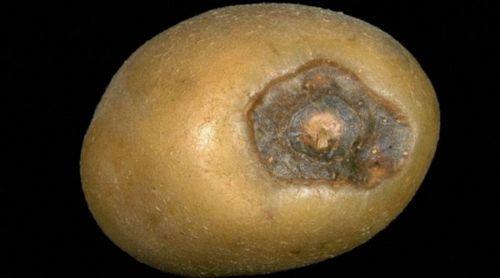
When cutting a diseased tuber, necrosis is clearly visible. Its structure resembles dry rot. The disease may not be detected immediately after the harvest has been completed. It only appears after a couple of weeks, so experts do not recommend storing potatoes immediately, especially if there have been outbreaks of Alternaria in the area.
Methods of combating the disease
Over the course of the disease's existence, certain techniques have been developed that allow not only to prevent its development, but also to cure affected bushes.
Biological drugs
Biological treatments for fungal diseases are rarely used, but they are widely used for preventative purposes. Potato tubers are treated with biological agents before planting. According to gardeners, the most effective are:
- "Baktofit";
- "Integral";
- "Agat-25".
If pre-sowing treatment has not been carried out, but there is a need to protect the future potato harvest from alternaria, then resort to using the drug "Planriz".
Chemicals
Once the disease has spread across the site, decisive control measures must be taken, including the use of chemicals. It's important to remember that such substances often pose a threat to human health and are toxic, so it's advisable to protect yourself with personal protective equipment.
Take a look Also
Chemicals against Alternaria are sprayed during the potato growing season. 0.3% solutions are considered the best for this purpose:
- "Profit";
- "Novozri";
- Thanos;
- Mancozeb;
- "Cuproxata";
- "Utana";
- "Penkozeba".

Gardeners also use a 0.5% solution of the following preparations:
- Metaxil;
- "Kuprikol";
- "Acrobat MC";
- "HOM";
- Metamyl;
- Abiga Peak.
If the disease has just begun to spread, it is recommended to treat the potatoes with the Bravo product. Three liters of the product are required per hectare of area. Seed tubers are sprayed with "Maxim" before storage. For each ton of harvest, 0.2 liters are required.
Alternaria prevention
When growing potatoes in their own plots, experienced gardeners prefer not to take risks and to carry out preventative measures against Alternaria in a timely manner, which include:
- Clear away any plant debris from the area where tubers are to be planted. This can be accomplished by deep autumn plowing, which promotes the decomposition of plant debris in the soil.
- It is worth adhering to the rules of crop rotation and plant neighborhood.
- Potatoes cannot be planted in one place for more than 3 years.
- Fertilizers should be applied promptly and the recommendations and dosages strictly followed. Potatoes require sufficient, but not excessive, nitrogen and potassium in the soil.
- In cases where alternaria annually affects potato crops in a certain area, varieties resistant to this disease should be selected for cultivation.
- Harvesting should be carried out after the tubers have fully matured, trying not to cause them mechanical damage.
 Spraying and treatments should not be done frequently. Their maximum number for the entire season should not exceed 4.
Potato varieties resistant to disease
Breeders have yet to produce a potato variety completely immune to Alternaria blight. However, several varieties exhibit increased resistance to this fungal disease. These include:
- Adretta;
- Bronnitsky;
- Lyubava.
Adretta is also known as the first yellow-fleshed potato variety fit for human consumption. It's ideal for boiling in its skin. Bronnitsky, in addition to being resistant to Alternaria, is immune to scab and blackleg. Its tubers are large and suitable for french fries.
Lyubava is distinguished by its early ripening time and snow-white flesh that remains colorless even when boiled. The potato is resistant to Alternaria blight, but is often affected by scab. It is suitable for all types of cooking.
Related posts:
 Why potatoes aren't growing well in the garden, and what to do to ensure a bountiful harvest
 Description of the best potato varieties of domestic and foreign selection
 Description and treatment of potato diseases, methods of control using folk and chemical means
 Description and characteristics of the Rodrigo potato variety, cultivation and care
 Description and treatment of potato pests, control measures
 Description and characteristics of the Krasavchik potato variety, planting and care
 Description and characteristics of the Gulliver potato variety, planting and care
 Description of the best potato varieties for 2025, selection for regions