
- A little history of the Ryabinushka variety's development
- Description and characteristics of the Ryabinushka potato
- Geography of cultivation
- Characteristic features of the Ryabinushka variety bush
- Yield and nutritional value of the Ryabinushka tuber
- Scope of application of the Ryabinushka variety fruits
- Pros and cons
- Planting and caring for potatoes
- Processing seeds of the Ryabinushka variety
- Selecting and preparing a planting site
- Technology for planting the Ryabinushka variety
- Watering and fertilizing
- Loosening and weeding the beds
- Hilling
- Diseases and pests - methods of control and protection
- Harvesting and storing elite Ryabinushka potatoes
- Reviews of vegetable growers about the crop
Potatoes are one of the most popular vegetables in the CIS countries. They are widely grown for both industrial and personal consumption, as the plant thrives in almost any soil and requires little care. Popular varieties include Ryabinushka. According to the Ryabinushka potato variety description, reviews, and photos, this domestic variety is renowned for its high-quality fruit and attractive pinkish skin. The potatoes grow large, and two harvests per season are possible.
A little history of the Ryabinushka variety's development
This potato variety was developed in 2007 by breeders from Vsevolozhsk. It is not a hybrid, but a single vegetable variety. Over the past 12 years, it has gained popularity in the central, northern, and Far Eastern regions, Crimea, and the Caucasus.
Description and characteristics of the Ryabinushka potato
This mid-season potato variety produces tubers 2.5 months after planting. The new potatoes are then harvested. The full harvest begins 4 months after planting. The plant exhibits resistance to diseases, beetle attacks, and late blight. The Ryabinushka variety is a leader among vegetable growers.
Geography of cultivation
The Ryabinushka potato variety has proven itself in temperate climates. It thrives in all regions of the Russian Federation, but especially in the Tambov, Rostov, Voronezh, Belgorod, and Krasnodar regions. It is not recommended for planting in the Lower Volga region due to soil conditions.
Characteristic features of the Ryabinushka variety bush
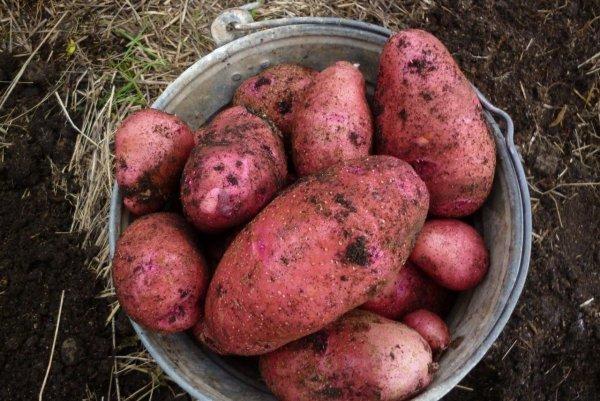
Potatoes have upright tops and semi-erect stems. The bushes are medium-sized, up to 1 meter, with wavy, dark green leaves. Their size varies: large at the base, smaller at the crown. The flowers are purple-blue, with trumpet-shaped flowers forming on the inflorescences.
Yield and nutritional value of the Ryabinushka tuber
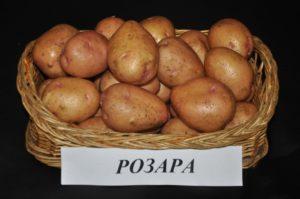
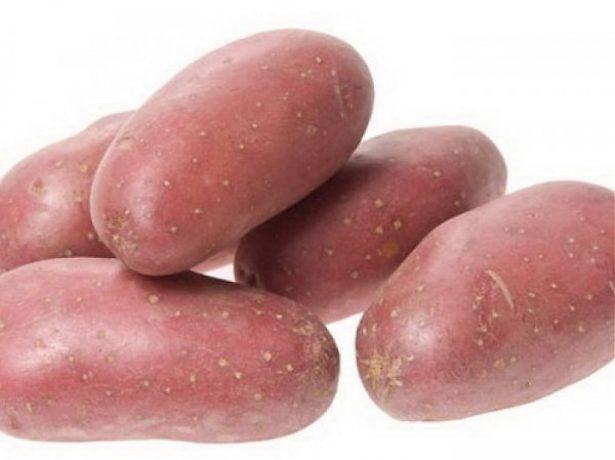
This variety is high-yielding, with a single plant yielding approximately 15 potatoes weighing up to 100 grams. The tubers are oval, with thin, smooth, reddish-purple skin and small eyes. The flesh is creamy, containing 18% starch. The color does not change after cooking.
The Ryabinushka variety is renowned for its excellent shelf life and can withstand long-distance shipping. The plant easily tolerates temperature fluctuations and drought.

Scope of application of the Ryabinushka variety fruits
Potatoes are used for mashed potatoes, casseroles, frying, and boiling. They also make delicious chips and French fries. They have a versatile use and are also perfect for making entrees.
Pros and cons
The Ryabinushka potato has a number of positive and negative aspects that should be considered beforehand.
| Pros | Cons |
| Stable, abundant yields | Average ripening period |
| High transportability of fruits | |
| High starch content | |
| Resistance to diseases and bugs | |
| Low maintenance |
Planting and caring for potatoes
The Ryabinushka potato variety's planting technique is no different from other varieties. One month before planting in the garden, remove the seedlings from storage to germinate. Before planting, soak the tubers in a boric acid solution for 30 minutes or copper sulfate for 5 minutes. When planting from seeds, space them 30 cm apart. The holes should be 10 cm deep and covered with ash and soil.

Proper care includes timely watering, weeding, hilling of beds, and application of fertilizers.
Processing seeds of the Ryabinushka variety
Select the seed material, leaving only viable, intact specimens. The seeds, like the roots, are soaked in a boric acid solution for half an hour. This procedure stimulates their rapid germination.

Selecting and preparing a planting site
The soil must be well warmed to prevent the risk of frost. Planting is usually done in early May, when the air temperature is consistently around 10°C (50°F). If a second harvest is desired, the tubers are replanted on June 20-25. It is advisable to plant Ryabinushka potatoes in a sunny, shade-free area.
Optimal predecessors include perennial grasses, flax, winter crops, lupines, and legumes. The harvest will be poor after eggplant, peppers, or tomatoes.
Potatoes can be planted in the same location for 2-3 years if they are intended for consumption. However, the crop depletes the soil and requires replanting after a specified time.
Optimal soils include loam, black soil, and sandy soil. Clay soil is heavy, so sand and humus are added during digging. Normal acidity is considered slightly or slightly elevated, with a pH of 5.8-6.8. Two weeks before planting, loosen the soil and remove weeds. Dig holes 10-15 cm deep and 10 cm wide. Space the plants 30-40 cm apart.
Technology for planting the Ryabinushka variety
Potatoes can be planted from seeds or tubers. The latter method is more popular. Planting should be carried out according to the recommendations below.
- The tubers should weigh 70-90 g and be undamaged. They are planted in holes 5 cm deep in clay soil. When planting in sandy loam or sandy soil, the seedlings should be planted 12 cm deep. In heavy soils, planting on ridges is recommended.
- Place humus and half a bucket of wood ash into the holes, and place tubers with straightened roots.
- From above, the potato seedlings are sprinkled with soil, lightly tamped down with hands.
- After planting, harrow the soil. This will reduce future weed growth.
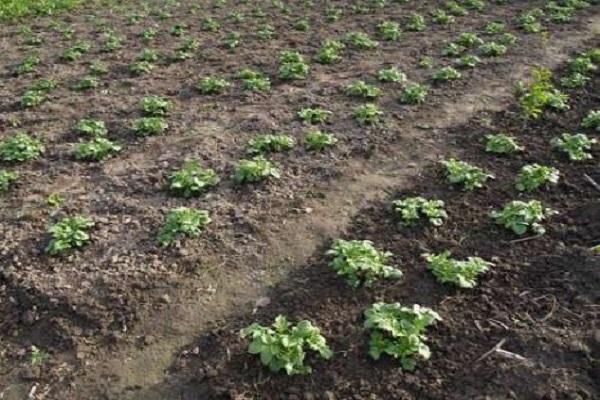
After planting, water the Ryabinushka bushes with half a bucket of water. Pour the liquid carefully, at the roots, to avoid washing away the young plants. Up to 5,000 bushes can be grown per hectare.
Watering and fertilizing
To ensure a bountiful harvest, potatoes should be regularly watered with settled water. The frequency of watering depends on the climate.
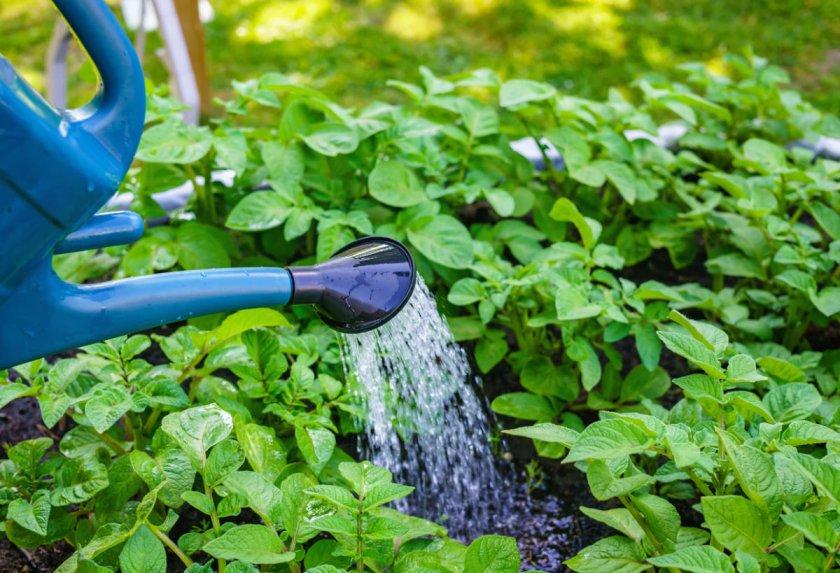
- 2 weeks after planting, when the seedlings reach 10 cm, irrigation is carried out.
- The second time the procedure occurs during the formation of flowers, when tubers are formed.
- The third watering is carried out when the fruits are forming intensively.
The soil should be wet to a depth of more than 0.5 meters.
For the Ryabinushka potato to thrive, it requires 3 feedings during the growing season.
- When the plants reach 15 cm in height, apply nitrogen fertilizer according to the instructions. Do not exceed the recommended amount, otherwise the potatoes will waste energy on growing green mass, detrimental to the yield.
- When setting fruit, use phosphorus-potassium fertilizers. Add 1 tablespoon of ash and the same amount of potassium sulfate to 1 bucket of water.
- A month before harvesting, apply mineral and organic fertilizers. Add 30 g of superphosphate and 250 ml of manure per 10 liters. Apply 0.5 liters of fertilizer per bush.
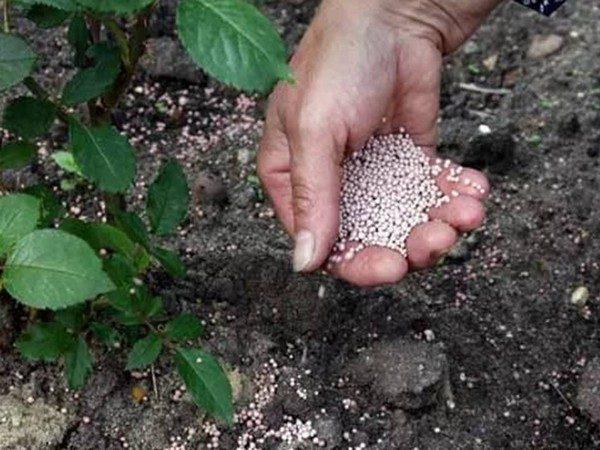
The recommendations given are mandatory, otherwise the harvest will be poor and the plant will lose its immunity.
Loosening and weeding the beds
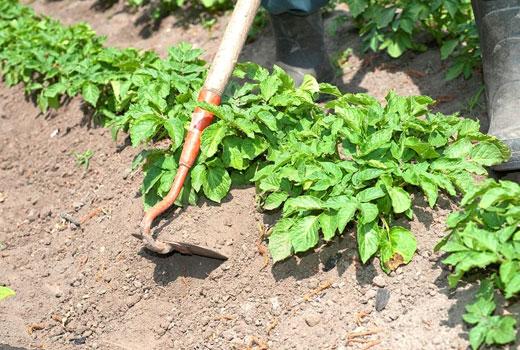
Ryabinushka potatoes should be weeded regularly, 2-3 times a month. This procedure removes weeds and oxygenates the soil. Use a bayonet-sized hoe to weed the soil.
Hilling
Hilling potatoes stimulates yield growth by clearing the area of weeds and keeping the tops off the ground. This procedure is performed twice per season. The first hilling occurs when the tops have reached 25 cm. The second hilling occurs two weeks later, as the green portion of the plant grows.
Diseases and pests - methods of control and protection
Ryabinushka potatoes are rarely affected by scab, canker, or late blight, provided they are properly cared for. They are most often attacked by insects.
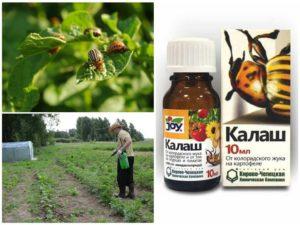
- Colorado potato beetle. They are killed with insecticides and collected by hand, then crushed.
- Wireworms can be controlled with chemicals such as Bazudin, Prestige, and Provotox. Marigolds can also be sown in the beds.
- Nematodes. These pests are eliminated by pouring boiling water over the bushes or adding chicken manure. Worms do not tolerate these substances. Infected plants are burned and replaced with legumes. Surviving bushes should be replanted.
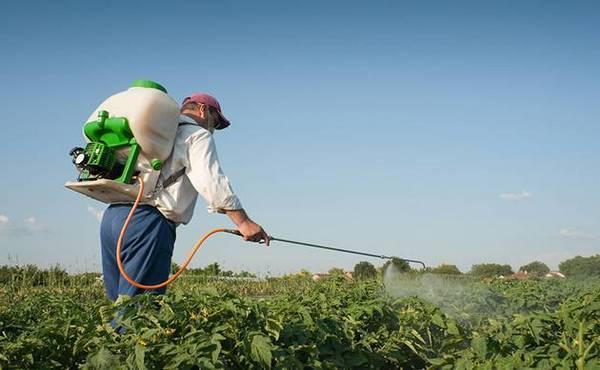
As a preventative measure, potatoes are sprayed with fungicides against late blight and other fungi. Preventative treatment with chemicals, or with garlic infusion or nettle decoction, helps against beetles.
Harvesting and storing elite Ryabinushka potatoes
The harvest begins in early September, following May planting. Harvesting can be done manually or mechanically. The fruits have a thick skin and are resistant to bruising. They should be stored in a basement or cellar where the temperature does not exceed 15 degrees Celsius. Maintaining an optimal humidity level is essential to prevent the vegetables from rotting. Good specimens are pre-selected, and unhealthy ones are discarded.
For future plantings, select strong tubers of uniform size, free from signs of rot, blue stain, or other diseases. They are washed and air-dried for 2-3 hours. The potatoes turn green, developing resistance to diseases and beetles. Vegetables selected for personal consumption or sale are stored in wooden boxes, bags, or nets. If all storage instructions are followed, they will last until spring with a 90% probability.
Reviews of vegetable growers about the crop
Gardeners' reviews of the Ryabinushka potato will help you choose the right variety and get a true picture.
Oksana Kovalenko, 67 years old, Zhitomir
Hello! I grow Ryabinushka potatoes commercially on a 4-hectare plot. I harvest them twice during the growing season using combines. The fruits sell out quickly, and I have a loyal customer base. I highly recommend this crop. Twice in three years, the vegetables have been attacked by aphids and Colorado potato beetles. I killed them with insecticides and washed the aphids off with soapy water.
Ivan Vinokur, 54 years old, Kyiv
Hello! The Ryabinushka potato is my favorite variety. I grow four rows of it at my dacha, and I tend to it on weekends. I harvest it abundantly, pick it by hand and store it in bags. The potatoes keep until spring, and we eat them all winter. I make delicious mashed potatoes, stews, and casseroles from them.
Irina Dogileva, 40 years old, Dnepr
Hi everyone! A neighbor shared some Ryabinushka potato tubers with me, and I decided to grow them in my garden. I planted the plants, and three months later, I had a harvest. The fruits are delicious, creamy, and filling. I highly recommend them!
Related posts:
 Description of the best potato varieties of domestic and foreign selection
 Description and characteristics of the Rodrigo potato variety, cultivation and care
 Characteristics and description of the Queen Anna potato variety, planting and care
 Description and characteristics of the Zhukovsky potato variety, planting and care
 Description and characteristics of the Rocco potato variety, cultivation and care
 Description and characteristics of the Colombo potato variety, planting rules and care
 Description and characteristics of the Krasavchik potato variety, planting and care
 Description and characteristics of the Bellarosa potato variety, planting and care