
- The history of growing potatoes under straw
- Advantages of the method
- Planting dates
- The specifics of growing potatoes in straw
- Soil preparation
- Preparing tubers
- Landing conditions
- Planting technology
- Using a minimum amount of straw
- Cardboard and straw as an alternative growing method
- Recommendations for crop care
- Harvesting Features
- Gardeners' reviews of the method
Potato growing technology Straw-based potato growing is popular among many gardeners due to its simplicity and high yield. This mulching-based method has undeniable advantages. To achieve excellent results, it's important to know how to properly prepare the soil and potato tubers, as well as how to care for the seedlings.
The history of growing potatoes under straw
In Russia, the method of growing potatoes under hay or straw has been known since the 19th century. In some regions of the country, it was successfully used even after the Revolution.
To save time and effort, farmers preferred to cover potato tubers generously with all kinds of plant debris or straw instead of traditionally burying them in the soil. The layer of this cover was at least twenty centimeters thick.
This extremely convenient and simple method was forgotten during the collectivization period. However, it is now being revived in summer cottages.
Advantages of the method
Using straw as a cover for potatoes has many important advantages that all beginning gardeners should be aware of:
- Straw is an environmentally friendly and safe natural material.
- There is no need to pre-dig the soil and clean the tubers from soil.
- Covering provides vegetable crops with reliable protection from adverse weather conditions (such as hail or frost), as well as from weeds and insect pests.
- The bottom layer of straw mulch is actively processed by earthworms, which saturate the soil with humus and increase its fertility.
- High yields are ensured – you can get a bucket of potatoes from a bush.
- Straw retains moisture well, so there is no need for frequent watering during rainy weather.

Planting dates
It is recommended to plant potatoes under straw starting in mid-May. Earlier plantings are prone to ground frosts, which can delay the tubers' germination. In southern regions, potatoes can be planted earlier.
The specifics of growing potatoes in straw
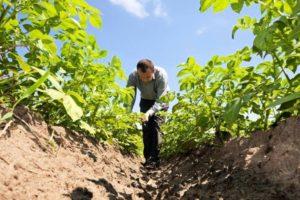
Growing potatoes in straw relies on a mulching technique, whereby the crop grows on the soil surface but within layers of natural materials. Proper soil and tuber preparation are essential for a good harvest.
Soil preparation
It's recommended to begin soil preparation immediately after the fall harvest. In this case, there's no need for thorough clearing and digging. Simply turn the grass over with a shovel so that it's as close to the ground as possible, with its roots exposed. The grass mass will completely rot over the winter and become a good fertilizer for the soil.

It's a good idea to plant green manure crops on the selected plot in the fall, which precede potato planting. These can include white mustard, rye, oats, phacelia, or alfalfa. They will enrich the soil with nitrogen, phosphorus, and valuable micronutrients, and will also help suppress any weeds. These plants can be selected individually or in combination.
Preparing tubers
Potato tubers the size of a chicken egg should be used as planting material.
Proper preparation requires the following steps:
- Carefully place the potatoes close to each other in a wooden box with low walls.
- Place it in a naturally ventilated and lit room with an air temperature of 18-22°C. Treat the potatoes with a solution of potassium permanganate.
- Monitor the potatoes regularly. As soon as strong sprouts appear on the tubers, you can transplant them into open ground. The tubers usually sprout within 5-7 days.

For these purposes, only high-quality potatoes, free from diseases and traces of pests, should be used.
Landing conditions
To grow a good potato harvest, certain conditions must be met. The air temperature must be at least 10°C. If it's lower, you'll have to wait a long time for the seedlings to emerge.
On the day of planting, treat the potatoes with special preparations that provide protection against pests - "Prestige", "Turbo" or others.
The location for the potato bed should be protected from gusts of wind and drafts, and also sufficiently open and illuminated.

Planting technology
Planting potatoes under straw requires the following steps:
- Moisten the warmed area of soil.
- Plant sprouted potato tubers one at a time, spacing them 30 centimeters apart. Maintain a 70-centimeter distance between rows.
- To replenish the potassium deficiency, sprinkle wood ash (one tablespoon) around each potato.
- Cover the potato tubers with a 10-centimeter layer of straw or hay.
- Once the first shoots appear, increase the covering layer to 30-50 centimeters.
These conditions will ensure soil moisture and aeration. As the straw decomposes, carbon dioxide is released, stimulating the growth of beneficial soil microflora. To increase yields, an additional layer of peat-humus mixture can be added.

Using a minimum amount of straw
When using straw in minimal quantities, it is recommended to form a ridge. The optimal height is 10 centimeters and the width 20 centimeters. After filling the holes, spread dry straw between the ridges.
Even with a small amount of mulch, potato tubers will be protected from greening and will not be exposed to the soil surface after heavy rains. The most vigorous weeds will likely emerge, so it's important to remove them promptly.
Cardboard and straw as an alternative growing method
Another effective way to grow potatoes without burying them in the ground is worth considering.

To do this you will need:
- cardboard with a dense structure (for example, boxes from household appliances);
- straw;
- potato tubers;
- knife.
You need to follow these steps step by step:
- Place overlapping cardboard on the prepared area of land and make cross-shaped cuts in it to fit the potato size, keeping a distance of 30 cm.
- Distribute the potatoes prepared for sowing into the holes.
- As soon as the seedlings appear, cover with a layer of straw or hay.
Recommendations for crop care
This method requires minimal crop maintenance. The most important thing is to maintain optimal soil and subsurface moisture.
In regions with abundant rainfall and a humid climate, additional watering is not necessary. Instead, it's important to ensure the straw doesn't rot. If this occurs, replace the layer. In dry climates, frequent watering is required to prevent the potatoes from drying out. Watering once a week will produce medium-sized potatoes, and every four days will produce large ones.

To prevent rodents from nesting in the mulch layer, ultrasonic repellents can be placed around the perimeter of the plot. Slugs are another crop pest. Beer traps, hot peppers, salt, crushed eggshells, and ash can be used as protection. Cabbage should not be planted near potato beds, as they are highly attractive to slugs.
Colorado potato beetles are extremely rare with this method, but it is still worth playing it safe and treating the area with organic insecticides.
Harvesting Features
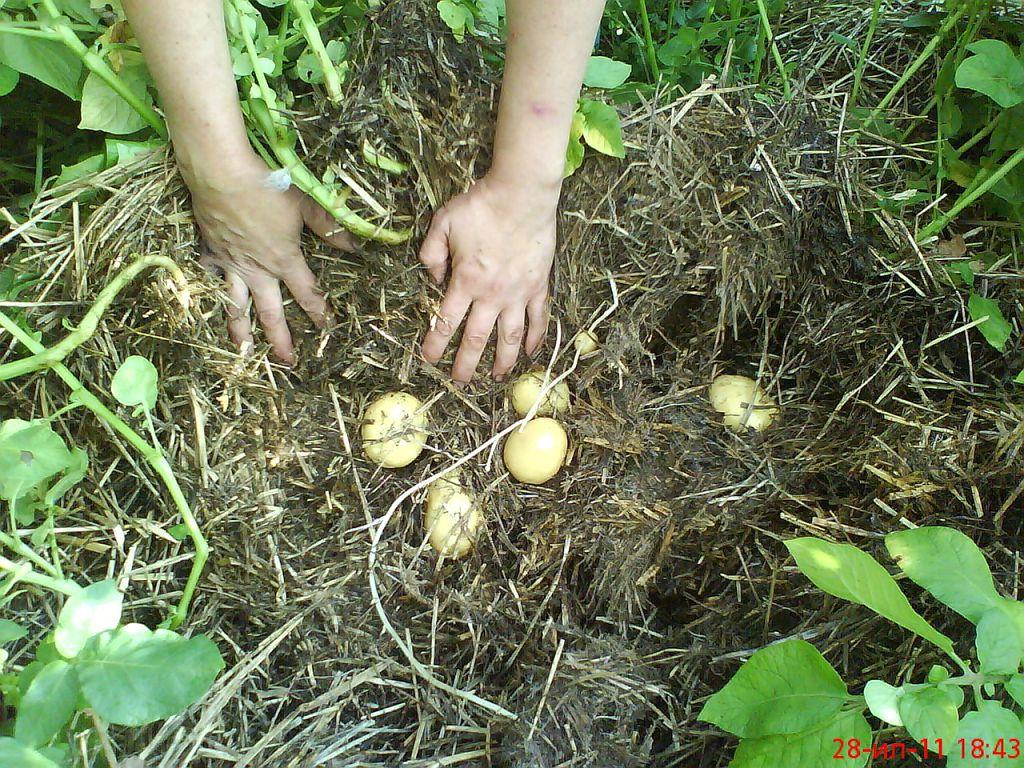
Compared with the traditional method potato harvestingHarvesting potatoes grown under a straw cover is much simpler and cleaner. All that's required is to rake away the straw layer and collect the ripe potatoes from underneath.

Alternatively, you can select large young potatoes before they ripen and then apply a new layer of mulch. This procedure does not negatively affect the subsequent growth of the potatoes.
Gardeners' reviews of the method
Maria Viktorovna: "I try to keep all gardening work to a minimum, so I've recently been growing potatoes under straw. That's how our ancestors did it, and they knew their stuff! Minimal effort and maximum benefit. The tubers grow smooth, large, and well-fertilized. And the taste is just as good as standard-grown ones."
Arkady: "I like growing potatoes under hay. The harvest is bountiful and free of Colorado beetles. I have a small garden plot, so I think this method is optimal. The main thing is to keep an eye on the straw to make sure it doesn't rot or dry out."
Related posts:
 Why potatoes aren't growing well in the garden, and what to do to ensure a bountiful harvest
 Description and treatment of potato diseases, methods of control using folk and chemical means
 Description and treatment of potato pests, control measures
 Description of the best potato varieties of domestic and foreign selection
 How to properly prepare planting material and when to plant potatoes to get a rich harvest
 Description and characteristics of the Jelly potato variety, planting rules and care
 Description of the best potato varieties for 2025, selection for regions
 Agricultural technology for growing potatoes in open ground and greenhouses and care