
- Description and characteristics of the Jolie strawberry
- Advantages and disadvantages of the variety
- Specifics of crop cultivation
- When to plant?
- Preparing soil and planting material
- Landing rules
- How to care for the plant?
- What to feed?
- How to water?
- Mulching and loosening
- Preparing for winter
- Protecting garden strawberries from diseases and pests
- Breeding methods
- Harvesting and storing strawberries Jolie
Growing Jolie strawberries is an interesting and exciting process that yields a bountiful harvest. This variety produces tasty, juicy fruits. They are eaten fresh or used for preserves. To achieve good results, it's important to follow all the necessary agricultural practices. This includes watering the plant regularly, fertilizing it, and protecting it from pests.
Description and characteristics of the Jolie strawberry
The Joli variety is considered non-remontant. It was developed by Italian breeders for commercial purposes by crossing the Darselect and Clery varieties. The result was a profitable crop.
This strawberry is considered a mid-early variety. Harvesting begins as early as mid-June. The active fruiting phase is short, lasting no more than three weeks. However, the variety is characterized by high yields. One bush can yield 0.8-1 kilogram of sweet fruit per season. The bushes are quite robust and large, covered with numerous bright green leaves. The plant is characterized by tall, strong flower stalks that produce numerous tendrils.
The culture has a large and powerful root system, which is distinguished by excellent vitality.
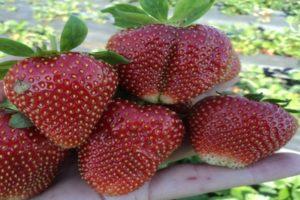
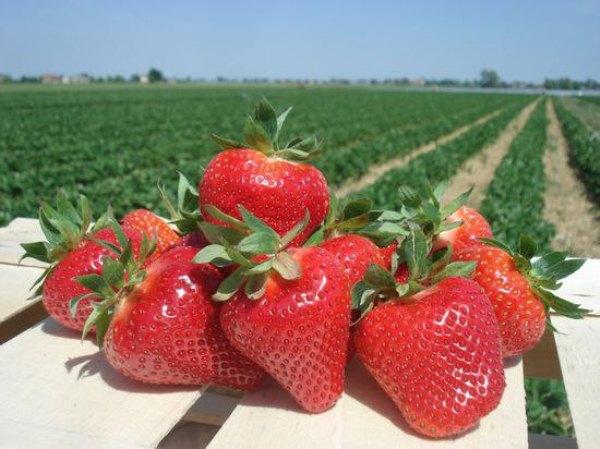
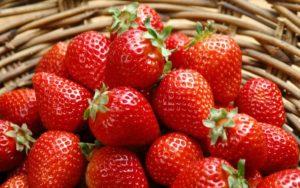
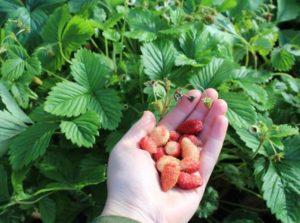
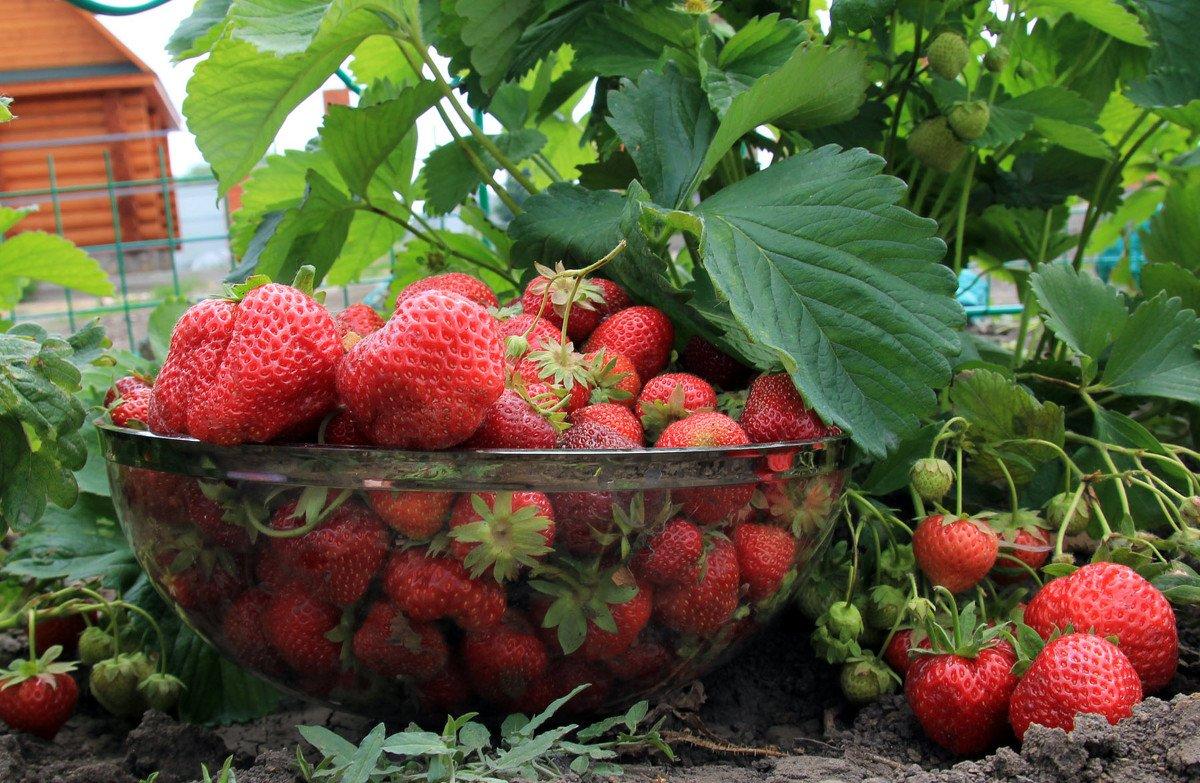
This variety is characterized by large, cone-shaped berries. The largest fruits reach 40 grams in weight. These specimens are found during the peak fruiting period. After some time, the berries become smaller.
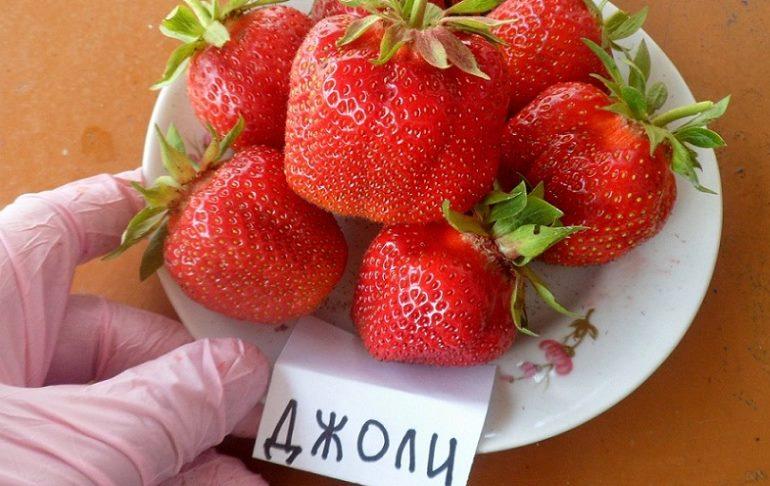
The fruits are distinguished by their bright scarlet color. Inside, they have a dense, firm texture and are completely free of voids. The berries have a pleasant, sweet, slightly tart flavor and a distinct aroma. These strawberries transport well and have a long shelf life. The variety is drought-resistant and adapts well to a variety of climates. In Europe, the Jolie strawberry is grown commercially.
Advantages and disadvantages of the variety
The advantages of this variety include the following:
- The fruit's multifaceted flavor is considered one of the best among Italian varieties.
- Good size and ideal shape. The fruits are uniform in shape and large in size.
- Excellent transportability. The berries do not bruise or leak during transportation. They can withstand long-term storage.
- Resistance to fungal leaf infections. Jolie strawberries rarely experience fruit rot.
- Resistance to drought conditions allows the plant to be grown even in southern regions.
- Strawberries are undemanding in terms of growing conditions and soil composition. When planting strawberries in poor soil, it's worth fertilizing them more frequently.
- No need for complex agricultural techniques. The plant requires standard care.
- Winter hardiness. This is why strawberries are planted in central Russia.
The variety's drawbacks include the low placement of its flower stalks. As a result, the berries often touch the ground. However, the variety is not susceptible to rot. Therefore, the fruits are only susceptible to damage from insects or soil contamination.
Specifics of crop cultivation
To obtain a full harvest, it is recommended to provide the crop with good conditions when growing it.
When to plant?
Strawberries should be planted in spring, summer, or fall. August or September is best. This allows the seedlings to take root by spring. Flower buds will also appear. If you plant strawberries in spring, you can only expect a harvest the following season. This option is suitable for dry and hot summers. In such a situation, planting in August is not recommended, as this will result in the death of the seedlings.
Preparing soil and planting material
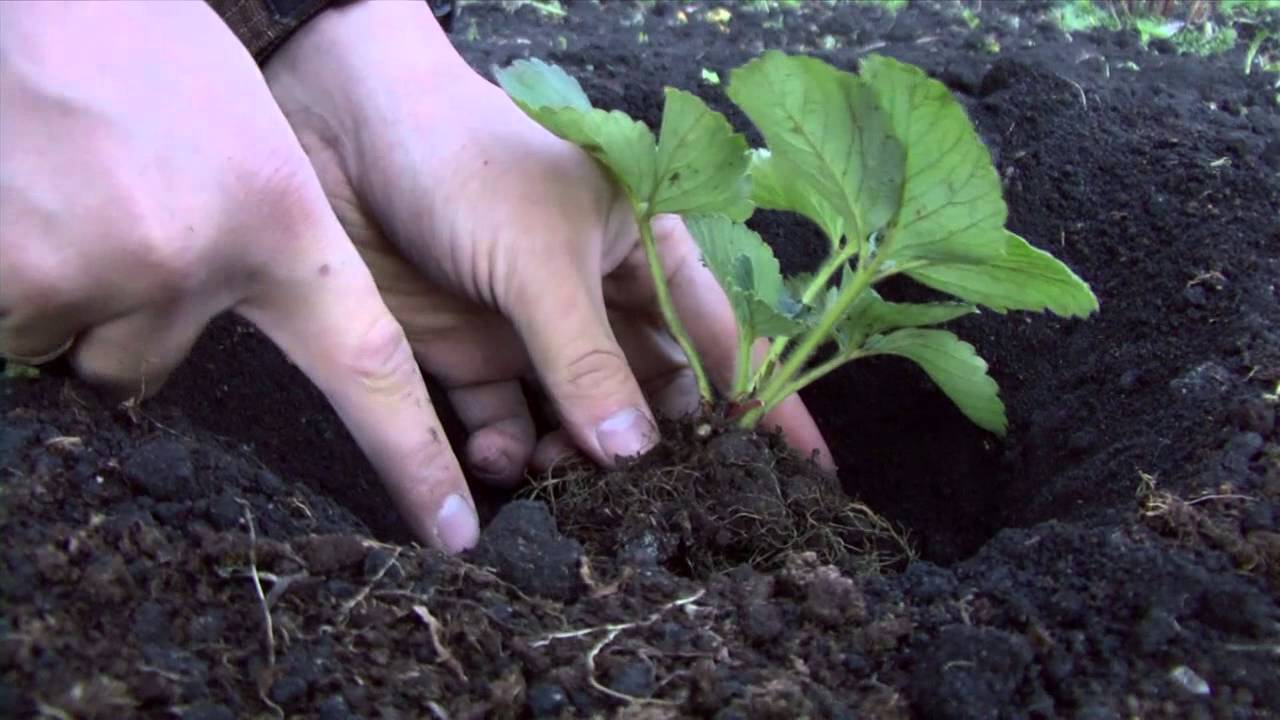
The strawberry plot should be prepared in advance. To do this, it's recommended to enrich the soil with compost or other fertilizers. Additionally, the soil should be dug to a depth of at least 25 centimeters. Once the soil has settled, dig holes for the seedlings.
Landing rules
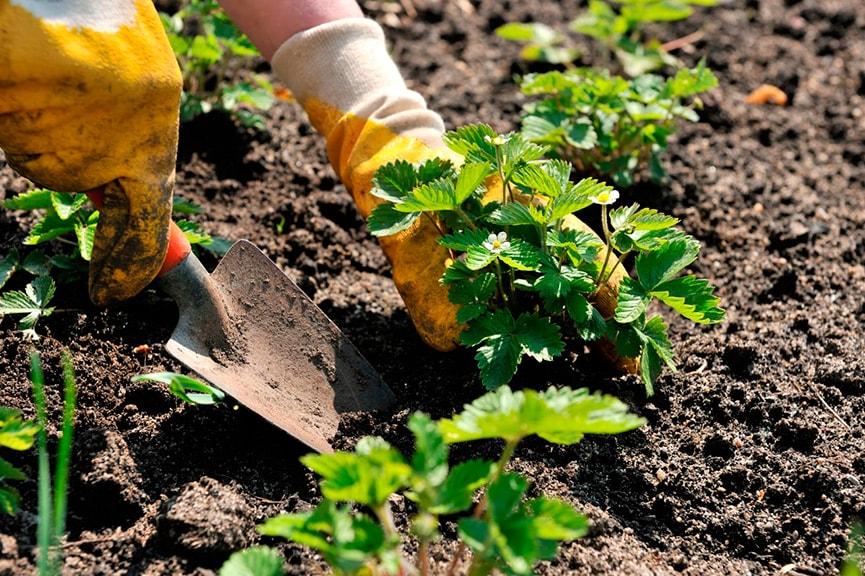
This variety is characterized by fairly spreading bushes. It is recommended to plant them at intervals of 25-30 centimeters. No more than 4-5 bushes can be placed per square meter. The seedlings should be transplanted into holes with a lump of soil. Afterwards, it is recommended to lightly cover them with dry soil and compact them. Finally, the area should be watered and covered with a layer of mulch. Straw, sawdust, or peat are suitable for this purpose.
How to care for the plant?
To ensure that strawberries grow well and bear fruit abundantly, they need to be provided with comprehensive and high-quality care.
What to feed?
For fertilizing bushes, it's best to use mineral fertilizers. These fertilizers are applied during flowering and fruit formation. Neglecting this procedure can lead to the development of a dangerous disease called chlorosis. In the fall, it's best to use organic fertilizers. These include humus, bird droppings, and mullein.
How to water?
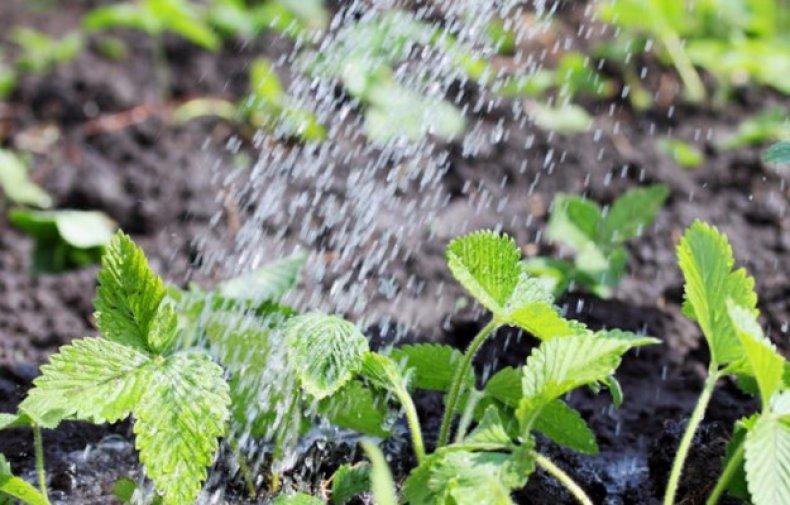
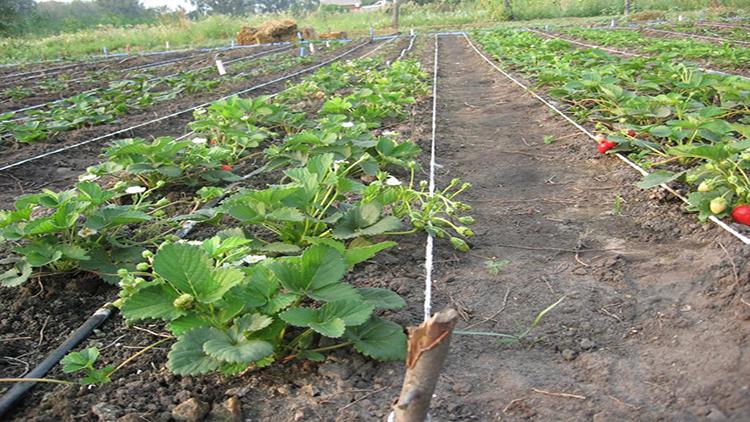
This strawberry variety is considered a moisture-loving plant. However, overwatering can be dangerous. Therefore, experts recommend using a drip irrigation system. 10 liters of water per square meter is required.
Mulching and loosening
The plant requires light, loose, and well-drained soil. Therefore, the bed should be loosened after each watering. This will help prevent crusting. Before flowering, the plants should be hilled. This is recommended three times a week. During harvest, repeat the process at two-week intervals. It is recommended to cultivate the soil to a depth of 4 centimeters.
To retain moisture, prevent active weed growth, and protect roots from the harsh sun, mulch the soil.
For this purpose, it is recommended to use sawdust or straw.
Preparing for winter
To prevent fungal infections, clear the bed of dry leaves in the fall. To stimulate the formation of tendrils, it's recommended to separate the mother plants. Removing any remaining tendrils can reduce yield.
In regions with snowy winters and light frosts, strawberries are not covered. Otherwise, the plants are insulated with straw, film, or agrofibre.
Protecting garden strawberries from diseases and pests
The plant is resistant to major diseases. However, if care instructions are not followed, it is susceptible to the following pests:
- Strawberry whitefly – when attacked by these insects, strawberry leaves curl and become covered in yellow spots. A sugar-like secretion appears on the leaves. Insecticide treatments can help combat the problem. This should be done three times, at weekly intervals.
- The strawberry leaf beetle causes damage to leaves and fruit. If left untreated, the plant risks drying out and dying. Insecticides are recommended before flowering and after harvest.
- Nematodes are dangerous pests that cause plant death. When infested, plants experience stunted growth, twisted leaves, and lack of fruit. In severe cases, use Fitoverm.
- Aphids – these microscopic insects attack leaves, petioles, and flower stalks. This results in leaf deformation and drying. A sticky mass appears on the plant, and flower buds stop developing. Insecticides help control these pests.
Breeding methods
In the first year after planting, the bushes produce 2-5 strong runners. To obtain good planting material, root the first two. The remaining runners should be removed.Rooting can be done directly in the garden bed or using a plastic cup for this purpose.
In August, the rooted seedlings are separated from the mother plant and transferred to a permanent site.
Harvesting and storing strawberries Jolie
This strawberry variety is considered an early ripening one. The first harvest occurs in mid-June. Since the fruit ripens gradually, the process extends over three weeks. The harvest is typically every four days. To extend shelf life, the berries are picked unripe. However, unripe fruits are considered less juicy and sweet. The flavor can only be appreciated when they are fully ripe.
The Joli strawberry is a popular Italian variety, distinguished by its excellent taste and high yield. To achieve good results, it requires high-quality care.
Related posts:
 The best varieties and cultivation of everbearing strawberries, fertilizing and propagation
 Description of the Florence strawberry variety, planting and care features
 Methods for planting and propagating cherries at home
 Signs of disease and pest attacks on strawberries, treatment methods
 How to grow strawberries at home
 Description and characteristics of the Vima Zanta strawberry variety, planting and care scheme
 Description of the everbearing strawberry variety Selva and cultivation technology
 Description of the Holiday strawberry variety, cultivation and propagation methods