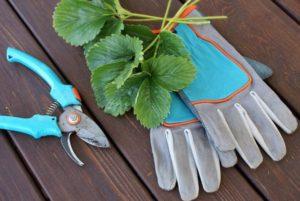
When grown in a garden bed, strawberry bushes eventually spread out and become poorly ventilated, making them susceptible to pathogens and pests. Furthermore, the berries become soiled after watering and are eaten by slugs. To prevent this, gardeners have developed various strawberry stands. Below is information about the structure, the variety of supports, and the pros and cons of supports.
What is the design?
A strawberry stand is a support made of plastic, metal, rubber, or wood. It is installed so that the strawberry bushes remain upright and do not collapse under the weight of the berries.
This is especially important after rain, when the water pressure pushes the fruit to the ground, causing it to become dirty and even rot. By providing support for the bushes, the structure doesn't block them from sunlight, allowing the strawberries to grow delicious and juicy.
Pros and cons of strawberry planting supports
Strawberry bush support has the following advantages:
- the bushes are ventilated, as a result of which they are not affected by pathogenic microorganisms;
- fruits are protected from being eaten by slugs and snails;
- care of bushes is simplified;
- the marketable appearance of the berries is preserved.
The disadvantages include the material and physical costs involved in maintaining a large strawberry plantation.
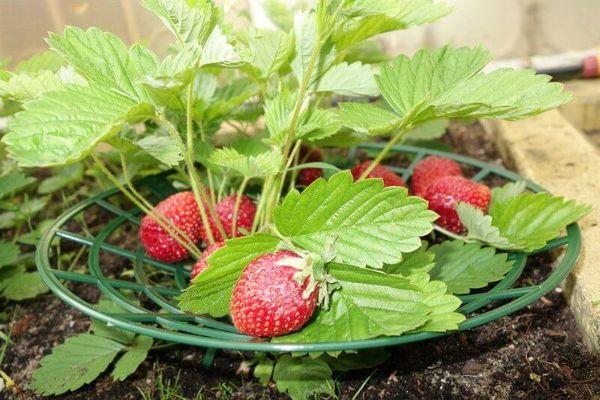
Variety of holders
Through trial and error, gardeners have installed several effective strawberry supports. They are made from a variety of materials, from environmentally friendly to those developed by the chemical industry. The farmer chooses the most suitable option and applies it to their plot.
Take a look Also
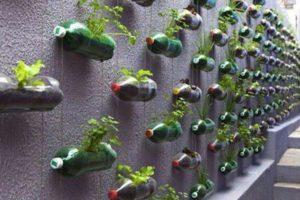
Plastic bottles
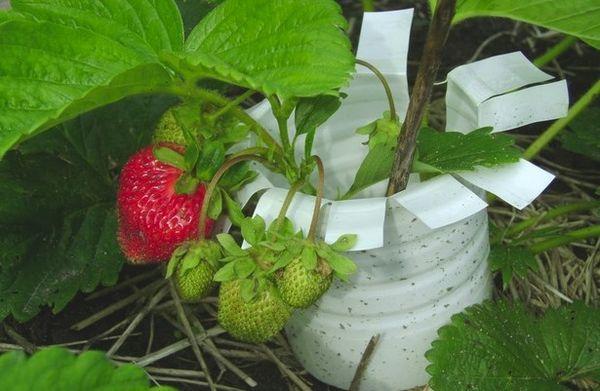
To create the holder, the bottles are cut off at the top and bottom. The resulting tubes are then cut at the top and bent outward. This is done to prevent the above-ground portion of the strawberries from being cut by the sharp edges of the bottles. The tubes are placed on the plants, and the flower stalks are folded back onto the bent ends.
Wire
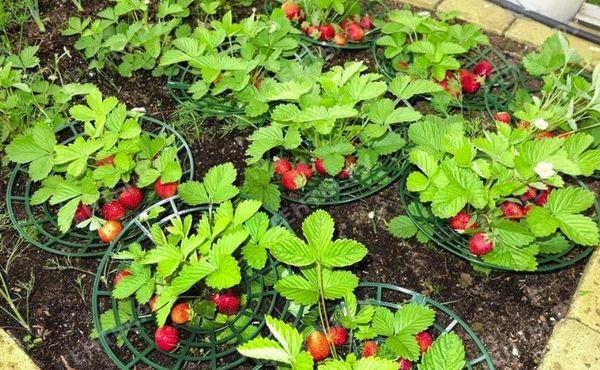
The structure consists of bent wire, the stems of which are driven into the ground, and the fruit stalks and leaf blades are placed behind a perpendicular circle. If the metal is coated with a protective layer, it will serve as support for several seasons. This structure helps preserve the berry harvest.
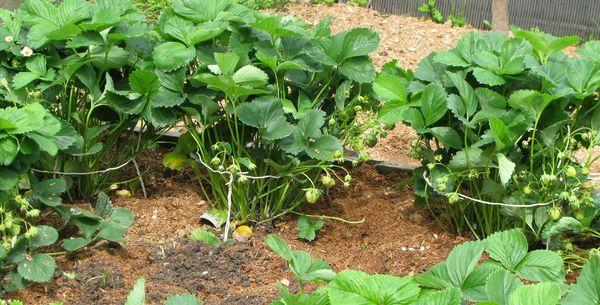
Net
The netting is sold in plastic sections that can be easily bent into a ring. The mesh cylinder is installed around the strawberry plant, and the stems and berries are placed behind it. The disadvantage of this type of support is that the plastic becomes brittle when exposed to the sun and cannot be used for a long time.
Film
The covering material helps retain soil moisture and prevents weed growth. The film's main purpose is to keep the berries clean and protect them from slugs, snails, and pathogens. This covering material comes in a variety of colors and thicknesses.
Branches
This is an environmentally friendly material for strawberry supports. The main problem may be a lack of sufficient branches. To create strawberry supports, forks are inserted into the ground, and the shoots are placed on them.
Mulch
Straw, sawdust, and grass clippings are used as mulch. Mulch not only retains moisture in the soil, prevents weeds, and protects the berries from dirt, but also acts as a natural fertilizer. This occurs after the organic matter has decomposed.
Disposable forks
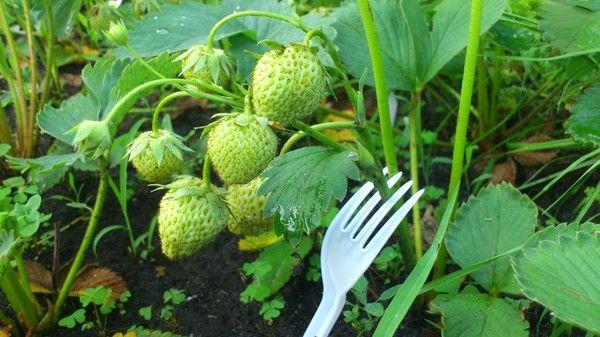
The kitchen utensil is inserted around the strawberry plants, and the flower stalks are threaded through the slits. If the shoots are thick, a few prongs can be broken off. The downside of this method is that you'll need a lot of forks to support all the plants in the bed.
Take a look Also

Making a strawberry stand yourself
A reliable support for garden strawberries is made of wire: it lasts a long time and doesn't rot from sun or rain. To make the support, cut a piece of material 80 centimeters long, form a loop with one turn, and then bend the loop 90° with pliers. The wire is inserted near the bush, and the flower stalks are threaded through the loop.
Arrangement of supports
Strawberries are grown in beds, pots, bags, PVC pipes, and old tires. Each design requires an individual approach: some require more support for the berries, others less, and some can be done without supports altogether.
In ordinary beds
Despite the abundance of various vertical strawberry structures that save space, gardeners still prefer to grow strawberries in regular beds. However, in these conditions, the bushes fall apart, the berries become soiled, and are eaten by slugs and snails. To prevent this, they support the bushes with supports made of bottles, wire, branches, and mesh, and mulch the soil with straw, grass clippings, and sawdust.
On the balcony
Loggias and balconies require compact structures because space is limited. For this purpose, vertical structures facing south or southwest are used. When grown in pots, berries don't get dirty, so staking is less necessary in these conditions than in garden beds.
Subsequent planting and care of strawberries
Depending on the variety, strawberry bushes are planted 30-50 centimeters apart. The plants are watered and the soil is mulched.
Further care consists of timely watering, loosening the soil, removing weeds, and fertilizing. Once the bushes grow and produce berries, support them with one of the stakes.
Related posts:
 Description of the Florence strawberry variety, planting and care features
 How to grow strawberries at home
 Description and characteristics of the Vima Zanta strawberry variety, planting and care scheme
 Description of the everbearing strawberry variety Selva and cultivation technology
 The best varieties and cultivation of everbearing strawberries, fertilizing and propagation
 Description of the everbearing strawberry variety Mara de Bois and growing rules
 Description of the Holiday strawberry variety, cultivation and propagation methods
 Description of the Fireworks strawberry variety, planting and care