
- History of selection and growing region
- General information about Syria strawberries
- Pros and cons of garden strawberries
- Nuances of growing the variety
- Planting dates
- Selection of seedlings
- Landing site
- Planting technology
- Further care of the plant
- Watering and fertilizing
- Features of weeding and loosening
- Preparing for the winter period
- Protecting crops from diseases and pests
- Cultivation of the variety
- Harvesting and storage of crops
The Syria strawberry variety is a beautiful, cone-shaped berry, ideal for growing commercially. Gardeners love this crop for its low maintenance requirements. The bushes produce fruit abundantly for many years. However, yields decrease with age. After five years, it's recommended to replant the strawberry plantings. Strawberries respond well to organic and mineral fertilizers.
History of selection and growing region
Despite its name, the Syria strawberry variety was not developed in the Middle East, but in Europe—more specifically, Italy. Breeders from New Fruits, a company based in Cesena, introduced a new non-everbearing strawberry variety to the world. The harvest can be picked only once per season—in mid-June. The new variety was patented in 2010.
The Syria strawberry can be grown in continental climates. It adapts well to cool or hot, dry summers and harsh winters. The new variety is suitable for both home and commercial cultivation.
General information about Syria strawberries
The Syria strawberry grows as low (up to 40 centimeters) spreading bushes. The plant has strong stems capable of supporting large berries. The leaves are dark green, basal, long-petiolate, trifoliate, and serrated. The roots are fibrous, extending 20-30 centimeters into the soil. The flowers are medium-sized, with white petals and a yellow center.
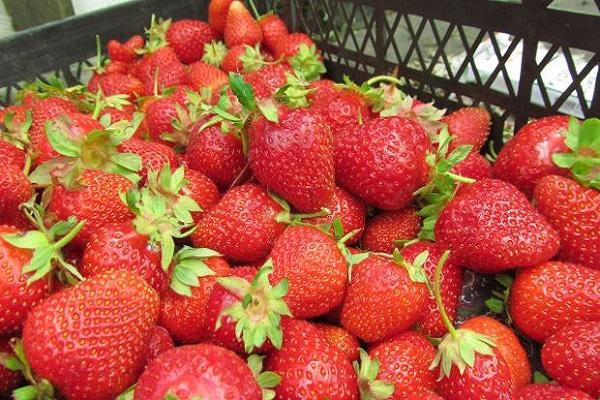
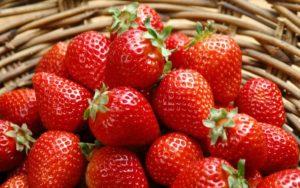
The berries are raspberry-red or dark cherry, perfectly cone-shaped. Each berry weighs 25-40 grams. The strawberries have juicy, dense, orange-pink flesh and a sweet flavor with a subtle tartness. In summer, each bush produces runners.
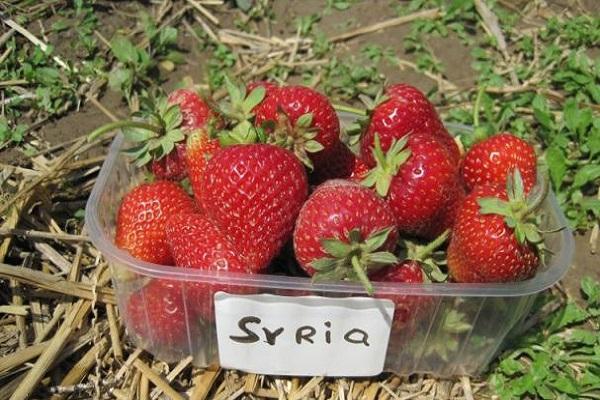
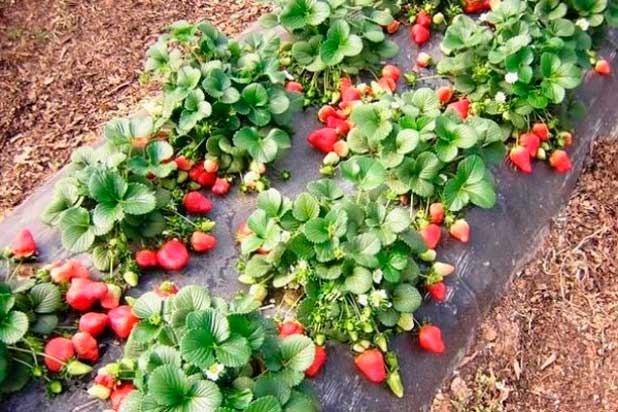
Syria strawberries can be grown in open beds or under plastic. A single mature bush can yield 0.5-1 kilogram of berries. However, this crop only produces fruit well for the first 3-5 years. It is recommended to gradually replant existing strawberry plants.
Pros and cons of garden strawberries
Advantages of Syria strawberries:
- large-fruited;
- possibility of breeding on an industrial scale;
- excellent taste characteristics;
- stability of fruiting;
- resistance to powdery mildew;
- transportability, excellent commercial qualities;
- cold resistance;
- drought resistance.

Disadvantages of the variety:
- low winter hardiness (needs winter shelter);
- susceptibility to certain diseases;
- affected by spider mites.
Nuances of growing the variety
The Syria strawberry is propagated by seedlings. Young rosettes form on the runners in midsummer. Very rarely, strawberries are propagated by seed.
Planting dates
The Syria strawberry variety is planted in spring (May) or summer (August). However, it's not always possible to find quality strawberry plants in spring. It's not recommended to plant old strawberry bushes sold during this period. Young rosettes appear in the summer after fruiting. It's best to plant strawberries in August.
Selection of seedlings
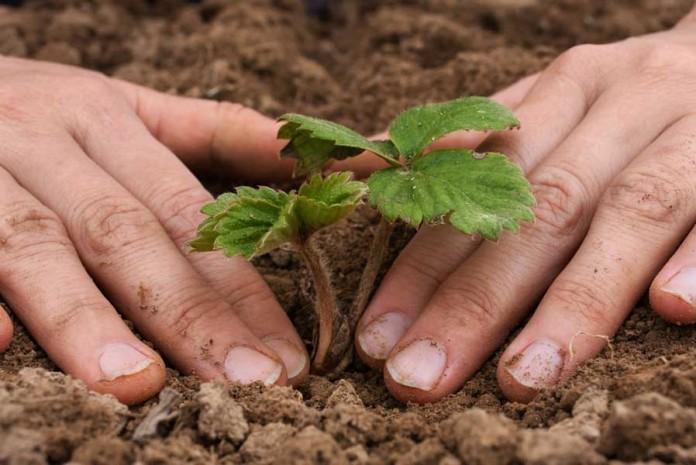
Seedlings should be healthy, have several (at least three) green leaves, and a well-developed root system. It's not advisable to purchase plants with weak roots. Purchased plants should be immediately planted in moist soil or placed in a container of water. For better rooting, you can add a growth stimulant (Kornevin) to the liquid.
Landing site
Syria strawberries thrive in sunny areas. In the shade, the berries will grow small and sour. You can build raised beds and plant the berries under plastic. You can also plant them on level ground. It's important to avoid growing them in low-lying areas. Avoid planting them in areas where water will accumulate after rain.
The Syria strawberry prefers fertile, sandy loam soil. Excessively clayey soil can be amended with peat and sand. Soil preparation begins several months before planting. The soil should be thoroughly dug, leveled, and sand and fertilizer added. For every square meter of area, use a bucket of rotted humus, 300 grams of wood ash, and 100 grams each of urea, superphosphate, and potassium sulfate. Strawberries can be planted after legumes, onions, garlic, carrots, and beets. Poor predecessors include potatoes, cabbage, tomatoes, and cucumbers.
Planting technology
It's best to orient the beds north to south. Strawberry bushes are planted in strips, parallel to each other or staggered. Ideally, create beds 1-2 meters wide, with 2-4 rows of strawberries.
The distance between adjacent plants should be 30-40 centimeters. Leave 50 centimeters of clear space between rows.
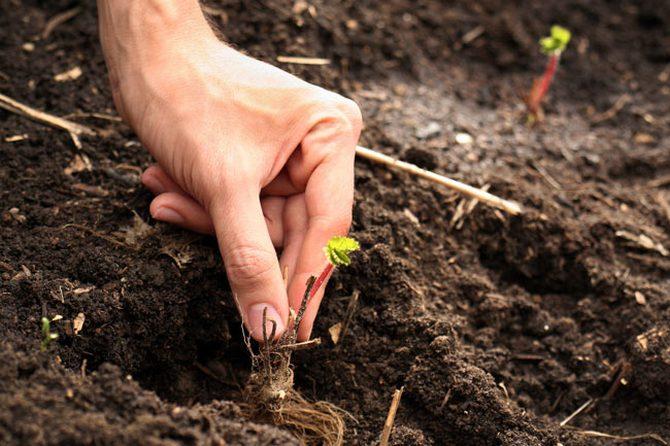
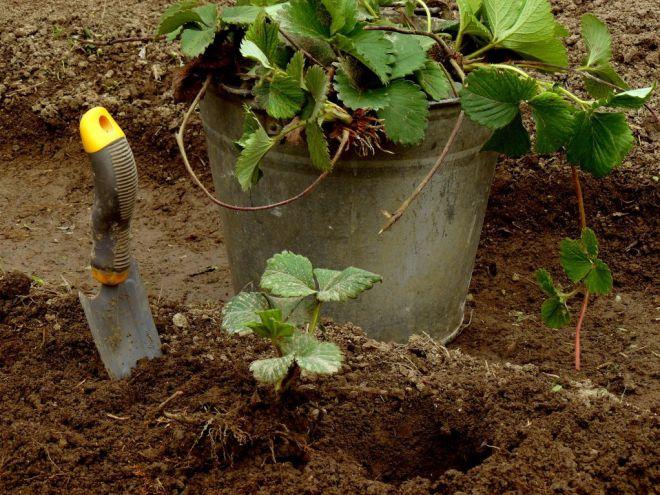
Before planting, dig holes 30 centimeters deep. Water each hole and treat it with a fungicide solution to combat fungi. Plant the bushes in the holes so that the leaves and flower buds are above the soil surface. Cover only the roots with soil. After planting, water the plants generously.
Further care of the plant
After planting, Syria strawberries require care: watering during dry periods, fertilizing, and protecting from diseases and insects. Before wintering, the bushes are insulated.
Watering and fertilizing
Water the Syria strawberry plant during hot and dry weather. This is essential during the flowering and fruiting periods. The bushes are watered twice a week (in the evening). Use settled, warm rainwater. A drip irrigation system can be installed for strawberries grown under plastic.
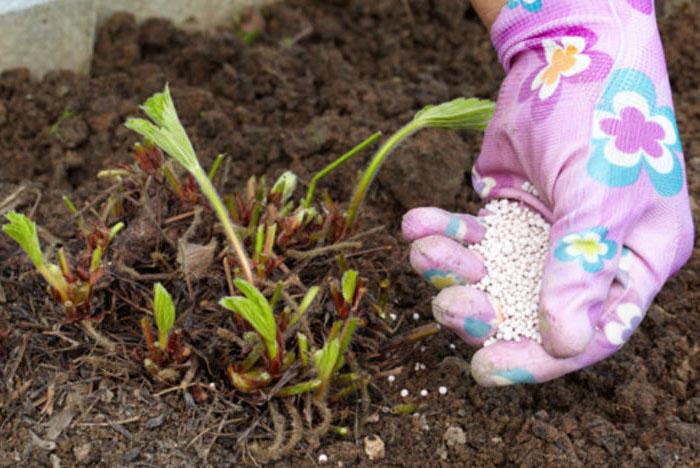
During the first year, plants don't need additional feeding. The fertilizer applied before planting should be sufficient. During the second season, in early spring, the bushes are fed with organic matter or nitrogen-containing substances. Before flowering, potassium and phosphorus are added to the soil.
Before wintering, plants are fed with potassium sulfate and superphosphate (30 grams per 10 liters of water—the recommended dose per square meter). Complex fertilizers (Ryazanochka, Hera, Nutri-Fight, Buyskoe) can also be used for additional feeding.
Features of weeding and loosening
After watering, it's recommended to loosen the soil and break up any crust. This will help oxygenate the soil. Weeds should be removed from the bed. Runners can be removed if they are not intended for use as seedlings.
Preparing for the winter period
In the southern part of the country, strawberries don't need to be insulated before winter. If winter temperatures are forecast to drop below 20 degrees Celsius, cover the bushes with agrofibre, dry straw, or spruce branches. Insulate strawberry plants only before the onset of frost, not before, otherwise the plants will rot and rot.
Before wintering, the bushes need to be fed and treated with fungicides and insecticides.
Protecting crops from diseases and pests
The Syria strawberry variety is resistant to many diseases. However, if not properly cared for, the crop, growing in nutrient-poor soil, is often susceptible to disease. Rainy and hot weather can trigger the spread of infections.
Common diseases of the variety: gray mold of fruits, white or brown spot of leaves, verticillium wilt of bushes, leaf rust, fusarium wilt of flower stalks and foliage.
It is easier to prevent diseases than to cure them.
In the spring, before flowering, strawberry plants are treated with fungicides. Recommended solutions include Fitosporin-M, Baktofit, Alirin-B, Trichodermin, and Gliokladin. Plants are sprayed with fungicide solutions several times: before flowering and after harvest.
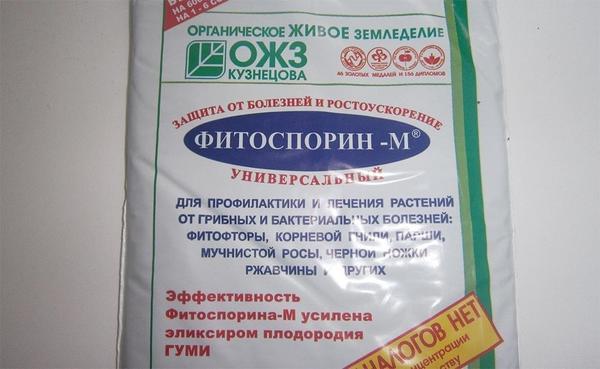
In hot weather, strawberry beds are attacked by insects. Common pests include weevils, leaf-eating caterpillars, and spider mites, which feed on plant sap and spin webs. Slugs, snails, millipedes, and red ants also enjoy the berries. Insecticide sprays can help protect plants from insects. Weevils can be controlled with products such as Karbofos, Confidor, and Iskra. Colloidal sulfur, Neoron, and Karbofos are effective against mites. Metaldehyde and a mulch of sharp stones help repel slugs and snails.

Bushes that are severely damaged by insects and diseases can be mown down, but it is advisable to do this before August 10th so that the plants have time to form leaves before the cold weather arrives.
Cultivation of the variety
Syria strawberries can be grown independently. The best method for propagation is to use rosettes that appear on the runners. In the first year, all runners are removed, allowing the plant to develop strong bushes and produce a good harvest of berries. In the second season, select several large bushes and pluck all the buds from them to prevent flowering. Within a month, runners with rosettes will appear on them. The very first rosettes are used for propagation; they are much stronger and larger than the others.
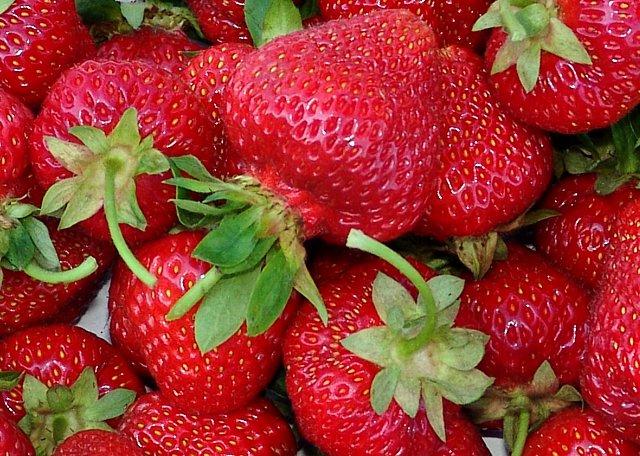
The rosette is pinned to the ground and allowed to strengthen and grow a little. Then the runner is trimmed, and the seedlings, along with the root ball, are planted in a prepared bed and watered. The transplanting period is early August.
Harvesting and storage of crops
In the southern regions, the Syria strawberry ripens in the first week of June. Young bushes produce only 300 grams of berries. Mature bushes can yield up to 1 kilogram of berries. The strawberries are picked in dry weather, along with the green bracts. The harvested berries are stored in boxes or plastic containers.
Strawberries intended for long-term storage should not be watered too frequently, to prevent them from becoming waterlogged. Healthy, firm fruits are stored at 0-2°C (32-37°F). The berries are used to make jams, preserves, compotes, and juices. They are also frozen and eaten fresh.
Related posts:
 Description of the everbearing strawberry variety Mara de Bois and growing rules
 Step-by-step instructions for planting strawberries on black covering material and growing rules
 Description of the Kama strawberry variety, planting and care features
 Characteristics and description of the Sonata strawberry variety, planting and care
 Description and characteristics of the Vima Zanta strawberry variety, planting and care scheme
 Description and characteristics of the Zephyr strawberry variety, planting rules and care
 Description and characteristics of the Kimberly strawberry variety, planting and care
 Description of the Holiday strawberry variety, cultivation and propagation methods