
- The history of the Cinderella variety
- Cultivation regions
- What are the benefits of strawberries?
- Are there any disadvantages?
- Features and characteristics
- Bush size and appearance of the leaf blade
- Flowering and pollination
- Ripening time and yield
- Taste qualities of the fruit and its further sale
- Winter hardiness and drought resistance
- Immunity and susceptibility to diseases and parasites
- The intricacies of planting garden strawberries
- Selecting a site and preparing the beds
- Selecting seedlings
- Timing and technology of planting seedlings
- Caring for Cinderella
- Watering mode
- Top dressing
- Weeding and loosening the soil
- Mulching
- Shelter for the winter
- Preventive treatments against diseases and pests
- Methods of reproduction
- Seeds
- By dividing the bush
- With a mustache
- Gardeners' reviews of the variety
The Cinderella strawberry variety is one of the best bred in Russia. It is highly prized and sought after by amateur gardeners. This berry allows for the cultivation and harvesting of a second crop after the first harvest. Thus, strawberries offer gardeners the chance not only to feed the whole family with fresh berries but also to harvest enough for canning.
The history of the Cinderella variety
In the late 1970s, Russian breeders crossed two popular varieties: Zenga Zengana and Festivalnaya. The result was a new variety, Cinderella. It inherited the best qualities of its "parents." Scientists spent 10 years refining this variety. In the late 1980s, Cinderella was officially added to the state register of breeding achievements.
Cultivation regions
Breeders have ensured that the berry thrives and develops well in our challenging climate. This is confirmed by the list of regions where this variety can be grown. Starting from the southern regions of the country, from the North Caucasus, to the central part of the Black Earth Belt, the variety will thrive equally well in the Central and Northwestern regions, the Volga-Vyatka region, and even Western Siberia.
What are the benefits of strawberries?
In addition to its excellent taste, strawberries have the following benefits:
- remontant - fruiting begins in July and lasts until September (one of the main advantages of the variety);
- high yield;
- original dessert taste;
- tolerates temperature changes well;
- excellent seed germination, the crop is not capricious;
- tolerates transportation well.
Strawberries have high commercial qualities.

Are there any disadvantages?
The disadvantages of the Cinderella strawberry include:
- a few whiskers – complicates vegetative propagation;
- fertilizers containing chlorine are not suitable for this variety;
- The crop is weakly resistant to gray mold, but is resistant to powdery mildew.
Experts recommend replanting the variety into new soil after 3-4 years.
Features and characteristics
The Cinderella strawberry has its own characteristics and features that must be taken into account when growing it.
Bush size and appearance of the leaf blade
This variety has a beautiful appearance and good bushiness. The bushes are large in both height and diameter. At the same time, the strawberry plant has a compact, not sprawling appearance, and the foliage is dense, large, and richly green with a waxy coating.

Flowering and pollination
The flowers are large, white, and consist of five twisted petals (both sexes). They are borne on sturdy stems, which are usually slightly shorter than the bush itself. The mother bush produces few runners.

Ripening time and yield
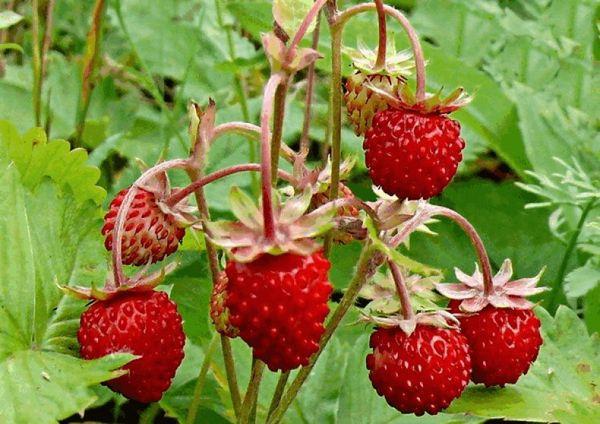
Strawberries have a medium ripening period, beginning in July. After one harvest, flowers appear again on the bushes. The first harvests produce large berries, while subsequent harvests produce smaller ones. Berries grow to a weight of 8 to 20 grams, are small to medium, and conical in shape. The fruit and flesh are bright red with an orange tint. Yields are good, up to 2 kg per square meter.
Taste qualities of the fruit and its further sale
Cinderella strawberry has excellent taste qualities, which include:
- aroma of wild strawberries;
- a little sourness;
- sweetish dessert taste.
The dense, fleshy, and very juicy flesh, combined with its multifaceted flavor, makes this berry a highly desirable fruit. Strawberries can be eaten fresh, used in fruit drinks, or added to baked goods. Jam made from this berry will be a delightful addition to any tea party.
Winter hardiness and drought resistance
Domestic breeders have ensured that the variety is adapted to our country's challenging climate. Cinderella is unpretentious, tolerates temperature fluctuations, is frost-resistant, and can withstand hot and dry days.
Immunity and susceptibility to diseases and parasites
Strawberries have good resistance to diseases and pests, but they require careful care. Diseases to which this variety is susceptible include:
- Gray mold – preventative pruning and mulching are recommended. If infected, treat the bushes with drip irrigation.
- Late blight - diseased branches are removed and healthy ones are treated with benlate.
- Spotting - remove the foci of the disease, followed by treatment with Bordeaux mixture.
- Powdery mildew – rare. Treatment with sulfur solution.
Cinderella may be susceptible to attack by parasites: weevils, spider mites, strawberry leaf beetles.
The intricacies of planting garden strawberries
One of the most important aspects of growing this crop is ensuring proper planting with all the necessary nuances.
Selecting a site and preparing the beds
After choosing a site for the Cinderella strawberry, prepare the soil in the fall. The bed is dug over. Plant roots and parasite larvae are removed from the soil. Then, the soil is disinfected by watering it with a copper sulfate solution. Calcium (lime) is added to the soil.
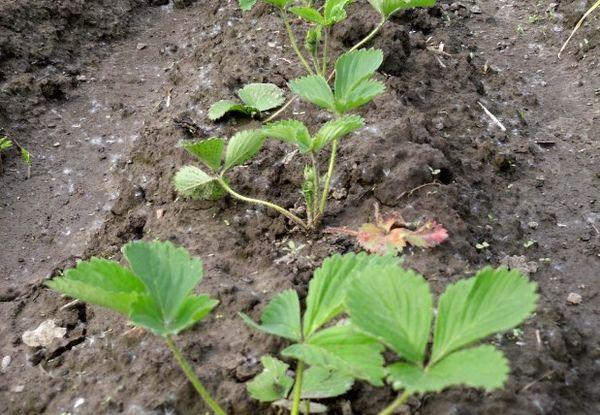
Experts don't recommend planting strawberries in sandy soil; medium loam is the best option. In the spring, immediately before planting, water the beds generously at a rate of one bucket per square meter, and loosen the soil.
Selecting seedlings
When choosing seedlings, choose strong, sturdy plants with clean, healthy green foliage, free from damage and signs of disease. The root system should be well-developed, with no broken roots or rot.
Timing and technology of planting seedlings
Cinderella is planted in spring or early fall. Spring planting occurs after frost. If cold weather is expected, the seedlings are covered with greenhouses. Weed and water the young plants once a week. It's important to water the strawberries in the morning so the bushes have time to dry before evening. This way, the plants are less susceptible to disease.
Autumn seedlings are planted in early September, and the soil is loosened twice during the fall. For the first two weeks, Cinderella is watered once every seven days. Then, as the weather cools, watering is gradually reduced. In November, the beds are covered for the winter with leaves, straw, and branches.
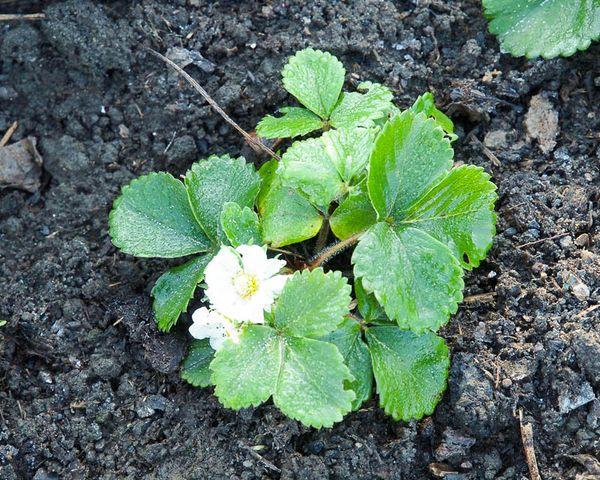
Planting seedlings can be done in two ways:
- Single-row – when seedlings are located 15-25 cm apart from each other. The distance between rows is 40-60 cm.
- Checkerboard – a two-row system. The second row, relative to the first, is planted in a checkerboard pattern. The seedlings are spaced 50 cm apart, with the same distance between rows.
Using the checkerboard method, you can plant strawberries in up to 4 rows.
Caring for Cinderella
To get a good strawberry harvest, in addition to proper planting, it is necessary to follow all the rules for caring for the crop.
Watering mode
If you follow a proper watering schedule, strawberries will thrive. For the first week after planting, water the seedlings daily. After that, water as the soil dries out.
The recommended watering rate per week is 8-10 liters per 1 sq.m.
Top dressing
Fertilizing is necessary during crop growth and berry ripening. The bulk of the fertilizer is applied during bed preparation, before planting the seedlings. Fertilizer is applied evenly across the entire bed and dug in.
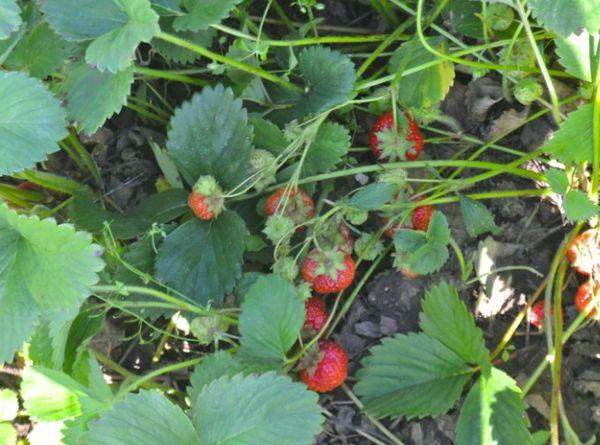
Top dressing is used:
- organic – manure, compost, humus;
- chemical – in the form of complex fertilizers.
The second feeding can be done in early May, between the rows of bushes (usually using a manure solution). The third feeding should be done after fruiting – preferably with mineral fertilizer.
Weeding and loosening the soil
Regular weeding and loosening the soil helps the plant:
- gain strength - in the absence of weeds, all the nutrients go only to the strawberries;
- receive oxygen - when the soil is loosened, the plant easily receives oxygen and moisture, the earth breathes, and there is no rotting.
A treated bed will be free of pests and diseases, and strawberries are guaranteed to grow well and fill out.
Mulching
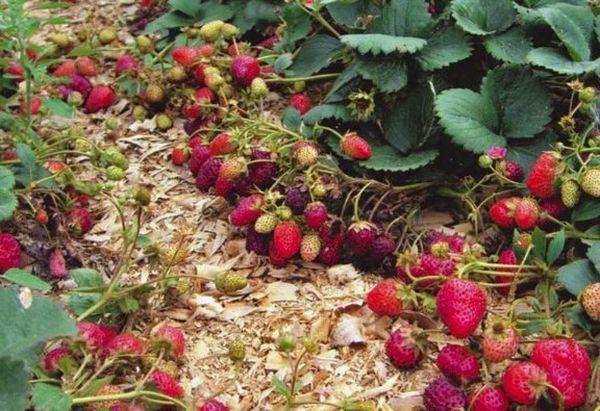
One of the essential nuances in caring for strawberries is mulching at a depth of 3-5 cm. To cover the bed and slow down the process of moisture evaporation from the soil, use leaves, sawdust or straw.
Shelter for the winter
At the end of the season, after the final harvest, the bushes are mowed down and burned. This prevents any pests that may have settled on the foliage from overwintering in the soil. If the strawberries were planted in the fall, in November the bed is covered with leaves, straw, and other materials to prevent freezing.

Preventive treatments against diseases and pests
Preventative treatment will leave no chance for disease. There are several prevention options:
- Chemicals—for example, urea for insects, boric acid for diseases. Copper sulfate increases yields and protects against pests.
- Biological – kills pests and is safe for strawberries. Trichodermin and Fitosporin protect against pests and enrich the soil with nutrients.
- Folk remedies are harmless and effective. Onion peel decoction and garlic tincture are good for pest control. Mustard infusion is good for gray mold.
Preventive spraying and watering are carried out at the beginning of spring and before flowering appears.
Methods of reproduction
Strawberry Cinderella can be propagated in several ways.
Seeds
The process step by step:
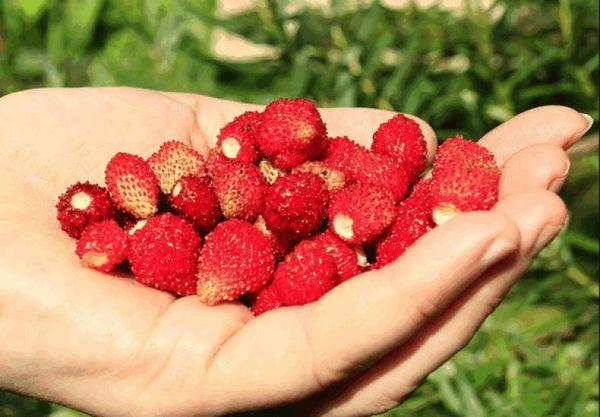
- Sow in early March in moist soil;
- cover with film or glass to create a greenhouse effect;
- two weeks after the sprouts appear, the seedlings are placed on the windowsills;
- Regular watering and ventilation are essential.
Ready seedlings should have up to 6-7 leaves and good roots.
By dividing the bush
When a lush strawberry bush grows, it can be propagated by dividing it into several smaller plants. This variety will take root easily, and the yield will increase significantly.
With a mustache
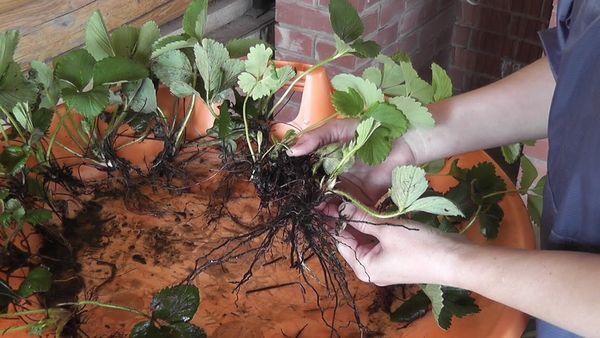
The simplest option is to grow strawberry rosettes from the runners of the mother plant. The bushes are planted at a distance of up to 1 m from each other. The rosettes that appear on the runners are dug in.
Gardeners' reviews of the variety
For decades, experienced gardeners have been growing Cinderella strawberries in their plots and have no intention of giving them up, as this remarkable variety never fails and always produces a bountiful harvest. Reviews of the crop are overwhelmingly positive, with even beginners posting enthusiastic comments.
Cinderella strawberries are worth and should be grown in your garden. Thanks to this wonderful, time-tested domestic variety, your family will enjoy healthy berries for a long period, from July to September, and your pantry will be stocked with delicious jam for the winter.
Related posts:
 Description of the Cinderella tomato and rules for growing seedlings from seeds
 Description of the early ripening melon variety Cinderella and cultivation techniques
 Description of the Cardinal strawberry variety, planting and cultivation
 Timing of strawberry planting in the middle zone in autumn, description of 25 best varieties
 Description and cultivation of the Elizabeth strawberry variety, planting and care
 The best varieties and cultivation of everbearing strawberries, fertilizing and propagation
 Description of the Fireworks strawberry variety, planting and care
 How to grow strawberries in Siberia outdoors: the best varieties and care