
- History of the selection of the Tsaritsa variety
- Advantages and disadvantages of strawberries
- Botanical characteristics of strawberries
- Bush and shoots
- Flowering and fruiting
- Taste qualities of berries and their use in cooking
- Shelf life and transportability
- Resistance to diseases and frost
- Necessary conditions for strawberry growth
- Climate and growing region
- Suitable soil
- Predecessors and neighbors
- Methods of reproduction
- Seeds
- With a mustache
- By dividing the bush
- Step-by-step landing algorithm
- Preparing the site and seedlings
- Timing and rules for planting bushes
- Care
- Watering and fertilizing
- Loosening the soil and removing weeds
- Trimming
- Protection from insects and diseases
- Shelter for the winter
- Gardeners' reviews of Tsaritsa
Strawberries are a favorite among children and adults alike; this juicy, flavorful berry is grown in almost every garden. Through selective breeding, new strawberry varieties with improved flavor and greater resistance to environmental conditions are being developed. The fruitful work of Russian breeders is the Tsaritsa strawberry variety.
History of the selection of the Tsaritsa variety
The crop was developed at the All-Russian Selection and Technological Institute of Horticulture and Nursery by breeder Svetlana Aitzhanova. The Venta and Regontlit varieties were used for crossbreeding.
The parent species have Lithuanian-Scottish roots and are considered large-fruited, frost-hardy, and resistant to infections and parasites. The strawberry variety Tsaritsa possesses these best characteristics.
Advantages and disadvantages of strawberries
The berry has a lot of positive parameters such as:
- high productivity;
- excellent quality fruits;
- ease of care;
- resistance to diseases, cold, heat;
- attractive presentation;
- long fruiting;
excellent transportability.
In addition to its advantages, strawberries also have negative aspects:
- plantings need protection from cold and temperature changes;
- insufficient harvest for large-scale industry.
Most often, the variety is grown by summer residents and gardeners; it is possible to grow strawberries for sale at a local nearby market.
Botanical characteristics of strawberries
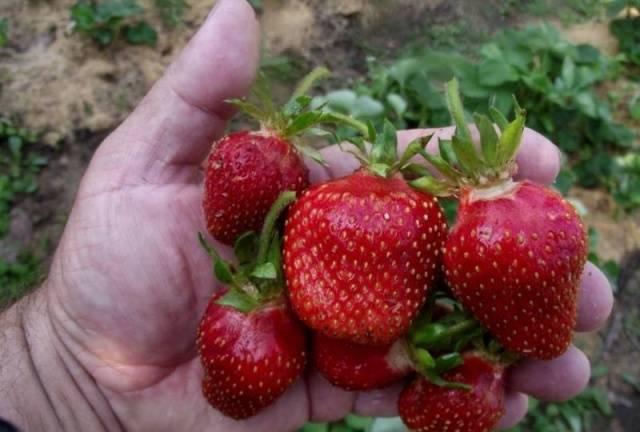
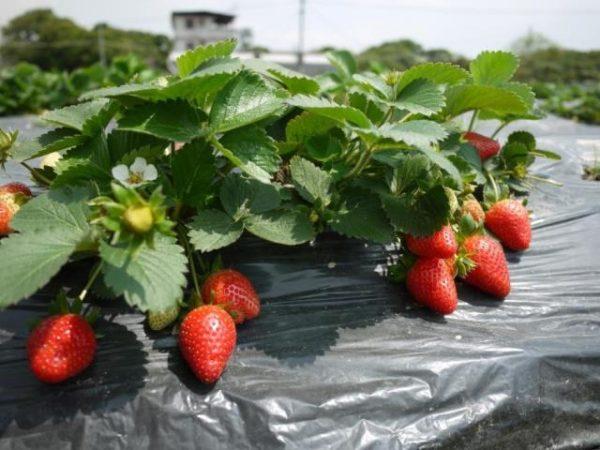
The Tsaritsa strawberry is medium-sized, with semi-spreading bushes and sparse foliage. Flowers are few and sparse, located at the base or leaf level. The flower stalk is medium-sized, with compact inflorescences. The berries are cone-shaped and wide.
Bush and shoots
The plant is characterized by low, compact bushes with small, dark green leaves. The leaves are not pubescent, unlike other varieties. The shoots are reddish in color and have fine hairs.
Flowering and fruiting
The flower stalks are large, white, and bear a small number of flowers per bush. Strawberries begin bearing fruit late, and the berries are harvested in late June.
Taste qualities of berries and their use in cooking
Strawberries contain a wealth of beneficial substances, rejuvenate the body, and have a beneficial effect on the nervous system. The berry has a positive effect on the cardiovascular and immune systems, and increases the production of endorphins (happiness hormones).
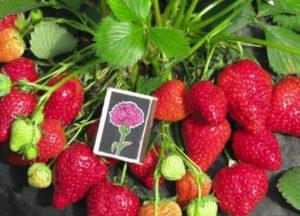
Strawberries are smooth, firm, and juicy. Their flavor is sweet and tart, and their aroma is vibrant. They are best eaten immediately after picking. They are also suitable for freezing, making preserves, jams, compotes, and juices.

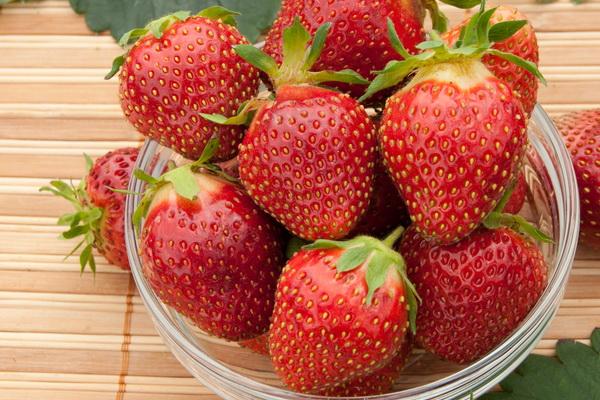 The Tsaritsa strawberry berries received a tasting score of 4.8 points on a five-point scale.
Shelf life and transportability
Tsaritsa strawberries are well-suited for transportation, but they don't store well for long periods. If you need to transport strawberries, they should be picked unripe, with the sepals still attached. Wooden or plastic crates or baskets are best for packaging. Refrigerating fresh strawberries can extend their shelf life. This will keep them fresh for an additional 3-4 days.
Resistance to diseases and frost
The crop is resistant to cold and snow, and can survive at -35°C. Without snow, berries begin to die at -21°C. Strawberries are resistant to infections and parasites, and survive fall rot well. Leaves remain bright green, spot-free, until the end of the season.

Necessary conditions for strawberry growth
This variety is characterized by its low maintenance, rapid establishment, and vigorous growth. This is due to the long daylight hours and active processes in the soil. In autumn, the number of daylight hours decreases, leading to a decrease in microbial activity in the soil. For this reason, experts do not recommend planting strawberries in autumn.
Climate and growing region
The Tsaritsa strawberry was bred for the harsh Russian climate, giving the plant excellent resistance to cold and temperature fluctuations. It grows best in a temperate continental climate, typical of Belarus, Ukraine, and Russia. Cultivation is permitted in both the southern and northern parts of the country.
Suitable soil
The soil should be slightly acidic, sandy, and light. Avoid planting near groundwater. The site should be well-lit and sun-warmed.
Predecessors and neighbors
The best predecessors to strawberries are plants such as radishes, parsley, spinach, and mustard. Strawberry plantings can be established in the same location as hyacinths, tulips, and daffodils.
You can plant strawberries next to root parsley – it is an excellent neighbor.
Planting it nearby will protect the berries from slugs and snails. Good neighbors include carrots, onions, garlic, radishes, or turnips. Ideally, these plants should bear fruit at the same time as the strawberries.
Methods of reproduction
Queen's fern is propagated by seeds, runners, and division. Fruiting begins in late June. Buds for the following season form in August-September.
Seeds
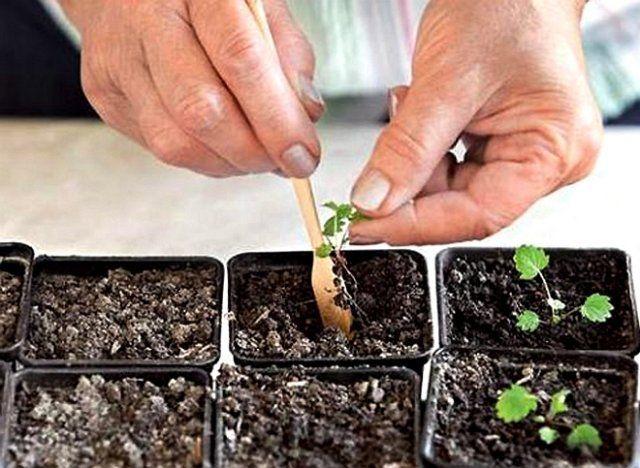
Propagating Queen from seeds is impractical. The parent species may not pass on their characteristics to the berry. This can result in a deterioration in the fruit's flavor, a reduction in size, and increased susceptibility to frost and heat.
With a mustache
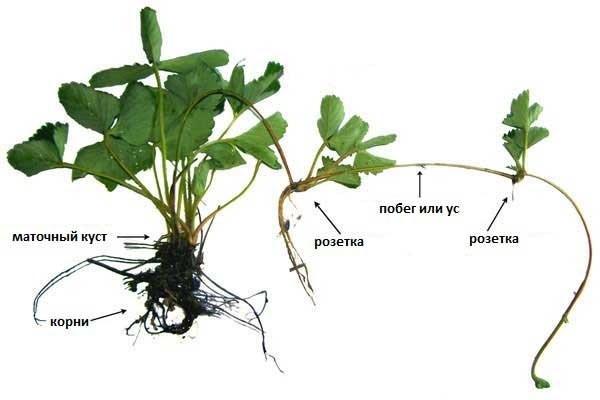
Propagation of strawberries by runners Propagation from a formed berry is more effective. After rooting, it is watered generously and the soil is loosened. After 3-4 shoots have formed, they are cut from the parent plant and replanted. This prevents damage to the berry and preserves all the original plant characteristics.
By dividing the bush
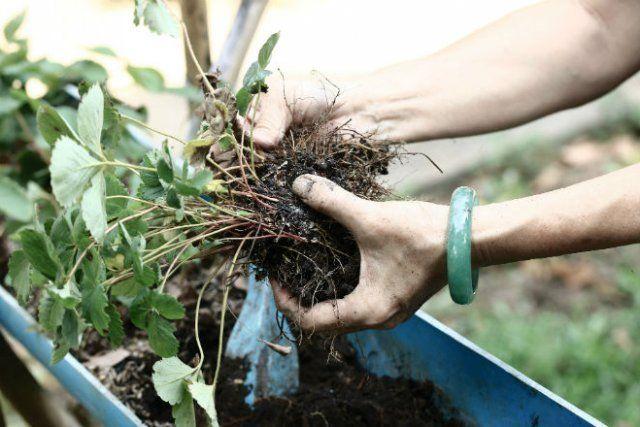
Dividing the plant ensures 100% survival, preserves all strawberry characteristics, and allows for the development of plants with improved characteristics. Division is possible using a perennial specimen, which is divided into several parts, including the rhizomes. Each part should have a leaf rosette and a central bud at the roots.
Step-by-step landing algorithm
Landing involves the following stages:
- digging a hole 15 cm deep and 35-40 cm in diameter;
- placing seedlings in such a way that the distance between bushes remains at least 20-25 cm;
- spreading the root system throughout the hole;
- sprinkling the bush with soil;
- watering the bushes;
- mulching using straw, dry grass, sawdust.
It is important to position the growth point at surface level; it should not be raised or lowered too much.
Preparing the site and seedlings
Before planting, the soil should be dug over and fertilized with humus and mineral fertilizers. In the spring, the soil should be fertilized with nitrogen supplements, and in the fall, with potassium-phosphorus mixtures. If the soil is dense, it should be drained with coarse river sand, rotted manure, wood ash, and urea.
 Seedlings must be healthy; diseased or damaged shoots are discarded. Strawberries should have at least four undamaged leaves and 10-centimeter roots free of rot or cracks.
Timing and rules for planting bushes
Tsaritsa strawberries can be planted in April-May and August-September. Spring planting offers a higher chance of survival. To ensure successful rooting, remove flower stalks.
Planting of berries is done using the strip method and individual holes.
For ribbon beds, dig trenches 15-20 cm deep and 35-40 cm in diameter. The distance between plants should be at least 20 cm. Planting in a hole differs only in that each plant will be in its own hole.
Care
Caring for the Queen includes feeding, watering, fighting diseases and parasites, timely harvesting of fruits, and protection from the cold.
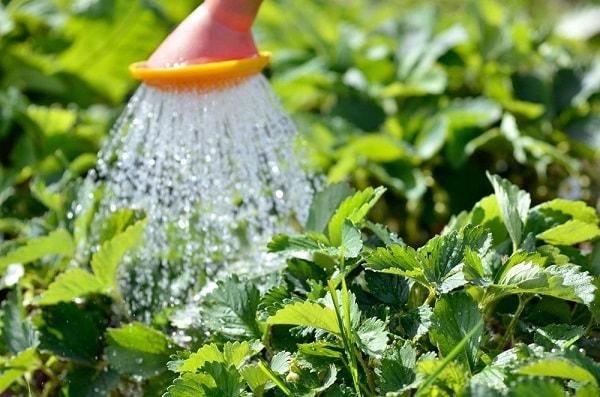
Watering and fertilizing
Irrigation should be carried out according to the following rules:
- For better ripening, a drip irrigation system is used;
- the optimal time for irrigation is early morning or late evening;
- water should be poured under the rhizomes;
- It is necessary to prevent water from getting on the berries during flowering and fruiting;
- in hot climates, watering should be abundant and frequent, with an interval of 10-14 days;
- One bush is watered with two or three buckets of water.
It's important not to let the soil become waterlogged, as this can lead to fungal infections. You can prevent pest infestations by spraying a solution of Malathion. Fertilizing with a mixture of cow dung, sawdust, and peat is also effective. Mineral fertilizers and organic matter, such as well-rotted manure, are applied under each bush.
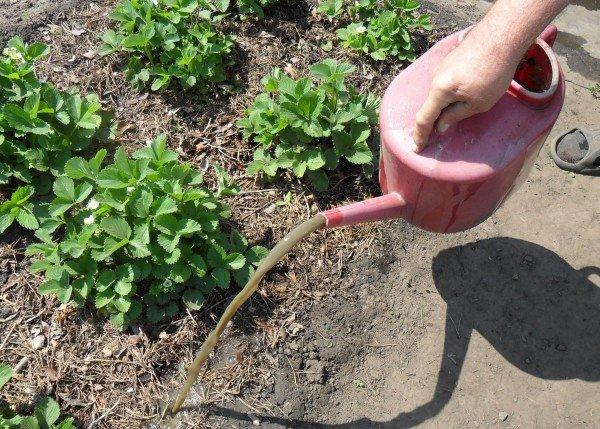
Loosening the soil and removing weeds
The plant requires regular mulching, loosening, and weeding. Straw, pine needles, and dry grass are used as mulch. Mulch not only protects the strawberries from drying out but also prevents weeds from overgrowing. Timely weed removal can prevent the beds from becoming overgrown.
Trimming
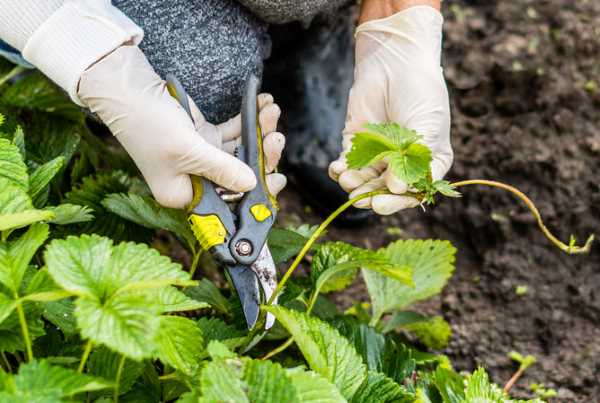
Bushes should be pruned after harvest. Use sharp pruning shears or garden shears to remove dried runners and leaves. A sharp tool will prevent damage to the root system. At least 10 cm of stems should remain after pruning. Dried, wilted, and infected leaves should also be removed.
Protection from insects and diseases
The Queen is often attacked by the following insects:
- wireworm larvae;
- May beetle;
transparent tick; - nematode;
- weevil.
You can clean the soil with ammonia water and Karbofos. To prevent gray mold, powdery mildew, and white spot, treat the plant with chemicals such as:
- Actellica;
- Confidora;
- Akarina;
- Soon;
- Bayleton;
- Topaz.
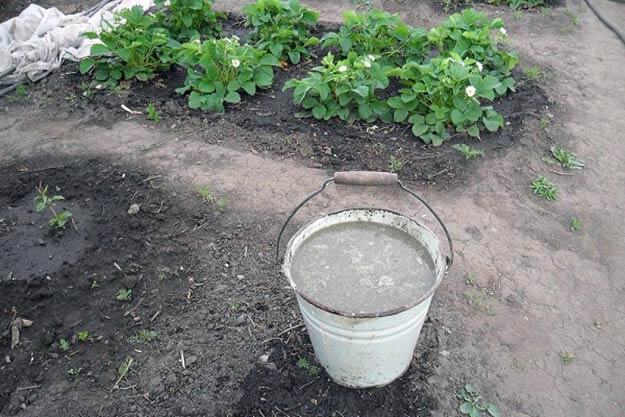 It's important not to overdo it with the application of fertilizers. If the soil is well-fertilized, strawberries should be fertilized 2-3 years after planting.
Shelter for the winter
With proper preparation for winter, the fruits will retain their good quality and produce a high yield the following year. Strawberries are insulated with a thick layer of mulch, such as straw, peat, sawdust, compost, fallen leaves, or corn stalks.
Insulation with covering materials such as agrofibre, lutrasil, and spubond will be effective.
Gardeners' reviews of Tsaritsa
Alexander, 49 years old, Kyiv
I've been growing Tsaritsa strawberries for five years now, and the harvest is nothing but delight – the berries are juicy, sweet, and perfect for jam. My wife picks buckets of them every year and makes preserves for her grandchildren.

Anna, 54 years old, Nikolaev
I used to grow this strawberry variety in my dacha, where I couldn't water it often. The yield was poor, and the berries dried out and disappeared. Then I transplanted it to a plot near the house, watered it frequently, fertilized it with manure and peat, and couldn't be happier. The berries appeared, grew in size, and became sweeter and juicier.
Dmitry, 39 years old, Krasnodar
My wife and I decided to plant strawberry beds, choosing the Tsaritsa variety. Our soil was well-fertilized, so we decided not to fertilize it at first. We were very pleased with our first harvest; we got a lot of berries, some of which we froze, and some of which we used for jam.
Antonina, 60 years old, Ivanovo
I decided to plant the Tsaritsa strawberry at home, and I haven't regretted it for a second. It produces a large crop; the key is to treat and insulate the plants promptly, and weed them. My grandchildren and children are delighted when I bring them jars of jam and compote. Fresh strawberries also travel well; the key is to transport them in a bucket or basket.
Related posts:
 How to grow strawberries at home
 The best varieties and cultivation of everbearing strawberries, fertilizing and propagation
 Description of the Florence strawberry variety, planting and care features
 Description and characteristics of the Vima Zanta strawberry variety, planting and care scheme
 Description of the Fireworks strawberry variety, planting and care
 Timing of strawberry planting in the middle zone in autumn, description of 25 best varieties
 Description of the Cardinal strawberry variety, planting and cultivation
 Description of the everbearing strawberry variety Selva and cultivation technology