Anyone with a garden or vegetable plot knows how common weeds can ruin a harvest. Sometimes, it seems they grow faster than vegetable or fruit crops. That's why, year after year, gardeners search for the best way to control weeds. The most effective option is considered to be the use of herbicides, so below we'll discuss which products are best for corn.
Herbicides and their effectiveness
A herbicide is generally understood to be a substance that kills vegetation. These chemicals are used to treat the soil to prevent weeds from growing in the garden and interfering with the normal development of the crop.
Herbicides can be used to control not just one but also multiple weeds simultaneously. These are achieved using reagents containing one or more active ingredients, respectively.
Currently, 300 types of chemical reagents are used on agricultural land, which differ from each other in composition, method of use, and impact.
The nuances of processing corn crops
With so many weed control products available today, choosing one should be done wisely. Any herbicide comes with manufacturer's instructions, which must be strictly followed.
First, the owner of a garden plot must determine what types of weeds he is dealing with, after which he can begin to select the most effective product for this case.
If herbicide treatments are applied before seedling emergence, care must be taken to ensure the solution does not penetrate below the seeds. Most chemicals applied directly to the soil are effective only when the soil is sufficiently moist.
To prevent negative impact on the quality of the crops being grown, the final treatment of the area is carried out 1 week before the start of harvesting.
Types of weeds growing between crop rows
Weeds are divided into annual and perennial plants. Annual weeds, which most often affect corn, include barnyard grass, wild oats, crabgrass, and others. Perennial weeds include knotweed, cornflower, stachys, goosefoot, and peas.
Deadlines
It is important not only to correctly select the required preparation, but also to determine the optimal time for crop treatment.
Pre-emergence
For effective weed control, pre-emergent treatments with weed control products are recommended. However, these products are only effective against annual or biennial plants.
Post-emergence
Weeds pose the greatest threat to corn in the 3-10 leaf stage. However, when the crop reaches 6-7 leaves, most varieties are susceptible to the negative effects of pesticides. Therefore, the optimal time for pesticide treatment is considered to be the period between seedling emergence and 3-4 leaves.
Features of herbicide application
Soil herbicides effectively protect corn during its early development. However, this method has a major drawback: additional treatment to bury the herbicide dries out the top layer of soil, making seed germination difficult.
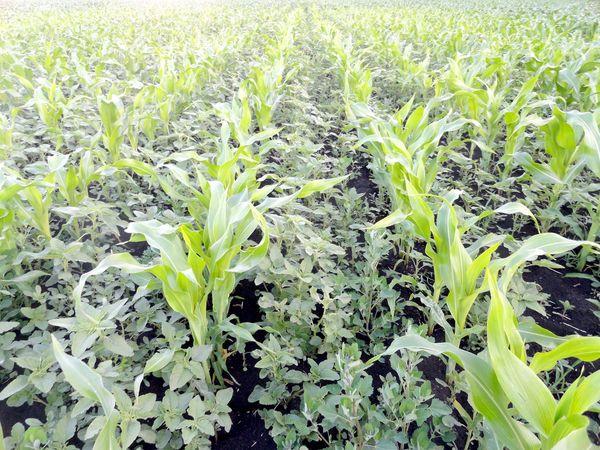
When applying liquid herbicides, uniform application and adequate soil moisture are essential. For example, in this case, climatic conditions can reduce the effectiveness of soil treatments. Consider the potential for water evaporation, drying out in windy weather, and product washout by rain. In this case, increasing the solution concentration is all that's needed.
If soil cultivation is carried out in dry weather, without proper watering, you should not expect the desired result.

Types of drugs and instructions for use
When considering herbicides, the following are popular.
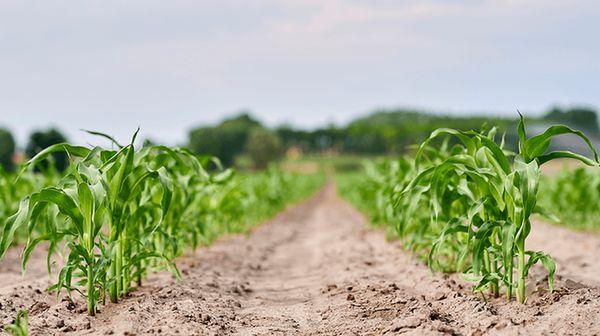
Prima
This product is effective against a wide range of weed species. It is applied during the crop development stage. Results are noticeable within a day after application. The product's effectiveness is observed at temperatures above 5°C (41°F). Corn is treated during the 3-7 leaf stage. For maximum effectiveness, apply the product to the leaves.
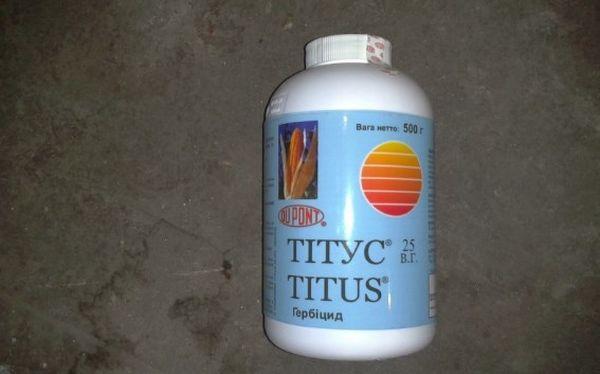
Titus
This herbicide has a detrimental effect on a wide range of weeds. It is based on rimsulfuron and is characterized by its immediate action. It is applied after crop emergence. The recommended dosage is 0.04 kilograms per hectare.
Aztec
This herbicide has proven effective against dicotyledonous perennials. The soil should be moistened before use. It can be applied before or during sowing, but before the crop emerges. Weed control lasts for two months.
Miranda
The product is used when the crop develops from 3 to 10 leaves. No additives are required. It is considered moderately hazardous to humans.
Quasar
This post-emergence product is effective against all types of weeds. It is available as a concentrated liquid.
Trimmer
Used for crops in the development phase up to 5 leaves. Available in water-soluble granules.
S-Metolachlor
This product is considered the most effective, as it controls all types of weeds. It can be used at the leaf stage up to the 7th leaf stage.
Related posts:
 Description of varieties of sowing peas and cultivation, to which family they belong
 How to properly plant peas in a greenhouse and open ground
 Methods for planting and propagating cherries at home
 How to make a garden bed from scratch without grass and weeds: ideas and methods with and without weeding
 Descriptions of the 20 best cherry varieties for the Moscow region, their planting and care
 The best grape varieties for growing in the Urals, planting and care rules in summer
 How to propagate and grow peas, cultivation technology, and care in open ground
 Description of the best varieties of onions, planting and care in open ground
Take a look Also