
- Why can seedlings become stretched?
- What to do with overgrown seedlings?
- How to properly plant overgrown cucumber seedlings: in open ground, in a greenhouse or hotbed
- Selecting a planting pattern
- Preparing seedlings for transplantation
- Is it possible to deepen it?
- Planting cucumbers in holes
- The nuances of transplanting flowering and elongated cucumber seedlings
- Post-planting care of seedlings
- Agronomist's advice: how to avoid seedlings becoming stretched?
Sometimes gardeners and vegetable growers are faced with the problem of overgrown cucumber seedlings. They immediately wonder whether they can be planted and whether they will be of any use. Even in this situation, it's possible to get a good harvest. The key is to know how to properly plant overgrown cucumber seedlings and what nuances must be taken into account.
Why can seedlings become stretched?
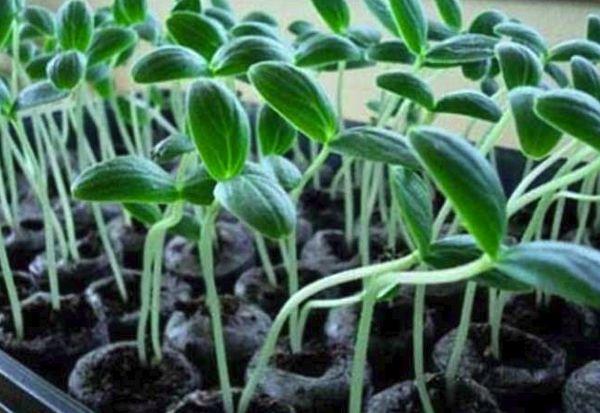
Overgrown seedlings can occur for a number of reasons. The following factors may contribute to this:
- excess heat, when the room temperature is too high;
- seedlings that were planted densely because the stems lack moisture and nutrients;
- lack of natural light;
- lack of moisture or, conversely, its excess;
- over-fertilization of the soil;
- unfavorable weather conditions.
Most often, the last factor is the main reason. According to the calendar, it's time to plant cucumbers, but it's still quite cold outside, and there's a thick layer of snow.
Due to these factors, seedlings can become overgrown. As a result, transplanting them becomes difficult, as the shoots become too long. In this case, the planting process is crucial. With the right approach, such seedlings can be saved.
What to do with overgrown seedlings?
Overgrown seedlings are shoots that have grown tall before their first leaves have appeared. They are quite weak, so they should be transplanted very carefully. Otherwise, they may die at this stage. But they should be planted anyway.
Before planting the seedlings in open ground, twist the thinnest shoots around the perimeter of a glass in a spiral, covering the glass with soil. After about a week, the stems will begin to grow independently around the roots. It's important to water the cucumbers properly during this period to stop the shoots from growing.
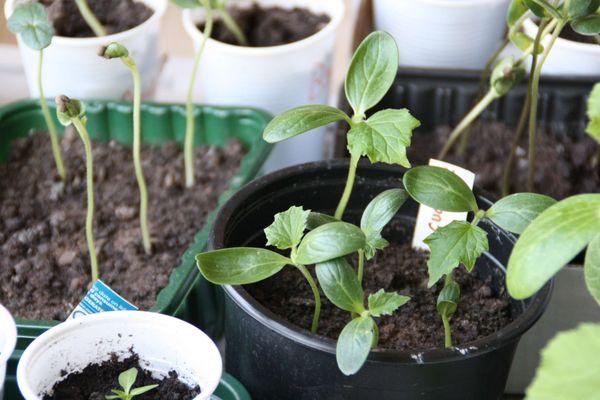
While the overgrown seedlings are indoors, immediately reduce the temperature to 16 degrees Celsius. If possible, increase the distance between the stems. Pinch the main shoot just above the second leaf.
How to properly plant overgrown cucumber seedlings: in open ground, in a greenhouse or hotbed
To ensure a good cucumber harvest, overgrown cucumber seedlings need to be transplanted into a garden bed. This requires following certain guidelines, as the stems of these plants are extremely weak and fragile. First, you need to decide on the best method for transplanting overgrown cucumber seedlings and where to plant them.
If the goal is to harvest early, the seedlings should be transplanted into a greenhouse immediately after the first leaf appears. Humidity should be maintained at 80%.

Overgrown seedlings can be planted outdoors. However, the soil should be prepared by adding humus. It's best to plant on a cloudy day.
Selecting a planting pattern
It's best to transplant seedlings in the morning or evening. Water the soil only with warm water. Using cold water can damage the seedlings and slow their growth.
To ensure proper planting of overgrown seedlings, you can use the seedling burying method. To do this, make a small hole next to each new stem. Carefully place the long stem of the plant into this hole, covering it with soil. Then, compact the soil and water it lightly.
If cucumber stems sprouted in peat pots, you can plant them in them as well. This will prevent damage to the plant's roots.
Preparing seedlings for transplantation
If the sprouts were placed in cups before planting, remove them very carefully. Leaving the paper cup intact and planting the seedlings in the ground this way is not recommended, as it will take a long time to harvest. You can carefully remove the sides of the cup, leaving only the paper bottom.
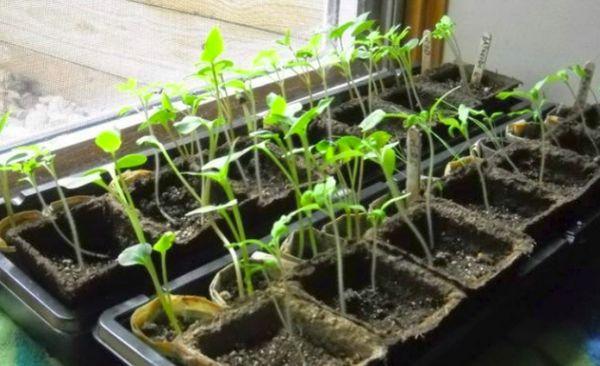
Leaves should also be protected, otherwise they may become damaged. If done correctly, the seedlings will root safely in the new soil.

Is it possible to deepen it?
The depth of the planting is also important. Avoid planting seedlings too deeply. It's better to plant the seedlings in a spiral, twisting them to the width of the hole or gently sideways. A depth of six to eight centimeters is considered optimal.
It's beneficial to plant the stems deeper. This will encourage faster and more vigorous root growth, which will then lead to lush foliage. If you don't plant deep enough, it will be difficult to fertilize, much less water, the plant.
Planting cucumbers in holes
Typically, holes for cucumber seedlings are prepared in advance. First, they are filled with ash or sawdust, or a little special fertilizer can be added. The prepared holes are watered with warm water, and the seedlings are planted by pushing them deeper into the soil.
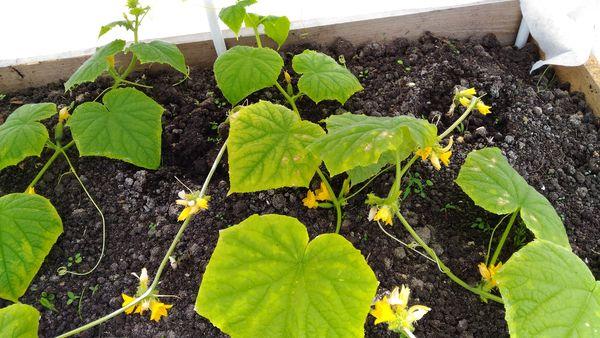
The soil around the plant should be filled to form a small mound. To slow down moisture evaporation, the hole can be lined with straw or dry grass.
The nuances of transplanting flowering and elongated cucumber seedlings
Before planting the elongated cucumber seedlings, they need to be prepared for the process. To do this, the plants are constantly exposed to fresh air for seven days. This could be a balcony with open windows or the garden itself. Water the plants thoroughly the day after planting.
The soil where the seedlings will be planted should be fertilized. Compost can be used for this purpose. It is recommended to plant overgrown plants at an angle, covering the lower part of the stems with soil.
If you're growing cucumbers in a greenhouse, leave 120 centimeters between rows of seedlings. It's best to plant them in a staggered pattern. Ideally, the greenhouse should be made of polycarbonate. In this case, you can plant the seedlings as soon as the first leaves have appeared.
Post-planting care of seedlings
To ensure that a cucumber that was transplanted when overgrown meets all gardening needs, it needs proper care. To do this, follow these recommendations:
- it is necessary to ensure that the soil does not dry out;
- the area where cucumber seedlings grow should be regularly watered;
- weak and frail shoots should be tied up so that they are not blown away by strong winds;
- the soil around the cucumber stems should be loosened no earlier than a week after the planting procedure;
- There is no need to feed the crop immediately; a few days should pass.
You can feed cucumber stems before transplanting them into open ground. It's best to do this a week before planting.
Agronomist's advice: how to avoid seedlings becoming stretched?
Gardeners and vegetable growers are wondering what to do to prevent cucumber stems from becoming leggy. To do this, they need to plant cucumber seeds correctly. It's best to plant two seeds per pot. The planting depth should be 1.5 centimeters.
It's recommended to regularly moisten the soil around the planted cucumber seeds and cover the pots with plastic film. They should be aired daily by slightly lifting the film. As soon as the first sprouts appear, remove the film.
It's important to keep the temperature in the room where the seedlings are kept below 25 degrees Celsius. Six days after the cucumber sprouts emerge, it's best to move them to a room with a temperature of 18 degrees Celsius. Fertilizing should begin fifteen days after germination. This will prevent the sprouts from becoming overgrown and weakened.
It is necessary to monitor the natural lighting in the room. When there's not enough light, the stems become pale and thin, and begin to grow upward. In this case, phytolamps can be a lifesaver, replenishing the missing light.
Related posts:
 When to plant pepper seedlings in 2025, favorable days according to the lunar calendar
 Planting, growing, and caring for eggplant seedlings at home
 How to Properly Sow Tomato Seeds for Seedlings: A Step-by-Step Guide
 When is the best time to plant tomato seedlings in 2025 and when to sow seeds?
 How to properly plant cucumber seedlings at home and what to feed them with
 How to properly harden tomato seedlings before planting them in the ground
 Reasons why tomato seedlings die (fall) and what to do
 Why does cabbage grow tall in the garden and what can be done about it?