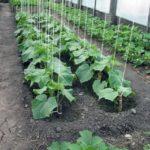
Cucumbers thrive in greenhouses compared to open-air cultivation in temperate climates with unstable weather conditions. Vegetables grown under plastic cover yield an earlier harvest. However, the harvest size depends on the precise method of pinching cucumbers in the greenhouse. If the procedure is performed incorrectly, it will negatively impact the growth of indoor vegetable plants.
Should cucumbers be pinched in a greenhouse?
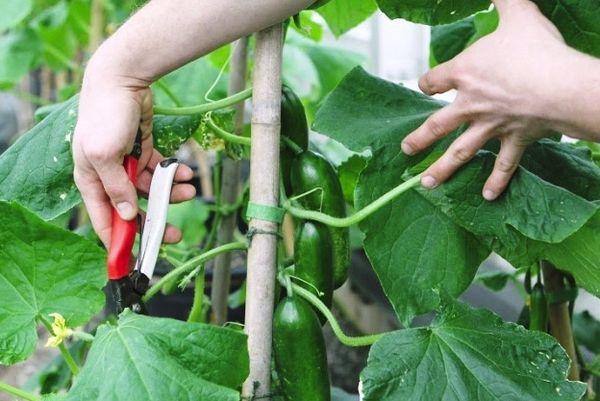
Among the important aspects of caring for vegetable plants is blinding, or pinching cucumbers in the greenhouse.
The purpose of the procedure is to ensure that the vines:
- more female flowers appeared;
- the growth of lateral shoots has become more active;
- the fruits set faster.
When gardeners neglect to pinch greenhouse cucumbers, their yield will decline. They'll have to pollinate the flowers by introducing bees and wasps indoors. This is difficult and rarely successful.
The more first- and second-order shoots are formed, the faster fruit set. This process can be accelerated by shaping the bushes. Remember, this procedure should be performed after tying up the cucumber shoots. This will ensure they receive sufficient light, which passes through polycarbonate and glass. Blinding the shoots is also easier and more convenient.
Benefits of pinching in a greenhouse
Although gardeners are skeptical about pinching cucumber stems, scientists believe the procedure has positive effects on plant care. Removing some of the stems containing male flowers helps:
- formation of female ovaries;
- increase in yields;
- improvement of greenhouse plants;
- reducing the bitterness of fruits.
Blinding is necessary for cucumber varieties that are self-pollinating, with both male and female flowers, or bee-pollinated. However, the latter varieties are rarely used for greenhouse cultivation. Parthenocarpic cucumbers do not require blinding.
A diagram for pinching cucumbers in a greenhouse
To properly perform blinding, you need to know the step-by-step procedure:
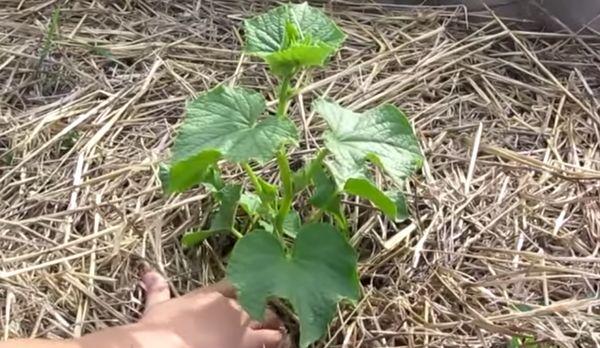
- Prepared cucumber seedlings are planted in a greenhouse when they are 25-30 days old.
- The main shoot of the zero order, that is, grown from seed, must be pinched above the 2nd true leaf. From the remaining stump, 0.3-0.5 centimeters long, lateral shoots of the first order will emerge.
- Pinching them stimulates the growth of secondary shoots, which produce most of the female flowers. This procedure works best when a net or wire is stretched across the greenhouse, along which the cucumber vines are trained vertically.
- The upper first-order shoots, growing from the axil of the second true leaf, begin to bud. It's best to pinch above the 7th to 9th leaf.
- The lower shoot of the 1st order, emerging from the axil of the 1st true leaf, is above the 5-6th leaf.
- The resulting second-order stems are pinched above the first ovary that has appeared.
- If there are no ovaries in the axils of the 1st, 2nd, 3rd leaves of these stems, then it is better to cut off the entire shoot.
- Next, pinch the first order shoots when the stems reach the top point of the wire.
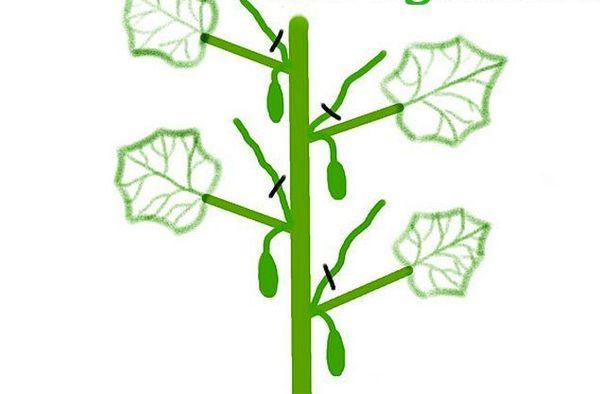
This is how cucumber bushes are formed into 2 stems.
The correct method for forming a single stem involves pinching off the primary shoots. The lower shoot should be pinched off above the first ovary, and the upper shoot, which has become the main stem, should be pinched off above the 8th or 9th leaf. The main stem is pinched again when it reaches the top of the trellis or net. Lateral shoots on this stem should be pinched off above the ovary.
Rules for conducting the operation
Pruning must be done carefully. If forming cucumbers into a single stem, inspect the vines attached to the wire every week. The bushes should be tied up 10 days after planting. The shoots and flowers are pruned at the axils of the first to fourth leaves. As soon as the next five leaves have grown, pruning off the side shoots is necessary. Finish shaping the bush by pinching off the top of the main stem.

You can form a bush with several stems. The side shoots are pulled toward the main shoot when the first buds appear. All emerging stems are attached to the main shoot with tendrils.
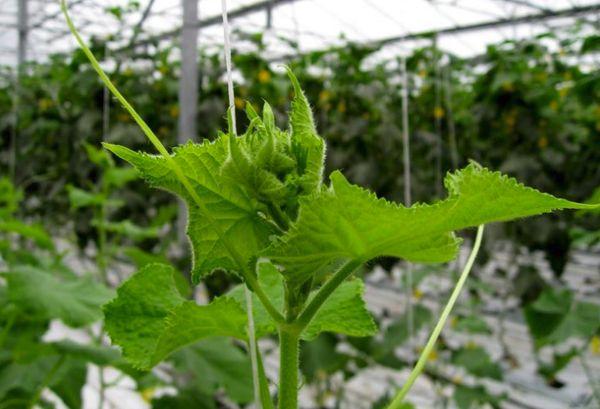
During the work period:
- Yellowed leaves and damaged tendrils are cut off, not torn off.
- Use only disinfected sharp instruments.
- It is better not to leave stumps after pinching.
- Male flowers and excess shoots are removed in a timely manner.
The procedure will be effective if performed correctly. Wear rubber gloves and sanitize your instruments to prevent them from becoming a source of disease for your cucumbers.
Which varieties do not require pinching?
When there is no time to pinch cucumbers, it is worth planting easy-to-care-for varieties of the crop in the greenhouse.
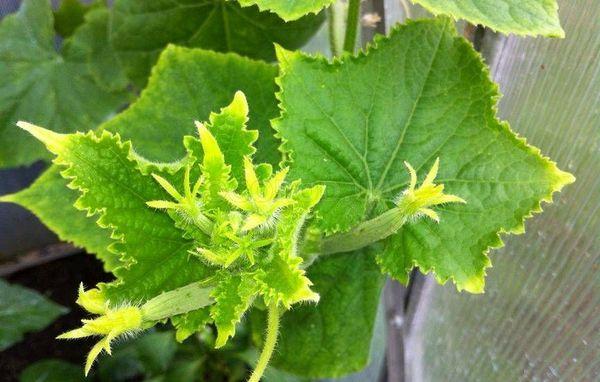
Cucumber varieties have been developed that grow as single-stemmed plants or without side shoots. A distinctive feature of single-stemmed cucumbers is that their fruits grow in clusters. This means that a single plant can produce a large number of cucumbers, up to 500. The cucumbers from this type of vegetable are often tasty, juicy, and without bitterness.
Many of them are related to gherkins. Caring for single-stem plants is simple, and vegetable crops are characterized by early maturity and resistance to diseases. The first cucumbers will appear in the greenhouses in just a month.
Among the best varieties for greenhouses, the following hybrids stand out: Nasha Masha, Druzhnaya Semeyka, Malchik-s-Thumb, Russkiy Stil, Prestige.
Cucumbers with weak branches don't require pinching. Planting hybrids in a greenhouse means there's no need to prune the vegetable plant's stems. Small lateral shoots form. cucumbers of the Vyuga varietyValdai, Metelitsa, Severyanin. It's best to choose parthenocarpic varieties that don't require pollination.
Related posts:
 Description of unusual methods for planting and growing cucumbers
 How to properly plant cucumbers in open ground with seeds, and at what depth
 How to care for cucumbers in open ground from planting to harvesting
 Description of the best varieties of Chinese cucumbers, planting, growing and care
 How to plant, grow, and care for cucumbers outdoors in the Moscow region
 How to make a cucumber trellis with your own hands from scrap materials
 How to properly plant cucumber seedlings in a greenhouse and care instructions
 How to plant cucumbers in a greenhouse, at what distance and with diagrams