
- When is the best time to plant cucumbers in a greenhouse?
- Optimal timing for sowing seeds
- The best time to plant seedlings
- Conditions for maximum germination and rapid growth
- At what temperature can cucumbers be planted in a greenhouse?
- Recommended soil temperature
- Preparing soil for sowing
- How and what to fertilize the soil with before planting seeds and seedlings
- Planting density of cucumbers in a greenhouse
- Consequences of a close fit
- Disadvantages of sparse planting
- Maintaining a distance between cucumbers when planting
- The best layouts for cucumbers in a greenhouse
- Single-row planting of cucumbers
- Two-line diagram
- Checkerboard planting pattern
There are certain rules for planting cucumbers in a greenhouse. They will help you grow healthy, robust cucumbers with a bountiful harvest. You need to create all the necessary conditions indoors, prepare the beds, and apply fertilizer. Each planting scheme has its own unique features, so it's best to follow step-by-step instructions and the advice of experienced gardeners.
When is the best time to plant cucumbers in a greenhouse?
It's important to sow cucumber seeds for seedlings on time. Overgrown plants or, conversely, small seedlings will root poorly.
Optimal timing for sowing seeds
Growing cucumbers in a greenhouse is possible using seedlings or seeds. Sowing seeds for seedlings begins a month before transplanting to a permanent location:
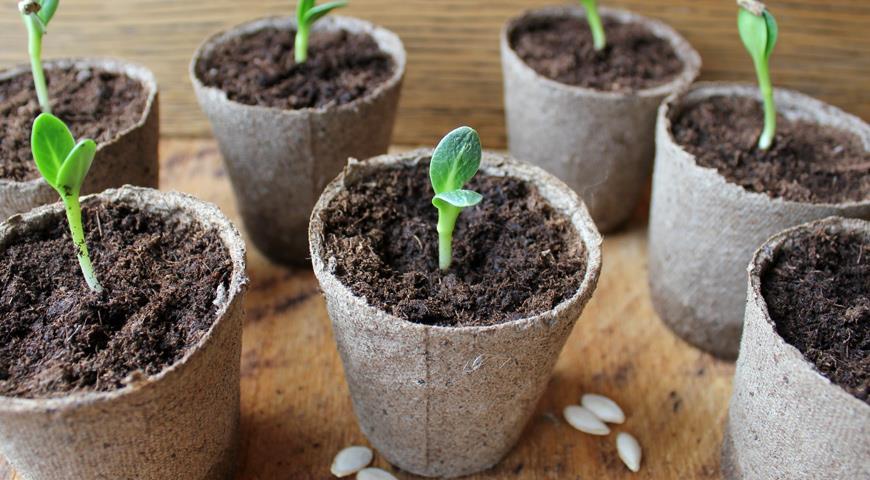
- It's best to plant the seeds in individual pots, as the root system doesn't tolerate transplanting well. Cover all containers with plastic wrap and store in a warm place.
- As soon as the first shoots appear, remove the film. Watering is necessary daily in the evening.
- To ensure cucumber seedlings grow quickly and become strong, you need to create the right conditions. The room temperature should be 22 degrees Celsius during the day and 19 degrees Celsius at night.
- As soon as the first pair of true leaves appears, begin fertilizing. Fertilizers are applied every 9 days. Suitable products include Kemira and Agricola.
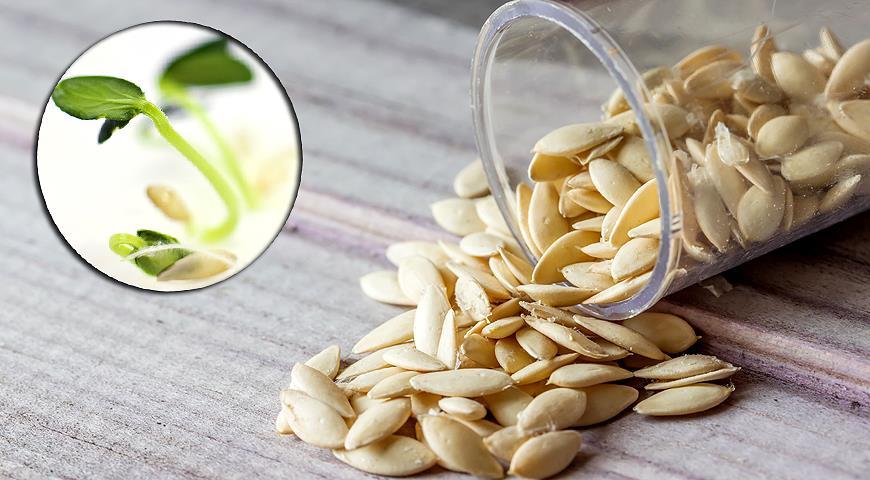
If you plan to sow the crop directly into the garden beds, be sure to germinate them first. Selected, firm seeds are placed on a damp cloth and left in a warm place. Sprouts should appear within a week.
The best time to plant seedlings
Planting cucumber seedlings in covered beds begins when the seedlings have 4-5 true leaves. The seedlings are hardened off beforehand.
The air temperature in the greenhouse should be around +17 degrees.
If the greenhouse is heated, seedlings can be planted as early as the first ten days of February. In an unheated room, young seedlings should be transplanted only after the soil warms to 11 degrees Celsius (53 degrees Fahrenheit). This coincides with the end of April.
![Favorable and unfavorable days for planting cucumbers in June [year]](https://harvesthub.decorexpro.com/wp-content/uploads/2020/06/page-300x185.jpg)
Conditions for maximum germination and rapid growth
To ensure that planted seeds germinate quickly and transplanted seedlings take root well, it is necessary to provide optimal conditions for the crop's development.
At what temperature can cucumbers be planted in a greenhouse?
When growing seedlings, the room temperature should be between 16 and 18 degrees Celsius during the day. At night, the temperature should be 3-5 degrees cooler. If sprouted seeds are to be planted in the ground, the air temperature should not fall below 13 degrees Celsius.
Mature plants thrive in a greenhouse during the day at temperatures ranging from 24 to 29 degrees Celsius. At night, the temperature should drop to 18 degrees Celsius. Lowering the temperature at night is essential to ensure the seedlings grow strong and don't become leggy.
Recommended soil temperature
TO planting cucumbers with seeds or seedlings Planting should only begin when the soil warms up to +13 degrees Celsius. It's best if the soil warms up to a depth of 10 cm, reaching +16 degrees Celsius.
Preparing soil for sowing
Cucumbers thrive in fertile, loose soil with neutral pH and adequate aeration. If the soil is too acidic, lime should be applied before planting. Loamy and sandy loam soils are ideal for planting cucumbers.
In the fall, after removing all plant debris, it's advisable to add compost. Disinfection is accomplished with a bleach solution. During spring tillage, it's recommended to add a mixture of wood ash and superphosphate. In the spring, disinfection is recommended with a potassium permanganate solution.
A sequence of actions that will help you plant vegetables without errors.
- It is best to make beds in the direction from east to west.
- Each bed is fenced with boards or simply a mound is made at least 18 cm high.
- Greenhouse soil is mixed with black soil, peat and humus.
- The beds are leveled with a rake.
- They choose a suitable planting method and dig holes.
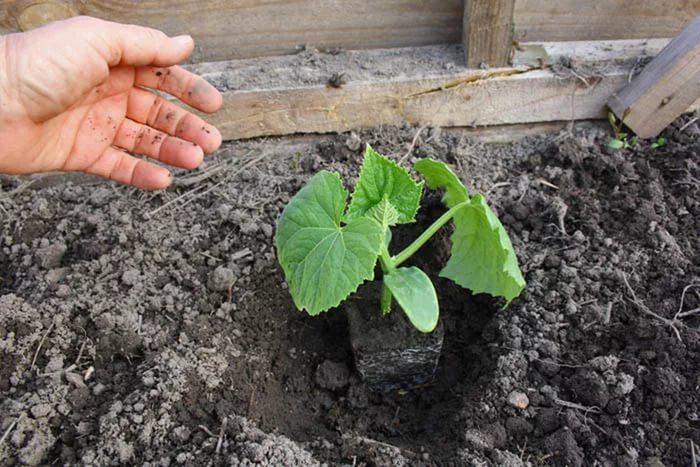
- Cucumbers are planted in pre-prepared holes or furrows. If sprouted seeds are being sown, they are placed sprout-side down. Dry seeds are laid on their sides. Then, the seeds are covered with a thin layer of soil.
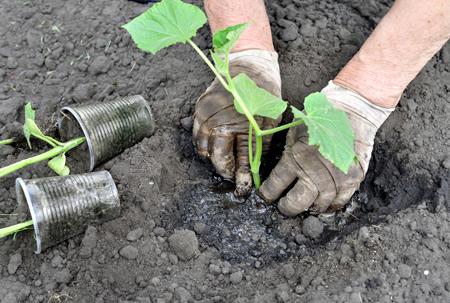
- The holes for the seedlings are made slightly larger. Each hole is watered with warm water. Each seedling is planted with a lump of soil. Overgrown seedlings are immediately tied to a support.
- The planted seedlings are watered again with warm water.

How and what to fertilize the soil with before planting seeds and seedlings
Before planting cucumber seeds or seedlings in a greenhouse a number of rules must be followed:
- clear the premises of debris and weeds;
- renew the top layer of soil;
- check the acidity of the soil;
- add wood ash and sand;
- fertilize the beds with micronutrients.

Spring isn't the best time to add fresh manure to the soil, so it's best to use peat or compost. These components make the soil loose and nutritious. In addition to organic matter, mineral components are also added. A mixture of urea, superphosphate, and potassium sulfate is prepared. Additional components include river sand, wood ash, straw, and sawdust.
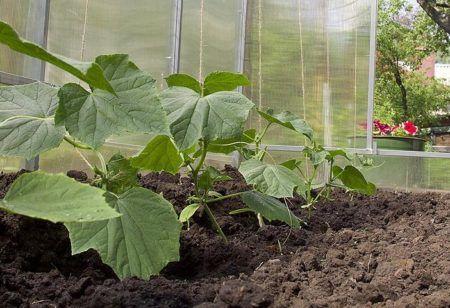
Cucumbers don't like excess micronutrients. Therefore, it's important to maintain the correct dosage and intervals between fertilizing. Carefully monitor the condition of the plants. If the growth or appearance of the foliage changes, adjust the micronutrient levels.
Planting density of cucumbers in a greenhouse
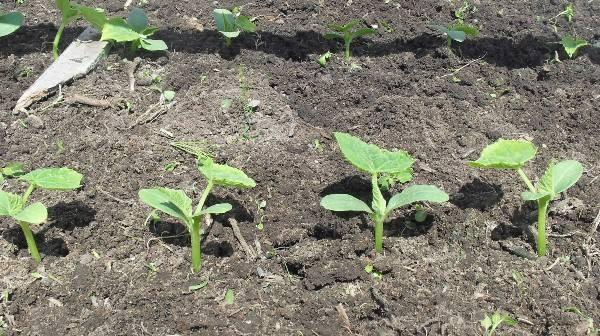
The frequency of cucumber planting depends on the size and layout of the room, as well as the variety chosen. Up to 4 cucumber plants should be planted per square centimeter of garden bed.
Tips to help you plant cucumbers correctly:
- the beds prepared for planting vegetables are watered with warm water;
- make holes at a distance of 48 cm;
- a complex of fertilizers should be placed at the bottom of the hole;
- Each seedling bush is planted in a vertical position.
Consequences of a close fit
If cucumber bushes are planted too close together in a polycarbonate greenhouse, the overgrown vines will hinder their development and normal fruiting:
- The foliage of closely planted cucumbers doesn't allow enough air and sunlight to pass through. This results in fewer fruit sets, which fall off, and increases the risk of fungal infections.
- Water is retained in thickets of cucumber vines, which, in addition to the rapid spread of infections, increases the risk of insect pests and rot.
- Plant roots develop poorly. They become intertwined. Plants compete for micronutrients from the soil. Furthermore, the roots of closely planted plants quickly absorb moisture, and the soil will always remain dry.
- It is difficult for pollinating insects to reach the flowers.
- Many barren flowers are formed due to a lack of sunlight and heat.
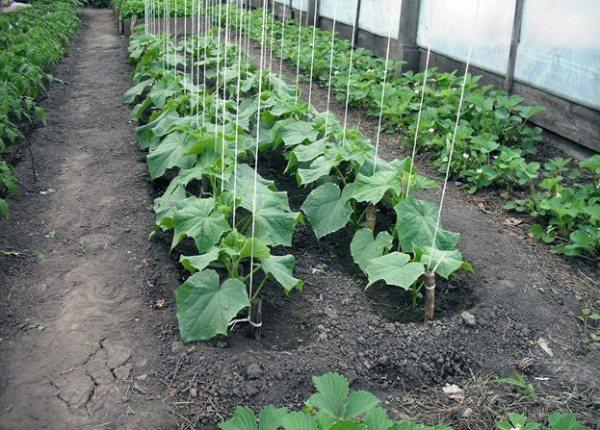
Dense plantings make crop maintenance difficult. Watering, fertilizing, weeding, and loosening the soil are difficult.
Disadvantages of sparse planting
If the distance between cucumbers is too large, you won't be able to save space in the greenhouse. Sparsely planted cucumbers will prevent you from harvesting a large crop of cucumbers.
Maintaining a distance between cucumbers when planting
The standard planting density for vegetable crops is as follows:
- the width of the bed is made 95-115 cm;
- the distance between rows is 48 cm;
- seedlings are planted at intervals of at least 18 cm.
It's best to create narrow beds so that each cucumber plant can be easily reached. This will make shaping and staking the plants easier. The plants will receive more air and light. And if any infections occur, it will be easier to locate damaged areas.

The best layouts for cucumbers in a greenhouse
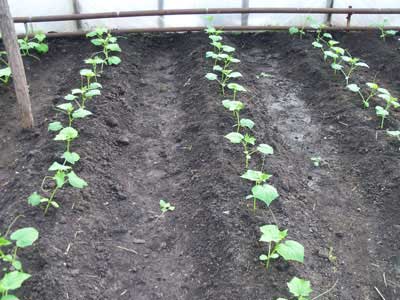
Cucumbers are planted in beds according to one of three correct patterns: single-row, double-row, or checkerboard planting.
Single-row planting of cucumbers
Hybrid cucumbers that ripen at the same time are best planted in a single, long, narrow row. This planting method would look like this:
- the height of the bed is made about 21 cm;
- the beds are left 43 cm wide;
- the distance between cucumber seedlings is 26 cm;
- the path between rows should be 40 cm.
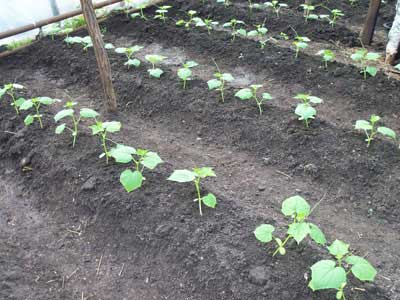
Two-line diagram
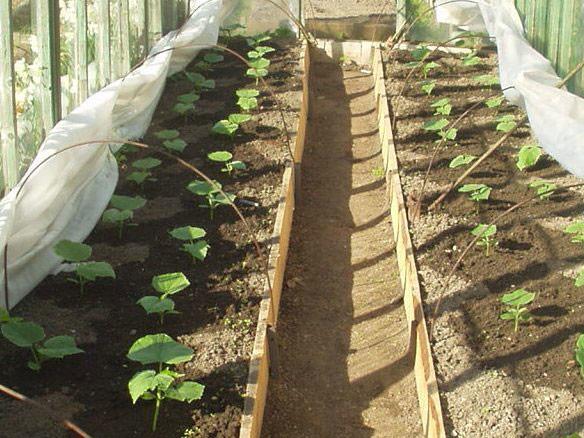
This option involves creating beds that are positioned opposite each other. This layout is best used for planting small-fruited cucumber varieties in a greenhouse, as well as varieties that are not prone to side shoots.
Recommendations to help plant cucumbers in two rows:
- the height of the embankment should be no less than 29 cm;
- the width of the bed is made 83 cm;
- the distance between cucumbers is 43 cm;
- The distance between the beds themselves is 48 cm.
Checkerboard planting pattern
A good option is to plant cucumbers in a staggered pattern. Each plant will receive sufficient light and heat.
This planting option is suitable for planting parthenocarpic cucumber varieties with large, elongated cucumbers and large leaves.
The parameters of the bed for the staggered planting option are practically no different from other schemes:
- the beds are made 84 cm wide;
- the soil layer on the bed is not less than 19 cm;
- the distance between bushes in a row is left at about 37 cm;
- the distance between the beds is left at 40 cm.
It's important not only to choose the right planting pattern but also to ensure careful care. This includes timely watering, fertilizing, loosening and weeding the soil, and preventative treatments against infections and pests. It's recommended to train cucumbers into 1-2 stems and tie them horizontally or vertically.
Related posts:
 Description of unusual methods for planting and growing cucumbers
 Description of the best varieties of Chinese cucumbers, planting, growing and care
 How to properly plant cucumbers in open ground with seeds, and at what depth
 How to properly plant cucumber seedlings in a greenhouse and care instructions
 How to plant cucumbers in open ground under film: timing and cultivation technology
 How to make a cucumber trellis with your own hands from scrap materials
 How to care for cucumbers in open ground from planting to harvesting
 TOP 30 best determinate cucumber varieties with descriptions