
Although cucumbers are a heat-loving crop, they also produce fruit successfully in temperate regions. Conditions in the Moscow region are ideal for growing cucumbers outdoors. This makes them popular with gardeners, and the names of some varieties suggest they thrive in the gardens of Central Russia.
Peculiarities of growing cucumbers in the Moscow region
To ensure that the conditions are suitable for vegetable fruiting, you need to:
- fertilize the soil in the garden bed well;
- choose a sunlit area;
- grow in one place for no more than 3 years;
- arrange the garden bed higher.
It is not without reason that they are trying to hold it in the Moscow region due to the heavy soil growing cucumbers in a barrelThis method will save space in a small garden plot and will speed up fruiting. You can also plant the seeds directly into the ground.
Optimal varieties
Cucumber varieties for Moscow gardens include both parthenocarpic and bee-pollinated varieties. Hybrids for summer salads and pickling varieties are also a popular choice.
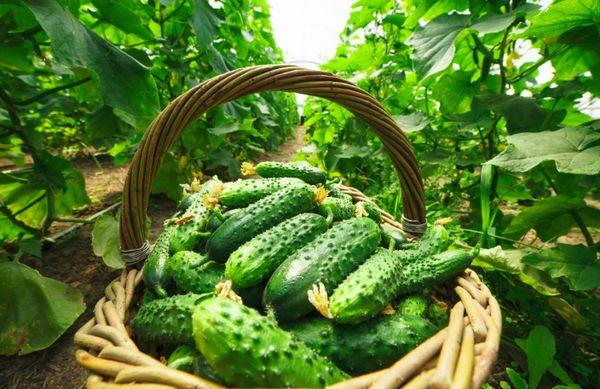
Can grow successfully in temperate climates:
- The Ant F1 hybrid is a universal variety that bears fruit 38 days after germination.
- Rodnichok is a pickling variety. Its distinguishing features include bee pollination, medium-sized cucumbers, and excellent flavor.
- The Masha variety produces green fruits 41 days after germination. They are medium-sized, with crisp flesh and no bitterness.
- The Konkurent hybrid should be planted outdoors, as it is pollinated by bees. With proper care, the yield of cucumbers can reach up to 8 kilograms per square meter.
- The ancient Vyaznikovsky variety is popular. It's versatile and easy to care for.
Cucumber varieties are chosen so they can be pickled for the winter, and summer residents also enjoy the juicy, sweet fruits in the summer. And to achieve this, they need to be grown properly.
When can you plant cucumbers?
Weather conditions determine when to plant vegetables outdoors. The site for cucumbers should warm up to 10-12 degrees Celsius, and the air temperature should be around 18 degrees Celsius. In the Moscow region, this temperature typically sets in between mid-April and early May.
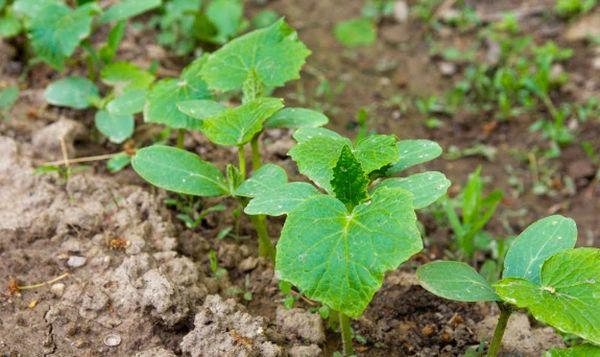
It's impossible to predict the exact date for sowing cucumbers. Weather conditions change every year. Therefore, it's important to keep an eye on weather forecasts to ensure you're sowing on time.
If you are preparing vegetable seedlings, they are planted in the beds at the age of 25-30 days.
Planting nuances
To sow cucumbers correctly, you need to decide on a location.
If you choose a barrel for vegetable plants, it should be bottomless and have holes in the sides. The nutrient-rich soil for cucumbers consists of equal parts humus and peat. The soil in the beds is prepared in the spring by digging and incorporating organic and mineral fertilizers.
Soak cucumber seeds in linen bags for 5-6 hours. Soaking cucumber seeds in methylene blue increases the yield. Only 0.3 grams of powder is needed per liter of water. Disinfection of the planting material is carried out in a potassium permanganate solution. After the treatment, rinse and dry the cucumber seeds.
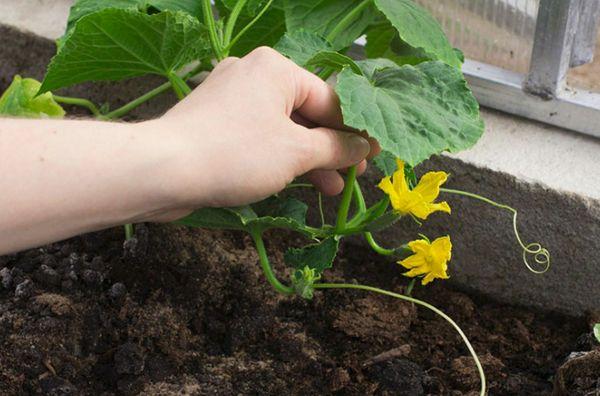
In open ground
It's best to plant cucumbers in a square nest pattern. Nests for short-stemmed cucumbers are made in a 70 x 70 cm pattern, while for long-stemmed cucumbers, they are 90 x 90 cm. Six to eight sprouted seeds are placed in each nest.
If you choose to sow cucumbers in rows, plant them at a depth of 3-5 centimeters. Before planting the seeds, water the soil and fertilize the bed with compost.
You can plant the vegetable as seedlings in peat pots. Place 2-3 rows of corn and peas nearby. These plants will raise the soil and air temperature, protect the tender vegetable from wind and frost, and reduce moisture evaporation.
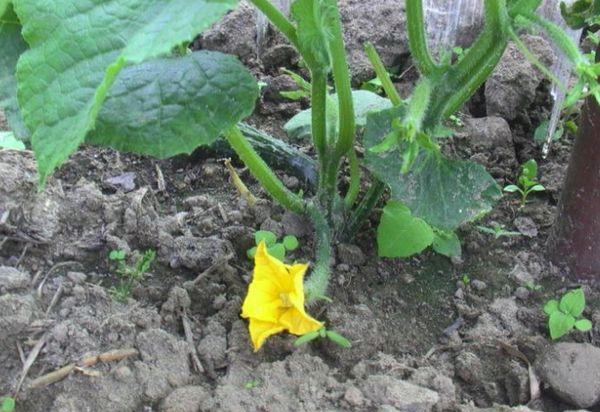
The soil mixture is placed in layers inside the barrel. Food scraps and plant remains are best placed at the bottom. Next comes manure, and on top is a fertile, loose layer. Once the bottom layers decompose, the soil will settle slightly. Watering the soil will help speed up the process.
Cucumbers are sown earlier than in regular beds. Four to five plants are planted in each container. Cover the plants with plastic film, removing it once the threat of frost has passed.
In the greenhouse
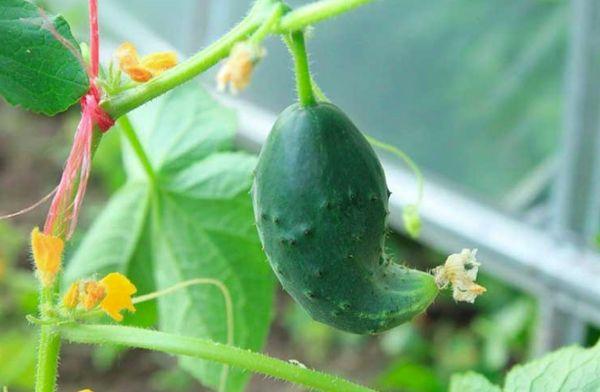
Prepared cucumber seedlings can be planted along the entire length of the greenhouse or hothouse. Peat pots containing the plants are inserted into the pots, maintaining a distance of 25 centimeters. The soil layer should be 18-20 centimeters deep. Self-pollinating varieties of cucumbers are chosen for greenhouses.
It is necessary to prepare trellises in the greenhouse to raise the plant shoots vertically.
At home
You can plant cucumbers in pots, growing them on windowsills. Use nutritious soil in the containers. Choose short-vine, bushy hybrids. Before planting, moisten the soil and apply fertilizer. Two to three plants can be planted in each container. Planting can be done at any time, so you can harvest cucumbers in March. However, don't forget to provide supplemental lighting for the seedlings.
How to properly care for cucumbers
During the growing season, cucumbers are carefully tended. The better the care, the longer they will bear fruit.
Watering
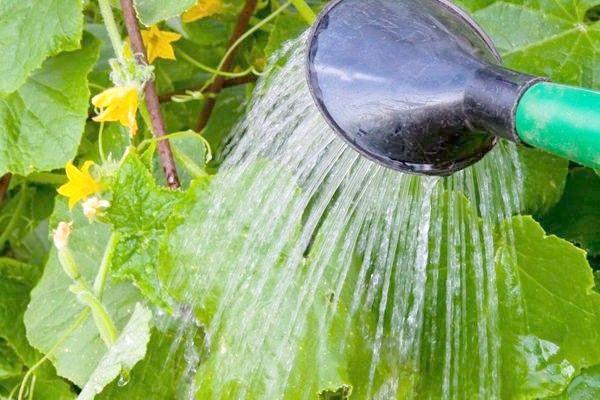
Plants need to be watered generously. Reduce the frequency of watering before flowering. Even slight wilting of the leaves is tolerated. This promotes better fruit set. After this, water the plants more frequently. Plants appreciate being misted from above. This removes dust from the leaves and increases air humidity. Use room-temperature water for watering cucumbers. It's best to water in the morning, using 5-10 liters of water per square meter.
Top dressing
Vegetable bushes should be fed regularly, alternating organic and mineral fertilizers. Use mullein diluted 1:8 and water the plants. For mineral fertilizers, use 30 grams of ammonium nitrate, 25 grams of superphosphate, and 10 grams of potassium salt during the first feeding. After two weeks, use 30 grams of ammonium nitrate and 15 grams of potassium salt per bucket of water.
For foliar feeding, it's best to spray cucumber plants with solutions of boric acid (0.5 grams), baking soda (50 grams), and iodine (2 grams). These solutions are diluted in 10 liters of water one hour before application.
Garter
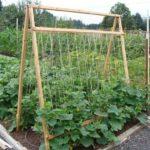
It's better to carry out Growing cucumbers in open ground on a trellis in the Moscow region, because the vines won't break or get tangled. The support will allow the cucumber stems to climb upward, and the cucumbers will ripen faster. To speed up their growth, you can pluck off some of the leaves covering the fruit.
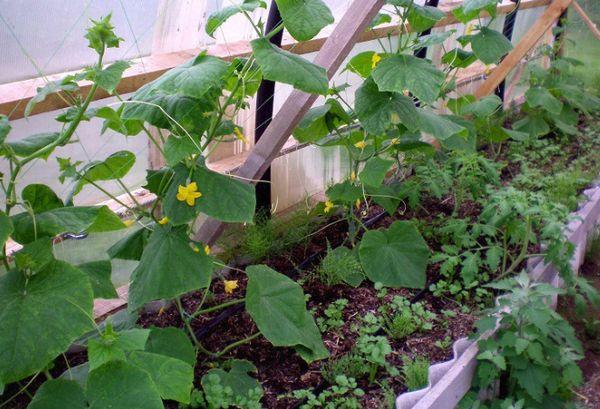
Barrel plants need support when they develop 4-5 true leaves. A 2-meter iron pole is installed in the center. A cross is welded to the top. Twine is tied to the top, directing downwards to form rays. These rays will be the climbing rays for the cucumber vines. The pole can also be made of wood.
Mulching, loosening, hilling
To retain soil moisture in the cucumber bed and prevent weed growth, apply mulch. Apply a 6-8 centimeter layer of peat or humus. Hay, straw, or sawdust can be placed around the plants.
Loosening the soil in cucumber beds is essential to improve permeability. After rain and watering, the soil becomes compacted, preventing air and nutrients from reaching the plant roots. Carefully loosen the soil with a rake or pitchfork so as not to damage the delicate stems of vegetable plants.
It's time to weed vegetable plants when the weeds have sprouted leaves. Pull the weeds by hand, being careful not to touch the shoots or damage the cucumber roots.
Pinching and pinching
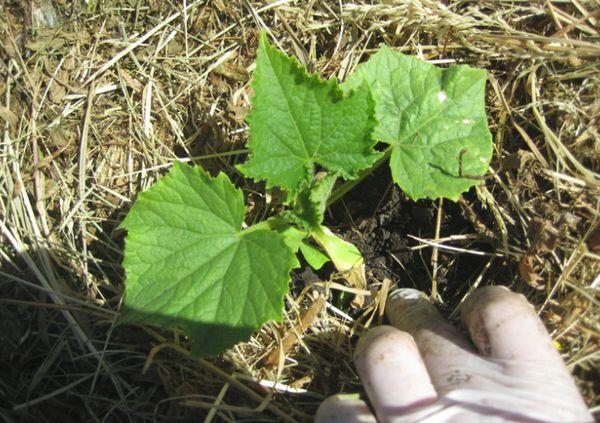
To encourage shoot growth, pinch the main stem above the second true leaf, leaving a 0.5-centimeter stump. Pinching emerging side shoots will encourage secondary branches to develop. These will produce more female flowers.

Cucumber bushes are trained into single or double stems. If the double stem method is chosen, the upper first-order shoot, which grows from the axil of the second true leaf, is pinched off. The location for pinching is above the 7th to 9th leaf. The lower shoot, which grows from the axil of the first true leaf, is pinched off above the 5th to 6th leaf.
The main cucumber shoots are pinched when they reach the top of the trellis wire. Forming the bush helps regulate and increase the vegetable yield.
Diseases and pests
Vegetable crops are susceptible to fungal infections. Pathogenic microorganisms attack all parts of the plant when conditions are humid and temperatures rise above 30 degrees Celsius.
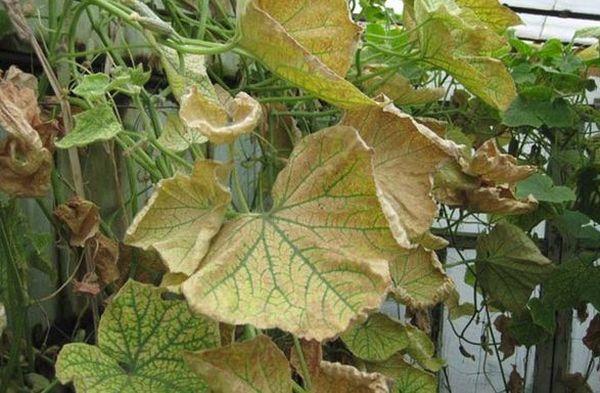
When affected by white rot, cucumber plant tissue becomes slimy and soft. A dense white mycelium appears on the surface of the vegetable. Upon detection of the disease, the damaged parts are torn off. Sprinkle the affected areas with lime and crushed charcoal. Wounds should be sprayed with a copper sulfate solution. The disease can be prevented by not planting cucumbers too densely.
Powdery mildew is defined by white coating on the upper leaf blade of cucumbersIn addition to Bordeaux mixture, diseased bushes are treated by dusting with sulfur powder.
In the fall, vegetable crops often become infected with brown spot. The fruits become covered with white, water-soaked spots, and the skin cracks. Over time, the spots harden, forming ulcers. At the first signs of disease, stop watering and spray the cucumbers with Bordeaux mixture, having prepared a 1% solution.
The most common pests that damage cucumbers are aphids and spider mites. Spray the plants with insecticides when pests appear. Infusions of onion peels and laundry soap are effective.
Earwigs and scaly-sided beetles can chew through cucumber leaves. You can collect the insects by hand or repel them with a kerosene-lime emulsion. Sprinkle it over piles of dry grass, placing them near the garden beds. Care should be taken to clear the soil of plant debris promptly. This will give the insect larvae nowhere to hide for the winter.
Related posts:
 How to care for cucumbers in open ground from planting to harvesting
 Description of unusual methods for planting and growing cucumbers
 How to properly plant cucumber seedlings in a greenhouse and care instructions
 How to properly plant cucumbers in open ground with seeds, and at what depth
 Description of the best varieties of Chinese cucumbers, planting, growing and care
 How to make a cucumber trellis with your own hands from scrap materials
 When to plant cucumbers in open ground in Siberia, how to grow them, and the best varieties
 Why do cucumber leaves curl inward and what to do about it?