
Marbled cucumber leaves indicate a plant disease. What should you do? First, determine the cause. Uneven coloring can be caused by a virus or nutrient deficiency.
Magnesium deficiency
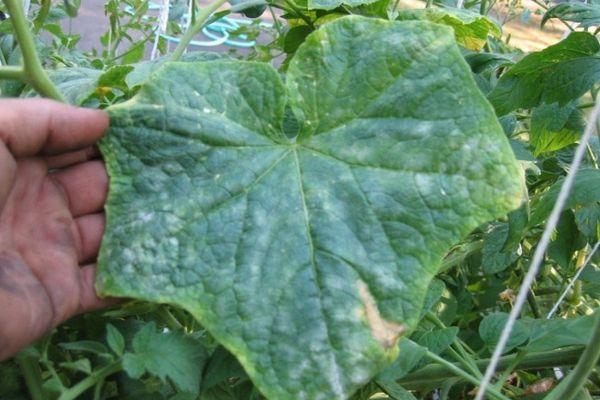
The condition of a plant can be assessed by its foliage. Leaves are the first to signal problems. Marbling is an uneven leaf coloring, with darker or lighter veins appearing. Spots of varying colors, from white to brown, can also appear. Depending on the shade of the spots, the cause of the disease can be determined.
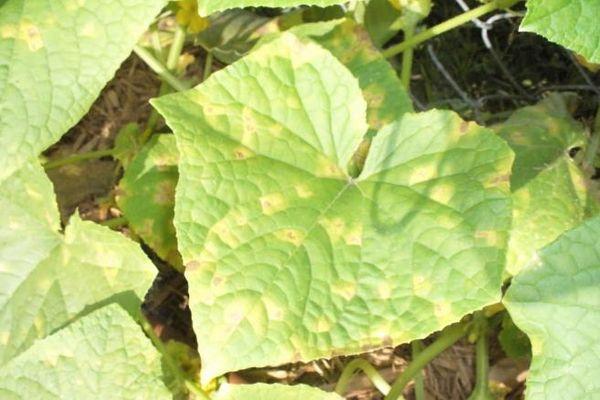
If dark green or light green streaks appear, this is a sign of magnesium deficiency. The lower leaves are the first to change, and over time, the marbling spreads throughout the plant. Magnesium deficiency typically occurs during the fruiting period.
A deficiency can be caused by sandy or acidic soil. Sandy soil accumulates potassium, and excess potassium interferes with magnesium absorption. Therefore, avoid overdoing it with potassium-rich fertilizers. Excess nitrogen also impairs magnesium absorption and can lead to marbled leaves in cucumbers. Phosphorus can also indirectly affect magnesium levels. A phosphorus deficiency disrupts the absorption of all nutrients from the soil.
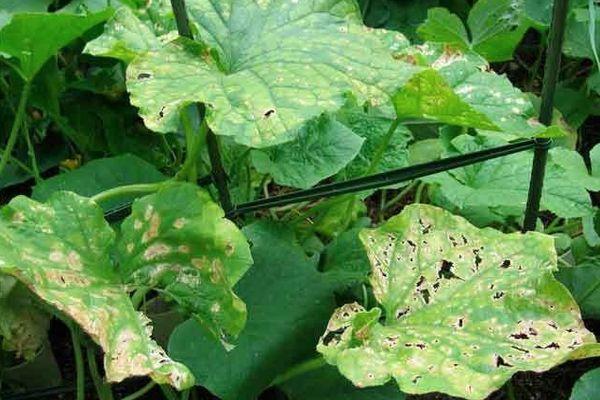
In acidic soil, magnesium is almost impossible for plants to absorb. To prevent marbling on the foliage, the soil should be treated with dolomite flour or lime. If the nutrient balance isn't restored, the plant will die. Initially, plant growth slows, then water absorption deteriorates. Over time, root development stops, and the cucumbers wilt.
Cucumber mosaic virus
If The stains on the cucumber leaves are white A yellow or yellow color is a symptom of cucumber mosaic virus. The virus is spread through the soil, by insects, and by weeds. Typically, the disease remains dormant in the soil. Temperature fluctuations, such as overnight frosts or sudden warming, can reactivate the virus.
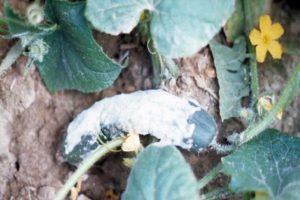
Mosaic fungi can remain in the soil from previous seasons. Gardening tools used in an infected area and not treated can also infect cucumbers. Seeds collected from a previous harvest are often infected. The virus can even be carried by wind if there are diseased plants in nearby areas.
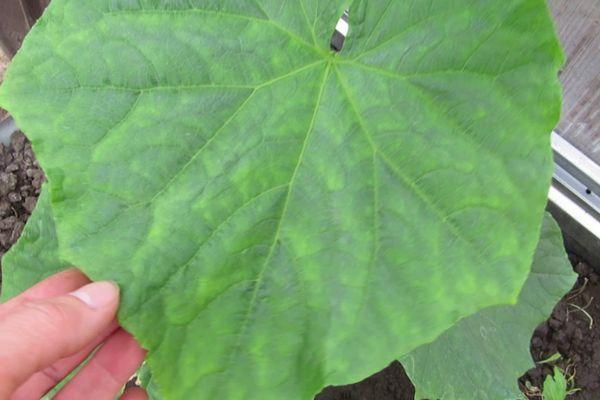
There are several varieties of cucumber mosaic, each causing leaf marbling. Common mosaic can easily be confused with magnesium deficiency, as the spots on the leaves have varying shades of green. Plants affected by mosaic are stunted, and the fruit becomes deformed and bitter.
White mosaic appears near the veins of the leaf. As the disease progresses, the spots enlarge and merge. As a result of the virus, the leaves dry out and fall off. Tobacco mosaic is less common than regular or white mosaic. Yellow-green streaks appear on the leaves, and the portion of the leaf untouched by the mottling becomes covered with bumps.
Methods of control
To avoid crop loss, preventative measures should be taken even before sowing. To increase magnesium levels, add potassium magnesium sulfate or ash to the soil at a rate of about 25 g per square meter. The first fertilizer application should be done before the cucumbers emerge; don't wait until the leaves appear. This will promote stronger root systems.
If marbling occurs, magnesium deficiency can be remedied with calcined magnesia. Use 2 teaspoons of powder per 10 liters of water. Uniflor liquid fertilizer is popular. Timely application of fertilizer will not only help stop the spread of the disease but also restore damaged bushes.
Saving crops is more difficult if the marbling is caused by a viral infection. There is no treatment that can eliminate the mosaic, so treating the plant with chemicals is pointless. The spread of the virus can be prevented by removing infected plants. This should be done early in the disease's development, as soon as spots appear. Infected plants should be burned.
It's also necessary to remove all weeds, not just growing ones but also dead ones. The virus can survive in dead plants for several decades, easily surviving even the harshest winters.
It is important to take preventative measures against cucumber mosaic. When sowing, the holes should be spaced according to the manufacturer's recommendations. The closer the bushes are to each other, the more easily diseases are transmitted. In addition, timely treating cucumbers against pestsAphids and spider mites carry the mosaic virus. If an anthill is found on the property, it must be destroyed.
Take a look Also


Crop rotation rules must be followed to prevent soil-borne infection. If seeds were collected independently, they must be disinfected before planting. The soil should also be disinfected. Do not collect seeds from diseased cucumbers, as the mosaic virus can persist in them for up to three years. The virus can survive in the soil for up to five years.
If cucumbers were infected in the previous season, the crop should not be planted in this place, even after thorough soil cultivation.
You can protect your crops and preserve your harvest by using hybrid varieties resistant to cucumber mosaic disease. However, even in this case, preventative measures are necessary. While it's best not to heat or soak the seeds, cultivating the soil and promptly removing weeds is essential.
Related posts:
 Instructions for use of magnesium sulfate fertilizer for plants, composition
 Methods of treating mosaic on cucumbers, drugs and folk remedies for processing
 Causes and symptoms of cucumber chlorosis, treatment methods
 Diseases and pests of home lemons, treatment options, and solutions
 Reasons why beet leaves turn yellow, care mistakes, what to do, and how to treat them
 Magnesium nitrate formula and instructions for use
 How and where to properly keep ginger root fresh at home
 What to do if apple tree leaves are wilting and what is the best treatment?
Most problems arise from a lack of minerals in the soil. I find "BioGrow"The product works well on both seedlings and the soil itself. I recommend it.