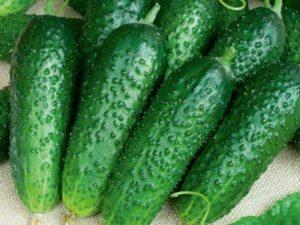
Parthenocarpic cucumber Metelitsa F1 is a first-generation hybrid. This variety is characterized by an early fruiting period and is ideal for those planning to harvest early produce.
Advantages of a hybrid
The ultra-early cucumber variety Metelitsa begins bearing fruit 36-37 days after germination. This hybrid does not require pollination and can be grown indoors. A distinctive feature of this variety is its limited lateral shoot growth.

The variety description indicates a predominance of female flowering. Three to four fruits form in a cluster-type ovary. Up to 15 identical cucumbers can ripen simultaneously.
Cucumbers have a beautiful cylindrical shape, reaching 7-8 cm in length and weighing 68-70 g. The fruits are intensely green with white stripes extending halfway down the surface. The surface is large and bumpy. The flavor is free of the plant's characteristic bitterness. In cooking, the fruits are used fresh, pickled, and canned.
Agricultural technology of cultivation
The crop is grown in two ways. For cool climate zones, the seedling method is used.

The seeds are sown in 10 cm diameter peat pots filled with a specially prepared soil mixture. It contains:
- humus - 2 parts;
- turf soil - 1 part;
- washed sand - 1 part.
The seeds are planted to a depth of 1.5 cm. To ensure uniform germination, maintain an optimal air temperature of 20–23°C. When watering, it's important to ensure even soil moisture. Excess moisture in the seedling container can cause the soil to become acidic, which will negatively impact the root system.
After sprouting, the air temperature should not drop below 14°C while the seedlings are developing. Growing seedlings require 14 hours of sunlight per day. If light levels are insufficient, fluorescent lamps can be installed.


During the formation period, apply one to two applications of nitrogen-rich complex fertilizers. The seedlings are transplanted to their permanent location after the end of spring frosts.
In southern regions, seeds are sown directly into the ground during the frost-free season. Soil temperatures should be between 15 and 17°C. The holes are filled with humus and nutrient mixture, wood ash is added, and the dry seeds are planted at a depth of 2 cm.
After planting in the soil, the surface is covered with plastic film to create a greenhouse effect. This encourages sprouting.
Caring for the crop
Cucumbers respond well to daily watering with warm water. This should be done in the evening. To retain soil moisture and ensure even water distribution, apply fiber mulch. Organic materials (straw, hay, or leaves) are used as mulch.
 To protect against biological pests and ensure oxygen access to the roots, the soil is loosened and the plants are hilled. Mature crops require mineral and organic fertilizers. Fertilizers are applied 5-6 times during the season.
Reviews from vegetable growers indicate that the Metelitsa hybrid is resistant to downy and powdery mildew and tolerates excess moisture well.
To prevent damage to healthy plants, preventative treatment with special preparations is carried out before ovary formation. Folk remedies can be used at any stage of plant development.

Opinions and recommendations
Vegetable growers who cultivate this hybrid confirm the description of its early fruiting period. The variety is disease-resistant and easy to grow. Even with limited moisture, the fruits do not become bitter, and the pulp has a pleasant flavor.
To combat pests, it's recommended to use homemade products. A garlic-and-water solution is used against whiteflies. Aphids are controlled with a solution of wood ash and laundry soap.
Spider mites leave behind webs that cause plants to wilt. A soap solution can be used to control them. If pests are detected, it's important to take prompt action to preserve the crop.
Related posts:
 The best eggplant varieties for growing in a polycarbonate greenhouse: planting and care
 Methods for planting and propagating cherries at home
 The use of peat as a fertilizer for potatoes and other crops and its differences from humus
 Causes and treatment of cherry diseases, methods of pest control
 Is it possible to soak treated cucumber seeds before planting and how to do it correctly?
 How to control carrot flies with medications and folk remedies
 The best grape varieties for growing in the Urals, planting and care rules in summer
 Corn sowing rules and regulations, how to plant and prepare seeds