
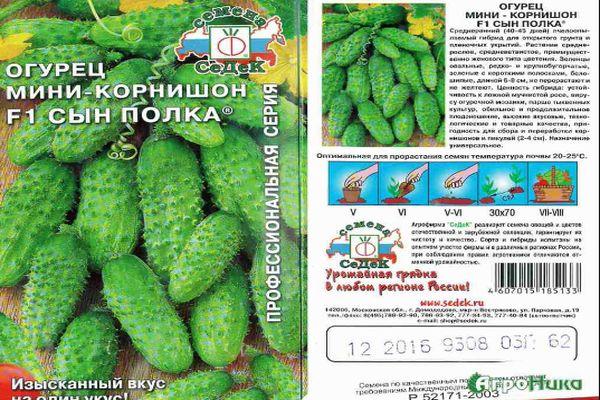
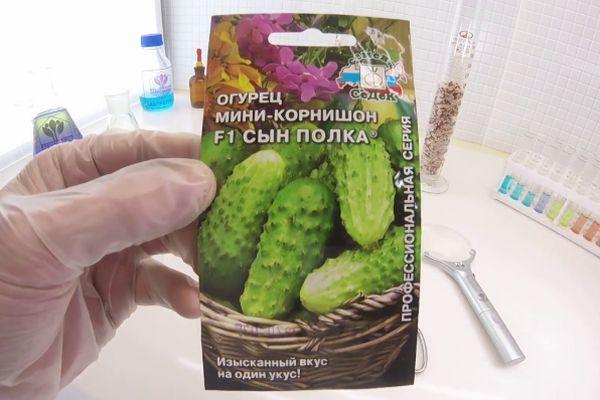
Son of the Polk cucumbers belong to the group of hybrids pollinated by bees. These are used cucumbers for pickling and canning for the winter. The harvest easily tolerates long-distance transportation.
Some data about the culture
The characteristics and description of the hybrid are as follows:
- the harvest occurs 40-45 days after emergence;
- cucumber has a female flowering type;
- the height of the bushes reaches 1-1.2 m; to support the stems, the plant is tied to supports or trellises;
- The hybrid has an average number of shoots; about 3 ovaries develop on the bush in the form of bunches;
- The oval-shaped fruit is covered with a medium number of tubercles, weighs 75-100 g and reaches 90-100 mm in length with a diameter of 3 cm; it does not taste bitter.
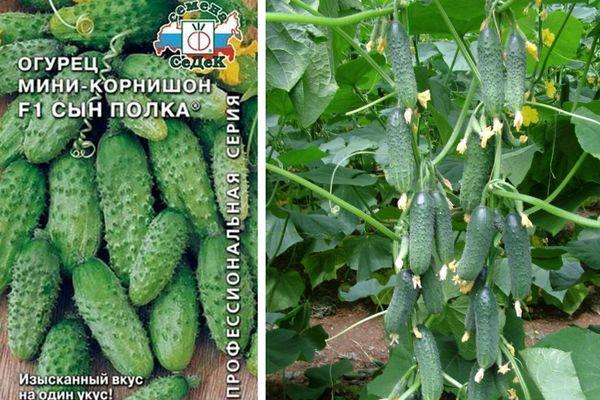
According to reviews from farmers growing the Son of the Regiment hybrid, the plants are immune to diseases such as powdery mildew, cucumber mosaic virus, and others. The hybrid yield is 3.5-4.1 kg of cucumbers per 1 m² of garden bed.
This variety can be grown outdoors only in the southern regions of Russia. In the central part of Russia and Siberia, greenhouses and hotbeds are used for growing the hybrid.
Obtaining seedlings from seeds
After purchasing the planting material, it should be disinfected with potassium permanganate or hydrogen peroxide. Then, begin germinating the seeds. They are placed on a damp cotton cloth, after first treating the entire seed bank with growth stimulants, such as a honey solution. Cover the seeds on the cloth with gauze or a bandage folded in 4-5 layers. The cloth should be moistened daily, but do not immerse it in water.
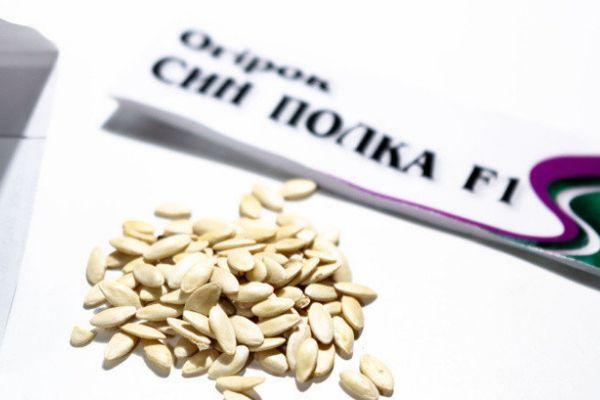
In about 4-5 days, the seeds will sprout roots. Those plants that haven't sprouted roots, or whose roots are very short, should be discarded. After this, the sprouted seeds can be planted in a greenhouse or open ground. If the gardener is sowing seeds in open beds, this should be done in mid- to late May.
Soil temperature should be no lower than +10…+12°C. If the farmer's area is at risk of a sharp cold snap in May, the planted seeds should be protected with a warm material or other covering.
If the farmer decides to grow seedlings first, peat cups filled with light soil are selected for each sprouted seed. Two to three seeds are planted in the cups to a depth of 10-15 mm. The room temperature is maintained at 21°C.
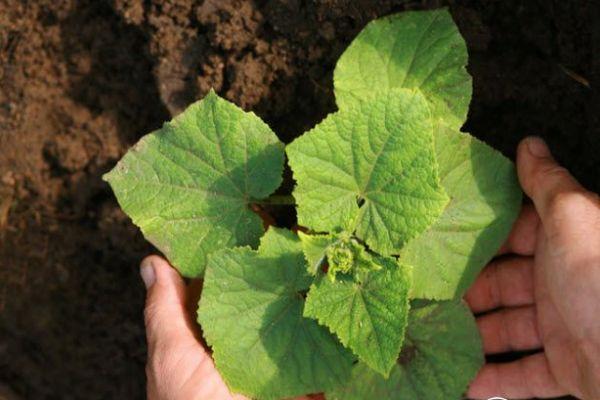
Since cucumbers love lots of light, the seed containers should be placed in a well-lit area. After the seedlings sprout, feed them with mineral fertilizer and water them with warm water once every 5 days. Harden them off about a week before transplanting them to their permanent location.
Before planting seeds or seedlings in a garden bed, the soil is loosened and manure or chicken droppings are added to the soil.
The beds are watered with a weak solution of potassium permanganate to kill fungi and bacteria. The seeds are planted 15-20 mm deep. They are planted in a 0.5 x 0.3 m grid; the soil is watered with warm water. If the farmer has seedlings, 4-5 plants are planted per square meter of bed. If the plot is open, choose a sunny spot for cucumbers, but avoid drafts.
Caring for growing cucumbers
Water the cucumbers with warm water. Let it sit in the sun. The amount of water poured onto each plant is determined by weather conditions (if the plants are planted outdoors). The hybrid thrives in water, but the soil beneath the plants should be slightly damp. Avoid getting wet on the leaves, as this will cause sunburn on a sunny day. In extreme heat, increase the frequency of watering to the required level.
Cucumbers prefer light, loose soil, so it's recommended to loosen the soil under the plants twice a week. This procedure allows oxygen to reach the hybrid's roots, which accelerates stem growth. Weeding should be done once a week.
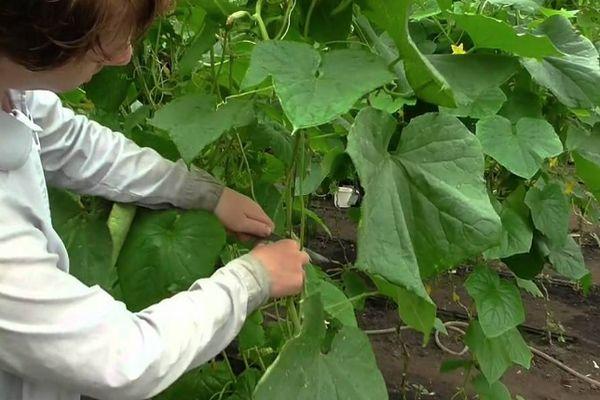 If cucumbers are grown in a greenhouse, it is advisable to ventilate the room regularly to maintain the desired microclimate.
Fertilize with mineral fertilizers every 10 days. Complex mineral mixtures are recommended for this purpose. If these are not available, organic fertilizers (manure, chicken manure), ammonia solutions, and mixtures containing phosphorus and potassium can be used.
If signs of a garden pest infestation appear in your garden, chemical pesticides are recommended. If you want to achieve an environmentally friendly harvest, you should use organic pesticides that are safe for humans or use traditional methods to eliminate the pests.
Related posts:
 Is it possible to soak treated cucumber seeds before planting and how to do it correctly?
 Description of the Krasotka grape variety, planting and care technology
 Carrot care guidelines for outdoor cultivation to ensure a good harvest
 Description of the Julian grape variety, planting and care instructions
 The best eggplant varieties for growing in a polycarbonate greenhouse: planting and care
 Why didn't the carrots sprout and what should I do? How to plant them so they sprout quickly?
 35 Best Powdery Mildew-Resistant Cucumber Varieties with Descriptions
 How to properly plant peas in a greenhouse and open ground
This variety is my main winter pickling variety. The cucumbers are small, firm-fleshed, and crisp, with small seeds. They're delicious in pickles, and also fresh in salads. I tried growing them with and without a growth activator, and settled on a bio-growth activator. BioGrow, the harvest is always excellent.