
- Is it possible to grow arugula on a windowsill at home?
- The most suitable varieties for growing on a windowsill
- The nuances of growing crops
- Selection of capacity
- Soil preparation
- Sowing seeds
- Specifics of caring for a houseplant
- Regularity of watering
- Lighting
- Temperature
- Top dressing
- Thinning
- Protection from diseases and pests
- Harvesting and storage
- The beneficial properties of arugula
Arugula is a member of the Cruciferae family. It's also known as eruca, rocket, indau, and caterpillar. Arugula is a staple of Mediterranean cuisine. It's tasty and healthy, and can be used to make salads, sauces, appetizers, and soups. It can be grown not only in the garden but also indoors. Below is information about... How to grow arugula at home on the windowsill. With the right knowledge, this won't be difficult at all.
Is it possible to grow arugula on a windowsill at home?
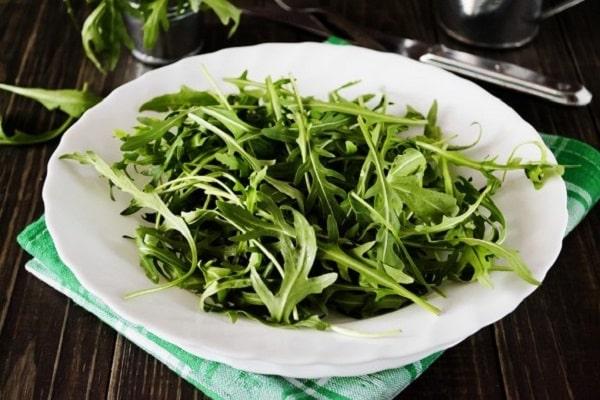
Salad greens contain a large number of vitamins and microelements. The green leaves have a nutty, mustardy flavor with a slight tartness. Growing arugula indoors during the winter is not only possible, but also essential. Indoors—on a balcony or loggia—this healthy green will grow even faster than in a garden. Outdoors, it can be susceptible to pest infestations, which can destroy it in minutes.
The most suitable varieties for growing on a windowsill
Breeders have developed many varieties of annual and biennial arugulaBoth varieties can be grown outdoors, but indoors, only annual greens are grown. The following varieties are most suitable:
- Poker. This early-ripening variety matures in 22-28 days. The bushes reach 20 centimeters, and the leaves have a mustard flavor.
- A curiosity. This variety of arugula ripens in 25 days. The leaves have excellent flavor.
- Cupid's Arrows. This variety ripens 35 days after germination. Its leaf blades resemble those of a dandelion.
- Olivetta. The plant matures in 3 weeks. It has a distinct nutty flavor.
- Solitaire. Dark green leaves are consumed 35-40 days after sowing.
- Coltivata. Early-ripening arugula has very aromatic leaves containing a large amount of essential oils.
- Sicily. This mid-season variety reaches a height of 60 centimeters. The leaves are pinnately dissected and lyrate-shaped. They have a nutty flavor and aroma.
- Koltivata. Leaves reach a height of 10-15 centimeters. The variety ripens in 20-25 days.
Take a look Also

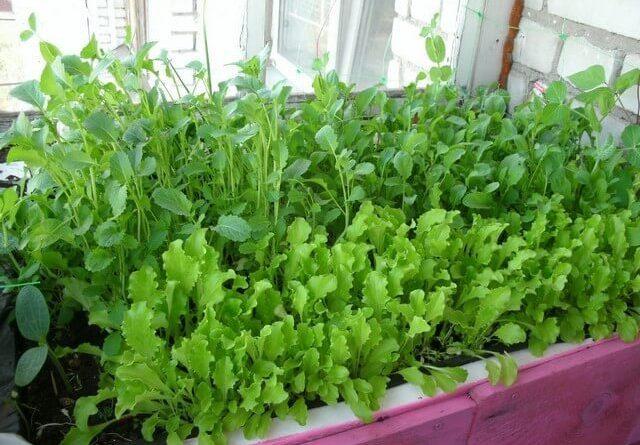 Additional information: The leaves of young plants are more tender than those of second-year plants, so arugula is typically grown as an annual salad crop.
The nuances of growing crops
Growing arugula indoors is easy. To ensure the greens sprout quickly and develop a rosette of tasty and nutritious leaves, sow them in the right-sized container and soil with the desired texture.
Selection of capacity
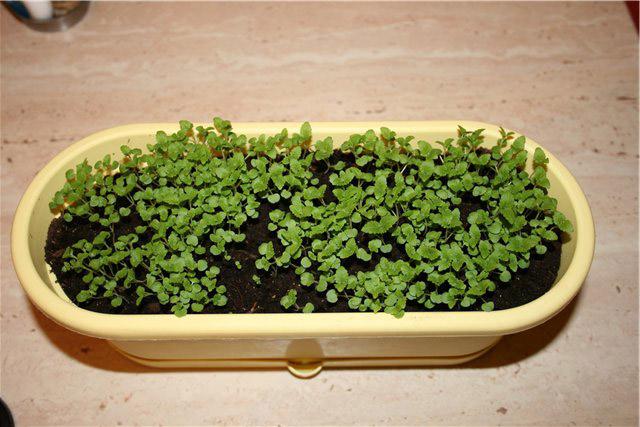
Choose a shallow container for sowing arugula, as this herb has a shallow root system. Small boxes or wide pots are used for this purpose. Add soil to a depth of 6-7 centimeters. Be sure to drill holes in the containers for drainage. Seeds planted in pots will sprout, which can be eaten or kept as a decorative item.
Soil preparation
For planting arugula, select loose, breathable soil. It should be slightly alkaline or neutral. Overly acidic soil can be neutralized with lime. The soil can be purchased at a flower shop or made at home using the following ingredients:
- turf land;
- leaf humus;
- sand.
You can take soil from a plot where legumes were grown. This loosens the soil and also enriches it with nitrogen. To disinfect the substrate, bake it in an oven two weeks before sowing the seeds. Then, you can add soil bacteria preparations, such as Baikal M1.
Sowing seeds
The seed material is sorted, dried and spoiled seeds are discarded.

The sowing procedure is carried out correctly as follows:
- drainage made of expanded clay or small stones is placed at the bottom of the box;
- prepared soil is poured onto it;
- in the moistened substrate, make furrows 1-1.5 centimeters deep, into which seeds should be sown at a distance of 3 centimeters from each other;
- then they are covered with soil.
To speed up germination, cover the container with glass or plastic film. This completes the planting process; the next step is caring for the arugula.
Specifics of caring for a houseplant
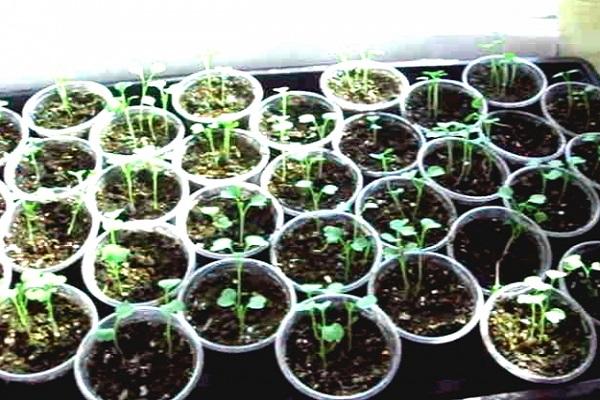
The seedling tray is placed on the windowsill. The covering material is removed daily to allow the plants to air out. Otherwise, excess moisture may build up, which can promote the growth of pathogenic microorganisms.
Regularity of watering
The juiciness of the leaves largely depends on the amount of water applied to the roots. Insufficient water can also cause the greens to taste bitter. Arugula should be watered so that the soil is moist, but not wet. If the soil is loose and permeable, watering should be done daily.
Lighting
Place the planting tray on the brightest windowsill. Without adequate light, arugula leaves will grow thin and weak. If there's insufficient light during the winter, supplemental lighting is provided using artificial lamps. These are fixed 50-60 centimeters above the soil surface.
Temperature
Spice seeds can germinate at room temperatures of 9 to 10°C. However, for uniform germination, a temperature of 17 to 20°C is optimal. If the air is too dry, mist the area around the seedlings with water from a spray bottle.
Top dressing
Fertilizers, especially organic matter, are not applied to arugula. This detracts from its flavor and aroma. Furthermore, the fast-growing greens will accumulate nitrates, which have a negative impact on the body. Simply planting the plant in fertile soil will provide it with sufficient nutrition for growth and development.
Thinning
After watering, gently loosen the soil surface to allow air to reach the roots. Six to eight days after germination, thin the plants, removing weaker, shorter-growing shoots by the roots. These can be eaten, as even at this age they contain nutrients.
Protection from diseases and pests
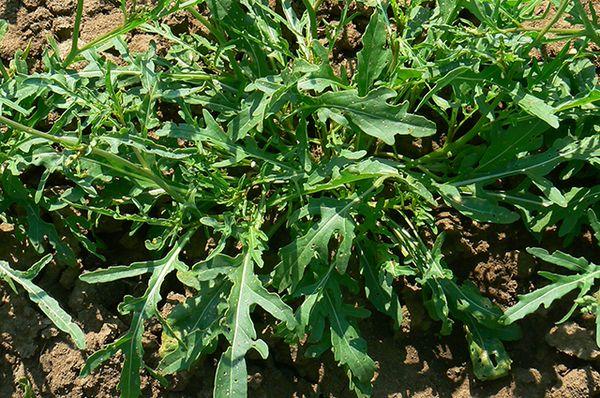
Arugula is rarely attacked by pests indoors. This usually occurs in open ground, where the plant is attacked by flea beetles. These can quickly destroy the entire crop. However, if this happens indoors, the arugula should be dusted with wood ash.
Bushes can become infected with diseases due to improper care. For example, overly dense plantings can lead to the development of pathogenic microorganisms. Arugula infected with fungus should not be consumed. Bushes can also become infected due to mold in the soil. For this reason, the soil should be disinfected before planting.
Important! Do not spray arugula with chemicals, otherwise all the harmful substances will enter your body.
Harvesting and storage
Begin harvesting the leaves once they reach 10 centimeters. There's no need to completely uproot the bush; it's enough to gradually remove the larger leaves just before cooking. This way, arugula can be eaten for up to six weeks.
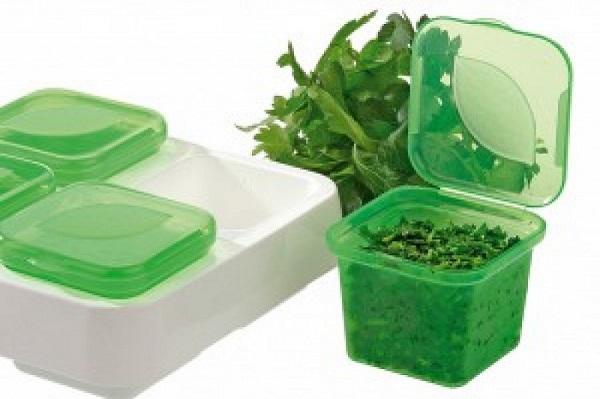
If you've grown a lot of arugula, you can dry it for later use as a garnish in various dishes. Dry the leaves in a warm, shaded place for a week. Alternatively, store the arugula in the refrigerator, shredded and mashed with salt.
The beneficial properties of arugula
Spicy greens affect the human body in the following ways:
- Cleanses the intestines. When you eat arugula, the dietary fiber it contains swells and acts like a brush to flush out toxins.
- With minimal caloric content, the body feels satiated for a long time.
- Due to the presence of a large number of vitamins, it effectively fights colds and also helps to improve immunity.
- It is an aphrodisiac.
- Externally used to get rid of warts, calluses, and growths.
- Arugula is used to whiten freckles and make the skin elastic and smooth.
- A mask made from spicy herbs applied to hair follicles prevents hair loss.
Arugula is a treasure trove of vitamins, essential for the body's winter needs. It can be easily grown both outdoors and indoors. With proper care, it will produce delicious, aromatic leaves within 21-30 days, perfect for fresh consumption and long-term storage.
Related posts:
 Can you freeze arugula at home and how can you preserve it for the winter?
 Planting and caring for arugula in open ground, description of the best varieties and their cultivation
 Causes and treatment of eggplant pests and diseases, how to combat them at home
 How to grow rosemary at home on a windowsill in a pot from seeds and cuttings
 Is it possible to grow an apricot tree from a seed in your garden? How to plant and care for it?
 How to prepare basil for the winter at home, storage methods and rules
 Why do cucumber leaves curl inward and what to do about it?
 What to do if your pepper's leaves are curling, proper care and treatment