
- General description
- Characteristics of the variety
- The main pros and cons of the Bogatyr pepper
- Growing the Bogatyr variety
- How to select and prepare seeds
- Timing of sowing pepper seedlings
- Sowing and caring for seedlings
- Picking
- Planting seedlings in the ground
- Plant care
- Watering and fertilizing
- Formative pruning
- Prevention of diseases and pests
- Harvesting and storage
- Gardeners' reviews of the variety
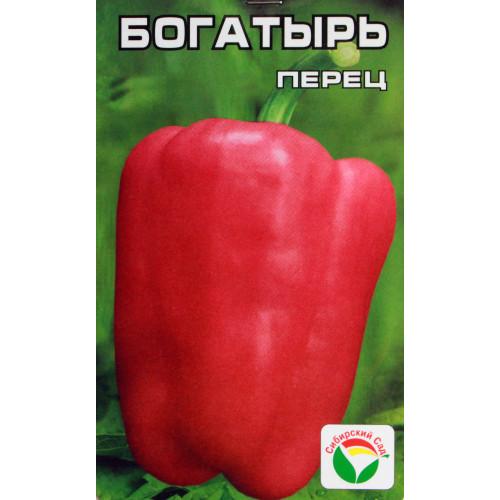
The Bogatyr pepper is a Russian-bred variety developed by Agrofirm Poisk. Boasting numerous advantages, it is widely grown in private gardens, farms, and greenhouses. The harvested peppers are used for preserves, delicious salads, and healthy, dietary dishes.
General description
Externally, the Bogatyr pepper bush has the following varietal characteristics of its main parts:
- The stem is herbaceous, erect, 40-50 to 70 centimeters in height.
- The leaves are simple, ovate (oval), and pointed at the tip. The leaf blade is light green.
- The flowers are solitary, large, and borne on short peduncles where lateral shoots branch off from the main stem (at forks). The petals are white.
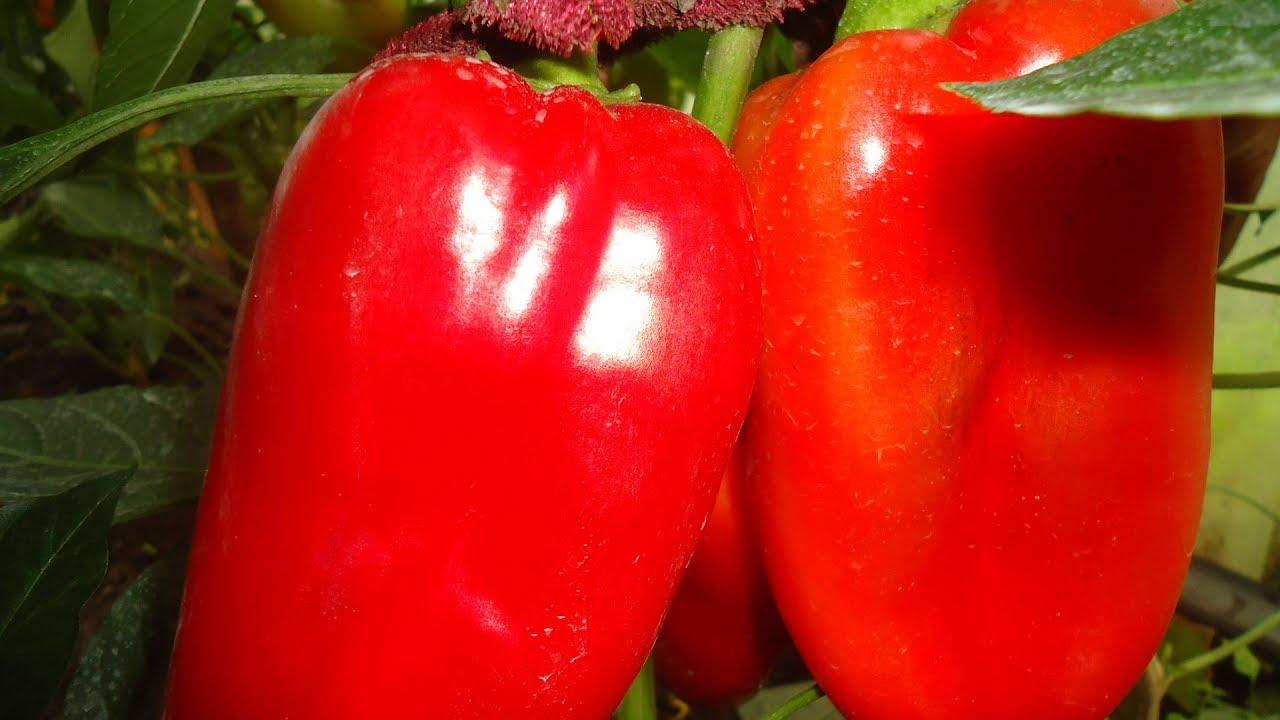
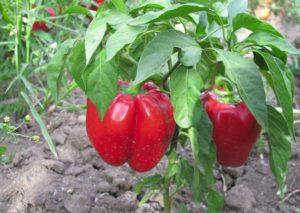
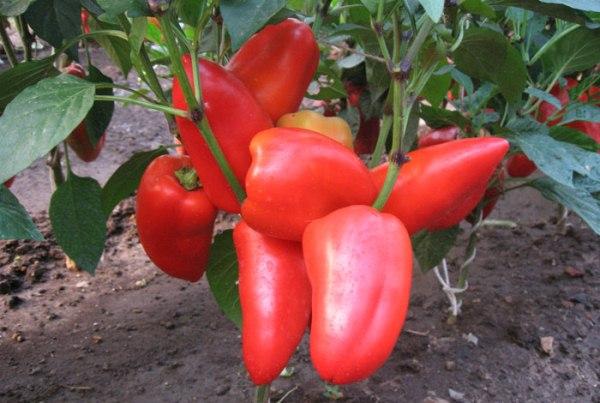
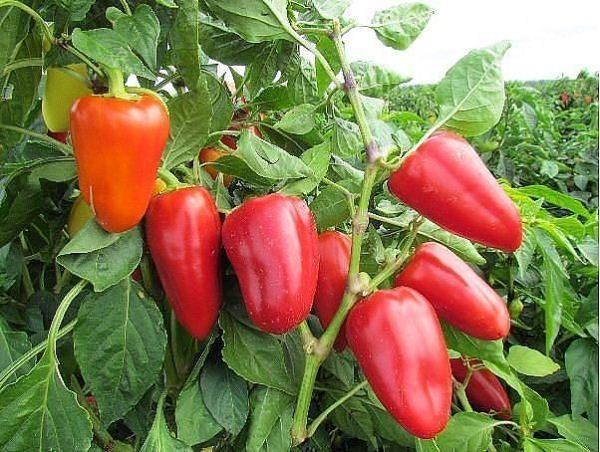
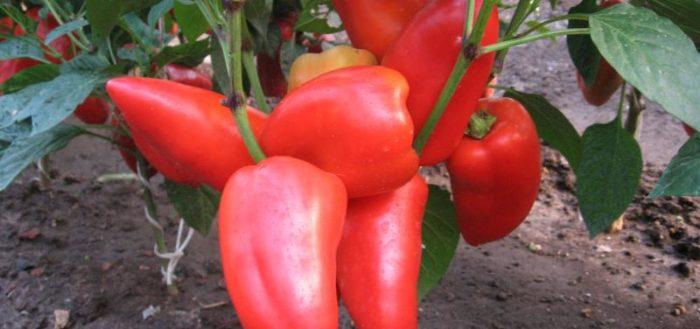
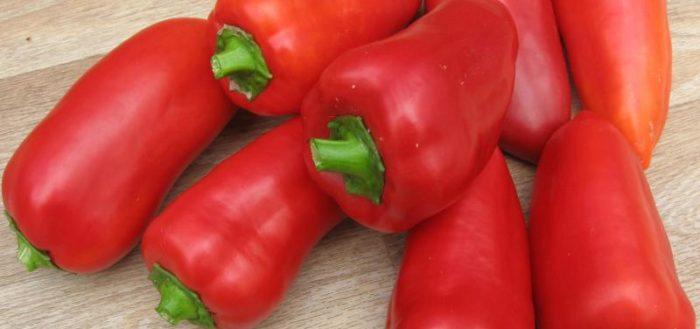
- The fruits are large, cone- or prism-shaped, weighing up to 180-200 grams, and have a sweet and pleasant taste. They are green when biologically ripe, and bright red when technically ripe.
Good stability and high absorption of nutrients from the soil are ensured by a root system with a central root penetrating to a depth of up to 100 centimeters and a large number of small roots located in the surface layer of soil, at a depth of up to 20-30 centimeters.
Characteristics of the variety
This variety of bell pepper has the following characteristics
- Productivity: with a traditional planting scheme, up to 8 kilograms or more of large ripe fruits can be harvested from 1 square meter of this variety.
- Early maturity – this variety is mid-season. The first fruits can be harvested within 110-130 days from germination.
- Keeping quality – the variety has good keeping quality and can withstand freezing.
- Transportability – thanks to the thick wall of the fruit (up to 5.5-6 millimeters), ripe fruits tolerate transportation well in various containers.
The variety also has high resistance to various pathogenic microorganisms and pests.
The main pros and cons of the Bogatyr pepper
The advantages of this variety include the following features:
- high yield;
- easy to care for;
- resistance of a plant planted in open ground to short-term cold spells and night frosts;
- beautiful appearance of the plant and fruits;
- high transportability;
- the possibility of consuming fruits both fresh and for preparing various home-made preserves, and freezing;
- excellent keeping quality.
The disadvantages of this variety are its need for frequent watering when there is a lack of soil moisture, and a decrease in yield when grown in conditions of insufficient light.
Growing the Bogatyr variety
The cultivation technology for this variety consists of pre-sowing preparation of the seed material, its sowing, picking, planting seedlings in open ground, caring for the plant, and harvesting ripe fruits.
How to select and prepare seeds
Seed material of this variety is purchased in specialized stores or pavilions.
- Calibration: immerse the seeds in a 2% solution of common salt and stir for 3-4 minutes. Collect the shriveled seeds that float to the surface. Remove the full, viable seeds that remain at the bottom of the solution and rinse under cold running water for 5 minutes.
- Warming: Place a thick, five-layer cardboard sheet on a radiator or stove, and spread a thin layer of seeds on it. Warm the seeds in this manner for one month.
- Disinfection: the seeds are immersed in a 1% potassium permanganate solution for 0.5 hours, then rinsed for 5-10 minutes under running water.
- Germination: Spread the seeds in a thin layer on one surface of a cotton pad, then cover with a second one. Place the pads in a saucer with a small amount of water, cover with a plastic bag, and leave in a warm, dark place for 2-3 days.
Also, to improve germination, pepper seeds are often soaked in growth regulators such as Zircon and Epin.
Timing of sowing pepper seedlings
When growing peppers using seedlings, prepared seeds are sown in seedling boxes in the 1st-2nd ten days of March.
Sowing and caring for seedlings
Prepared and sprouted seeds are sown in seedling trays with store-bought or homemade potting soil. They are sown in long furrows 1-1.5 centimeters deep, spaced 6-7 centimeters apart. Within a row, the distance between sown seeds should be 2-3 centimeters.
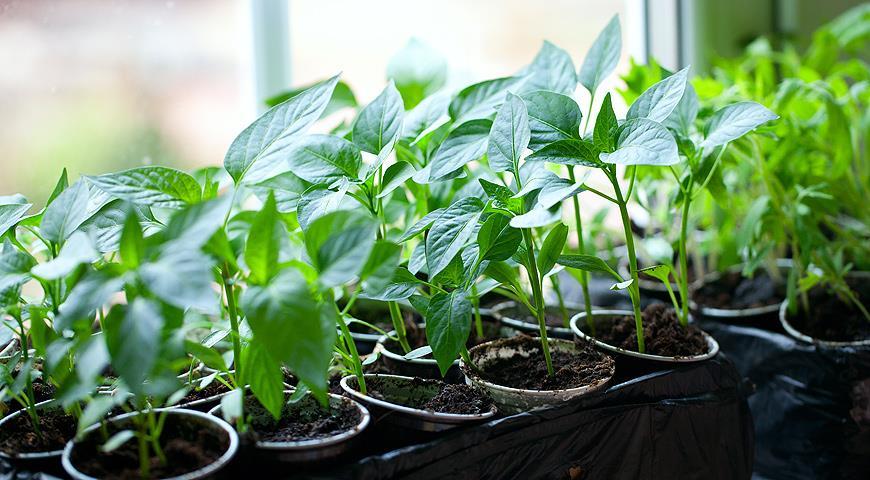
Cover the seed tray with thick cardboard and place it in a dark, warm room for 2-3 days. When seedlings appear, move the container to a well-lit windowsill.
Caring for seedlings involves watering them on time and maintaining a constant temperature of at least +11 With night and +23 During the daytime, 3 feedings (in the phase of 2 and 4 true leaves, 2 days before planting seedlings in open ground).
Picking
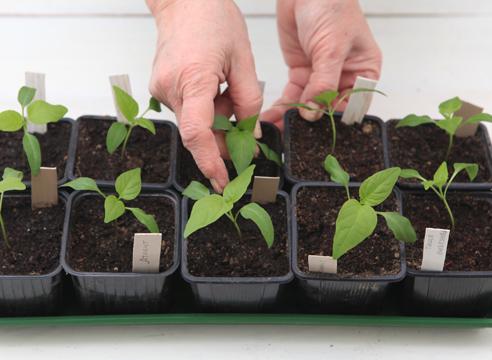
The seedlings are transplanted into individual containers when they have two true leaves. 250-milliliter plastic cups are used for transplanting.
Planting seedlings in the ground
Seedlings are planted in open ground at 60-70 days old. If seeds are sown in seedling trays at the time specified above and the seedlings are properly cared for, healthy and vigorous seedlings are transplanted to a prepared site in the first or second ten days of May. The planting pattern is 40 x 60 centimeters.
Plant care
To obtain a rich and high-quality harvest, pepper plants must be watered throughout the season, excess shoots must be removed, and measures must be taken to prevent diseases and pests.
Watering and fertilizing
Throughout the growing season, plants of this variety are watered 2-3 times per week, with an average of 1.5-2.0 liters of clean, warm rainwater per plant. For more effective watering and to prevent weeds from overgrowing the plantation, only a small area around the plant is thoroughly moistened, and the soil between the rows is loosened several times per season using a cultivator and hoe.

Peppers are fed 3 times per season with mullein infusion (10-12 liters of mullein per 200-liter barrel of water), pouring 1 liter of this organic fertilizer under each plant.
Formative pruning
To achieve a denser, more spreading bush, a process called shaping is performed. This is done as follows: when the seedlings reach a height of 30-35 centimeters, the lower shoots are removed from each bush, the upper crown buds are trimmed from the side shoots, and the growing points on the main stems are pinched. Subsequently, leaves appearing at the base of the stem, as well as side shoots and shoots that are growing fat are removed.
When the ovary is formed, the apical buds of the skeletal shoots are pinched off - thanks to this, all the nutrients will be spent on filling and increasing the mass of the fruit, and its rapid ripening.
Prevention of diseases and pests
To prevent crop damage by pests and diseases, the following preventive measures are taken:
- Careful preparation of the soil of the site and application of the required amount of fertilizers.
- Adherence to the principle of crop rotation – planting seedlings in a plot that was occupied by legumes, rapeseed, and cabbage in the previous year.
- Compliance with the timing of planting seedlings.
- Removing weeds near the planting.
- Timely watering and fertilizing with organic fertilizers.
- Tying tall plants to supports or trellises.
In addition, the first measures to prevent the occurrence of diseases are high-quality preparation of seed material, its treatment and disinfection.
Take a look Also
Harvesting and storage
Bogatyr peppers are typically harvested in early to mid-August, when they are technically ripe. The green fruit is picked along with the stalk, trimmed off, leaving a small tip, placed in a small container, and stored in a cool, dark place.
In order for the fruits to ripen and acquire their characteristic red color, they are placed on dry and clean, well-lit windowsills.
Gardeners' reviews of the variety
This variety of pepper, grown in home gardens, has already earned many complimentary reviews from gardeners.
 Irina Vitalievna
"I love Bogatyr for its sweet flavor and bright, rich color. This pepper variety stores very well, without getting crushed or damaged during transportation, and it makes great salads and adjika."
Andrey
"I've only been growing this variety for a year, but I'm already pleased with it—the peppers are large, bright red, and sweet. They're great not only for salads but also for preserves. Furthermore, the variety is very low-maintenance and tolerates short night frosts and summer cold very well."
Vladimir
"Last season, I tried growing this variety at my dacha, and I was very surprised by the results. The peppers grew tall and vigorous, with large, heavy fruits that, ripening on the windowsill, acquired a bright red color and a sweet flavor. I didn't put much effort into them—I just watered and fertilized them, just like other varieties I've grown before. A wonderful variety. I highly recommend them!"
Related posts:
 Planting, growing, and caring for peppers in open ground in the Moscow region: the best varieties
 80 Best Eggplant Varieties for Different Regions with Descriptions and Characteristics
 Description of the 90 best varieties of beans for open ground with names
 How to grow peppers from seeds at home: choosing a variety, planting, and care
 Is it possible to soak treated cucumber seeds before planting and how to do it correctly?
 Planting, growing, and caring for bell peppers in open ground
 The best eggplant varieties for growing in a polycarbonate greenhouse: planting and care
 Description of the best varieties of ornamental peppers, growing and caring for them at home