
- The necessity and features of forming pepper bushes
- Significance for different varieties of crops
- Which peppers don't require shaping?
- The process of forming pepper bushes
- Schematic arrangement of seedlings
- Pinching the crown bud
- Pinching out sweet peppers
- Trimming leaves and shoots
- Formation of the skeletal part
- The nuances of pepper formation: the influence of temperature and humidity
- In the greenhouse
- In open ground
- Tips and recommendations
Many gardeners are skeptical about training peppers in a greenhouse. Although this procedure prolongs the fruiting period, accelerates ripening, reduces disease, and increases yield, not all pepper varieties require training. Some varieties don't.
The necessity and features of forming pepper bushes
Peppers are bush plants. Shoots form throughout the growing season. Too much green matter can lead to poor yields. The fruits don't match the stated weight and size, and their walls are thin.
Gardeners complain about mixed varieties and poor-quality seeds. However, the problem lies elsewhere, rather in the lack of control over the quantity and quality of shoots. By rationing them, the fruits will receive more nutrition and ripen faster.
Significance for different varieties of crops
To achieve high yields, tall (70 cm and above) and medium-sized (50-69 cm) bush-type pepper varieties must be trained. Low-growing varieties with standard and semi-standard bushes do not require training.
Standard varieties have only one stem, branching at the top. Semi-standard varieties produce one to three short shoots. Bushy varieties have a central shoot that branches along its entire length, forming long shoots.
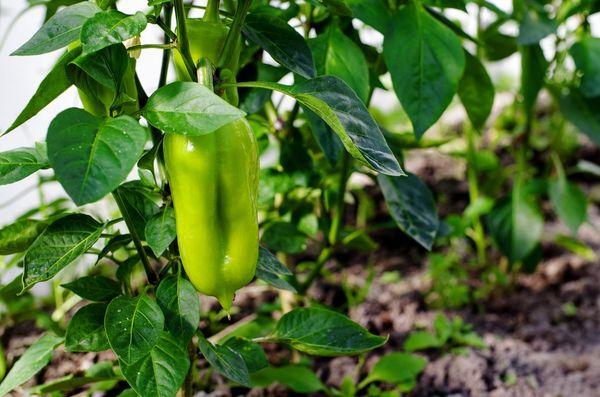
Which peppers don't require shaping?
For those who don't want to spend time shaping bushes, varieties and hybrids of low-growing, low-branching peppers are suitable.
| Varieties | Hybrids (F1) |
| Barguzin | Cloud |
| Alyosha Popovich | Othello |
| Beloserka | Mercury |
| A gift from Moldova | Maxim |
| Bagration | Gemini |
| Poplar | Goodwin |
| Dobrynya Nikitich | Pinocchio |
The process of forming pepper bushes
Proper bush training allows you to prolong the fruiting period of vegetable crops, increase yields, accelerate fruit ripening, and improve their taste and marketability. This is achieved by creating favorable conditions for development and targeted nutrient redistribution.
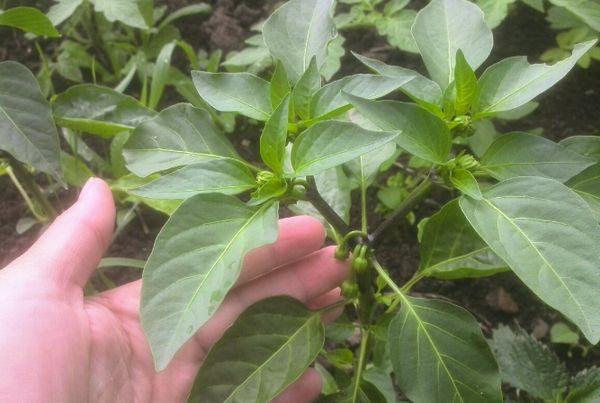
Schematic arrangement of seedlings
When transplanting seedlings into the soil, follow the scheme recommended by the manufacturer, which depends on the characteristics of the variety (hybrid).
Take a look Also

| Characteristics of the bush | Planting step in a row (cm) | Row spacing (cm) |
| Short | 15-25 | 30-40 |
| Medium height | 15-25 | 30-40 |
| Tall | 30-40 | 60-70 |
Pinching the crown bud
The crown bud is the first to form. It appears when the seedling is 15-20 cm tall. It is located at the first fork in the trunk. Its early flowering and ovary formation will delay the seedling's development. Therefore, experienced gardeners remove it without regret. If several flowers appear in a fork, they are all pinched out.
There will be no yield loss. New buds will quickly form on the plant after transplanting. Avoid pinching the crown bud if you're growing a varietal pepper; you want to keep your own seeds. The fruit formed from this flower will have the highest quality seeds.
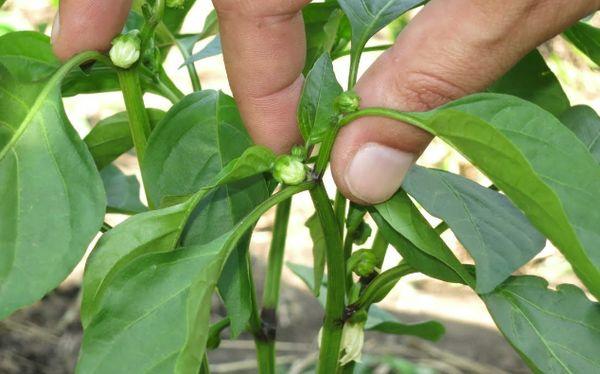
Pinching out sweet peppers
Stepchildren appear in the leaf axils. For a seedling 25-30 cm high, remove all 3-4 cm long stepsons located below the first fork. No more than three shoots are removed from a bush at a time. This approach does not harm the plant. The side-sonning procedure is carried out systematically.
Trimming leaves and shoots
Due to insufficient light, stems stretch, delaying flowering and fruiting. Removing leaves improves light exposure. After the fruits growing in the first fork reach technical maturity, all lower leaves are removed from all pepper varieties (low-growing and tall). The purpose of this procedure is:
- ensure free air circulation;
- normalize humidity levels;
- reduce the risk of fungal diseases;
- improve illumination of all parts of the bush;
- accelerate ripening.
Plants routinely have their growing points removed from branches. By pinching the tops, gardeners have two goals:
- direct the flow of nutrients to the formation of fruits;
- stop the growth of shoots and force them to branch.
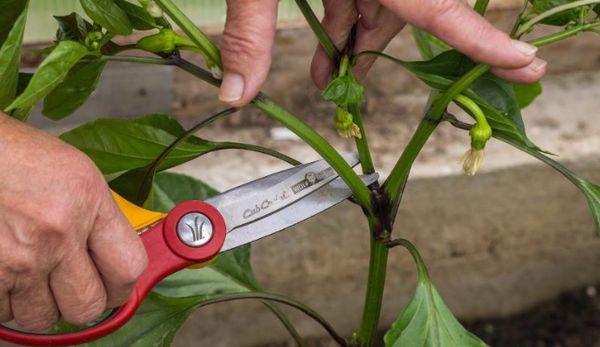
The bushes are inspected regularly. Shoots are pruned if they are too numerous or growing inward. Two to three stems are left on each plant, the strongest ones being selected. Leaves are removed from all varieties, even dwarf varieties. Only tall and medium-sized bush-type plants are pruned and topped.
Formation of the skeletal part
Pepper bushes grow on two stems. The base of the skeleton consists of two strong branches extending from the first fork. This is the fork where the crown flower forms. All other branches are pruned. The remaining branches extending from the central stem are called first-order shoots.
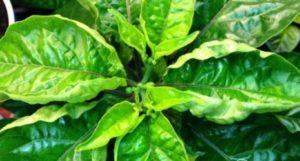
As they grow, new branches appear on them. Flowers form in their axils. The strongest stems are left, and the rest are cut out. These shoots are called second-order shoots. Fruits form from buds located in the forks.
The nuances of pepper formation: the influence of temperature and humidity
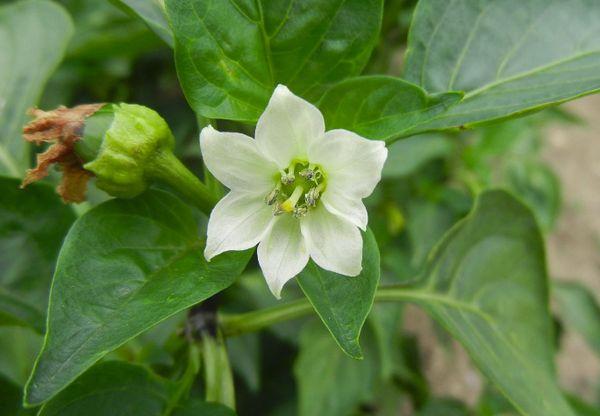
Optimal conditions for crop development include daytime temperatures of 20-28°C and nighttime temperatures of 18-20°C. However, soil temperatures should not fall below 18°C. Heat negatively impacts the harvest. At temperatures above 30°C, flowers fall off, and fruit develops poorly. Buds also fall if soil and air humidity are low.
In the greenhouse
In greenhouses and hothouses, yields directly depend on the seedling planting pattern and bush formation. Yields are significantly reduced if plants are planted too densely. Reasons for low yields include:
- lack of light, because of this the plants stop developing;
- Stagnant, humid air creates conditions for the growth of fungi, and plants begin to get sick.
Dwarf varieties are not shaped into bushes. When planted densely, they are thinned out. Medium-sized varieties are trained according to a simple scheme:
- on the central stem, leaves and side shoots are removed up to the first fork;
- pluck out the crown bud(s);
- remove all sterile shoots located below the main branches;
- After finishing the 2nd harvest of fruits, pinch off the tops of all the stems.
The process for shaping tall varieties is much more complex. It's carried out in stages. First, everything below the fork (side shoots, leaves) is cut out (broken off). The bush is left with a central stem and two first-order lateral shoots. These form the base (the skeleton) of the bush. These branches are tied to a trellis or support.
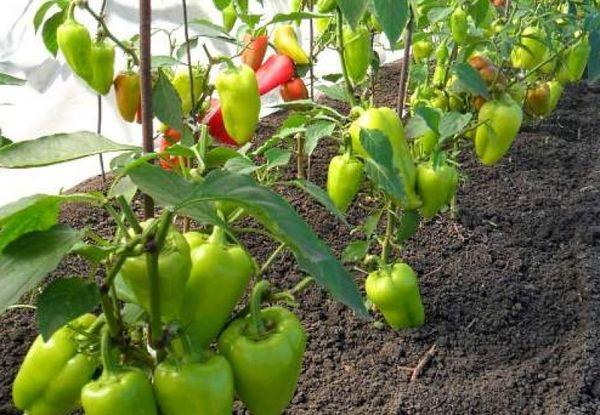
Up to three second-order shoots form in each fork of the first-order stem. The healthiest one is left. On the second, the ovary and first leaf are left intact, and the rest are pinched. The third second-order branch is removed. Third-order shoots form in the forks of the second-order scaffold branches. The pattern of their formation is similar to the previous one.
In open ground
Bush pepper varieties grown in the garden are trained into three stems. Shoots are removed along the entire length of the stem (from the base to the first fork). After branching, all fruiting and sterile (superfluous) shoots are removed, as well as those growing inward.
Formative pruning is done in dry weather. Wounds heal faster and are less likely to be infected by fungi and viruses. Tall pepper varieties require support. The central stem is tied to it just below the fork.
All first-order shoots must be secured to stakes (trellises). For low-growing varieties, all side shoots at the bottom of the stems must be pinched out. Low bushes must also be tied to a support. Leaves touching the ground are partially removed.
Tips and recommendations
To produce large, thick-walled fruits, experienced gardeners recommend regulating the fruit load. They recommend no more than 15-25 ovaries per bush. Leave one leaf above each ovary. This will provide the fruit with nutrition.
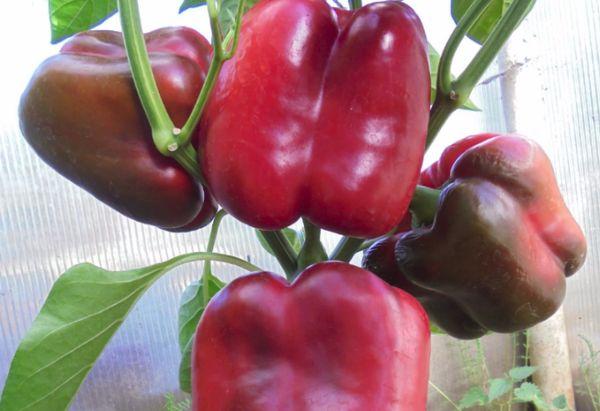
Although many gardeners believe the optimal leaf-to-fruit ratio is 2:1, with two leaves for every fruit. In southern regions, it's not recommended to remove leaves. They create shade, which reduces moisture evaporation from the soil.
Fruiting shoots should be pruned promptly to prevent them from robbing the fruit of nutrients. The bush's growth should be halted promptly to allow all the fruit to develop. To achieve this, remove all growing points a month before the end of fruiting. The tops of the shoots are trimmed back to 4 cm.
Throughout the summer, you need to regularly pinch out the side shoots, remove yellowed and excess leaves, and form tall varieties of pepper. If these rules are not followed, the fruit will be small in size and have thin walls.
In temperate climates and Siberia, bush training allows for a good harvest of healthy fruits. Only healthy plants undergo this procedure.
Related posts:
 Planting, growing, and caring for bell peppers in open ground
 Planting, growing, and caring for peppers in open ground in the Moscow region: the best varieties
 How to grow peppers from seeds at home: choosing a variety, planting, and care
 Why are pepper leaves turning white? What to do and how to feed them in a greenhouse and in the ground.
 Description of the best varieties of ornamental peppers, growing and caring for them at home
 When and how to prune cherry trees correctly, and tree shaping schemes for a good harvest
 Causes of pepper diseases in greenhouses, their description and treatment
 The best eggplant varieties for growing in a polycarbonate greenhouse: planting and care