
- The history of the Bogatyrskaya plum breeding
- Key advantages and disadvantages
- Description of the tree
- Size and annual growth
- Fruiting
- Flowering and pollinators
- Ripening time and harvest
- Tasting evaluation and scope of application of fruits
- Susceptibility to diseases and parasites
- Resistance to low temperatures and drought
- Specifics of planting a heroic tree
- Selecting and preparing a site
- Required soil composition
- Dimensions and depth of the planting hole
- Timing and rules for planting fruit crops
- What to plant next door
- Aftercare
- Watering mode
- How to feed a fruit tree
- Crown formation
- Loosening and mulching the tree trunk circle
- Seasonal preventive treatments
- Methods of reproduction
- Gardeners' reviews of the Bogatyrsky variety
The Bogatyrskaya plum hybrid, bred for southern regions, has attracted the interest of many fruit tree enthusiasts. Its geographical distribution is gradually expanding. It is claimed that, with almost no effort on the part of gardeners, a tree grows that yields a sea of plums—delicious, fragrant, and high-quality. This is not entirely true. Without a thorough understanding of all the intricacies of cultivation, no tree will yield good results.
The history of the Bogatyrskaya plum breeding
In 1962, breeders at a research institute in Nizhne-Volzhsk crossed the Ispolinskaya and Vengerka plum varieties. The result was a hybrid named Bogatyrskaya plum, which was added to the state register in 1987.
Key advantages and disadvantages
Gardeners consider the Bogatyrsky variety suitable for cultivation, as the tree has few disadvantages.
The variety is distinguished by:
- regular fruiting;
- high productivity;
- large plums with excellent taste;
- the tendency to bear fruit without pollination (self-fertile plant);
- frost resistance;
- immunity to major pests and diseases.
Disadvantages include damage to branches and crushing of plums due to their abundance.
Description of the tree
The Bogatyrskaya plum is a medium-sized tree with a spreading, rounded crown and gray, peeling bark. The branches and trunk form a right angle.
Size and annual growth
The tree reaches a height of 3 meters. When young, it stretches quickly, but growth slows over time.
Fruiting
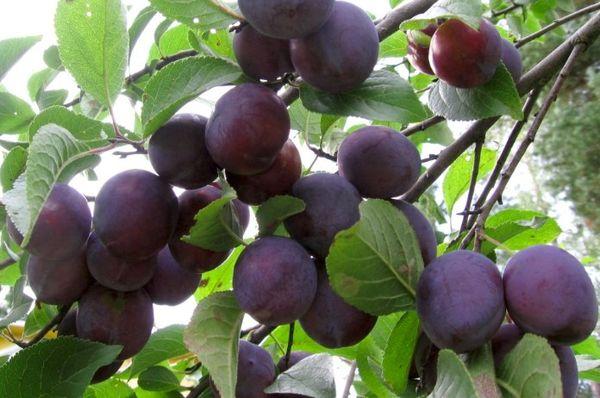
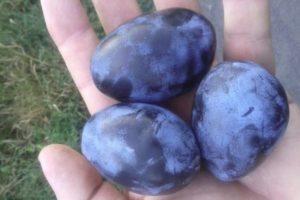
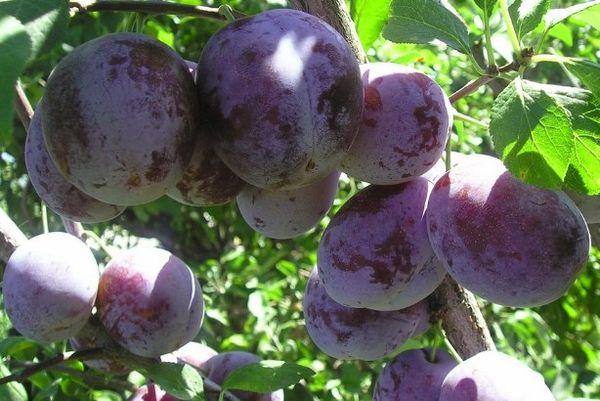
The fruits of the Bogatyrskaya plum variety are large, weighing 40-60 grams. They are distinguished by their blue skin, which turns black when ripe. The fruits are round with a blue waxy coating. The flesh is firm, with a sweet and sour taste. The pit accounts for 8% of the volume.
Flowering and pollinators
The Bogatyrskaya plum has 2-3 white flowers per inflorescence. The variety is self-pollinating. However, if another variety is grown nearby, the yield of both increases.
Ripening time and harvest
The fruit only appears in late August. The harvest is annual and abundant. The yield increases as the tree matures. While a young tree yields 50 kg of plums, a mature tree yields 80 kg.
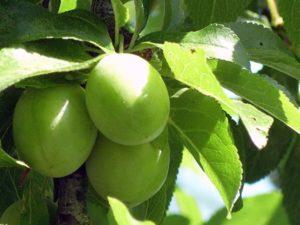
The first harvest appears after 5 years. With proper care, fruiting continues for 2-3 decades.
Tasting evaluation and scope of application of fruits
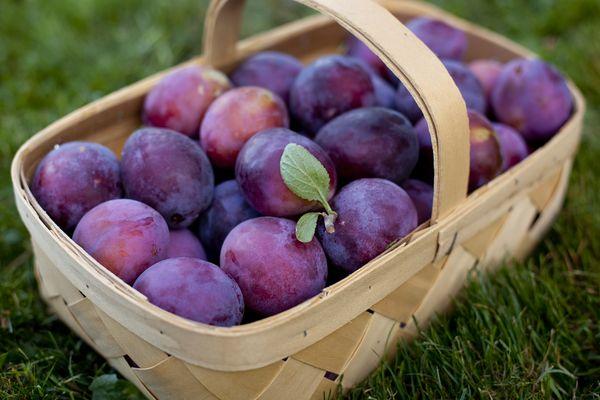
Fruits are eaten fresh. They are tasty and healthy. Ascorbic acid alone contains 9.6 mg per 100 g of product.
The fruits are canned, dried, made into compotes and pastilles, and jams and preserves. Freezing plums is not recommended due to their large and juicy fruits. Blue plums are used to make liqueur and wine. Plums are well-suited to transportation.
The tasting score of the fruit is 4.75 on a 5-point scale.
Susceptibility to diseases and parasites
The Bogatyrskaya plum is resistant to certain diseases and pests. However, there are some that can cause damage to the plant. Branch drying is a clear sign of scale insects, while dark spots on the fruit can be caused by codling moths.
The appearance of a gray coating on the ovary indicates marsupial disease. Rust causes the leaves to become covered with red spots. These signs should not be ignored to avoid losing a fruiting plant.
Resistance to low temperatures and drought
The plum variety is frost-resistant and tolerates low temperatures well without shelter.
A slight drought is not dangerous for the tree, but irrigation will not be superfluous.
Specifics of planting a heroic tree
The Bogatyrskaya plum develops and bears fruit in conditions that are comfortable for it.
Selecting and preparing a site
Plant the plum tree in a sunny, sunny spot, preferably 2 meters from a hedge to provide protection from the wind. Keep it at least 2.5–3 meters away from other trees.
If there is groundwater nearby, the crop is raised onto an earthen mound 0.5 m high and of the same radius.
Required soil composition
Choose light soil, preferably sandy loam. If the acidity is above normal (pH 6-7), add wood ash. Clay soil is enriched with sand, and vice versa, sandy soil is enriched with clay.
Dimensions and depth of the planting hole
The Bogatyrskaya plum is planted in holes prepared in the fall, 50 cm in diameter and 80 cm deep. A stake is driven in to support the sapling. The distance between plants should be at least 5 meters.
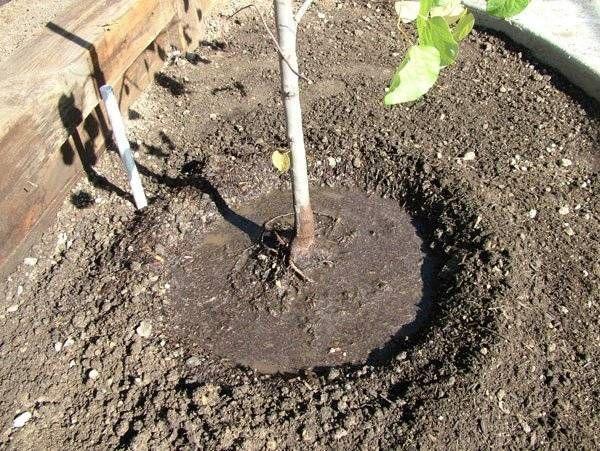
When planting, use a soil mixture containing garden soil, manure, superphosphate, and salt. The root collar is positioned 5 cm above ground level. Dig a hole near the seedling, add two buckets of water, and then mulch the tree with peat.
Timing and rules for planting fruit crops
The Bogatyrskaya plum is planted in early March. However, if conditions are favorable, planting can be postponed until October.
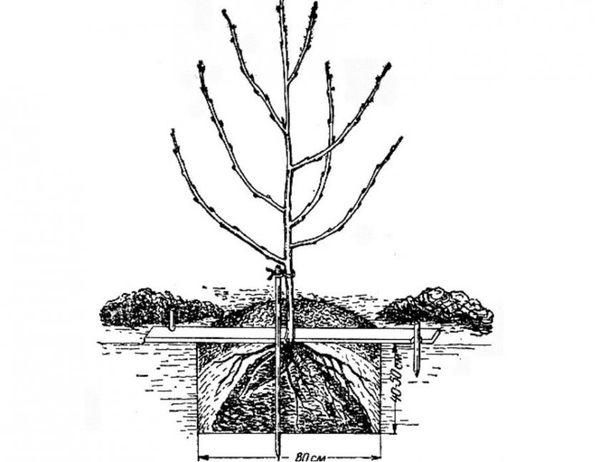
Saplings are purchased from nurseries at 1–2 years of age, 1.0–1.5 m tall, and with a root system of 4–5 developed roots. If the tree is purchased in advance, the roots are wrapped in a damp cloth or covered with soil.
What to plant next door
It's not advisable to plant walnut trees next to Bogatyrskaya plums. Deciduous trees are not suitable neighbors. Apple and pear trees, even if they may dislike each other, can coexist in the same area. Black currants are excellent neighbors. The two crops interact favorably.
When planting plants next to the Bogatyrskaya plum, it is best to maintain a distance of 3 meters between plantings.
Aftercare
The variety requires minimal attention.
Watering mode
The Bogatyrskaya plum tree is watered regularly, but moderately, depending on the weather. Overwatering causes the foliage to turn yellow. During the first year, the seedling is watered weekly. 10 liters of water are poured into the trunk circle.
Seedlings from 2 to 4 years old need 20–30 liters of liquid every three weeks.
Adult trees are given 40–50 liters 4 times per season:
- before flowering;
- after him;
- 3 weeks before harvesting plums;
- the last time in early October, if there is no rain.
Water using a sprinkler or by using grooves along the crown's contour. Then, loosen the soil. A similar procedure is performed after each rainfall.
How to feed a fruit tree
A young plant thrives on the fertilizer applied at planting. Starting from its second year, additional feeding is necessary.
Fertilizers are added, each taken in the amount of 60 g:
- before flowers appear - urea;
- after the flowers fall - nitrophoska;
- end of June – urea (foliar feeding);
- beginning of August – superphosphate and potassium sulfate.
Trees are fertilized annually with organic matter. Possible options include: 15 kg of humus (compost), 10 kg of cow manure, or chicken manure. Mature trees are fertilized with organic fertilizer every 2-3 years.
Crown formation
Timely and correct tree pruning is a guarantee of good fruiting, increased yield and freedom from diseases.
The first procedure is carried out when planting the plum tree. The trunk is trimmed back by a third of its height. This will speed up crown formation.
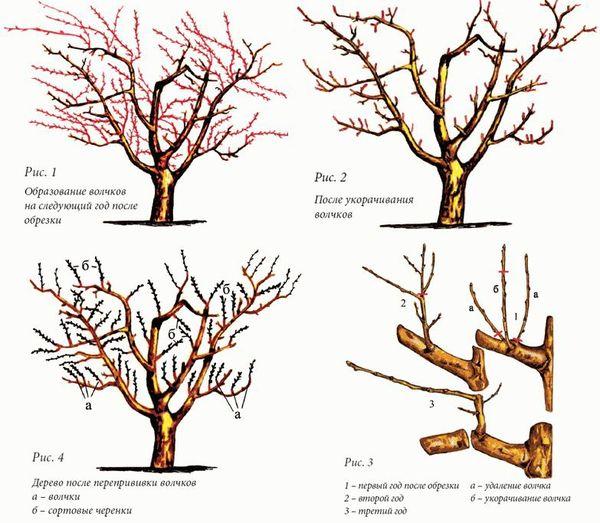
Pruning is carried out annually in the spring. Shoots damaged over the winter are removed. If shoot growth is small, the branch is cut back to the wood. Saplings that hang heavily above the ground are removed. The volume of pruned shoots should not exceed a quarter of the total number of branches.

Loosening and mulching the tree trunk circle
After each watering, the soil is compacted. To ensure the roots grow, breathe, and are nourished, the area around the tree trunk is loosened, and this is done after each watering.
Mulching will perform the following functions:
- will reduce liquid evaporation;
- will protect roots from frost and temperature changes;
- will slow down the growth of weeds;
- will improve the soil structure, since mulch is a fertilizer;
- activates the activity of beneficial microorganisms.
Peat, humus, pine needles, sawdust, straw, grass, and film are used as mulch for plums.
Seasonal preventive treatments
The Bogatyrskaya plum is resistant to diseases and pests. However, seasonal spraying is recommended for preventative purposes. A 1% Bordeaux mixture is used. The first treatment is before the buds swell. Then, at the beginning of flowering, and again two weeks after flowering. Additional spraying is performed after harvest.
Methods of reproduction
Bogatyrskaya plum is propagated vegetatively using the following methods:
- cuttings;
- graft;
- root shoots.
Rootstocks are grown from seed. Seeds are sown in early April. Prior to this, six months of stratification are carried out. Young rootstocks are obtained throughout the season.
Gardeners' reviews of the Bogatyrsky variety
Igor, 40 years old, Bobruisk:
"I chose the Bogatyrskaya plum because of its name, and I haven't regretted it. For six years now, the tree has been producing fruit without ceasing to amaze. One plant is enough for a family to enjoy delicious plums, make jam for the winter, and even make liqueur."
Daria Mitrofanovna, 55 years old, Volzhsk:
"I planted a plum tree 10 years ago. It hasn't been plagued by any diseases or serious pests. It doesn't require much care. The Bogatyrskaya plum produces a good yield. I sometimes use supports to prevent the branches from breaking."
Only painstaking work and adherence to all the rules will allow you to grow the Bogatyrskaya plum the way its breeders intended: an unpretentious, vigorous, and productive crop.
Related posts:
 Description and characteristics of the Yakhontovaya plum variety, pollinators
 Description and characteristics of the 30 best yellow plum varieties, planting and care
 Description and varieties of plum variety Ternovka, planting and care technology
 Description of the 30 best plum varieties for the Moscow region, planting and care
 Description of the Volga Beauty plum variety, planting and care
 Description and characteristics of the 27 best plum varieties for the Urals, planting and care
 Description of the Renklod plum varieties and cultivation technology
 Characteristics and description of the Startovaya plum variety, planting and care