
- Why fertilize plums?
- Signs of macro- or microelement deficiency
- What kind of fertilizer does the tree like?
- Minerals
- Organic
- Complex preparations
- What is best for yellow-fruited and red-fruited varieties?
- Fertilizer application methods
- Foliar
- Root
- What to consider when applying fertilizers
- When planting seedlings
- Fertilizing young trees
- Fertilizing a mature tree
- What to feed to stimulate fruiting
- Fertilizing during the flowering and ripening period of plums
- How to fertilize after harvesting
- Basic mistakes
Fertilizing plums is rarely done in the summer, as gardeners believe it's best to feed the plant in the spring, when it begins to bloom. However, much depends on the tree's needs, its age, and the quality of the soil. It's believed that fruit trees without fertilizer don't produce a good harvest and are prone to disease. To reap a good harvest, you'll need to choose the right fertilizer and timing for its application, taking into account the tree's needs.
Why fertilize plums?
Plum is a common garden crop; people often plant the trees in their gardens hoping to harvest their abundant, delicious fruit. However, if you don't feed the plum tree, this is unlikely to happen. Without fertilizer, the plant:
- Slowly gaining height.
- It bears fruit worse.
- Often affected by fungal and other diseases.
Another problem is that plum trees develop their root system slowly and don't require nitrogen fertilizers during their first year of life. These can harm the tree and lead to its death.
If a gardener expects a good harvest, they will need to feed the tree throughout the season, starting from the moment the plant is planted.
Signs of macro- or microelement deficiency
It is believed that a deficiency of nutrients affects the condition of fruit crops; it can be “diagnosed” by examining the shoots and leaves of the plum.
General signs of nutrient deficiency in plants:
- leaves turn yellow and fall off;
- shoots die off;
- the quality and quantity of fruits decreases.
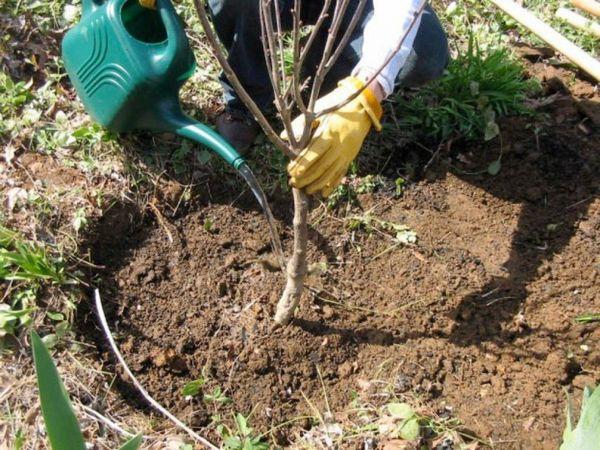
Many gardeners, lacking the necessary experience, mistake these "symptoms" for signs of disease and begin treating plum trees with various solutions. In reality, simply fertilizing the trees is sufficient.
Let's try to figure out what the plum lacks:
| Nitrogen deficiency | The shoots develop poorly, the leaves on the tree become small, turn yellow, and quickly fall off. The fruits become smaller, their flavor changes, and a sourness develops that is unusual for the variety. |
| Phosphorus | Leaf fall occurs early, and the leaves dry up on the branches. Fruit develops slowly and is not large. |
| Potassium | Pay attention to thin shoots and the tree's growth rate. If there's no growth and the young branches are very thin, it's time to fertilize the plum tree. |
| Calcium | When a plant lacks this element, its leaves curl up and the root system develops slowly. |
| Magnesium | The leaves take on a different color, become furrowed, and fall off. The veins remain green for a while. Foliage begins to fall from the lower parts of the trees. |
Note: Experienced gardeners know that plums have a hard time withstanding a lack of nutrients.
What kind of fertilizer does the tree like?
Plum is not too picky about fertilizers, but much depends on the region where the tree grows, as well as the quality of the soil.
Minerals
Apply in spring or early summer. These solutions are not recommended for young trees in their first year of life. Fertilizer can be applied in the second year.
Organic
Often the crop is fed with woody ashYou can also use humus, manure, or compost. Organic matter is typically added before planting or during fruit ripening. Many gardeners apply organic matter during the growing season to ensure a good harvest at the end of summer.
Complex preparations
Can be used throughout the entire growing cycle. Complex fertilizers are considered universal, allowing them to be applied in spring, summer, and fall, as part of the plant's preparation for winter.
Note: It is recommended to mulch the soil around the tree after applying fertilizer, as this will help increase the effectiveness of the treatment.

What is best for yellow-fruited and red-fruited varieties?
Fertilizers aren't classified by plum color. However, experienced gardeners believe that yellow varieties "prefer" mineral fertilizers. Red plums, on the other hand, are best fed with complex fertilizers.
But there's no significant difference; if all procedures are carried out promptly and the characteristics of the tree variety are taken into account, the result will be identical.
Fertilizer application methods
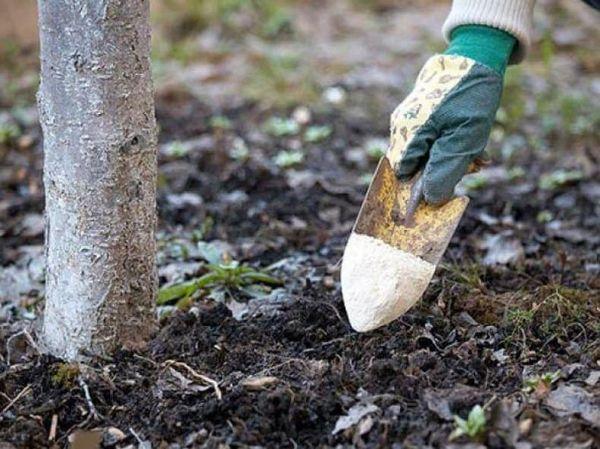
Trees can be fed in a variety of ways. Most often, nutrients are diluted with water before the plant is watered. Fertilizer can also be added to the root hole before planting the seedling.
Foliar
This involves misting. A nutrient solution is sprayed onto the leaves and young shoots. This ensures that the plum tree receives the necessary nutrients. Moreover, these nutrients are delivered not to the root system, but to the leaves and twigs, eliminating the possibility of nutrient deficiencies in the young shoots.
Root
Nutrients in the form of solutions are applied directly to the roots so that the plant receives all the necessary elements.
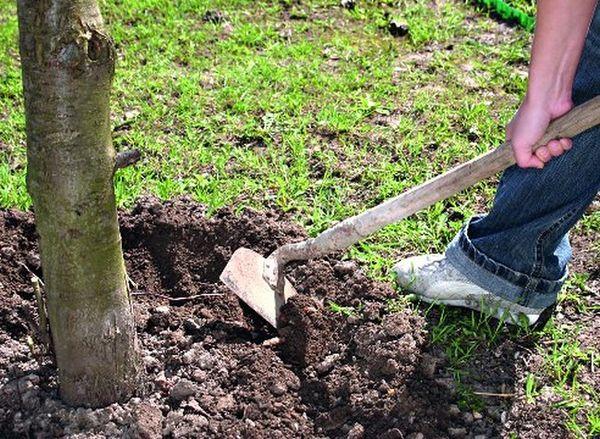
This type of fertilization is considered universal, as the tree receives all the necessary elements from the soil, absorbing them through its root system. This doesn't just mean watering with nutrient solutions. Fertilizers are often added to the planting hole, and similar procedures are also performed when digging the garden.
What to consider when applying fertilizers
Plum trees have a fertilizing calendar, which means they will need to be fertilized several times per season.
When planting seedlings
A specialized mixture consisting of the following components is added to the planting hole:
- Powdered eggshells.
- A mixture of soil, peat and humus.
- Mineral components are also added to the soil: superphosphate, potassium sulfate.
Fertilizing young trees
It is carried out in 2 stages:
- If the tree is already a year old, then you can use nitrogen fertilizers, they are applied under the roots, mainly in spring or early summer;
- The young crown is sprayed with a special solution consisting of water and urea.
To prepare a nutrient solution for spraying, add 20 grams of urea to 5 liters of water. At the end of summer, trees are fed with mineral complexes.
Fertilizing a mature tree
You can fertilize the plant in the spring, before the growing season begins. To do this, dissolve 30 grams of urea in 10 liters of water. Potassium sulfate will enhance the solution's properties. Apply up to 20 liters of this pre-prepared fertilizer per plant.
What to feed to stimulate fruiting
In July, when the fruit ripening process begins, the following procedures are carried out:
- In a bucket of water, dissolve 30 grams of urea and 40 grams of nitroammophoska.
- Up to 30 liters of nutrient solution can be added under one tree.
Fertilizing during the flowering and ripening period of plums
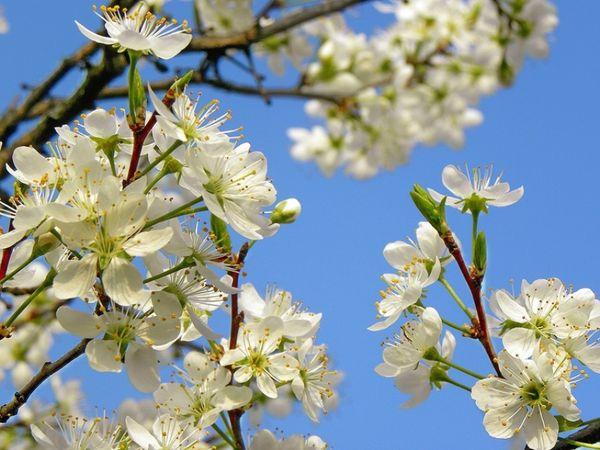
Fertilizing plum trees during the growing season is a must, as is done with all fruit-bearing plants in the garden. The first summer fertilization involves adding urea to the soil, which is done after loosening or digging the soil.
In August, you can feed the tree with ash, diluted in a small amount of water. Create furrows in the soil to prevent drainage, and pour the solution under the root system.
Take a look Also
In the spring, bird droppings or manure will help stimulate the growth of green foliage. They can be used safely if the tree is more than a year old. Organic matter contains a lot of nitrogen.
In June, plum trees with fruit require phosphorus, as this element facilitates the absorption of sugar. However, if the tree is planted in sandy soil, the use of phosphorus fertilizers is not recommended.
How to fertilize after harvesting
In the fall, it's not recommended to use organic matter, so manure is often abandoned in favor of other fertilizers. It's better to choose:
- superphosphate and potassium sulfate;
- the substances are dissolved in a bucket of water;
- Plums are watered with a nutrient mixture in the amount of 20 liters, under each tree.
Basic mistakes
If you're an inexperienced gardener, you might make several mistakes when growing plums. Problems arise when:
- The proportions are not maintained. Gardeners often apply fertilizers by eye. This behavior results in the plant receiving too much or too little nutrients.
- Late application. If you don't follow the schedule and apply the treatments late, the plum tree won't have time to prepare for winter. The nutrients won't be absorbed, and the tree won't be able to withstand the cold.
- Monotony. Gardeners often apply fertilizer only to the roots, forgetting that the branches also need additional nutrition.
It's believed that, regardless of the fruit's color or variety, plums are easy-to-grow trees that will bear fruit even without proper care. However, neglecting to feed the tree and ignoring fertilization during the spring, summer, and fall can reduce yields and affect the taste and size of the fruit.
Related posts:
 How and what to feed watermelons in open ground after planting, during flowering
 What is the best way to feed tomato seedlings to make them plump?
 What can you feed peppers with after planting them in the ground? Mineral and organic fertilizers.
 How and what is the best way to feed cabbage in open ground, fertilizers for growth
 How to feed onions after germination and before harvesting to ensure they grow large throughout the season
 Carrot care guidelines for outdoor cultivation to ensure a good harvest
 Why do you need to fertilize corn? Irrigation and watering after applying fertilizer.
 What is the best way to feed geraniums at home? - a list of fertilizers