
- What are the characteristics of standard currants?
- Pros and cons: is it worth planting?
- What varieties are suitable?
- Specifics of planting work
- Growing methods
- Own-rooted standard
- Standard on rootstock
- Which option is better?
- Tips and recommendations for caring for standard currants
- Regularity of watering
- What and when to feed
- Loosening and mulching the soil
- Pruning and shaping the bush
- Garter
- Shelter for the winter
- What mistakes do novice gardeners make?
The main requirements of gardeners and farmers for fruit crops are plant hardiness in various climatic conditions, resistance to fungal diseases, and high yields. Ease and speed of harvesting the ripened crop also play a significant role. Breeders around the world are concerned with how to improve the varietal characteristics of currants. After years of work and testing, a new method for growing currants on a standard tree has been developed.
Historical background! Hungarian gardeners, who were losing their currant crops due to high humidity and heat, were the first to develop standard plants.
What are the characteristics of standard currants?
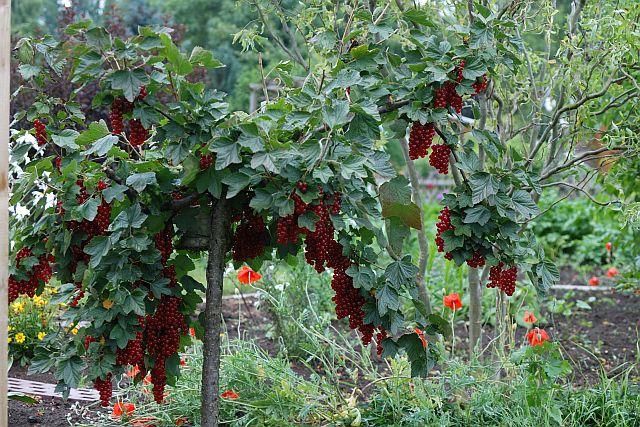
To understand how to grow a standard fruit tree, it's important to first understand what this type of plant is. A standard is the lower part of the plant's main trunk, from the root collar to the first level of skeletal branches. Accordingly, a currant grown or grafted onto a standard is no longer a bush, but a miniature tree with a compact crown.
Standard plants require less maintenance, and the lack of multiple shoots increases the yield and flavor of the berries. Standard currants are grown in several ways, including shaping a currant bush into a miniature tree, or by grafting a cutting from a productive berry bush onto the trunk of a frost-resistant variety.
Important! On standard currant varieties, ripe fruits are high above the soil surface; the berries do not rot, spoil, or become affected by fungi or pests.
Pros and cons: is it worth planting?
Before planting a standard tree, you need to understand the pros and cons of the fruit crop you will encounter during the growing and care process.
Advantages:
- The high crown is not dense and receives sunlight evenly, which has a positive effect on the yield and taste of the berries.
- Simplified plant care. The lack of undergrowth makes it easier to access the tree's trunk for watering, fertilizing, loosening the soil, and weeding.
- Ripe berries do not come into contact with the soil, so they are not susceptible to rotting or spoilage.
- The risk of pest spread is reduced.
- Harvesting ripe berries is simplified.
- Miniature fruit trees have excellent decorative properties, take up less space, and will decorate any garden plot.
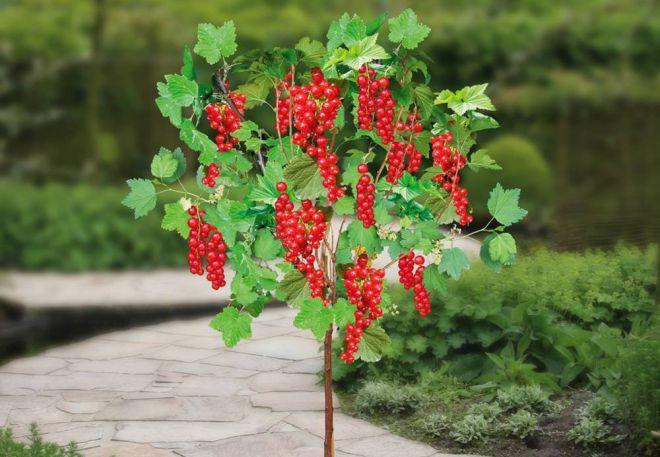 Important! Any currant variety grown on a standard tree differs from its bush counterparts by its faster ripening and sweeter berries.
Flaws:
- A thin tree needs additional support, otherwise strong gusts of wind can break the plant.
- Currants grown on standard trees lose some of their varietal characteristics and become vulnerable to temperature fluctuations and frost.
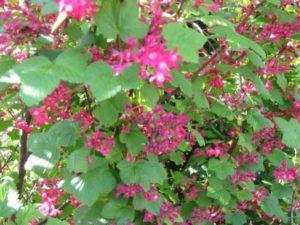
Standard currants begin bearing fruit two years after being planted outdoors. The lifespan of such plants ranges from 15 to 20 years.
What varieties are suitable?
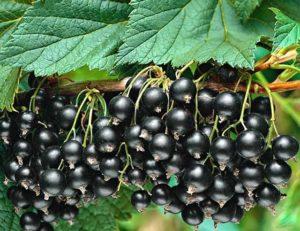
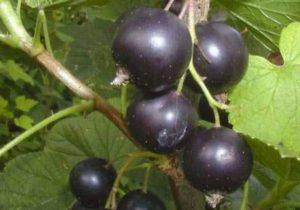
Any variety of currant can be used to grow standard currants. Black currants grown on standard currants are particularly sensitive to frost and low temperatures. Severe frosts and winds often cause branches to freeze. Therefore, growing standard black currants is not recommended in northern regions.
The black currants most suitable for standard cultivation are Monastic, University, and also the Aist and Pamyatnaya varieties.
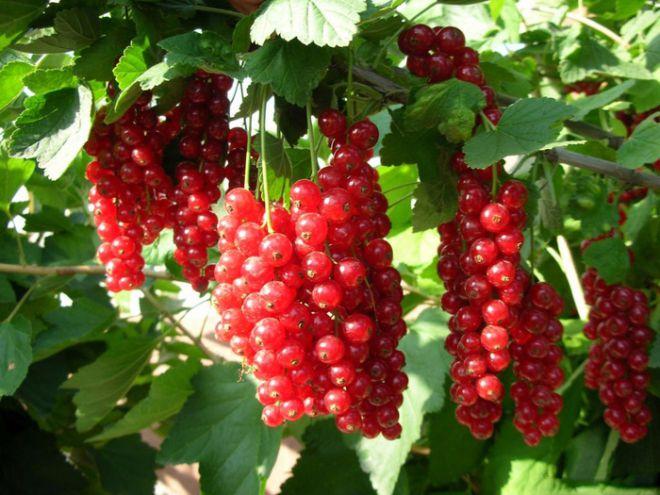
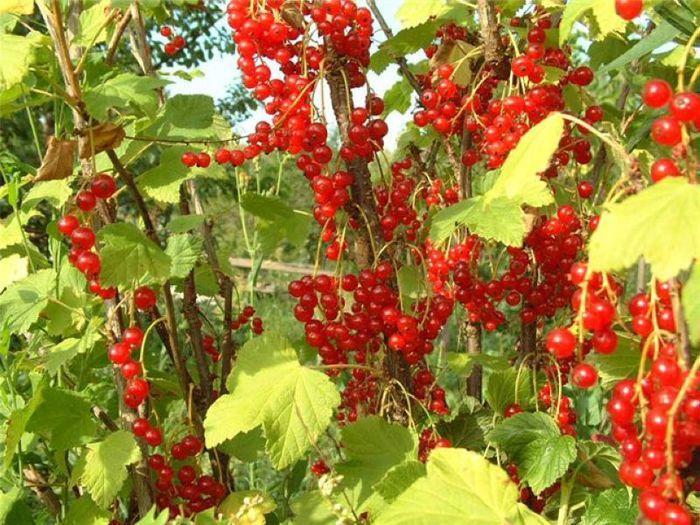
Red currants grown on standard trees are less demanding of climatic conditions and can be grown in any region. The best varieties for standard cultivation are recognized as red currant Natalie, Rondom and Bayan.
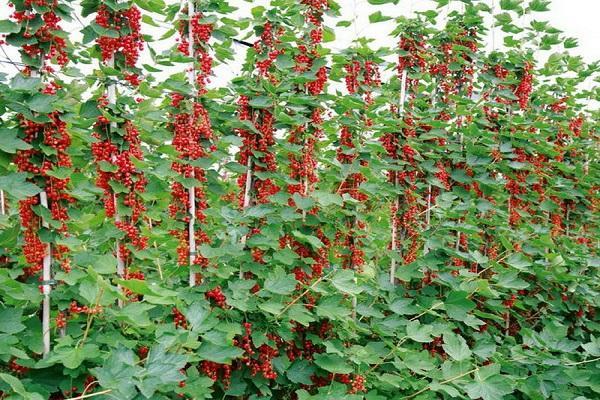
Also, white and yellow varieties of the fruit crop grow well on standard trees.
Specifics of planting work
To properly grow currant bushes, initially purchase currant seedlings with stable varietal characteristics, such as frost resistance and natural immunity to fungal and viral diseases.
Planting of seedlings is carried out at the end of summer.
- On the garden plot, choose a well-lit place, sheltered from gusty winds.
- The soil is dug up, cleared of weeds and mixed with organic and mineral fertilizers.
- 2-3 weeks before planting the seedlings, planting holes 60 cm in diameter and depth are dug in the area.
- Fertile soil is placed into the hole, a support peg is driven in and the area is watered generously.
- The distance between plantings should be at least 30-35 cm, between rows from 1 to 1.5 m.
- The standard seedling should be free of branches and leaves, and the top should be pinched off.
- The prepared seedling is placed in a hole with fertile soil, the roots are evenly spread out and covered with soil.
- The soil is compacted and watered, and the seedling is secured to a support peg.
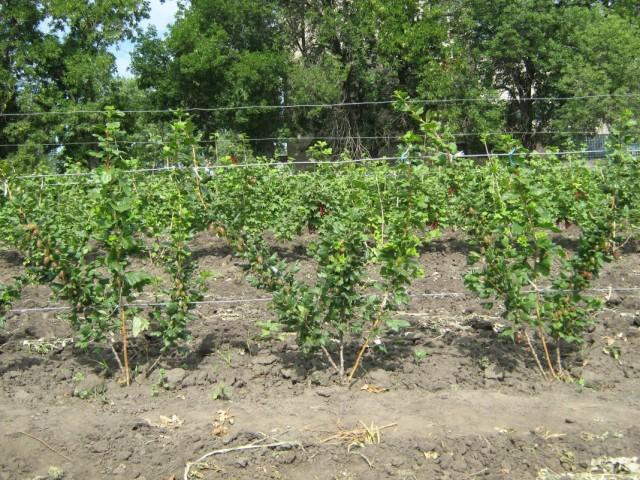 Important! To grow a standard tree, plant the seedling upright, not at a 45-degree angle, as is common when planting currant bushes.
Growing methods
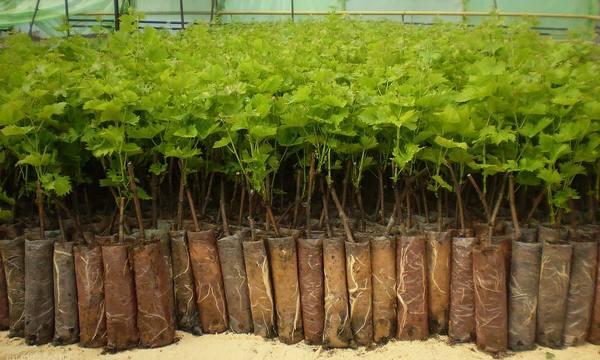
You can grow a standard tree yourself using various methods. All methods rely on lengthening the plant's main stem.
Own-rooted standard
Early spring, before the start of the plant's growing season, is best for starting work on growing currant bushes.
- Among the currant bushes, select an adult, healthy plant.
- The bush is pruned, leaving one of the strongest, straightest, thickest and most viable shoots.
- All lateral branches are removed from the plant, with the exception of 3-5 upper branches.
- The remaining branches are given a spherical or oval crown shape.
- The compact tree is tied to a support peg.
- During the growing season, all emerging shoots and excess branches are pruned.
Take a look Also
In late autumn, to increase the yield in the next season, the lateral branches are pinched.
Standard on rootstock
Growing standard currants on rootstock requires more than just desire. You need the knowledge to help you achieve a healthy and fruitful garden plant step by step.
Work on growing a standard bush on a rootstock is planned for early spring, before the plants enter the active growing phase.
- Any currant bushes growing in your garden are suitable for rootstock. You can also plant new seedlings purchased specifically for standard cultivation.
- All branches, leaves and shoots are cut off from the bush, leaving only the central trunk of the plant.
- The top of the trunk is pinched.
- To make a scion, take a fresh cutting from any currant variety. If the rootstock and scion are of different varieties, the tree is believed to grow stronger and more fruitful.
- The cutting is grafted onto a standard and secured using special materials sold in garden centers and flower shops.
- In a year, the standard plant will begin to bear fruit.
During the first 2-3 years of growth, all excess branches and shoots are completely cut off from the tree.
Tip! For grafting, choose currant varieties with frost and disease resistance.
Which option is better?
To choose the option for growing standard currants, let's consider all the advantages and disadvantages of both methods.
- When obtaining an own-rooted standard, the varietal characteristics of the plant remain the same, yield indicators increase and maintenance is simplified.
- When growing standard currants using grafting, you can create a unique fruit crop. When the rootstock and scion are different varieties, the yield and flavor of the berries increase severalfold.
However, it is important to take into account that the method of grafting a cutting onto a rootstock requires additional knowledge and skills.
Tips and recommendations for caring for standard currants
To prevent standard currants from turning into ordinary bushes, the plant requires timely and proper care.
Regularity of watering
Fruit trees prefer moist soil, but can become ill if overwatered. Water no more than once every 7-9 days. Add up to 40 liters of warm, settled water to each plant. In humid climates with heavy rainfall, reduce watering and only water as needed.
What and when to feed
For active growth and development, standard currants require additional feeding and nutrients. Fertilize the fruit crop several times per season, alternating mineral and organic fertilizers. In late autumn, the plants are fed with a mineral complex.
Take a look Also
Loosening and mulching the soil
Loosening and weeding the tree trunk area are timed to coincide with irrigation. Loosening the soil helps moisture retain in the soil longer and promotes oxygenation of the plant's rhizomes. Mulching is also done once a month. Peat mixed with sawdust, straw, or dried leaves are used as mulch.
Pruning and shaping the bush
Standard currants need annual pruningTo properly shape the tree's crown, remove all unnecessary branches and shoots. Dry, broken, frost-damaged, and diseased or pest-infested branches should also be pruned.
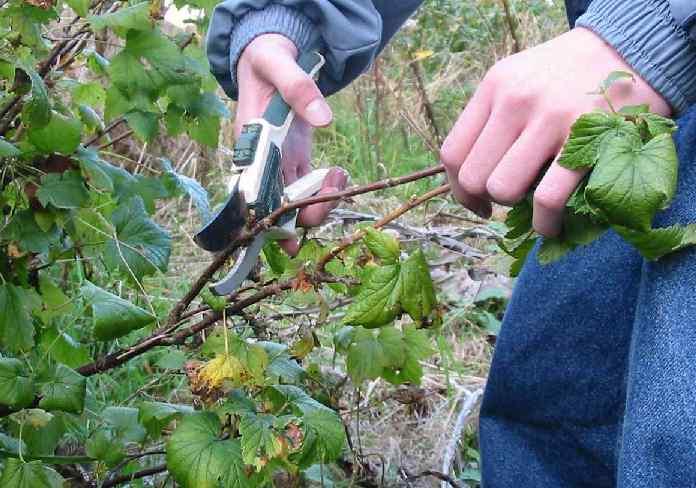 Important! In the third year of growth of a standard plant, root shoots become active and must be completely removed.
Garter
The thin trunk of a standard tree cannot withstand strong winds or the weight of ripe fruit. Without additional support, the fruit tree will simply break. Therefore, the plant requires support in the form of a stake firmly driven into the ground or a specially constructed structure of slats.
Shelter for the winter
With the onset of autumn, berry crops are prepared for winter dormancy.
- Currants are watered generously.
- The tree trunk circle is mulched with humus, dry leaves and spruce branches.
- As soon as the first snow falls, a large snowdrift is created around the bush.
- If the winter is cold, the plant is completely covered with burlap or special fiber.
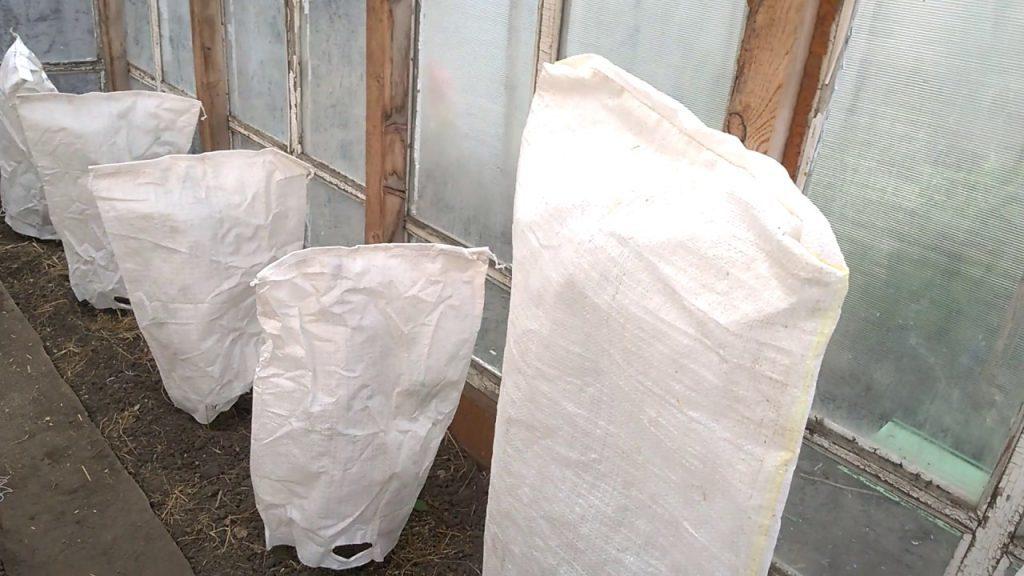
At the first spring thaw the cover is removed.
What mistakes do novice gardeners make?
The most common mistakes gardeners make when growing standard currants are:
- Nitrogen fertilizers are not suitable for this type of fruit crop.
- Planting calendula, geranium, or garlic around the tree trunk will help get rid of pests.
- Standard plants require reliable support and anchorage, even in wind-resistant areas. Stake types can be made of a variety of materials.
- Fruit crops do not tolerate frost and sudden temperature changes well, so in regions with little snow, trunks require additional cover.
With proper and timely adherence to the rules for planting and caring for standard currants, even a novice gardener can grow a beautiful and fruitful tree.
Related posts:
 Characteristics and descriptions of the 40 best red currant varieties
 The health benefits and contraindications of black currants
 Red currant health benefits, properties, and contraindications
 The health benefits and contraindications of white currants
 The best and new varieties of black currant for growing in the Urals, planting and care
 Description of the 50 best blackcurrant varieties for different regions
 Description and characteristics of the 25 best blackcurrant varieties for Siberia
 20 Best Blackcurrant Winter Preserves Recipes