
- History of selection
- Description of the Nuclear Currant
- Bush and fruiting
- Taste qualities and scope of application of fruits
- Distinctive characteristics of Nuclear and Nuclear 2
- What conditions does the variety require?
- Climate indicators
- Illumination of the area
- Required soil composition
- Favorable and unfavorable neighbors
- Specifics of planting berry crops
- Selecting and preparing a seedling
- Preparing the site and planting hole
- Timing and technology of planting
- How to care for it in open ground
- Pruning currants
- Top dressing
- Watering and loosening
- Preparing for winter
- Diseases and pests: prevention and treatment
- Reproduction technique
- By dividing the bush
- Cuttings
- Layering
- Gardeners' reviews of the variety
Gardeners grow currants to enjoy not only a tasty but also a healthy berry in winter. Currants vary in harvest time, fruit size, and flavor. The Yadrenaya currant variety stands out for its abundance and large berries, which have versatile uses. Below is information on planting, care, and propagation, as well as gardener reviews.
History of selection
The Yadrenaya currant was developed by crossing three varieties: Dikovinka, Lyubimitsa Altaya, and Bredtorp. It was developed by breeder L.N. Zabelina. The breeding work was conducted at the Barnaul branch of the Lisavenko Scientific Research Institute of Strawberries and Vegetables.
In 2000, the variety was included in the State Register of Russia.
Description of the Nuclear Currant
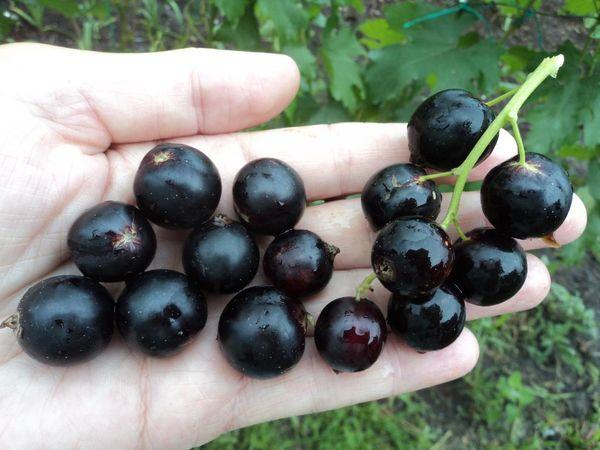
The crop is characterized as a mid-late ripening variety with large berries that have universal use.
Bush and fruiting
The Yadrenaya currant reaches a height of 1.5 meters. Young shoots are green, while older shoots are gray-brown. The crown is sparse, allowing the berries to receive ample sunlight. The leaves are leathery, glossy, and have deeply indented veins.
The Yadrenaya currant begins bearing fruit in late July, or early August in northern regions. The clusters bear 6-12 berries. The fruits ripen quickly, making it suitable for commercial production.
Taste qualities and scope of application of fruits
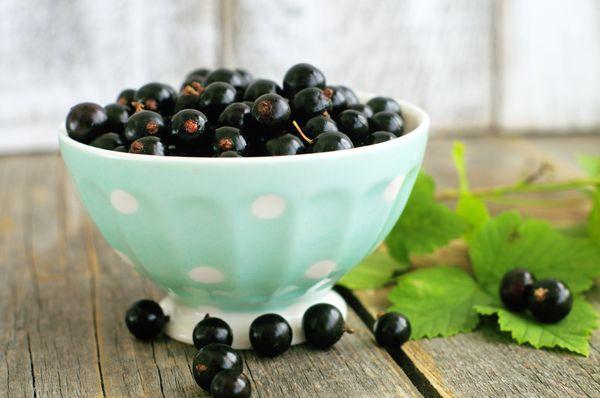
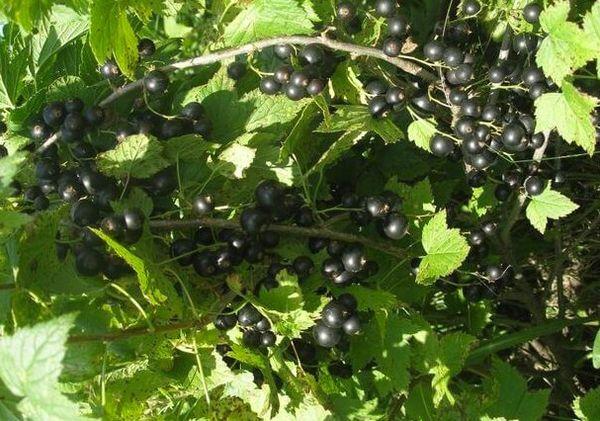
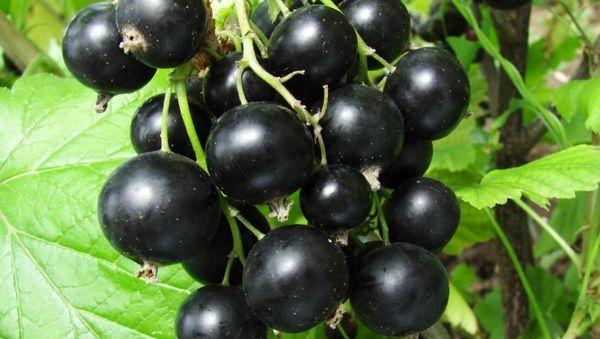
Under favorable conditions, a mature bush can yield up to 5 kilograms of berries. Tasters rated the fruit's flavor at 4.3 points on a 5-point scale. The sweet and sour berries are dried, frozen, mashed with sugar, and used to make compotes, jellies, and preserves.
Distinctive characteristics of Nuclear and Nuclear 2
The varieties are similar and almost indistinguishable before fruiting. The Yadrenaya 2 currant has slightly larger fruits, but otherwise the varieties are identical in their characteristics:
- fruiting begins in the 2nd year after precipitation;
- high yield;
- self-fertility;
- universal use of berries;
- high winter hardiness and drought resistance;
- The varieties are resistant to most diseases and pests.
Take a look Also
What conditions does the variety require?
Yadrenaya currants are planted in fertile soil. It's best to plant green manure crops beforehand.
Climate indicators
Currants are planted in the ground in spring or fall. In the former case, planting should be done as early as possible, immediately after the weather warms up. In the fall, currant bushes are planted from mid-September to the end of October. Groundwater should not be too close to the soil surface where currants are planted.
Illumination of the area
The Yadrenaya currant's growing area must be well-lit by the sun, otherwise the berries will not acquire a sweet flavor. Shade for a few hours a day is acceptable. It is not recommended to plant this variety in a drafty area, as the wind will cause the berries to fall.
Required soil composition
The soil should be loose and fertile. Depleted soils should be enriched with humus or manure six months before planting. Mineral fertilizers are also added to the soil.
Favorable and unfavorable neighbors
Avoid planting this crop near taller plants, as they will shade the Yadrenaya Smorodina. Plants that don't do well near this crop include red currants, gooseberries, and raspberries.
Favorable neighbors are garden strawberries, honeysuckle, low-growing apple trees, onions, and garlic.
Specifics of planting berry crops
The correct choice of seedling and preparation of the site for its planting have a great influence on the development of currants.
Selecting and preparing a seedling
The bush you purchase should be 1-2 years old and have 2-3 leafless shoots. A healthy seedling will have fibrous roots free of kinks and rot. During transportation, wrap them in a damp cloth. Soak the currant root system for 2-3 hours in a potassium permanganate solution.
Preparing the site and planting hole
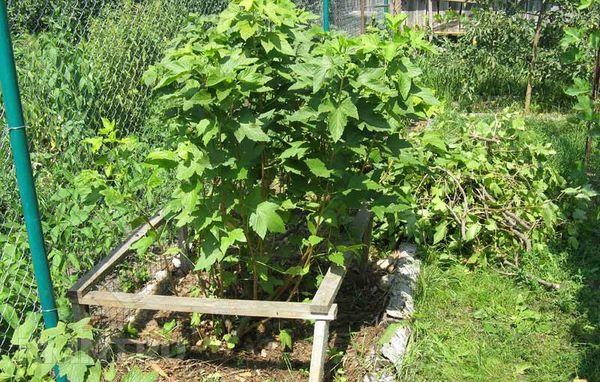
The site for planting the Yadrenaya currant is cleared of grass and debris, dug over, and leveled. Two weeks before planting, a hole measuring 50 x 50 centimeters is dug. The soil is mixed with rotted manure and then returned to the hole.
Timing and technology of planting
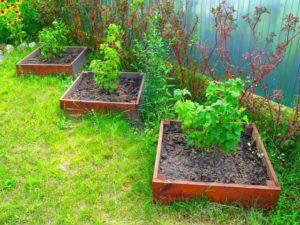
Bushes are planted in spring or fall. Planting procedures are as follows:
- the land is formed into a hill;
- the seedling is placed at an angle of 45° and covered with soil;
- the soil is compacted and watered.
 Important! The root collar should be buried no more than 5-7 centimeters deep.
How to care for it in open ground
Caring for currants involves watering, loosening the soil, fertilizing, pruning, and covering for the winter.
Pruning currants
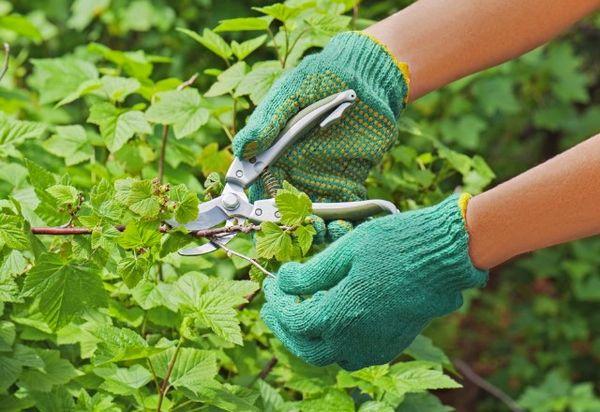
In the spring, sanitary pruning is performed: diseased, dry, and frost-damaged shoots are removed. As the bushes grow, they become denser, and the berries begin to receive less light and heat. To prevent this, shoots older than five years are completely pruned. This procedure is performed with sharp, disinfected pruning shears.
Top dressing
Experts recommend fertilizing currant bushes several times per season. In the second year after planting, the soil beneath the bushes is fertilized with nitrogen-containing fertilizers in the spring. A second fertilization is done during flowering with a complex fertilizer. When the berries are forming, the bushes are fed with potassium and phosphorus. A fourth fertilization is performed in the fall with the same fertilizer to help the bushes withstand temperature fluctuations.
Watering and loosening
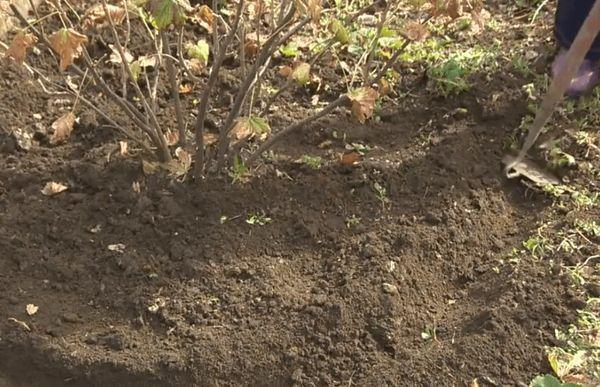
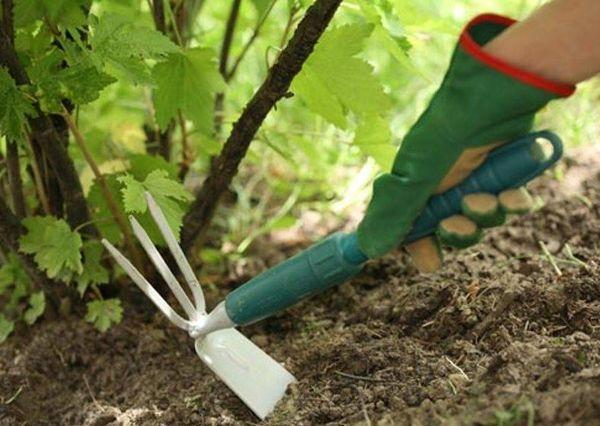
Currants require ample watering, especially when the fruit is ripening. Irrigation of the tree's trunk is also necessary in the fall, before frost sets in. After each watering, loosen the soil to prevent a crust from forming, preventing air from reaching the roots.
Preparing for winter
In warmer climates, the Yadrenaya currant requires no cover. In colder climates, the shoots are bent to the ground and insulated. In winters with little snow, the soil beneath the bushes is mulched before the onset of frost.
Diseases and pests: prevention and treatment
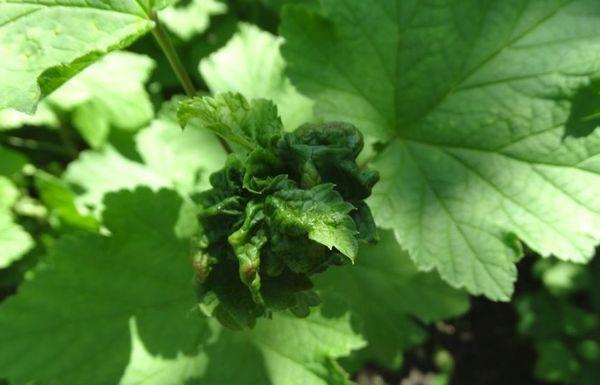
If not properly cared for, the Yadrenaya currant can be susceptible to diseases and pests. To prevent these, spray the bushes with insecticides and fungicides before and after fruiting.
If there is a need to irrigate plants during berry growth, it is better to use preparations prepared according to traditional medicine recipes.
Reproduction technique
The culture is propagated in 3 ways: by dividing the bush, cuttings, and layering.
By dividing the bush
An overgrown bush can be divided. To do this, dig it up and cut it into several pieces with a hacksaw. Each section should have a well-developed root system and 3-4 shoots. Seal the cut areas with garden pitch.
Cuttings
To propagate currants using this method, green or woody cuttings are used. The procedure for propagating from young branches is as follows:
- at the end of May, the tops of shoots 10-12 centimeters long are cut off;
- for one bud they are deepened into the ground at an angle;
- watered, mulched.
By autumn the seedlings will take root, grow, and can be planted in a permanent place. propagation of currants by woody cuttingsThey are cut in the fall, tied into bunches, dug into the ground, and covered. In the spring, they are planted in the garden, tended, and by autumn, young bushes emerge from them.
Layering
Propagation by layering begins in the spring, after the buds have opened. To do this, make a hole in the ground, place a one-year-old cutting into it, and cover it with soil. For security, the cutting can be pinned to the ground with wire.
The tops of the shoots are now visible above the ground. The pinched area is watered throughout the summer, and by fall, a young, independent plant with a root system and above-ground part will form. It is dug up and replanted.
Gardeners' reviews of the variety
Gardeners describe the Yadrenaya currant as an easy-to-grow plant, producing abundant fruit, and rarely affected by diseases and pests when properly cared for. The berries are delicious, sweet and sour, and can be mashed with sugar, frozen, or used to make compotes and jams.
Elena Vasilievna, 60 years old, Stavropol
My currant bush is already ten years old. In its sixth year, I noticed a decline in yield. I was advised to prune it back significantly, which I did. Now the bush is producing well again, and I freeze the berries and use them throughout the winter to make vitamin drinks.
Oksana, 38 years old, Tomsk
I've been growing Yadrenaya Smorodinia (Fiery Currant) for several years. The berries are large, so unlike other varieties, they're easy to pick. The fruit is a bit sour, but I make sweet jam from them for the winter, which I use to treat my family's colds.
Ivan Nikolaevich, 49 years old, Seversk
I've heard that currants are susceptible to spider mites, so I spray the bushes with Yadrenaya Aktellik in early spring. In six years, the plants haven't been infected or attacked by pests. The berries are very large, similar to grapes. I recommend them to all gardeners.
Related posts:
 Characteristics and descriptions of the 40 best red currant varieties
 The health benefits and contraindications of black currants
 The best and new varieties of black currant for growing in the Urals, planting and care
 Description of the 50 best blackcurrant varieties for different regions
 Red currant health benefits, properties, and contraindications
 The health benefits and contraindications of white currants
 Description of the red currant variety Sakharnaya, features of planting and care
 Description and characteristics of the 25 best blackcurrant varieties for Siberia