
A relatively new tomato on the Russian seed market, Betalux is quickly finding its fans. This variety was bred in Poland, but it thrives in central Russia, both in open ground and greenhouses. Anyone who planted these tomatoes for the experiment will be eager to save the seeds for next season.
General characteristics of the plant
This is an ultra-early, superdeterminate variety. This type of plant typically produces fruit quickly and completes its growing season within 2-3 weeks. Reviews from gardeners who have grown Betalux outdoors indicate the variety's ability to produce two harvests and continue fruiting until autumn.
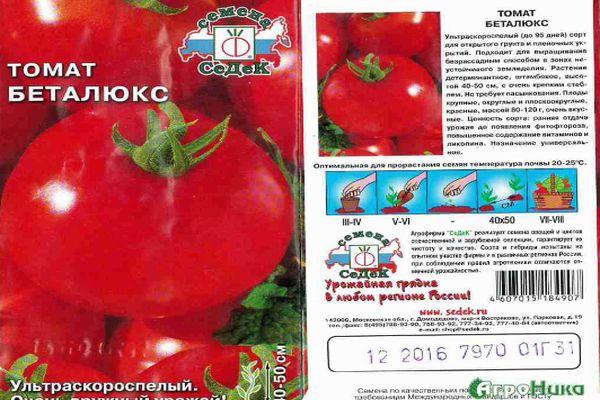
The first ripe tomatoes (several berries per bush) are harvested one month after planting the seedlings. In greenhouse conditions, this can be done as early as mid-June. The manufacturer's stated period of 90-95 days from sowing to ripening is well met; Betalux tomatoes are among the first to produce a harvest.
The main harvest begins 10-15 days after the first fruits are picked. The heaviest yield will be approximately 4 kg per square meter (5-6 plants). The next fruiting will begin on side shoots two weeks after the first tomatoes are picked and will be slightly smaller. The last ripened ovaries can be harvested in mid-August, after which the plant's growing season ends. The total yield per unit area is approximately 6-7 kg.
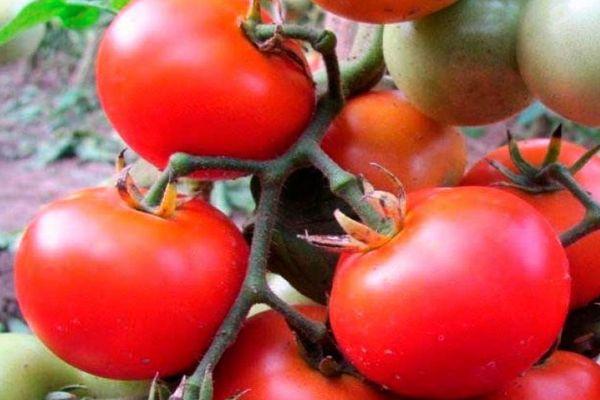
The bushes are compact, not exceeding 30 cm in height in open ground, but can be larger in a greenhouse—up to 50 cm. The plant has a rigid stem and can be grown without pinching or tying to a support.
The Betalux tomato variety is resistant to cladosporiosis and alternaria, is not affected by cold, and can tolerate temperatures below 10°C without yield loss. It is virtually immune to late blight, producing most of its harvest before its widespread spread. Removing old leaves accelerates fruit ripening and helps prevent late blight.
Take a look Also
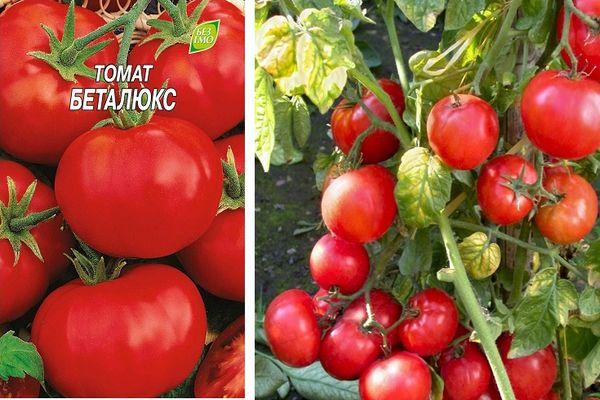
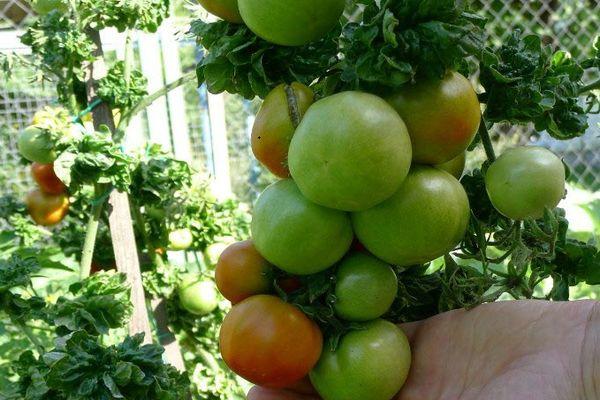
In greenhouse conditions, compact bushes are conveniently planted under tall tomatoes. However, gardeners' descriptions of the variety note that in such conditions, numerous small fruits are produced. The tomato bears fruit continuously for 1-1.5 months.
Consumer properties of Betalux tomatoes
Ovaries form on simple or double clusters of 4-5 on each branch. The fruits, uniform in size, ripen simultaneously. A single tomato rarely weighs more than 100 g. The shape is round, without pronounced ribbing. Ripe tomatoes are bright red; at technical maturity, the fruits are pale green, with a spot near the stalk. In open ground, greenish patches may remain on the shoulders.
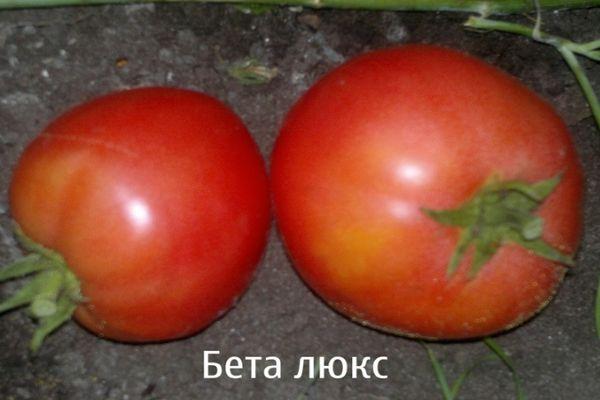
The skin is firm but not thick. The tomatoes are resistant to cracking during ripening and packaging, and they transport well even when ripe. The fruit has a shelf life of 5-7 days, and blanched tomatoes can be stored and gradually ripened for up to 2 weeks.
The flesh is tender, its texture reminiscent of a ripe melon, and the tomatoes are juicy and fleshy. The fruit's structure can be classified as a beefsteak tomato. The seed chambers are small, and the seeds are few. The flesh color is intense and uniform, with no light spots in the center.
The taste of a ripe tomato is sweet and sour, classic, with a distinct characteristic aroma.
These tomatoes are versatile. The early ripening of the Betalux variety makes it ideal for fresh consumption. These bright, juicy, and delicious tomatoes can be used to make a variety of salads, appetizers, and gazpacho. The richly colored flesh is perfect for hot sauces, vegetable caviar, and borscht and soup dressings. Small tomatoes are easy to bake and stuff.
Betalux is an ideal variety for winter preserves. These small, calibrated tomatoes look great in canned form and complement vegetable platters beautifully. Their firm skin resists cracking, and the flesh retains its structure and doesn't spread. Ripe tomatoes are processed into juice or sauces. The pulp from these fleshy tomatoes is quite thick and can be boiled to the desired consistency in a short time, ensuring the preservation of virtually all vitamins.

Agrotechnical requirements
The ultra-early nature of the variety influences the timing of sowing seeds for seedlings. In southern regions, early tomatoes can be grown even without first growing seedlings. In most of Russia, this method is not used, so seeds are sown approximately 50 days before the tomatoes are expected to be planted in the garden.
For the substrate, mix equal parts sand, fertile soil, and humus. Add 2 tablespoons of ground chalk or eggshells per 10 kg of mixture.
Disinfect the soil directly in the container where the seeds will be sown. Use a hot solution of potassium permanganate for disinfection.
Seeds can be sown immediately after the soil has cooled to room temperature.
The Betalux tomato variety is not a first-generation hybrid; seedlings are also grown from seeds from home-grown plants that have demonstrated superior varietal qualities. However, such seedlings will need to be treated before planting to kill fungal spores. Solutions of Fitosporin, Epin, or potassium permanganate can be used for pre-planting preparation. The seeds are soaked for 30-40 minutes and then dried until free-flowing.
Spread the seeds over the surface of the moist soil and cover with dry soil or sand. The layer should be no more than 0.5 cm thick. To retain moisture, cover the container with perforated plastic film and place it in a warm place (+25°C). Once the seedlings emerge, remove the film.
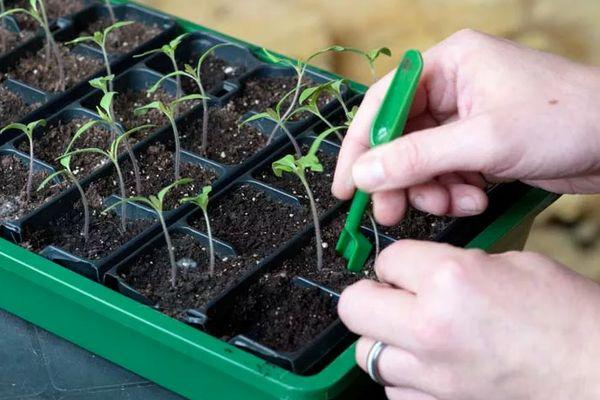
The seedlings are pricked out in the phase of 2-3 true leaves at a distance of 10 cm from each other. After the last frost has passed, tomatoes can be planted in the garden. The planting pattern for compact varieties is 40x40 cm or 30x60 cm. Further care involves watering the plants regularly and hilling the base of the stems approximately one week after planting.
Related posts:
 How to propagate and grow peas, cultivation technology, and care in open ground
 How to properly plant peas in a greenhouse and open ground
 The best grape varieties for growing in the Urals, planting and care rules in summer
 Carrot care guidelines for outdoor cultivation to ensure a good harvest
 Description of varieties of sowing peas and cultivation, to which family they belong
 The best eggplant varieties for growing in a polycarbonate greenhouse: planting and care
 Descriptions of the 20 best cherry varieties for the Moscow region, their planting and care
 80 Best Eggplant Varieties for Different Regions with Descriptions and Characteristics
