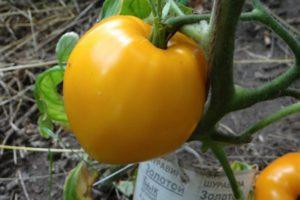
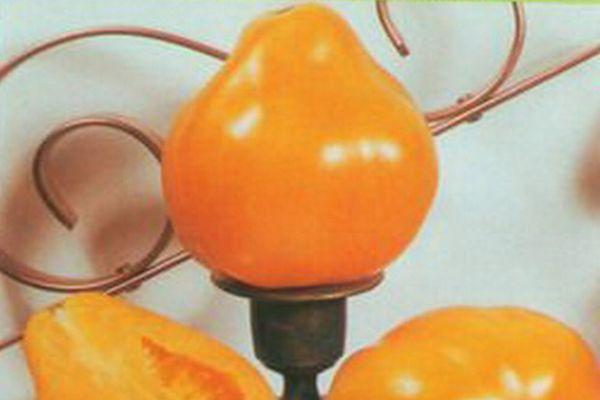
The unusually shaped "Lampochka" tomato is sure to please any amateur grower of ornamental tomatoes. The tomato clusters truly resemble garlands of glowing lamps. This resemblance intensifies as the berries begin to ripen.
Main characteristics of the plant
The same tomato variety may have different names among seed producers. The Lamp tomato can be called Aladdin's Lamp or Light Bulb. There's also a separate cherry variety, the Pink Lamp, which differs in bush size and fruit size.
The Aladdin's Lamp tomato plant is an indeterminate variety and can reach 1.8 meters in a greenhouse. In the ground, it is usually shorter: the tops of the plants should be pinched back around mid-August. This allows the last few clusters to fully ripen, allowing them to be harvested even when unripe. The plant's stems require support. It's best to train them into 2-3 stems, preventing the shoots from spreading.
Reviews from those who have planted Lampa tomatoes describe the variety as temperature-resistant and consistently productive. It copes with stress from changing weather conditions and severe cold snaps, and can tolerate heat and dry soil without dropping its buds. With proper care, the plant can yield 4-5 kg of marketable produce per plant, regardless of the weather.
The Lampa tomato is a mid-season variety; the first ripe fruits are only available in the second half of summer. Therefore, in northern regions, it is recommended to grow it in hotbeds or greenhouses, while in the Altai region, the southern Siberian steppes, and Primorye, it is best grown in open ground. In this case, part of the harvest will have to be harvested at the milky and blanched stages of ripeness.
The variety's characteristics and description in the State Register of Breeding Achievements note its relative resistance to late blight. Late-ripening tomatoes are susceptible to fungal infections, and growers may lose a portion of their harvest. To prevent this, it is recommended to treat green tomato plants with fungicides in particularly difficult years.

 A preventative measure can be the removal of the lower leaves (1/3 of the plant). The Aladdin's Lamp variety is resistant to summer fungal diseases (macrosporium, fusarium wilt, etc.).
Description of the fruits of the Aladdin's Lamp variety
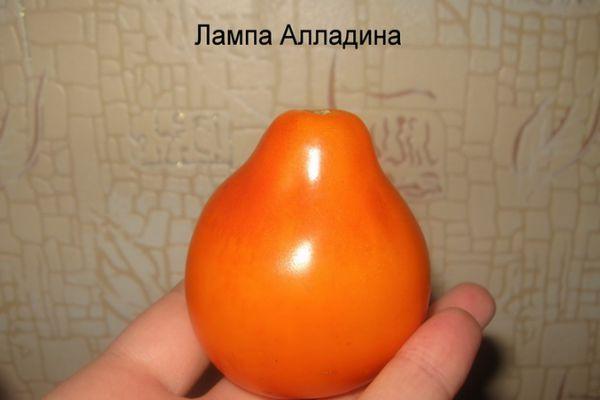
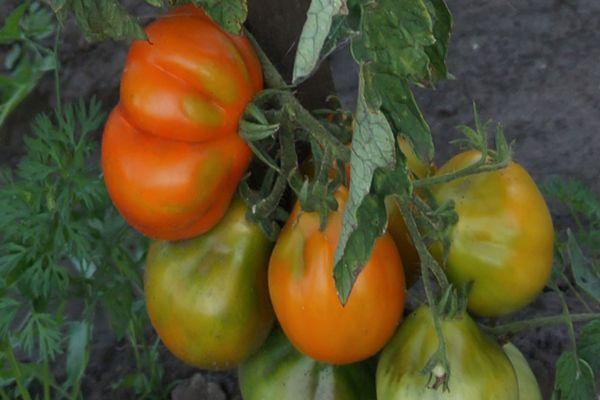
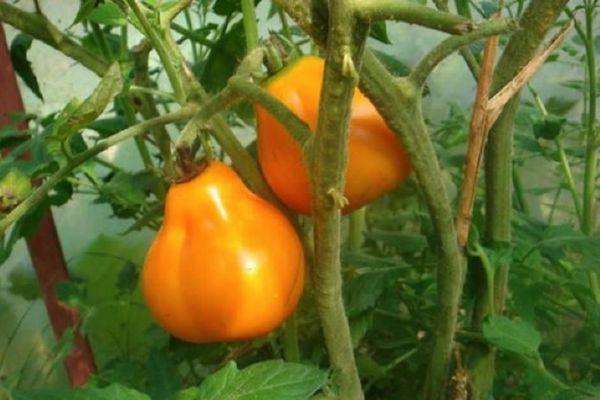
A tomato plant produces 5-7 clusters of brightly colored, uniquely shaped tomatoes. The pear-shaped fruits are somewhat reminiscent of the Truffle variety in size and shape. The golden and orange "bulbs" are uniform in size, and a cluster typically contains about 10 tomatoes, averaging 100-120 g. The last ovaries on the cluster may have a more elongated (plum-shaped) shape.
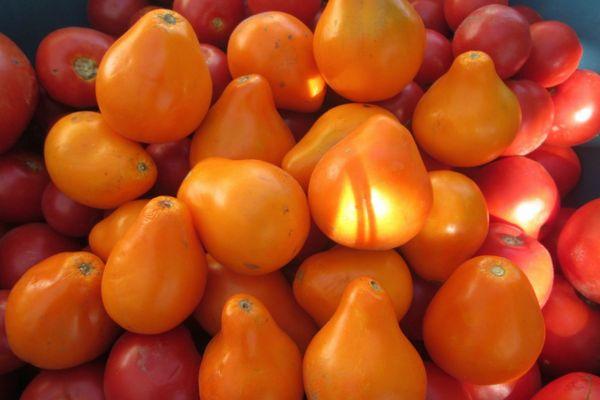
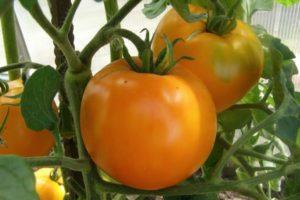
The skin of tomatoes is firm and not rough. It rarely cracks when ripe, but in years with excessive rainfall, cracking can prevent a good harvest. The unripe fruit is light green, turning yellow as it ripens, and orange when biologically ripe. The surface is smooth, without noticeable ribbing.
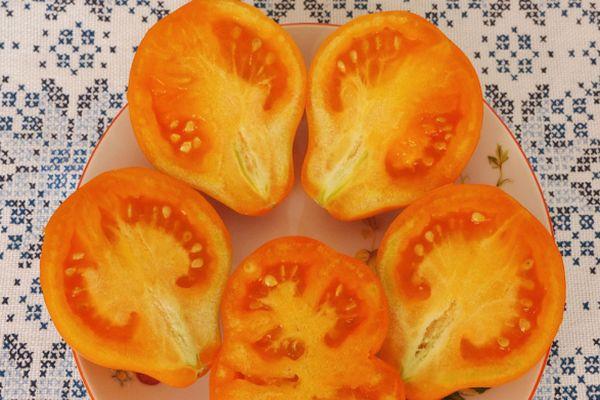
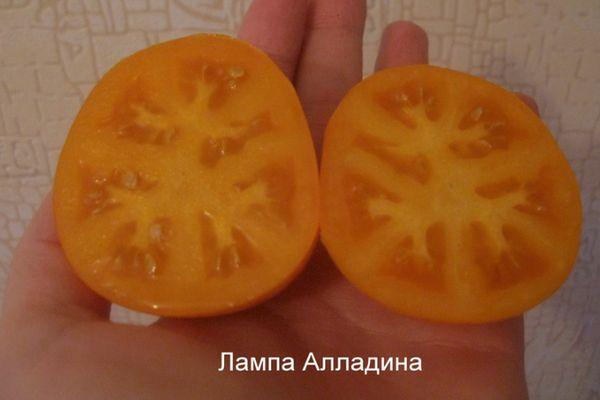
The flesh is meaty, a fact that every homemaker who has planted bulb tomatoes in their garden notices. The color is dark yellow or orange, but some of the flesh can also be red (in overripe tomatoes). The tomatoes are highly flavorful, possessing a sweet taste with a subtle tangy tartness.
Like all orange varieties, Aladdin's Lamp is rich in beta-carotene and vitamins, but is less allergenic than red tomatoes. The low acid content of the fruit makes it suitable for baby food and dietary nutrition.
This variety can be used as a versatile variety. Firm, blanched tomatoes are ideal for whole-fruit canning, and well-ripened ones can be used to make a uniquely colored tomato juice. When reduced by 1/3, the juice thickens and becomes suitable for sauces and ketchups, lecho, and other canned snacks.
Vegetable growers will also love tomatoes fresh. Vibrant salads and platters made from a combination of Aladdin's Lamp and red varieties will enhance both festive and everyday tables, and the fruit's unusual shape makes for a striking appetizer. Orange tomatoes are great for hamburgers and open-faced sandwiches.
Agricultural technology of the variety
Lampa tomatoes are not a hybrid. Seeds can be saved for planting next season. Before sowing, soak the tomato seeds in a weak solution of potassium permanganate. Sow the seeds in disinfected soil, scattering them over the surface of the thoroughly moistened soil. Sprinkle a thin layer of dry soil (0.5 cm) on top of the seeds. Cover the containers with plastic wrap and germinate the seeds at a temperature of at least 25°C.
Once the seedlings emerge, remove the plastic wrap and let the tomatoes grow for 2-3 weeks. By this time, they should have 1-3 true leaves. At this stage, the plants should be pricked out, meaning they should be spaced 10 cm apart. They can also be transplanted into individual pots.
Seedlings of pear-shaped varieties often stretch and appear frail. These plants are planted horizontally in trenches. After transplanting, the plants gain foliage well, become strong, and quickly produce their first flower clusters. At this time, it's time to begin shaping the bush.
One side shoot (stepson) is left above the first cluster. The remaining shoots should be removed until the second cluster with flowers grows. One more shoot should be left above it so that the plant has three trunks. These will soon also begin to produce clusters of flowers.
To grow large tomatoes for fresh consumption, you can remove some of the ovaries from the cluster, leaving 5-7 at the base of the plant, which are the first to set. During fruiting, the bushes are fed and watered, as moisture is needed for the fruit to ripen. However, too much water will make the tomatoes taste unpalatable. If there is no rainfall, water 1-2 times a week. At least 10 liters of water should be poured under each bush.
Related posts:
 The best grape varieties for growing in the Urals, planting and care rules in summer
 The best eggplant varieties for growing in a polycarbonate greenhouse: planting and care
 80 Best Eggplant Varieties for Different Regions with Descriptions and Characteristics
 Descriptions of the 20 best cherry varieties for the Moscow region, their planting and care
 Description of 30 varieties and types of Muscat grapes, planting, cultivation and care
 How to grow grapes in the Moscow region in open ground without a greenhouse
 Description of the 90 best varieties of beans for open ground with names
 Description of the best tomato varieties for open ground and greenhouses in the Krasnodar region