The early-ripening Red Fang tomato has only recently appeared on the seed market, but has already been tested and highly praised by gardeners. Over the past few years, vegetable growers across the country have been able to grow it both indoors and outdoors, and in a variety of climates across Russia.
General description of the variety
A determinate, low-growing, standard-shaped plant, the Red Fang tomato variety produces compact plants that don't require pinching. The bush reaches 80-90 cm in height, but when heavily loaded with fruit, it becomes unstable. To prevent toppling, tie the plants to a support or trellis.
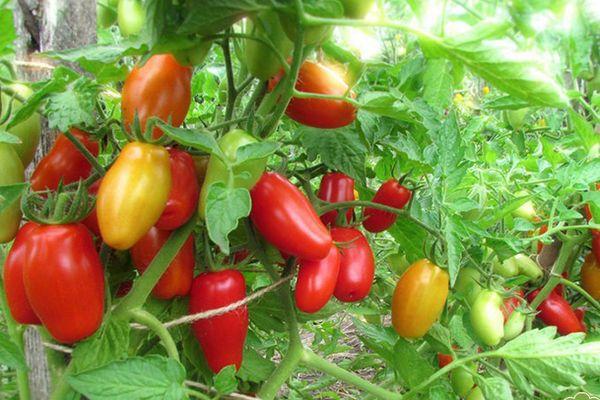
Fruiting is prolonged, with ovaries forming throughout the summer. Over the course of a season, several large clusters of fruit form on the bush. Vegetation continues for about three months, after which the bush tops out and stops producing new inflorescences.
The Red Fang variety is an early-ripening variety. The first harvest of fully ripened tomatoes can be harvested 90-100 days after sowing the seeds. When planted in a greenhouse or plastic greenhouse, fresh vegetables can be ready for the table as early as June, but in the open ground, tomatoes begin to ripen in mid-summer.
Reviews from amateur vegetable growers note the variety's high yield: the bushes are covered with small, brightly colored berries. Up to 12 kg of marketable produce can be harvested per square meter per season. Even with sudden weather changes in the Siberian region, the tomato continues to produce fruit and quickly recovers from stress. Tomatoes also tolerate hot, dry weather well, retaining their buds and continuing to produce fruit.
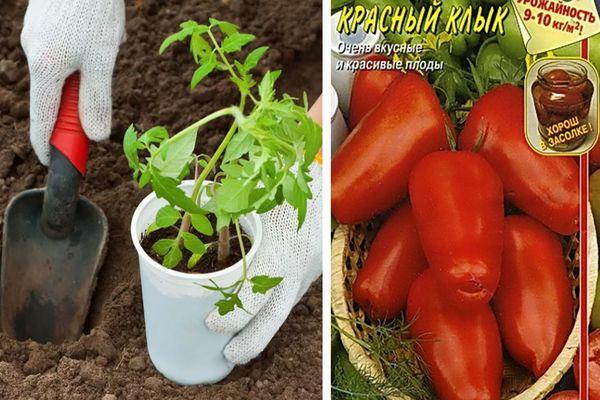
Red Fang tomatoes are resistant to most fungal diseases. They are rarely affected by late blight, producing almost their entire harvest before the pathogen's massive spread in late summer. They are resistant to blossom-end rot and are immune to tobacco mosaic.
Fruit characteristics
The tomatoes are gathered in clusters of 15-20. Each berry weighs 40-60 g, and the ovaries, which are the last to form on the cluster, are often smaller in size than the others. The tomatoes are ovoid, slightly elongated, and finger-shaped.
The skin is very strong, and the berries do not crack during ripening, even in conditions of excessive moisture. Tomatoes can be transported at full ripeness and retain their marketable appearance for a long time. Unripe tomatoes ripen easily at room temperature. At technical maturity, the color is uniform, light green. As they ripen, the fruits turn red.
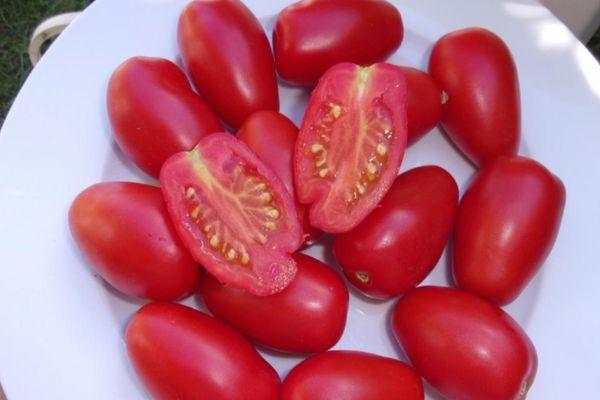
The flesh is dense and firm, even when biologically ripe. There are two seed chambers. The walls are thick, up to 1 cm. The flesh is uniformly red. The taste is considered excellent: the fruits are sweet, sometimes with a slight piquant tartness. The aroma is classic, tomato-like.
The Red Fang variety is recommended for fresh consumption. Early and tasty tomatoes make excellent summer salads. The small fruits are perfect for garnishing dishes and creating individual appetizers for buffets. Sliced or sliced, the tomato makes a great addition to canapés, sandwiches, or hamburgers. The pulp is included in any tomato-based dish, including soups, gazpacho, or sauces.
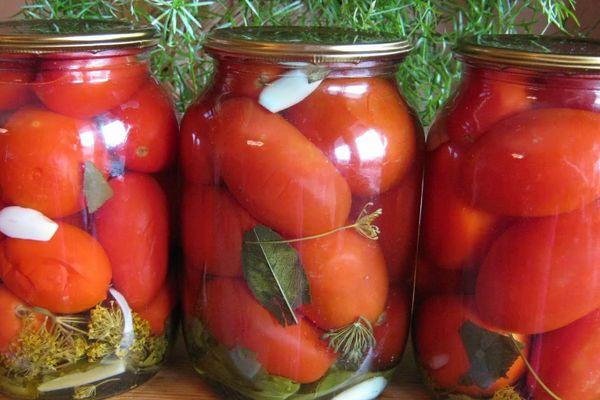
These elongated tomatoes are ideal for canning whole. They look beautiful in a jar, and when served, their ability to retain their firm flesh when pickled or salted becomes apparent. Fully ripened tomatoes can be used to make juice or a filling for lecho and tomato-based appetizers. The consistency of the flesh and its sweet flavor make the Red Fang variety ideal for making sun-dried tomatoes.
Agricultural technology of the variety
Early-ripening varieties should be sown 50-60 days before planting in their permanent location. For sowing, prepare a substrate of equal parts humus, garden soil, and fine sand, adding 2 tablespoons of chalk or dolomite flour for every 10 kg of the mixture. To disinfect, soak the soil scattered in the boxes with a hot, dark solution of potassium permanganate.
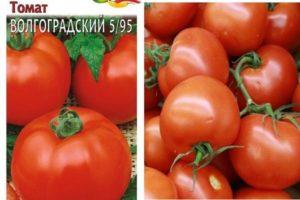
You can harvest tomato seeds yourself if your first experience with the Red Fang tomato was successful. However, these seeds will need to be soaked in a solution of potassium permanganate or Fitosporin. The seeds are soaked in warm liquid for 30-40 minutes, then dried until they are free-flowing. They can be sown as soon as the soil cools.
Spread the seeds over the soil in the box and cover them with a 0.5 cm layer of dry sand. Do not water the seeds. Cover the box with plastic wrap and poke 2-3 holes in it for air circulation.
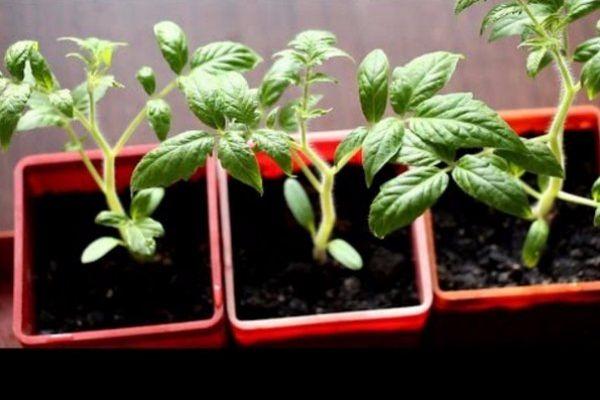
Place in a warm place (+25°C) to germinate. Under these conditions tomato seedlings appear already after 4-5 days. After this, remove the film. For the first few days, the tomatoes can remain in a warm place, but after about a week, they can be moved to cooler conditions (around 20°C during the day and no lower than 16°C at night).
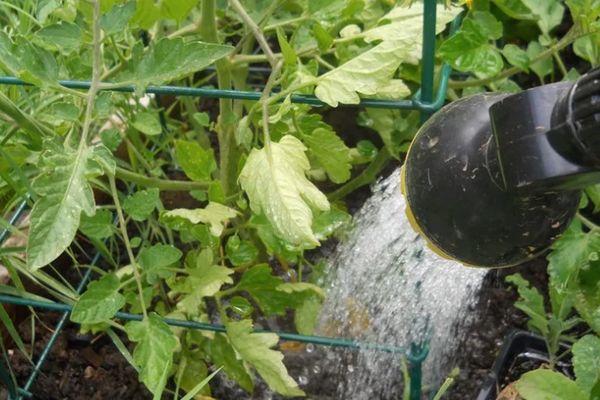
Water the seedlings whenever the soil dries out to a depth of 0.5-1 cm. When watering, use lukewarm water with potassium permanganate. To prevent blackleg, dust the seedlings with sifted wood ash after each watering.
After 2-3 leaves have formed, transplant the seedlings into 10x10 cm containers or individual 0.5-liter pots, using the same soil used for sowing the seeds. Further care consists only of regularly watering the growing plants. They don't require fertilizing, but they do require good light.
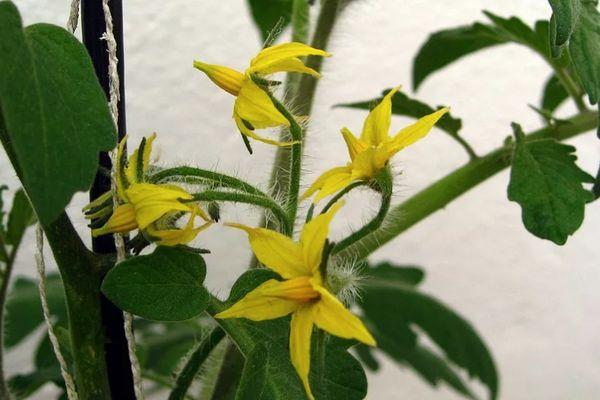
A sunny spot is recommended for planting Red Fang tomatoes. Plant 4 plants per square meter. If the seedlings have become leggy, it's easier to plant them horizontally, placing them in a 20-cm-deep trench. Leave the tops of the plants with 4-5 leaves above the surface.
When the plants begin to flower, feed the tomatoes with a complex mineral fertilizer containing potassium and phosphorus (Signor Tomato, Kristallon Tomato, Kemira Lux, etc.). Repeat this feeding after 2-3 weeks. Nitrogen fertilizers and organic matter should not be applied during the flowering and fruiting period.
Related posts:
 Characteristics and description of the tomato variety Banana Red, yield and cultivation
 Description and cultivation technology of the Red Ball plum variety
 The best varieties of daikon radish for winter storage and open ground, choosing seeds
 Description of 30 varieties and types of Muscat grapes, planting, cultivation and care
 Description of the Red Coal tomato and its cultivation using seedlings
 Description of the Red Bull bell pepper and its color variations
 Description of purple onion varieties, their beneficial properties, storage methods, and harvesting times
 The best grape varieties for growing in the Urals, planting and care rules in summer