
- Description and characteristics of the Ville de Lyon variety
- Advantages of using in landscape design
- Necessary conditions for growth and flowering
- Planting nuances
- Recommended timeframes
- Selecting a site and preparing seedlings
- Stages of planting work
- Further care
- Watering and fertilizing
- Pruning group
- Pest and disease control
- Preparing for winter
- Reproduction
- Seeds
- Cuttings
- Layers
- Dividing the bush
- Gardeners' reviews of the variety
Clematis Ville de Lyon is a beautiful plant with large inflorescences and is widely used in landscape design. It is popular with many gardeners. For it to grow and thrive, it requires comprehensive and high-quality care. This should include timely fertilization, watering, and pruning. Protecting the plant from diseases and pests is also crucial.
Description and characteristics of the Ville de Lyon variety
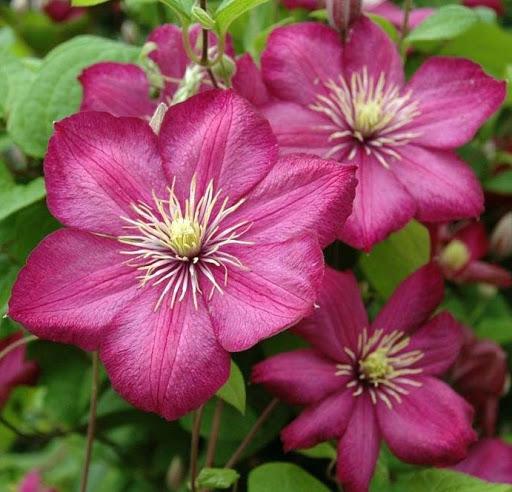
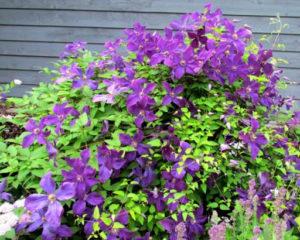
Ville de Lyon is one of the most popular cultivars, reaching a height of 3-4 meters. The shrub is characterized by small, oval, heart-shaped leaves. Flowers can be quite large, up to 15 centimeters in diameter. They are adorned with 5-7 perfectly shaped petals and large stamens in the center.
Young bushes have bright pink flowers. The petal edges can have a fuchsia hue. With too much sun, the flowers fade and turn a light pink, almost white.
Mature plants typically produce smaller flowers, which take on a purple hue. The branches have a brown or tan tint.
Clematis is characterized by lush and prolonged flowering - it begins in the second half of July and continues until frost. The advantages of the plant include the following:
- long and abundant flowering;
- rapid growth;
- undemanding to care;
- resistance to diseases and temperature drops;
- longevity.
Advantages of using in landscape design
Clematis of this variety are distinguished by their excellent decorative qualities. Therefore, they are often used to decorate garden plots.
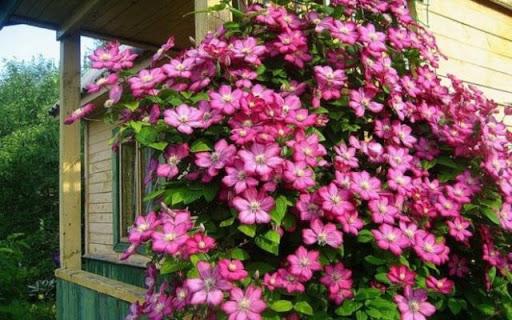
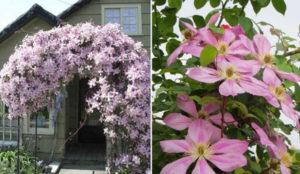
The plant can be trained into columns. A full-grown bush looks beautiful when combined with conifers. The bushes are suitable for single plantings. They can be planted near a house porch. The plant can be used to form a beautiful arch.
Necessary conditions for growth and flowering
When growing clematis, it is recommended to provide it with the following conditions:
- Plenty of sunlight. The Ville de Lyon variety should not be planted in the shade or on the north side of buildings or structures. The more sun, the better the plant will thrive.
- Moderately moist soil. It's best to keep the soil around the roots moist all year round. To achieve this, mulch the soil with tree bark. If the site itself is marshy or located in a lowland, there's a risk of root rot. High groundwater levels can also increase the risk of root rot. If the groundwater level is high, plant the plant in a higher location.
- Wind protection. Open areas are not ideal for clematis. It's best to plant it in areas with natural or artificial wind protection.
The plant thrives in loamy soil. It should be normal or slightly alkaline. The soil should be fertile and should be fertilized to provide the plant with nutrients.
Planting nuances
To ensure the crop develops properly, it's recommended to plant it properly. However, there are a number of factors to consider.
Recommended timeframes
Planting is recommended in the fall, from September to October. If this is not possible, plant in the spring. The seedling hole should be 60 centimeters deep. This is necessary to ensure proper distribution of the long roots.
A drainage layer should be placed at the bottom of the hole. Crushed brick or pebbles are ideal for this purpose. Expanded clay is also ideal for this purpose. After the drainage layer, it is recommended to add compost.
Selecting a site and preparing seedlings
A sunny location is considered the best option for clematis seedlings. The plant also thrives in partial shade. However, it should not be planted under trees. Without sufficient light, the bush will stop growing and dry out. When choosing a site for clematis, avoid areas near bodies of water, as excess moisture will negatively impact the plant's development.

Stages of planting work
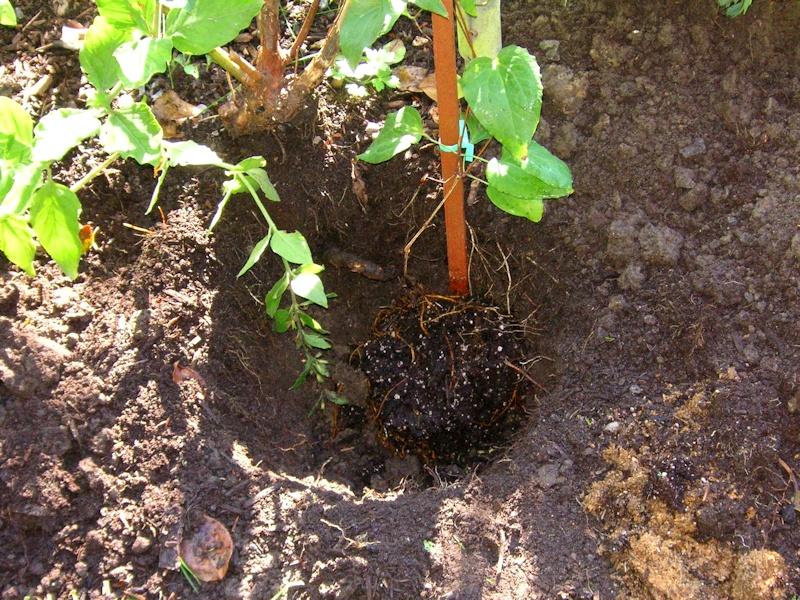
A month before planting, it's recommended to dig a hole 60 centimeters deep and 50 centimeters wide. Mix fertile soil with a bucket of compost. Humus can also be used. It's recommended to add 2 tablespoons of potassium sulfate and superphosphate to the mixture.
To carry out planting work, you should do the following:
- make a mound of earth at the bottom of the hole;
- lower the seedling and straighten the roots;
- deepen the plant to position the growth bud 8 centimeters below the ground surface;
- water;
- cover the roots with sand mixed with ash, and add the prepared substrate on top;
- water again.
When planting several crops at once, it's recommended to maintain a distance of 80-100 centimeters between them. A 50-centimeter distance from a wall is recommended. Water from the roof should not be allowed to drip onto the bush.
Further care
To ensure the plant develops fully, it is recommended to provide it with high-quality care. This care should be comprehensive.
Watering and fertilizing
Clematis should be watered once a week. The amount of water needed should be determined based on the soil's dryness at a depth of 20 centimeters. To ensure water reaches the roots, it's recommended to make a depression 30 centimeters from the plant. This is where you should apply water.
The fertilizer applied at planting will last for three years. Starting in the fourth year, it is recommended to feed clematis four times. At the beginning of the growing season, a solution of chicken manure should be applied. Cow manure can also be used at this stage. After a couple of weeks, urea should be applied.
Before flowering, it's recommended to apply a complex fertilizer to the soil. This should include nitrogen, potassium, and phosphorus. In summer, it's important to feed the plant with nitrophoska. To increase frost resistance, add 500 grams of ash mixed with compost per plant.

Pruning group
This clematis variety belongs to pruning group III. This means it blooms on the current year's growth. In the fall, it is recommended to prune the branches radically, leaving a maximum of 20 centimeters long. In regions with winter temperatures below -20 degrees Celsius, the plant should be insulated for the winter. With the arrival of spring, sanitary pruning is recommended. This involves removing the weakest shoots.
Pest and disease control
Clematis are known for their resistance to pests. However, young plants sometimes suffer from root-knot nematodes. Signs of infection include swellings on the roots. These swellings, as they grow together, form large clumps.
Infected plants become stunted. Leaves and flowers become small, bushes stop blooming, and their roots die. Infected plants should be removed. To prevent this, crops that inhibit root-knot nematode growth are planted near the bushes. These include dill, parsley, and calendula.
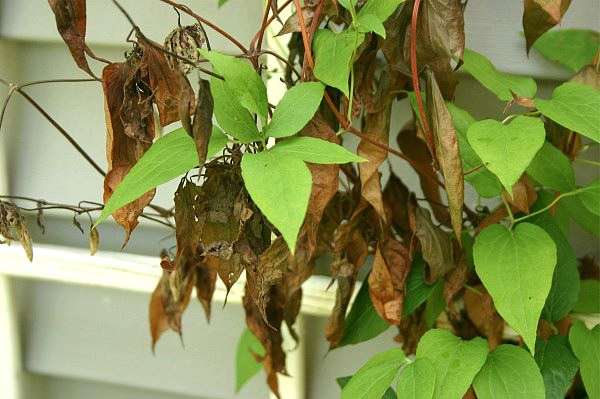
Plants suffer from the following diseases:
- Wilt is a dangerous disease that causes the death of the plant. As a preventative measure, clematis should be watered with lime milk in the spring and fall. During the growing season, a pink solution of potassium permanganate or Fundazol should be used.
- Rust – in this case, the foliage is covered with reddish spots. For prevention, use a 5% Bordeaux mixture. Skor, Polihom, and Bayleton are also acceptable.
- Powdery mildew causes leaves, branches, and flowers to become covered with a white coating, which then dries up. Fundazol and colloidal sulfur can help combat this disease.
Preparing for winter
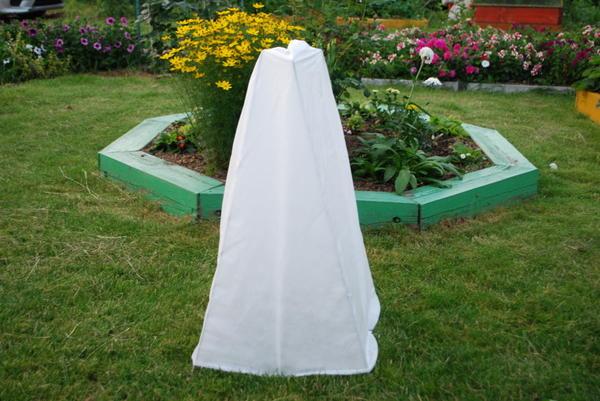
Before the cold weather sets in, it's recommended to earth up the bushes and deeply prune the stems, leaving stumps near the roots. In temperate climates, this should be done in mid-October. If winter temperatures drop below -20°C (-4°F), the plant can be left uncovered. However, the soil should be covered with fallen leaves and compost.
Reproduction
Clematis can be propagated by seed or vegetatively. The former method will not preserve the varietal characteristics of the plant. Most often, gardeners use the vegetative method, which is considered less labor-intensive and more reliable.
Seeds
Seeds ripen 90 days after flowering. Clematis seeds typically don't ripen in Russian regions due to climate conditions. In this case, it's recommended to place the fruited branch in a container of water and place it on a windowsill. This will allow the seeds to ripen.
Take a look Also

Cuttings
This propagation method is recommended for June. The procedure should be performed during bud formation. To do this, cut off the middle section of a young 2-3-year-old plant and cut it into segments. Leave 2 centimeters above the internode and 3-4 centimeters below.

After this, it is recommended to place the cutting in a Kornevin solution and then transfer it to a separate glass. The plant requires 3 months to root.
Layers
First, select strong plant shoots and dig 5-centimeter-deep furrows for them. Then, lay the vine along the grooves and secure it with staples. Sprinkle the shoots with fertile soil and water.
During the season, the shoots will take root. In the fall, it's recommended to cover them with a layer of mulch. In April or May of the following year, the bushes can be transplanted to their permanent location. This propagation method is time-consuming, but allows you to produce several bushes at once.
Dividing the bush
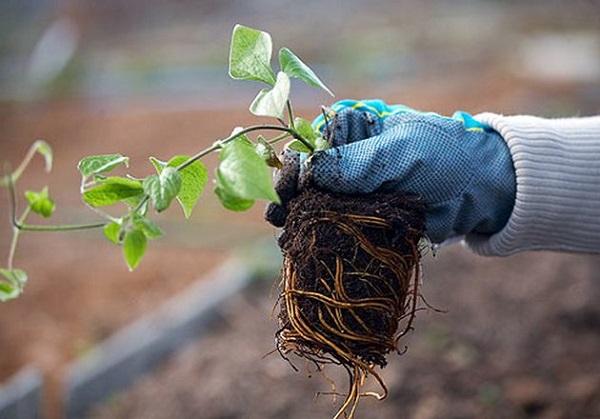
When the clematis roots become overgrown, it's recommended to dig up one side and separate a root fragment with 2-3 shoots. The young bush should be completely removed from the soil. The cutting should be immediately planted in the prepared hole. This is a simple and quick method. However, it doesn't produce a large number of bushes.
Gardeners' reviews of the variety
Today you can find many reviews about this plant, which confirms its popularity:
- Alena, 32: "This clematis variety has absolutely enormous flowers. The blooms also last a long time. Its frost resistance is a definite advantage. However, it's important to prevent fungal infections. I use Bordeaux mixture for this purpose."
- Maria, 40: "I really like the clematis Ville de Lyon. It's perfect for growing in temperate climates, is fast-growing, and is cold-resistant. The bushes are adorned with decorative crimson blooms, which have become a real highlight of my garden."
Clematis Ville de Lyon is a popular garden plant with large flowers. It's easy to care for and cold-hardy. Following proper gardening recommendations helps ensure lush blooms. Regular watering and fertilizing are recommended.
Related posts:
 Methods for planting and propagating cherries at home
 Conditions for growing mandarin at home and rules for caring for the tree
 Growing and caring for hazelnuts in open ground, rules for planting hazelnuts
 The best grape varieties for growing in the Urals, planting and care rules in summer
 Description and rules for growing Solaris grapes
 Rules for planting and caring for pears in open ground, how to grow them correctly
 The best eggplant varieties for growing in a polycarbonate greenhouse: planting and care
 The best methods for growing grapes from seeds at home