
- History of appearance
- God's Tree: Description of the Plant
- What are the known types of abrotanes?
- Features of cultivation
- Lighting and wind protection
- Soil for planting
- Technology of planting seedlings
- Care
- How often should I water wormwood?
- Soil care and plant fertilization
- Rules for proper pruning of dill trees
- Methods of reproduction
- Dividing the bush
- Propagation by layering
- Cuttings
- Growing from seedlings
- Diseases and pests
- Uses of dill tree
- In cooking
- In landscape design
- In folk medicine
Among the flora in nature, there are some beautiful specimens that some gardeners have never even heard of. Sometimes, having a plant in the garden, the owner doesn't even know its name. One of these is the dill plant. Scientists know of 250 species. It is often used as a decorative element in gardens and country houses.
History of appearance
Many plant growers know this plant as "God's tree," "aborothan," "artemisia wormwood," and "oak-grass." Some scholars believe that the dill tree's homeland is Asia Minor and the Mediterranean. It was first mentioned in the Hypatian Codex. The entry for the plant in this ancient document dates back to the 12th century. In the 16th century, aborothan became common in European countries. It arrived in North America in the 17th century. Russians learned of the "God's tree" during the reign of Peter the Great.
Currently, it is widespread throughout the Black Sea coast and the Siberian region, in particular its southeastern part.
God's Tree: Description of the Plant
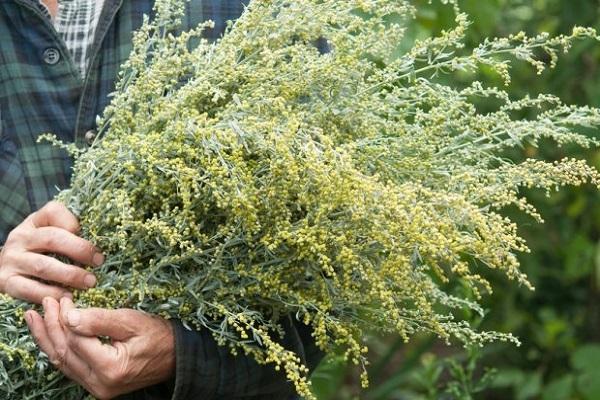
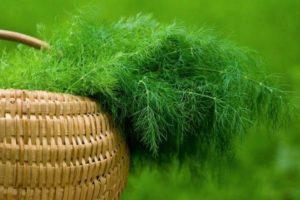
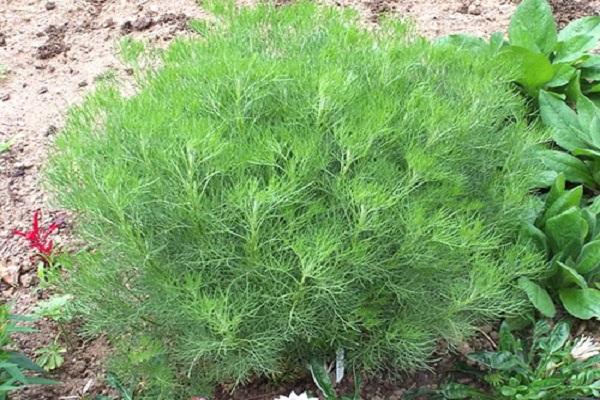
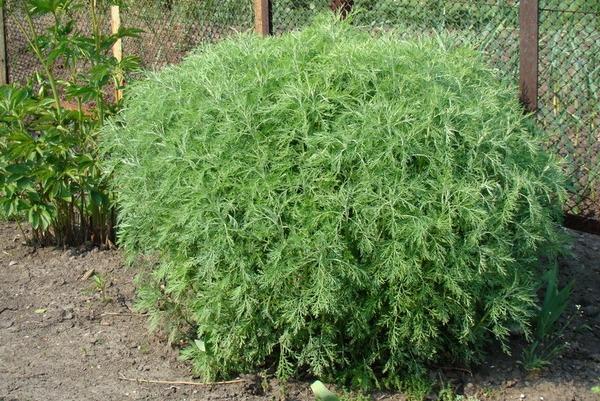
The plant grows as a perennial evergreen shrub. Its stems and roots are woody. It reaches a height of 1-1.5 meters. The leaves are pinnately dissected and gray-green in color. The erect shoots are distinguished by numerous petioles. The paniculate inflorescences consist of small flower heads.
Aborotan begins to emit its aroma in June and July. Its strong lemon notes are unpopular with insects; they simply repel them. This quality makes the shrub a favorite among many gardeners.
What are the known types of abrotanes?
There are many different species of abrotane in nature. More than half of them are resistant to low temperatures. Europeans are familiar with the "God's tree," a representative of the medicinal varieties.
Due to its therapeutic effect, wormwood is popular among many gardeners.
Mediterranean climates favor tree-like varieties. Border species are primarily grown here.
Caucasian wormwood grows in the mountainous regions of southern Europe. Its height does not exceed 30 centimeters.
Tarragon, also known as tarragon, is another subspecies of dill plant. It grows quite tall, with stems sometimes reaching a meter.
Take a look Also
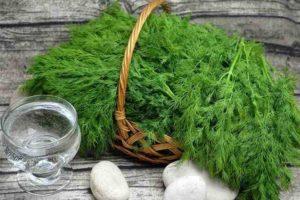
Cold wormwood is a low-growing plant common in southeastern Russia.
The milky-flowered aborotana is native to China. Its shoots reach 1.5 meters in length, and small, light-colored buds develop during flowering.
The Ludovica variety of wormwood is widespread in Latin American countries.
Features of cultivation
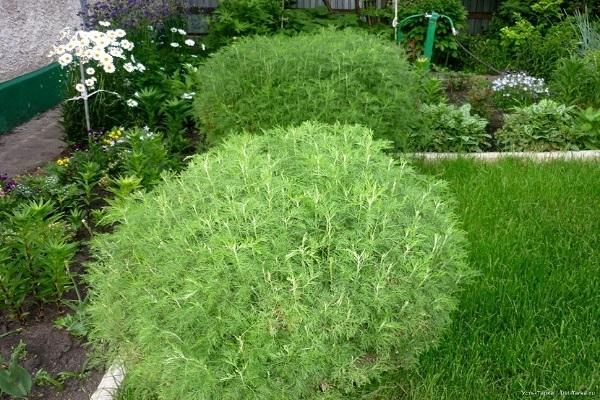
If the plant is not grown for landscape design purposes, there are no specific growing rules. It thrives in any soil except sandy soil. Wormwood tolerates low temperatures and snowless winters. However, to ensure the shrub thrives, it's important to familiarize yourself with certain conditions.
Lighting and wind protection
Abrotane is a southern shrub that prefers warm climates and sunny areas. It does not thrive in shaded areas, so the planting site should be shade-free.
Abrotane can also be damaged by cold northern winds. To avoid these effects, plant the shrub near trees and tall grasses, which will protect it from the wind but not block the sun's rays.
Soil for planting
The plant prefers loose, nutritious soil. If necessary, enrich depleted soil with organic fertilizer. In case of increased acidity, it is preferable to neutralize it with dolomite flour; otherwise, the plant may die.
Repotting is not required for the genus dei. The shrub grows and develops in one location for 10 years or more. Therefore, its selection is taken quite seriously.
Technology of planting seedlings
Planting is done in soil moistened with warm water and fertilized with humus. This process is performed in the second or third ten days of April. During this period, the soil moisture is sufficiently high, which promotes better rooting of the seedling, even without watering.
The seedlings are planted at a distance of 1.5 meters from each other, which promotes their better growth.
Care
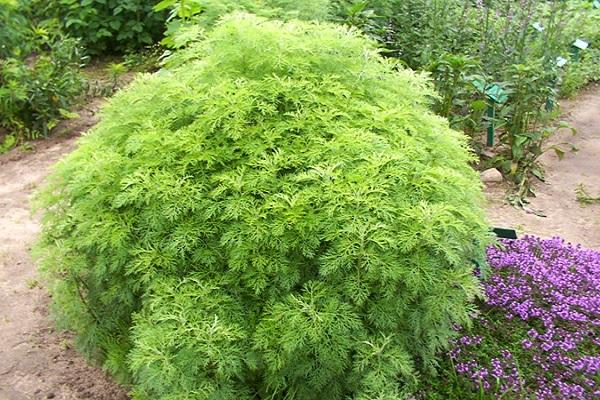
As such, there are no special care requirements for common wormwood. Simple gardening steps will transform the shrub into a true garden ornament.
How often should I water wormwood?
The plant is drought-resistant and doesn't require frequent watering. Only newly planted wormwood requires additional moisture for the first 1.5 to 2 weeks.
During hot periods, regular watering (up to 4 liters of water per plant) every 14 days will help maintain its decorative beauty.
Soil care and plant fertilization
If you periodically loosen the soil around the wormwood by weeding and loosening the soil, air and water will flow more quickly to the root system. Uncovering the root system is not recommended. Instead, the shrub should be slightly earthed up.
Applying complex fertilizers will improve plant growth. Adding ash will also have a positive effect.
Before the arrival of winter, wormwood is mulched or humus is sprinkled around the bush.
Rules for proper pruning of dill trees
With the arrival of early spring, it's time to prune your dill plant. As soon as severe frosts end, remove one-year-old shoots at a height of 5 centimeters. Pinching the tips will promote bushy growth. Regularly prune last year's growth on established plants. Removing all shoots will help rejuvenate the plant.
Methods of reproduction
Abrotanes are propagated by dividing the bush, cuttings, layering, and seeds.
Dividing the bush
The bush is dug up, the soil is carefully shaken from the roots, and the soil is divided into sections. The resulting new bushes are planted in well-moistened holes fertilized with humus. It is best to set aside time for this process in April.
Propagation by layering
To propagate by layering, around May 20th, take a shoot about 30 centimeters long with the leaves removed and carefully cut it around the circumference with a knife. This area is treated with a growth stimulant and then covered with sphagnum moss.
A black plastic sheet filled with peat is placed over the section below the cut. Its ends are secured to both cuts with electrical tape. Roots emerging will indicate that the shoot has taken root and is ready for planting.
Cuttings
At the end of June, when the woodiness of the wormwood stems begins, cuttings are carried out in the following sequence:
- Cuttings. They should have 4 internodes and be 10-15 centimeters long;
- Soaking the planting material in a rooting solution. Soaking the prepared cuttings in the solution for 24 hours will accelerate root formation;
- Wash and plant them in a soil mixture consisting of 1 part compost and 2 parts sand. The roots should be buried about 3 centimeters deep.
Cover the container with film and leave it there for 1.5 months, remembering to water it and monitor the condition of the shoots.
In late August, cuttings with sprouted roots are planted in the ground. This allows the tree time to adapt to the new conditions before the cold weather sets in. The new growth reaches 40 to 50 centimeters in height.
When preparing planting material in August, it's best not to plant sprouted cuttings in the garden. During cold weather, store the container with the planting material on a cool patio.
Growing from seedlings
Flower shops often offer wormwood seeds. They are sown in small pots. The prepared containers should be placed in a location with constant sunlight. Once the plants reach 15-20 centimeters in height, they are planted in the garden.
Diseases and pests
Dill plants are generally unaffected by pests. Sometimes the leaves become infested with aphids. To get rid of them, treat the plant with a soapy water solution. Typically, 250 grams of laundry soap per 10 liters of water is needed. Spray three times, every 7 days.
Uses of dill tree
The dill tree is rich in vitamins, minerals, and essential oils, which makes it in demand in various industries.

In cooking
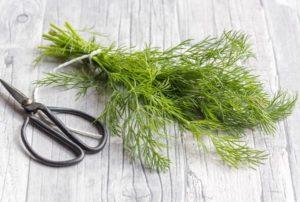
The selected upper part of the plant is used as:
- spice for canning vegetables;
- salad ingredient;
- soup seasoning;
- tea flavoring additive.
Fresh wormwood leaves have a slightly bitter taste. To avoid spoiling a dish, they are used in small quantities. The dried plant does not have a bitter taste.
Excessive consumption of wormwood in food can lead to health problems, as almost all its varieties contain alkaloids, large quantities of which are dangerous for the human body.
In landscape design
The tree of God is often used as a decorative element in gardens. It is planted in flowerbeds alongside other crops. It is used as a hedge or border, and also for landscaping verandas, terraces, and balconies.
In folk medicine
Wormwood leaves are an excellent remedy for toothache. A prepared water infusion is used as a mouthwash. The decoction improves digestive function.
Abrotane will rid the body of parasites, relieve pain, and increase hemoglobin levels. It's an excellent remedy for healing bruises, sprains, and inflammation.
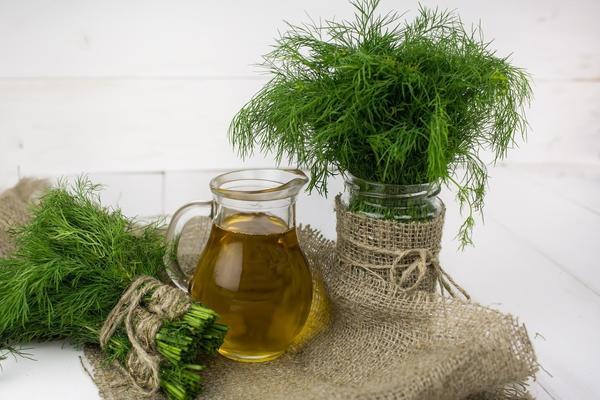
By planting a dill tree in your garden, you will acquire a fragrant plant and a wonderful assistant for health problems and in culinary matters.
Related posts:
 How to plant walnuts, care for them, and grow them at home
 Description and cultivation of the 15 best cherry plum varieties for the Moscow region, planting and care rules
 Descriptions of the 20 best cherry varieties for the Moscow region, their planting and care
 Description and characteristics of the 27 best plum varieties for the Urals, planting and care
 Description of the Bryanochka cherry variety, planting and care instructions
 Description and characteristics of the 45 best types of peaches, growing rules
 Characteristics and description of the Shokoladnitsa cherry variety, pollinators and fruiting
 Description of the 25 best cherry varieties for the Urals and Siberia, planting and care in open ground