
- Description and Features
- Vine
- Inflorescences
- Berries
- Taste
- Growing regions
- History of selection
- Main characteristics
- Drought resistance
- Frost resistance
- Productivity and fruiting
- Areas of application of fruits
- Resistance to diseases and pests
- Transportability
- Pros and cons of the variety
- How to plant correctly
- Recommendations for choosing deadlines
- Choosing a location
- Soil requirements
- Site preparation
- How to select and prepare planting material
- Planting diagram
- Care instructions
- Watering mode
- Top dressing
- Preparing for winter
- Mulching
- Prevention of diseases and pests
- Trimming
- Garter
- Methods of reproduction
- Harvesting and storage
- Tips from experienced gardeners
The Violet Early grape variety is often chosen by gardeners for growing in their gardens. This choice is due to the plant's high resistance to many adverse factors. By following the advice and recommendations on site selection, planting guidelines, and plant care, you can reap a bountiful harvest of sweet, large berries.
Description and Features
To distinguish the Purple Early grape from other grape varieties, you need to familiarize yourself with the main characteristics.
Vine
Grapevines grow tall (up to 2.2 meters), with numerous leaves and shoots. The shoots of young plants are covered with characteristic down and are light green. The shoots of perennial plants have a brownish-red tint.
Inflorescences
The leaves of the Purple grape are light green, rounded, and medium-sized. They can be trilobed or five-lobed. The edges are slightly serrated. The upper surface of the leaf blade is smooth, while the lower surface is lightly pubescent.
The inflorescences of the Purple grape variety are bisexual, with clearly visible stamens and pistils.
Berries
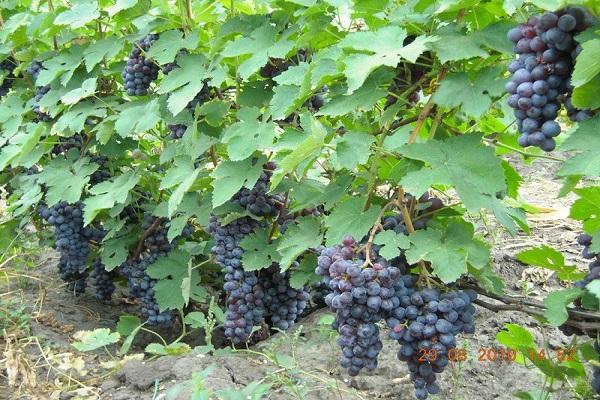
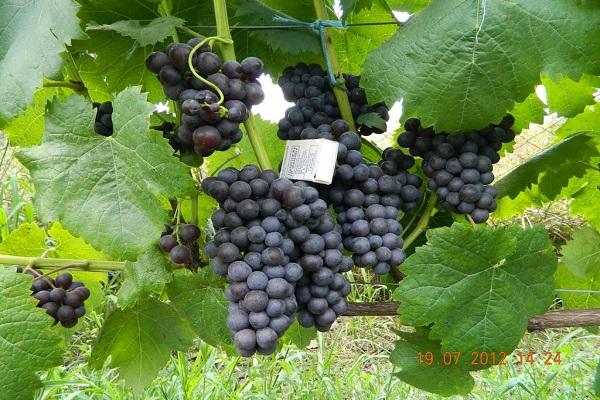
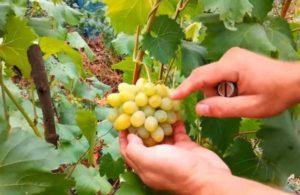
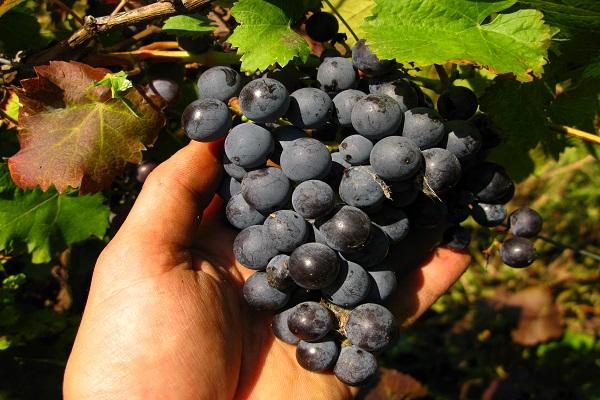
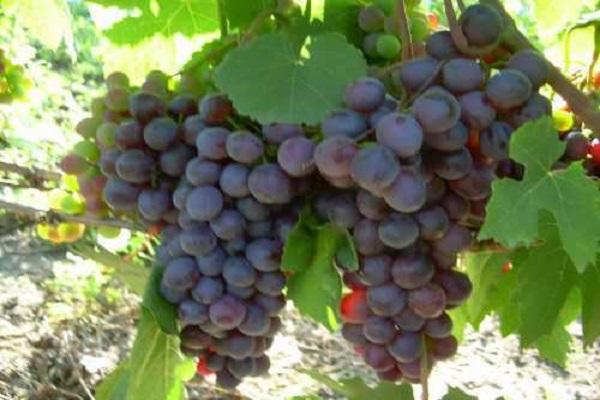
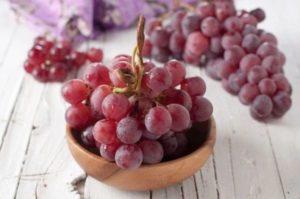
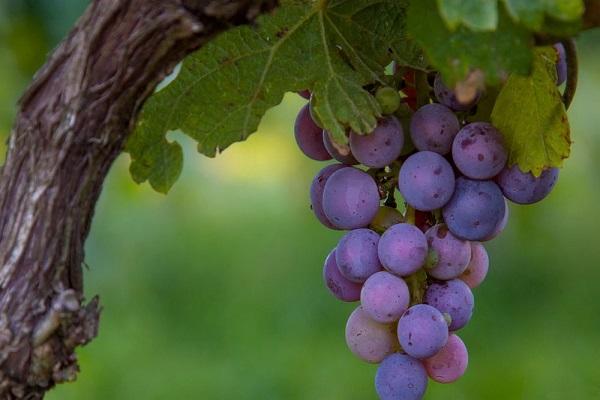
The berries are round, weighing 5 grams each. As they ripen, they change from greenish to dark purple, almost black. The flesh is white and contains 1-2 seeds.
Taste
The grapes have a rich, sweet flavor, with a distinctive muscat flavor and subtle aroma. The skin is thick. The juice contains a high amount of sugar (up to 25%).
Growing regions
The Violet Early variety is suitable for growing in any climate zone. It thrives best in warmer climates, but with the right conditions, good results can also be achieved in temperate climates. In northern climates, frost protection is essential for the vines during the winter.
The variety has become widespread in regions such as Ukraine, Moldova, and the Caucasus.
History of selection
The Violet Early hybrid was developed at the Potapenko Research Institute of Viticulture in Novocherkassk by crossing two grape varieties: Muscat Gambursky and Severny. The resulting variety is distinguished by its frost resistance and excellent flavor. It differs from the Kyiv Violet variety.
Main characteristics
Drought resistance
Grapevines have a powerful root system that penetrates deep into the soil, making them drought-tolerant. However, to maintain the quality and quantity of the harvest, supplemental irrigation is necessary during dry periods.
Frost resistance
This variety is highly frost-resistant. The grapes can withstand winter temperatures as low as -28 degrees Celsius.
Productivity and fruiting
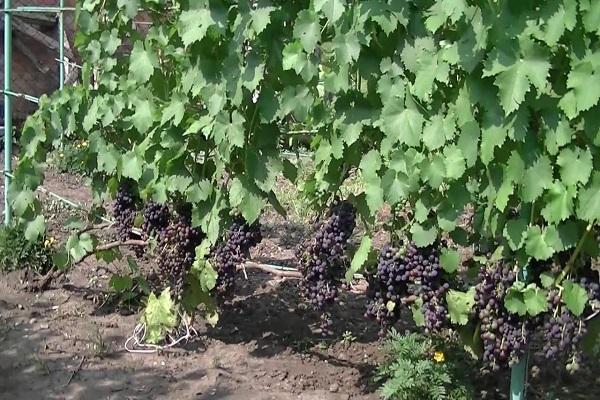
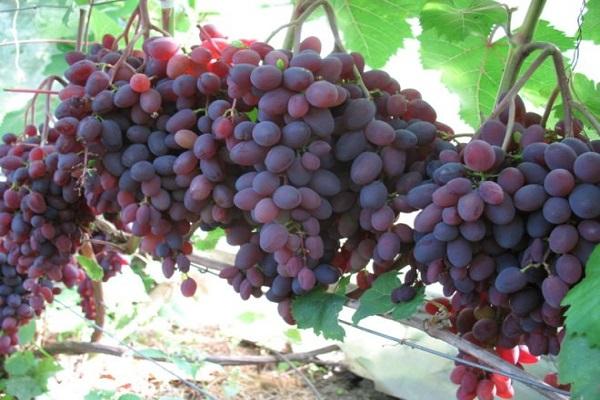
The harvest ripens early. The berries begin to ripen as early as the end of July. They are gathered in small, cone-shaped clusters weighing up to 140 g.
This hybrid is a high-yielding crop. Fruit develops not only on the main branches but also on the side shoots. A single vine can yield up to 10 kg of fruit.
To maintain a consistently high yield, it is necessary to trim off excess shoots and side shoots annually, as well as properly care for the plant.
Areas of application of fruits
This grape variety is versatile. It's eaten fresh, but the berries are most often used to make wine. Commercially, the Violet Early grape is used to make a wine called Muscat Stepnaya Rosa. Homemade grapes produce delicious juice or wine with a pleasant floral aroma.
Resistance to diseases and pests
Purple grapes are characterized by high resistance to some infections and low immunity to other diseases.
The Violet Early variety has low resistance to leaf roller, phylloxera and powdery mildew:
- Leaf roller caterpillars damage the green parts of the plant and the fruit. As a result, the leaves begin to dry out and fall off, and the fruit becomes small, sour, and dries out. Insecticides such as "Cidial," "Sumicidin," and "DNOC" are effective in controlling leaf rollers.
- Phylloxera (aphids) also cause significant damage to crops. Spraying with solutions based on products such as Nitrafen, Tocution, and Sevin helps.
- Powdery mildew (Powdery mildew) appears as a whitish coating on the leaves and shoots of the plant. This fungal infection spreads during rainy weather. Fungicides such as Topsin, Rubigan, and Ridomil are helpful.
Transportability
Grapes tolerate long-distance transportation well, while maintaining their marketable appearance and taste.
Pros and cons of the variety
According to gardeners, the Violet Early variety has many positive characteristics:
- tolerates frosts down to -28 degrees;
- sweet taste and pleasant aroma;
- early boundaries of fruit ripening;
- high resistance to infections;
- high yields;
- grapes do not have any special requirements for soil or care;
- the variety is self-pollinating.
But there are also weaknesses:
- the berries in the clusters are small in size;
- the pulp contains seeds;
- dense skin;
- During care, it is necessary to regulate the number of bunches.
How to plant correctly
The first harvest can be obtained as early as the third year after planting. To ensure a satisfying harvest of quality and quantity, certain agricultural practices must be followed.
Recommendations for choosing deadlines
The choice of planting time for Purple grapes depends on the region in which the crop is intended to be grown:
- In the middle zone, it is recommended to start planting in October.
- In northern regions, winter cold comes earlier, so it is better to plant grapes in the first half of September.
Take a look Also
Choosing a location
The best location for Violet grapes is a site that receives sufficient sunlight and warmth throughout the day. The location should be protected from strong winds.
Soil requirements
The Violet Early variety is undemanding regarding growing location and soil composition. It thrives on flat land and slopes. Fruiting begins even in heavy soils.
Site preparation
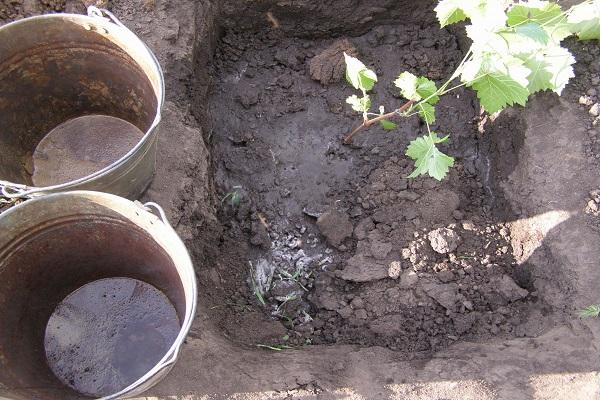
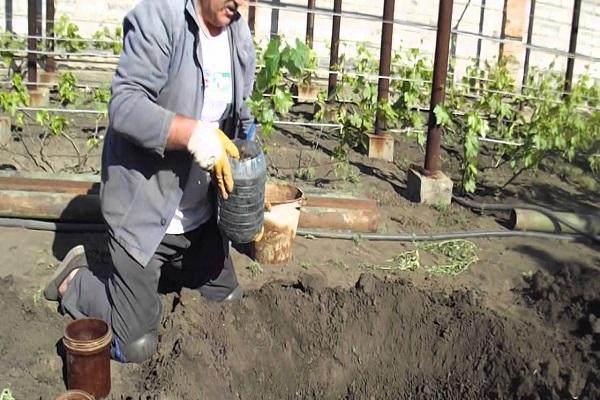
Once the site has been selected and the seedlings have been prepared, begin digging holes at the recommended distance according to the chosen scheme:
- They make a hole 20 to 55 cm deep.
- Laying a drainage layer.
- A fertile layer of humus, peat, sand and superphosphate is created.
- A bush is placed in the center of the hole and covered with soil.
- The soil around the trunk is lightly pressed down and watered with warm water.
How to select and prepare planting material
The future harvest depends on the quality of grape seedlings. To select good planting material, follow these tips:
- It is better to buy seedlings in the fall;
- a healthy seedling has strong roots;
- the roots must be flexible;
- a high-quality seedling has a light and moist root cut;
- There should be no signs of damage on the trunk or shoots;
- A good seedling has 3-4 buds.
A day before planting, the roots of the seedling are placed in a Zircon solution.
Planting diagram
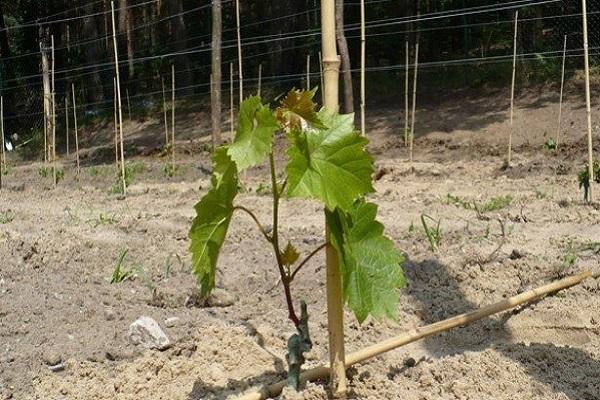
Since the Violet Early grapevine produces numerous lateral shoots, the distance between seedlings should be at least 1.7 meters. The depth of the hole depends on the soil composition. If the soil is sandy, dig a hole 55 cm deep. In clay soil, the depth is less—up to 27 cm.
Care instructions
Vineyard care should begin in early spring and continue until late autumn.
Watering mode
During the first two years after planting, grapevines should be irrigated regularly. Afterward, water as needed. If there is sufficient summer rainfall, additional irrigation is not necessary. During dry periods, irrigation is essential, especially during flowering and grape cluster ripening.
Top dressing
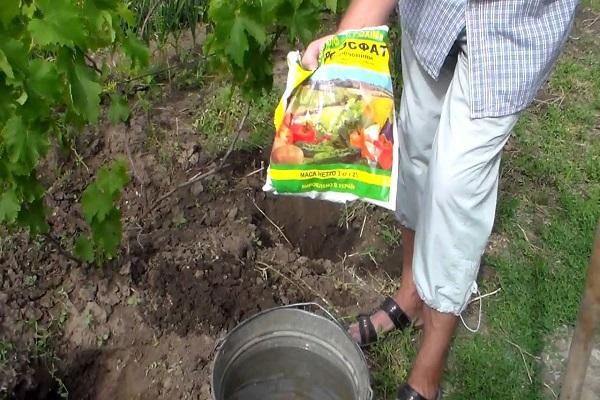
The first application of fertilizer is carried out in the third year of grape growth. Fertilizing is repeated in early spring, before bud break, and in late fall. It is recommended to dig trenches for the fertilizer at a distance of 75 cm from the trunk.
Preparing for winter
It is important to properly prepare the bushes for the winter cold:
- In the fall, the branches are pruned and the cuttings are prepared for planting the following year.
- A trench is dug around the trunk, into which the tied grape vine is laid.
- For preventive purposes, spray with copper sulfate and wood ash.
- The vines in the trench are covered with earth and additionally covered with boards, film, pine branches, and straw.
Mulching
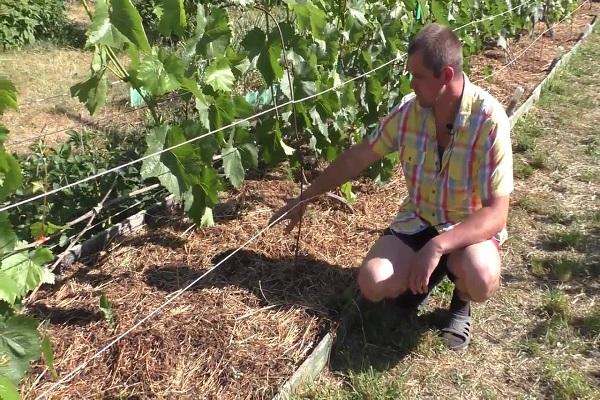
It is recommended to cover the soil around the grapevine trunk with a layer of mulch. Use mown grass, straw, peat, moss, compost, or black plastic film.
Take a look Also
A layer of mulch helps retain heat and moisture in the soil, reduces the likelihood of weeds appearing, improves oxygen exchange and promotes the activity of beneficial soil microorganisms.
Prevention of diseases and pests
The Violet variety is characterized by good immunity. However, rainy weather increases the risk of fungal infections, so preventative treatment of the bushes is recommended.
The first spraying is done in the spring, when the weather warms up, and in the fall, after all the leaves have fallen. A solution based on copper sulfate is used.
Trimming
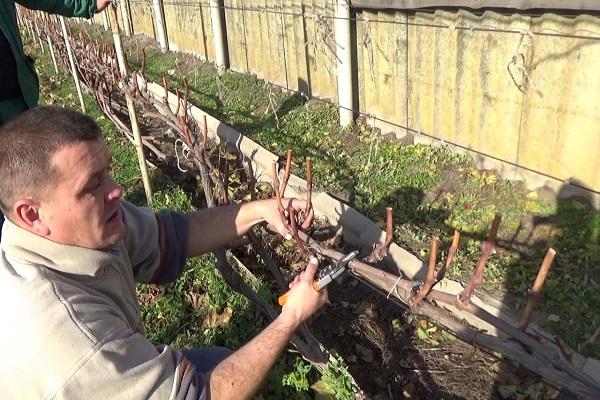
Spring shaping of grapevines begins before bud break. All above-ground shoots are cut back and excess buds are removed from perennial shoots.
In the fall, after the leaves have fallen, pruning is carried out. Shoots older than two years are shortened by two buds, while three-year-old shoots are cut back to four buds.
Garter
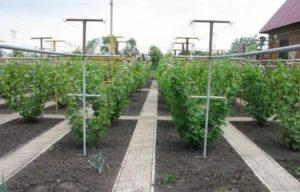
To ensure the stem is securely attached and prevents breakage, choose a sturdy trellis at least two meters high. Staking should begin in early spring, before the sap begins to flow.
The support protects the grape stem from gusts of wind, makes it easier to care for the crop, and allows air, light, and heat to flow freely to all parts of the plant.
Methods of reproduction
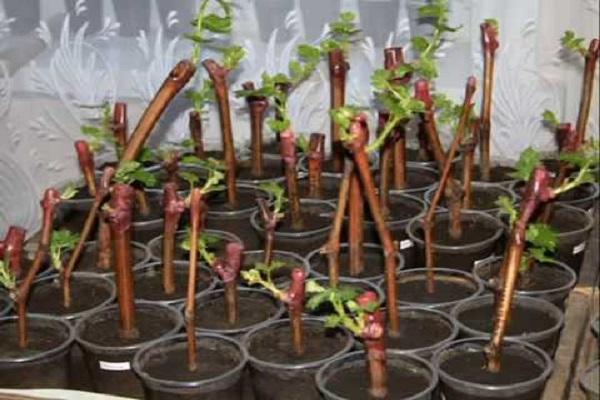
The Violet Early variety is propagated by cuttings, layering and grafting.
Harvesting and storage
It's recommended to harvest ripe Purple grape clusters in dry weather. The bunches are cut with scissors, being careful not to damage the waxy coating on the berries, and stored in boxes.
It's not advisable to leave ripe berries on the bushes for too long. They will begin to crack and fall off. Store the harvested fruit in a cool, dry place.
Tips from experienced gardeners
To grow a healthy plant and reap a good harvest every year, you need to listen to the advice of experienced gardeners:
- planting material should be carefully selected and prepared;
- For planting, it is better to choose a sunny place, protected from drafts;
- the bushes need to be watered only with warm water;
- top dressing should be carried out according to the schedule, observing the recommended dosages;
- pruning is essential.
If all agricultural practices are followed, the Purple Early grape variety will produce a bountiful harvest of sweet berries every year.
Related posts:
 How to grow grapes in the Moscow region in open ground without a greenhouse
 Description of the Julian grape variety, planting and care instructions
 Beginner's Guide to Growing Grapes in Open Ground in Central Russia
 Description of the Krasotka grape variety, planting and care technology
 Description of 30 varieties and types of Muscat grapes, planting, cultivation and care
 The ripening time of grape vines by variety, how to speed up the process, and what to treat the plant with
 Description of 30 grape varieties for Siberia, planting and care for beginners
 Description of purple onion varieties, their beneficial properties, storage methods, and harvesting times