
- Description and Features
- History of selection
- Main characteristics of the variety
- Caloric content
- Benefits and harms
- Acidity
- Berries and bushes
- Disease resistance
- Frost resistance
- Productivity
- Transportability
- Advantages and disadvantages
- How to plant
- Recommendations for choosing deadlines
- Site selection and preparation
- How to select and prepare planting material
- Planting diagram
- Care instructions
- Watering
- Top dressing
- Mulching
- Formation
- Preventive treatment
- Installation of the support
- Shelter for the winter
- Diseases and pests
- Oidium
- Chlorosis
- Phylloxera
- Methods of reproduction
- Seeds
- Cuttings
- Air layering
- Harvesting and storage
- Applications of berries
- Tips and advice from experienced gardeners
The Monarch grape variety is considered a popular choice. Many gardeners choose it for its high yields and excellent flavor. To achieve successful cultivation, proper planting and thorough, high-quality care are essential. Timely spraying against diseases and pests is also crucial.
Description and Features
This is a table hybrid characterized by its mid-early ripening period. The growing season is 120-140 days. The crop is characterized by rapid growth. The vine matures to approximately one-third of its original size.
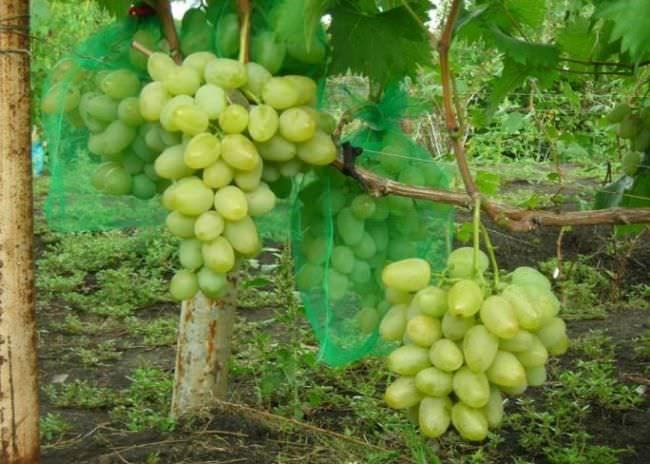
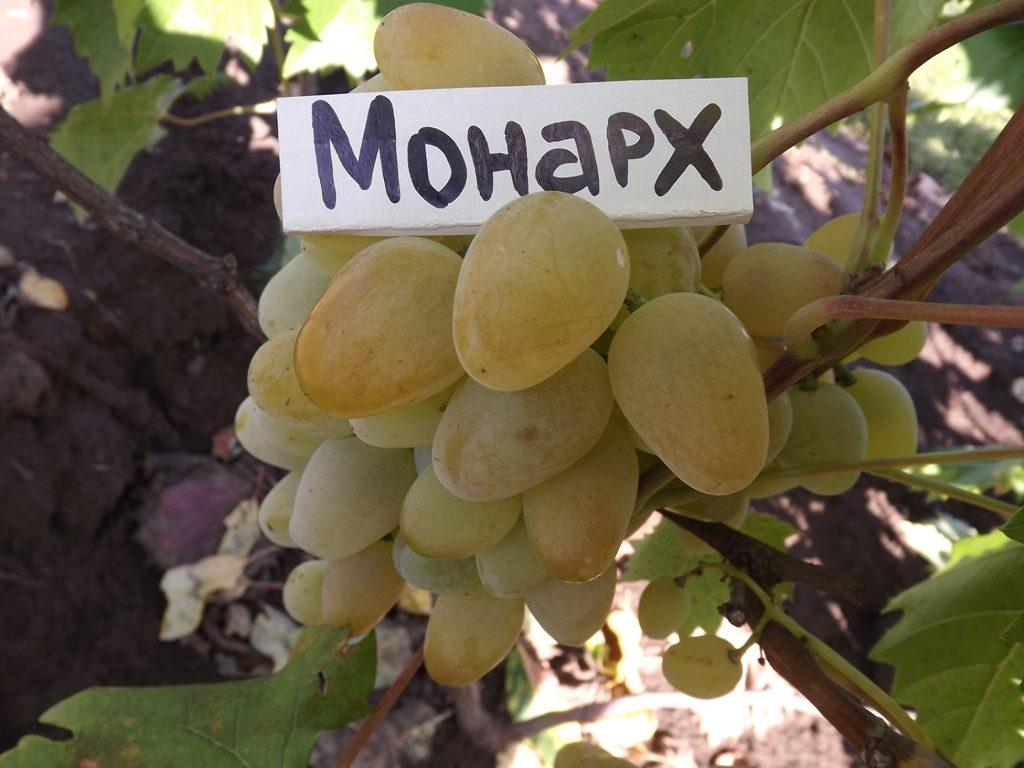
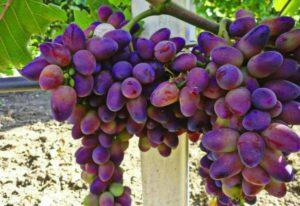
Monarch grapes are characterized by bisexual and self-pollinating flowers. The vines are covered with large, cylindrical-conical clusters containing very large berries. Inside are small seeds and juicy pulp. A distinctive feature of the fruit is its delicate muscat aroma.
History of selection
This grape variety was developed by amateur breeder E. G. Pavlovsky. The plant was obtained by crossing the Talisman and Cardinal varieties. However, the variety has not yet received official recognition. It is not included in the State Register of Russia. Subsequently, the breeder developed another variety, Oligarch, from Monarch.
Main characteristics of the variety
Before planting grapes, it is worth familiarizing yourself with the key characteristics of this variety.
Caloric content
100 grams of the product contain 65 kilocalories.
Benefits and harms
Monarch grapes are extremely beneficial for the body. They contain many vitamins essential for health. They detoxify the body, slow down the aging process, and restore normal organ and system function.
When eating grapes, remember to exercise moderation, as they are high in calories. Furthermore, they can cause stomach upset. Rinsing your mouth after eating is recommended. This will help neutralize the acidity of the grapes.
Acidity
This parameter is 4-5 grams per 1 liter.
Berries and bushes
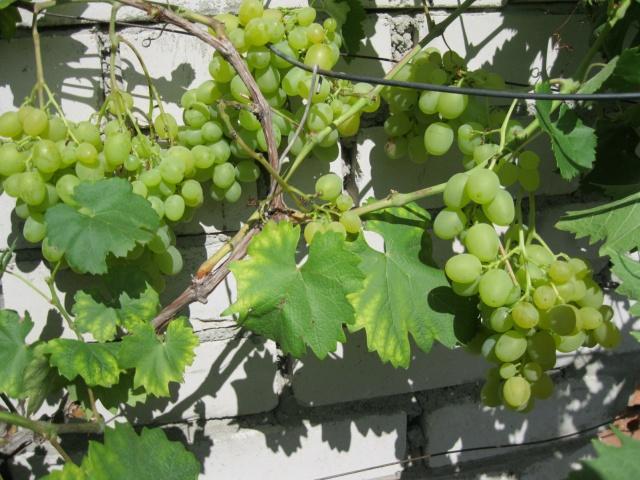
This grape variety is characterized by tall vines with light-colored shoots. The leaves are five-lobed and moderately dissected. The plant produces a high yield.
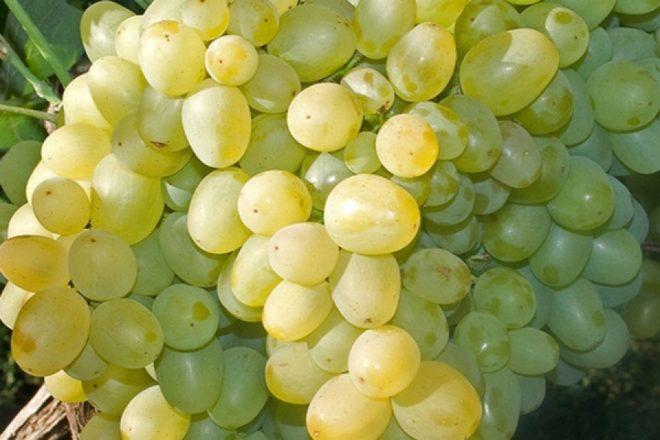
The grape clusters are cylindrical-conical in shape and large in size. The average bunch weight is 400-600 grams, with the maximum reaching 1 kilogram.
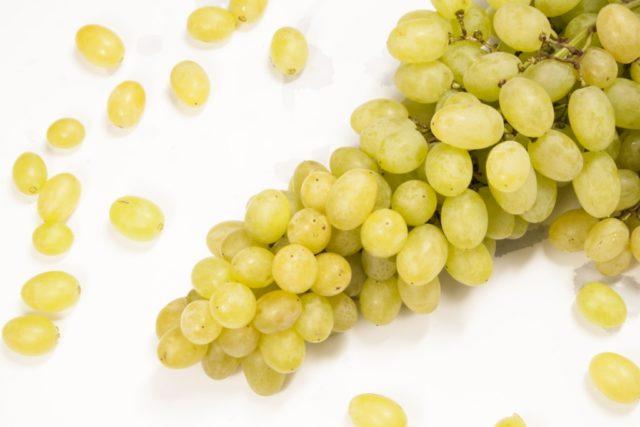
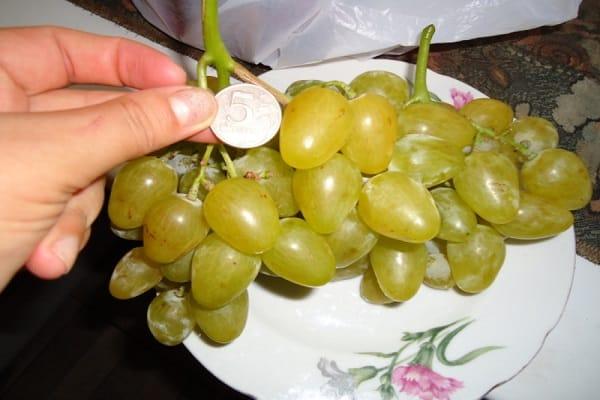
The berries are large and oval in shape. Their color ranges from yellow to greenish. They reach 3.6 centimeters in length and 2.6 centimeters in width. They weigh 15-20 grams. Particularly large berries can reach 23 grams.
The outer skin is crisp and firm. Inside is a fleshy, medium-dense pulp with a dessert-like flavor and nutmeg notes. Each berry contains 1-2 seeds.
Disease resistance
This variety is characterized by high resistance to gray mold and mildew. However, it has average resistance to powdery mildew. The crop is susceptible to chlorosis, phylloxera, and other diseases.

Frost resistance
The Monarch grape is highly frost-resistant. The plant can tolerate temperatures down to -23 to -25 degrees Celsius. To increase the plant's chances of successfully overwintering, it is recommended to cover it.
Productivity
This variety is characterized by large berries and dense clusters. This allows for harvesting over 7 kilograms of grapes per vine.
Transportability
Grapes transport well. Ripe bunches are quite firm. The berries cling easily to them, making them easy to transport and maintaining their marketability.
Advantages and disadvantages
The main advantage of this variety is its high-quality grape clusters, which boast excellent commercial qualities. Another undoubted advantage of the plant is its large berries with excellent flavor.
In addition, the following are among the advantages of grapes:
- the ability to keep berries on the bush for a long time - they are not affected by sudden changes in humidity;
- absence of pea-shaped fruits - this problem does not arise even in bad weather conditions;
- good survival rate of cuttings - they can be planted on their own roots or used for grafting;
- resistance to gray mold and mildew.
One of the downsides of grapes is the plant's tendency to drop ovaries. To avoid crop loss, it's best not to thin the bunches.
One of the factors that triggers ovary drop is the removal of shoots before flowering. It is recommended to adjust the number of clusters when the berries begin to appear.
Another drawback of grapes is the risk of powdery mildew. This can have serious consequences. Preventative treatments can help avoid problems.
How to plant
Proper planting will help you get a strong plant and a bountiful harvest.
Recommendations for choosing deadlines
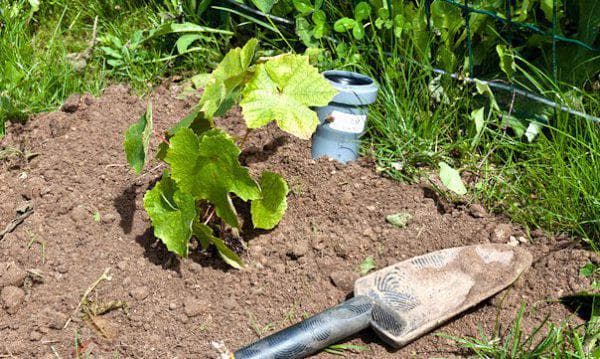
It is recommended to plant on its own roots in the spring. Grafting onto rootstock can be done in the spring or fall.
Site selection and preparation
The Monarch grape variety is considered quite heat-loving. Therefore, it is recommended to choose a sunny site for the plant that is well protected from drafts. Monarch should not be planted in soil containing a lot of sand or clay. This variety prefers light, moist soil.
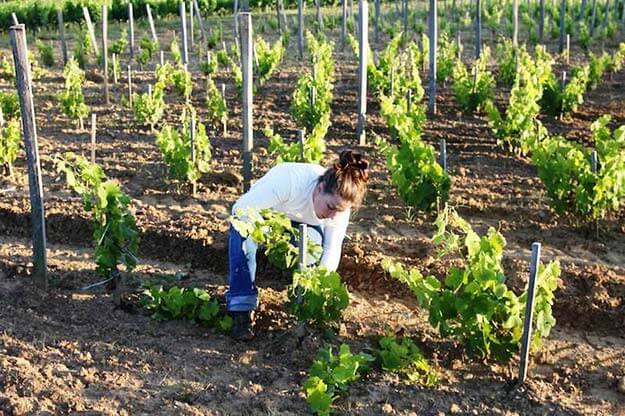
Groundwater levels are considered a key factor in the proper development of the crop. If the groundwater level is higher than 1.5 meters, it's important to install drainage ditches to drain the moisture. Otherwise, there's a high risk of root rot.
How to select and prepare planting material
To achieve good results in growing the crop, it's important to properly prepare the planting material. You can either take cuttings yourself or purchase ready-made seedlings with roots.
When purchasing a plant, it's worth assessing the condition of its cuttings. They should be green. It's important that the bush has at least three buds. The condition of the roots is also important. They should be well-developed and contain white lateral shoots.
The cutting needs to be trimmed. This procedure is carried out carefully on both sides. It is then recommended to soak the cutting in water for 24 hours. It is also advisable to soak the bush in a special solution, such as Humate, for 24 hours. This procedure will improve root formation.
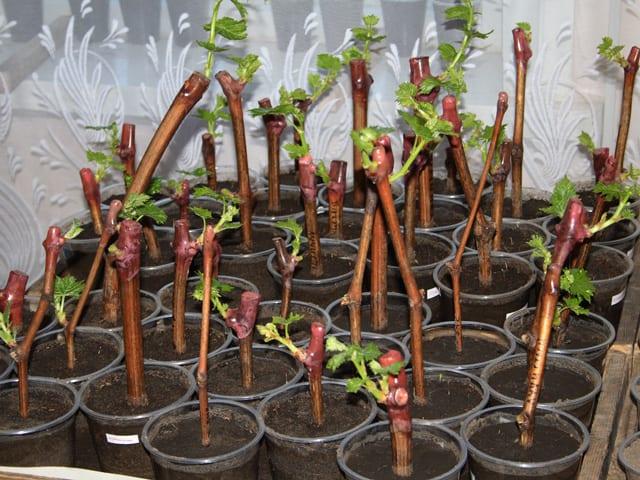
It's recommended to coat the top of the cutting with wax. This process is called "paraffining." It helps retain moisture in the cutting's structure and facilitate its adaptation. To do this, dip the plant in melted wax and then immediately into cold water.
Planting diagram
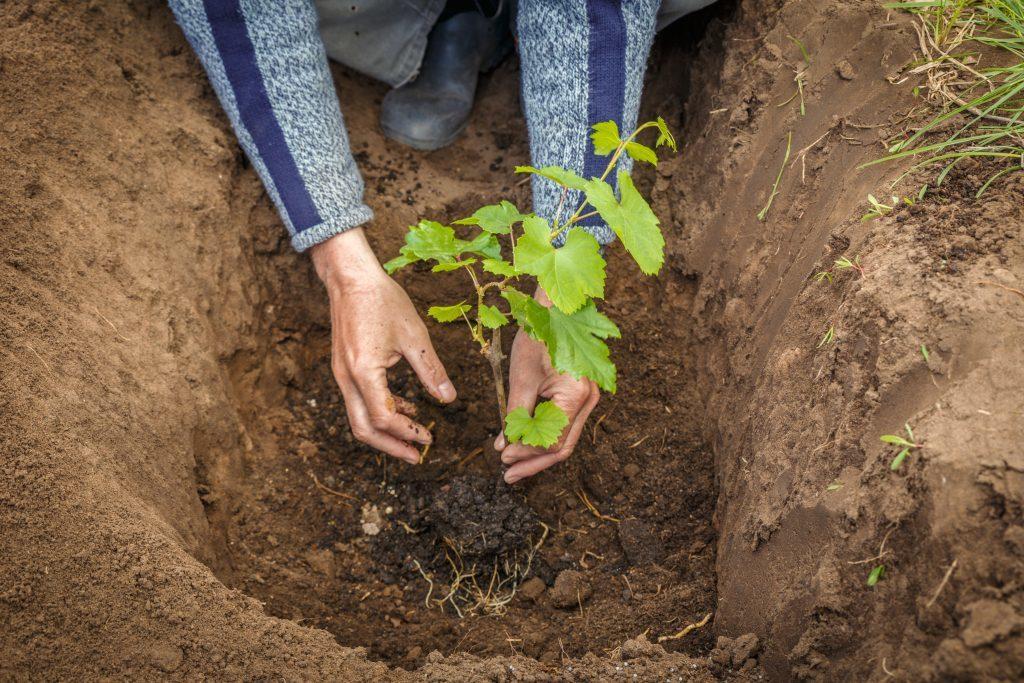
To plant a crop, you need to do the following:
- Make a planting hole measuring 70 x 70 centimeters. Its depth should be twice the height of the root system.
- Water the hole to settle the soil. Leave for a few hours.
- Pour a drainage layer.
- Sprinkle with nutrient-rich soil and place the plant in the hole. Spread the roots out along the mound you've formed.
- Dig a hole, compact the soil and make a ditch to collect moisture.
- Apply a layer of mulch.
Care instructions
For a crop to thrive, it needs high-quality care. This care must be comprehensive.
Watering
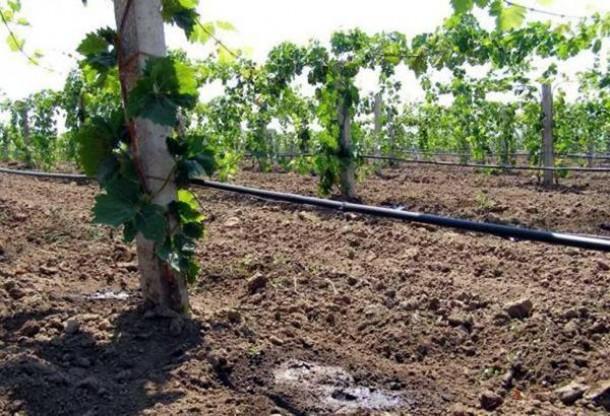
Moistening the soil is recommended when planting grapes in sandy soil or during periods of severe drought. In other cases, excess watering is contraindicated. Before flowering, the vines should be watered twice. The next soil moistening should be done during fruit set. Afterward, water the soil as needed. Apply 20-30 liters of water per vine.
Top dressing
This grape variety requires mineral fertilizers. Select fertilizers containing potassium and phosphorus. These should be applied in small amounts while loosening the soil.
It is not recommended to apply fertilizers under the trunk, since it cannot absorb them.
Mulching
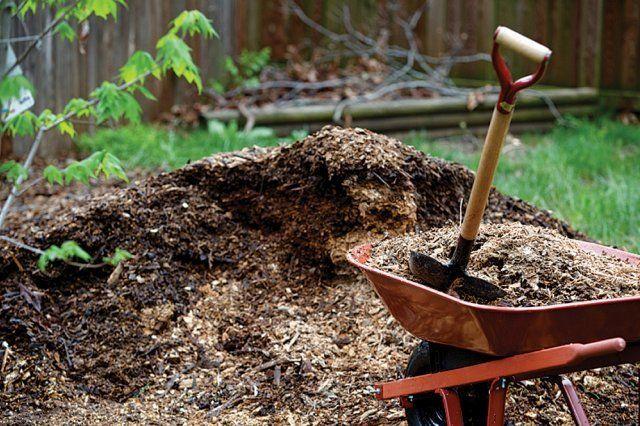
A mulch layer can consist of rotted manure. It is recommended to place it on the soil surface to a depth of 3 centimeters. This will help retain moisture in the soil structure and provide nutrients to the plant roots.
Formation
When pruning, leave 4-6 buds at each level. The total number of buds on the grapevine should be no more than 40. Pruning should be done when the grapevines are dormant. Thinning is done after the berry pods have formed.
Preventive treatment
Grapes of this variety are susceptible to powdery mildew. To prevent this, preventative spraying is performed using a 1% Bordeaux mixture.
Installation of the support
This variety is considered quite tall. Therefore, it requires support. A two-plane trellis with two vertical supports is considered optimal. This design allows the leaves to receive maximum light.
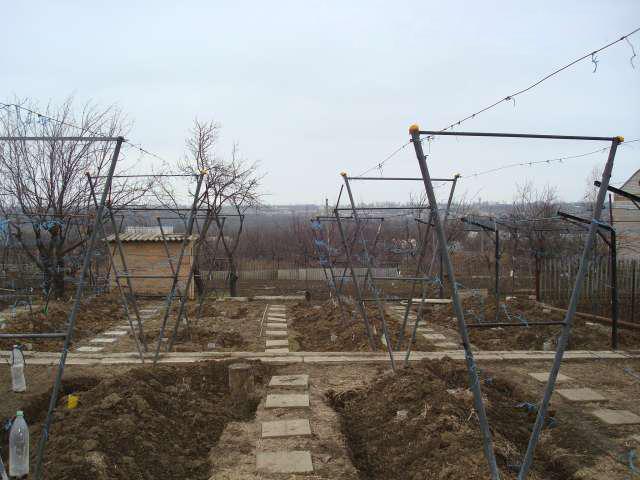
Additionally, it improves air circulation throughout the plant. This improves pollination and reduces the risk of fungal infections. It is recommended to form 4-12 branches on the trellis. This increases yield.
Shelter for the winter
To insulate the plant, it's recommended to lay its branches on the ground and cover them with hay. Cover the top with plastic film. If winter temperatures drop below -25 degrees Celsius, you can do without covering. A layer of mulch will help protect the plant.
Diseases and pests
Sometimes crops encounter various diseases and pest attacks. In such situations, prompt action is required.

Oidium
When infected, the leaves become covered with a grayish-white coating. This can be easily wiped off with a finger. A white, flour-like coating appears on the ovaries. As a result, the fruits crack and rot. To combat this problem, you can apply Thiovit Jet every 10 days.
Chlorosis
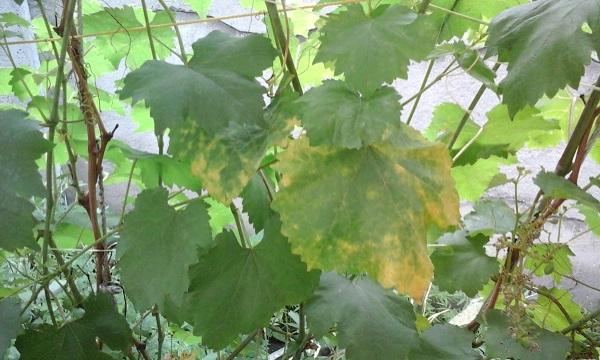
As the disease progresses, grape leaves turn light green. They then turn yellow and die. The vines become stunted, and buds fall off. Spring treatment with iron-containing fertilizers can help prevent problems.

Phylloxera
This problem is caused by green aphids. These insects can damage the plant's root system and leaves. Fumigants can help control these pests. However, they also cause harm to the plant itself.
To prevent phylloxera, grape vines should be grown in sandy soils. This helps prevent aphid attacks.
To control pests, insecticides are used. The most effective include Confidor, Zolon, and Actellic. A total of three treatments are performed on the grapes.
Methods of reproduction
There are various ways to propagate grapes, each with its own unique characteristics.
Seeds
This method is rarely used. It is considered very labor-intensive and does not preserve the varietal characteristics of the mother plant.
Cuttings
In this case, planting material should be prepared in the fall. This is done during the fall pruning of the bush. The cuttings should have 3-4 buds. The planting material should be wrapped in a damp cloth and placed in a plastic bag. Store the prepared cuttings in a cool, dark place. A basement or refrigerator is ideal.
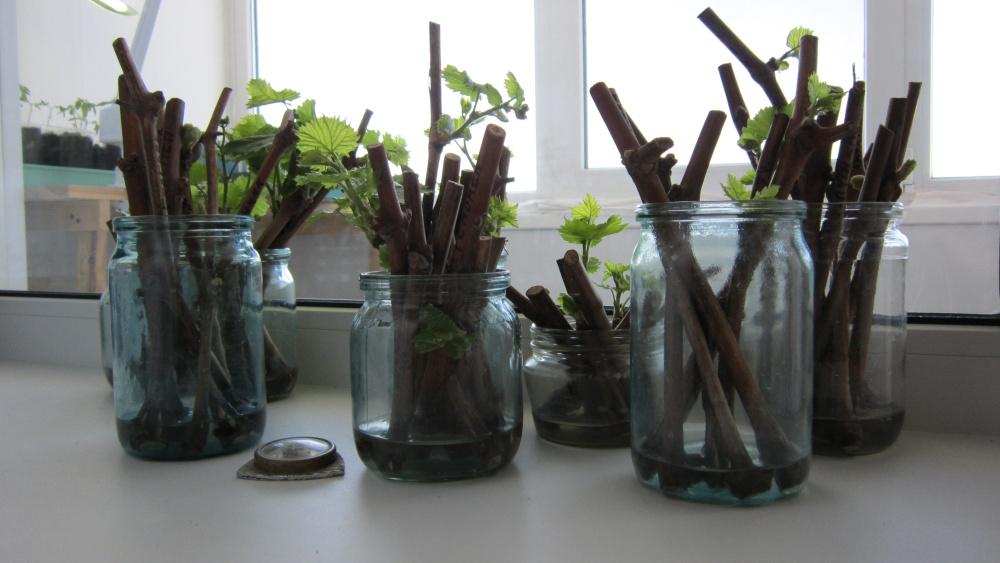 In February, it's recommended to remove grape cuttings and soak them in water for 24 hours. The cut surface should be green. After this, the plants are treated with potassium permanganate. Growth stimulants can also be used. Once roots appear, the bushes can be planted in fertile soil.
Air layering
To propagate this way, you'll need a strong, long vine. It should be planted in a hole near the mother plant. It's important to secure the shoot securely. Water the plant regularly. After two years, you'll have a strong, fruit-bearing bush.
Harvesting and storage
The berries ripen in late August. It's recommended to trim the bunches with pruning shears and store them in wooden crates. Some fruits can be left on the bushes. They can hang for a long time without falling off.
The grapes of this variety travel well in transit. It's recommended to store the harvest in the refrigerator. If there are large quantities of grapes, they should be kept in a cool room. The bunches are then suspended on ropes.
Applications of berries
Grapes of this variety can be eaten fresh. They are also used to make wine with a pleasant berry aroma. They are often used in various preserves.
Tips and advice from experienced gardeners
To achieve success in growing grapes, you need to follow these rules:
- do not over-water;
- carry out pruning on time;
- tie up the grapes in a timely manner;
- treat the plant against pests.
The Monarch grape variety boasts excellent flavor and a high yield. To ensure a robust, fruit-bearing plant, it requires proper care.
Related posts:
 Description of 30 grape varieties for Siberia, planting and care for beginners
 Description of 30 varieties and types of Muscat grapes, planting, cultivation and care
 The ripening time of grape vines by variety, how to speed up the process, and what to treat the plant with
 How to grow grapes in the Moscow region in open ground without a greenhouse
 Beginner's Guide to Growing Grapes in Open Ground in Central Russia
 The best grape varieties for growing in the Urals, planting and care rules in summer
 Description of the Julian grape variety, planting and care instructions
 The best methods for growing grapes from seeds at home
Monarch is a table grape variety, but it can be eaten fresh for more than just eating. Its berries are very juicy, making it ideal for juice and wine.